




AI outperforms breast density for breast cancer risk
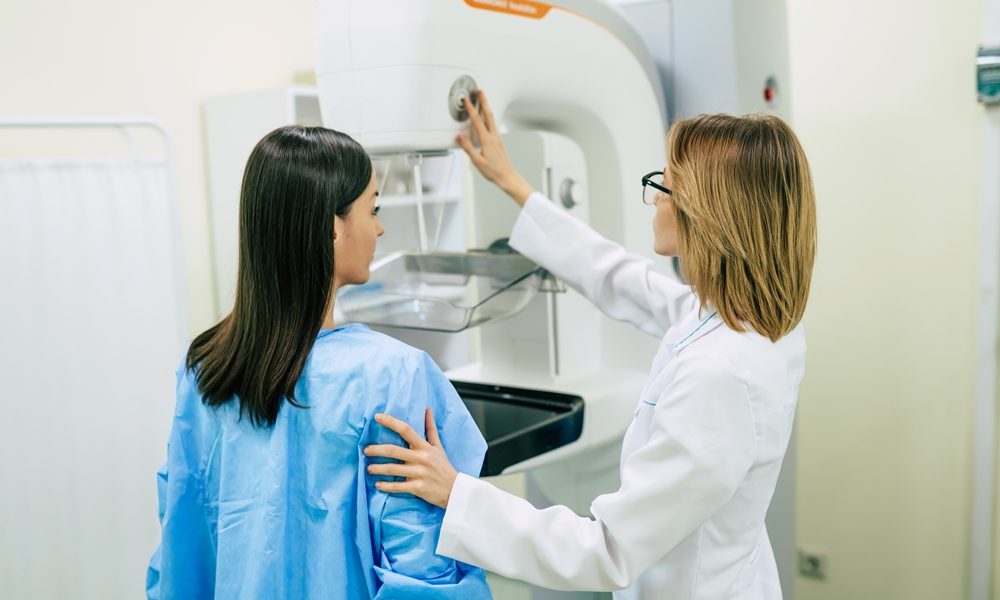
An artificial intelligence model predicts five-year breast cancer risk more accurately than traditional breast density assessment, new research shows.
The image-only AI model, called Clairity Breast, showed that women in its high-risk group had more than a fourfold higher cancer incidence than those in the average-risk group (5.9 per cent vs 1.3 per cent).
Breast density, which refers to the amount of fibrous and glandular tissue compared to fatty tissue in the breast, has traditionally been used as one indicator of cancer risk. Dense breast tissue can both mask tumours and slightly increase cancer risk.
Researchers from Harvard Medical School and University Hospital RWTH Aachen in Germany tested the FDA-authorised AI model on 245,232 screening mammograms from US and European sites taken between 2011 and 2017.

The AI was trained on 421,499 mammograms from 27 facilities across Europe, South America and the US, learning to identify subtle tissue patterns that predict cancer development within five years. It uses a deep convolutional neural network (a pattern-recognition algorithm) to generate risk probabilities.
Traditional density assessment showed minimal difference in outcomes: 3.2 per cent for dense versus 2.7 per cent for non-dense breasts.
“Over two million women are diagnosed with breast cancer annually, and for most, it comes as a complete shock,” said Dr Constance D. Lehman, professor of radiology at Harvard Medical School. “Only 5 to 10 per cent of breast cancer cases are considered hereditary, and breast density alone is a very weak predictor of risk.”
The AI categorised risk using National Comprehensive Cancer Network thresholds: average (less than 1.7 per cent), intermediate (1.7-3.0 per cent) and high (greater than 3.0 per cent) five-year risk.
“The model is able to detect changes in the breast tissue that the human eye can’t see,” Dr Lehman explained. “This is a job that radiologists just can’t perform. It’s a separate task from detection and diagnosis, and it will open a whole new field of medicine, leveraging the power of AI and untapped information in the image.”
The findings have particular significance for younger women. While the American Cancer Society recommends optional annual screening from age 40 for average-risk women, those under 40 represent the fastest-growing group diagnosed with breast cancer and advanced disease.
“An AI image-based risk score can help us identify high-risk women more accurately than traditional methods and determine who may need screening at an earlier age,” Dr Lehman said. “We already screen some women in their 30s when they are clearly at high risk based on family history or genetics. In the future, a baseline mammogram at 30 could allow women with a high image-based risk score to join that earlier, more effective screening pathway.”
Dr Christiane Kuhl, director of the Department of Diagnostic and Interventional Radiology at University Hospital RWTH Aachen, who presented the findings, emphasised the clinical implications.
“The results of this large-scale analysis demonstrate that AI risk models provide far stronger and more precise risk stratification for five-year cancer prediction than breast density alone,” she said. “Our findings support the use of image-only AI as a complement to traditional markers supporting a more personalised approach to screening.”
Currently, 32 US states have breast density legislation requiring healthcare providers to inform women of their density status after screening mammograms. The researchers suggest this information could be enhanced with AI risk scores.
“We’d like to see women given information on their breast density and their AI image-based risk score,” Dr Lehman said. “We can do better than just looking at a mammogram and saying, ‘It is dense or not dense’ to inform women of their risk.”
The technology represents what its developers describe as a shift in breast cancer screening from population-based to personalised risk assessment, potentially enabling earlier intervention for high-risk women while reducing unnecessary procedures for those at lower risk.



Newsletter
Sign up for free weekly updates
The latest femtech news, research and investment, straight to your inbox.




