




Entrepreneur
Xella Health closes US$3.7 million in pre-seed financing










Diadia Health, winner of the Femtech World AI Innovation Award, is working to revolutionise women’s health through AI-backed at-home testing.
By analysing genetics, biomarkers and medical literature, Diadia addresses women’s health issues, taking a functional medicine approach to healthcare.
With the goal of making personal healthcare accessible and affordable, Diadia Health uses technology to automate tasks for clinicians and doctors to save time and improve decision making, and provides comprehensive health reports.

Diadia app was founded by machine learning and AI scientist and CEO Elena Ikonomovska, and CTO Andrii Yasinetsky.
Ikonomovska speaks to Femtech World about the inspiration behind the app, how the app helps to find health issues traditional care misses and the future of Diadia in the healthcare system.
What was the inspiration behind the app and what was at the forefront of your mind when developing Diadia?
My research was about learning from infinite data streams, so for a very long time, I’ve been obsessed with the idea of teaching machines how to learn, in a similar way to how humans learn, which is incremental.
Early on I got into the space of machine learning and built multiple products and systems at companies like Google, Reddit, Change.org.
I also built a number of companies which were all AI first companies, always with a social impact in mind as I was creating these products.
I started experiencing health issues during my last company, and I’ve always been someone that has tried to be as healthy as possible – eating healthy, working out – but I was still becoming pre-diabetic.
My health was getting worse and worse. I spoke to four different doctors, changed primary care doctors, providers, and no one actually had any idea what’s going on, and didn’t know how to help me.
Being a scientist, I decided I was going to try to solve it by myself with the help of AI.
At this time, AI was already at a place where it was quite powerful, allowing us to research and read all the medical knowledge and interpret data.
I realised that there’s so much knowledge we have that has not reached healthcare providers because it is specialised knowledge.
The way that the healthcare system is organised is that everything is solved within a specialty, isolated.
The problems are looked at in isolation when, in essence, they’re not isolated. They’re very connected. Everything in the body is influencing everything else.
Through that problem, I actually started learning about this, and I started applying concepts of systems biology, which is used in functional medicine, an area of medicine which is very niche.
They look at the body as a whole system when they’re solving problems.
This is how I discovered answers for my health, over time, I understood the real cause for my issues was thyroid problems.
This was contributing to my insulin resistance and a number of other deficiencies such as iron anemia, that were contributing to the whole problem that needed to be solved all together, so that I could stop myself from becoming diabetic.
At Diadia, you combine genetics, biomarkers, and medical literature to uncover what normal testing tends to miss.
What was the breakthrough that made you realize AI could solve a problem that traditional clinical tools have struggled with?
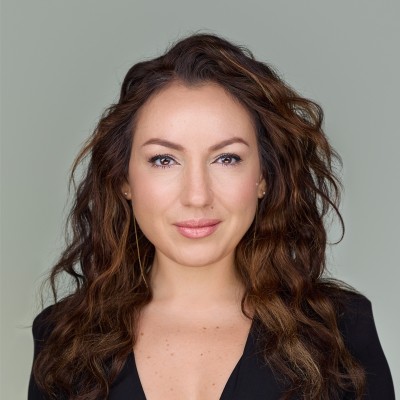
Elena Ikonomovska
AI is capable of connecting the existing knowledge we have with questions and problems.
Initially, we built a system that was capable of seeing the problem only from the five biomarkers without further testing, and that made me realise that this is powerful because it can make the connections between these data points and that represent the different systems in the body intelligently.
This means that it understands the relationships, understands biology, understands how things are like, you know, interacting with each other.
The only thing that we were worried about is that sometimes it might be wrong, as it really doesn’t do proper logical thinking but pattern matches and connects information that statistically is likely accurate together.
There is no protection from fabricating little details that are wrong.
So what we call hallucinations are happening more and more, these are mistakes that AI does that are not obvious.
You can’t catch them by the eye, especially if you’re not an expert. You wouldn’t understand that this is not true.
What we did was we forced logical thinking, we forced logical connections between the evidence that the AI is capable of finding, so that we make sure that the conclusion at the end from the data that is being given is making sense.
It’s logical, and there is research and there is data supporting that connection. That’s something that chatbots don’t do.
I think that’s the reason that makes me sleep well at night because we know that this way we can connect not only genetics – we actually work with gut tests and metabolites, toxins analysis, infections, and all sorts of different tests and biomarker labs.
It enables a multi-specialist view on the problem when you’re analysing the data of the patient in the context.
There may be concern that AI might replace clinical judgment, but you have taken a different approach – what have you learned from working with clinicians about where AI creates the most value?
I don’t believe AI will replace clinical judgment, not yet.
For AI to be able to replace clinical judgment, it needs to be trained over highly dimensional data coming from specialty labs that represent the full body all at once, and such data does not exist.
There is no data of that sort, and also there is no decision making clinical frameworks or choices around how treatments should be ordered and sequenced out that is available to the AI to learn from.
This is knowledge that only clinicians have.
In fact, like the best clinicians have been creating such knowledge and frameworks for decades, practicing in this cutting-edge field of medicine, honing their skills and learning from experience, and embedding the latest research.
That’s the kind of knowledge that is needed to guide these systems to make better decisions over time.
That is also something we are working with clinicians on, because we know that AI cannot on its own come up with the best actual answers, and what we want is the best possible, and the most accurate right analysis, so that we’ll be able to safely deploy such technology to millions of people.
We are working towards that world, and clinicians are a huge part of it.
The more data we generate, the more knowledge we will create about our understanding of disease, human longevity and health span will create more human judgment to continue guiding the tool to uncover more and create more data.
This will be to feed back that data into clinical decision-making processes, because the space is so unexplored, it’s like we’re just entering right now.
At the end of the day, it has to be a human being accountable for another human, and also a human that is there to explain and help the other person incorporate all the things that they need to be doing for their health.
How does Diadia bridge the knowledge gap between patients and clinicians?
The AI is analysing data and prepares very comprehensive reports with clinical priorities and protocols. It explains why certain choices have been made, what it is addressing, and more.
For the patients, there is also really great research to learn more and read more. We give them all the medical research and then it gives them something to hold on to until next time they see their doctor.
Over time we are likely going to have features like chatting functionalities so that the AI will be able to answer certain questions based on the knowledge or the clinical guidelines from a specific clinic.
It is saving hours of analysis time that most doctors don’t have time to really look at. Once you start entering this complex data, it can be hours of analysis where you need to look at 300 biomarkers, or even 1000 in some cases. That’s a long time that a lot of doctors don’t really have.
The AI is in essence cutting that off and giving them a fairly comprehensive insight report that they can quickly understand, look into things, and adjust if needed, and then hand it over to the patient.
As AI and other elements of healthcare such as precision and personalised medicine continue to evolve, where do you see Diadia heading in the next five years, and in women’s health more broadly?
Right now Diadia is being used by clinics who are practicing functional medicine. What we’re capable of, is empowering clinicians to see more patients while maintaining the same high quality standards, as well as being able to grow their practices and train staff.
I hope that as this technology becomes better, we’re going to be able to then bring it into more accessible clinics like direct primary care, and eventually integrated into the healthcare system.
My big dream is that this technology will be covered by insurance. It will be helping millions of doctors in the U.S.
For now we’re in the U.S. market in order to provide this kind of quality care and ultimately offer the service to more women and men as well this personalised precision medicine care that I believe should be the standard of care for everyone.
Finally, what does it mean to win a Femtech World Award?
It’s really an amazing recognition.
As a woman, I put a lot of heart into this. My whole mission is to build a world where women and men, of course, will have the right kind of care that we need, and we will have better data.
I hope that some of the bias and unfairness around women’s health will be fixed.
And so, being recognised that we’ve made a contribution in this direction means a lot to me.
It really helps me do this work and feel more inspired to continue forward.

Sponsored Content
Last chance to save on Women’s Health Week and Women’s Sport Summit: Early Bird pricing ends 11 September
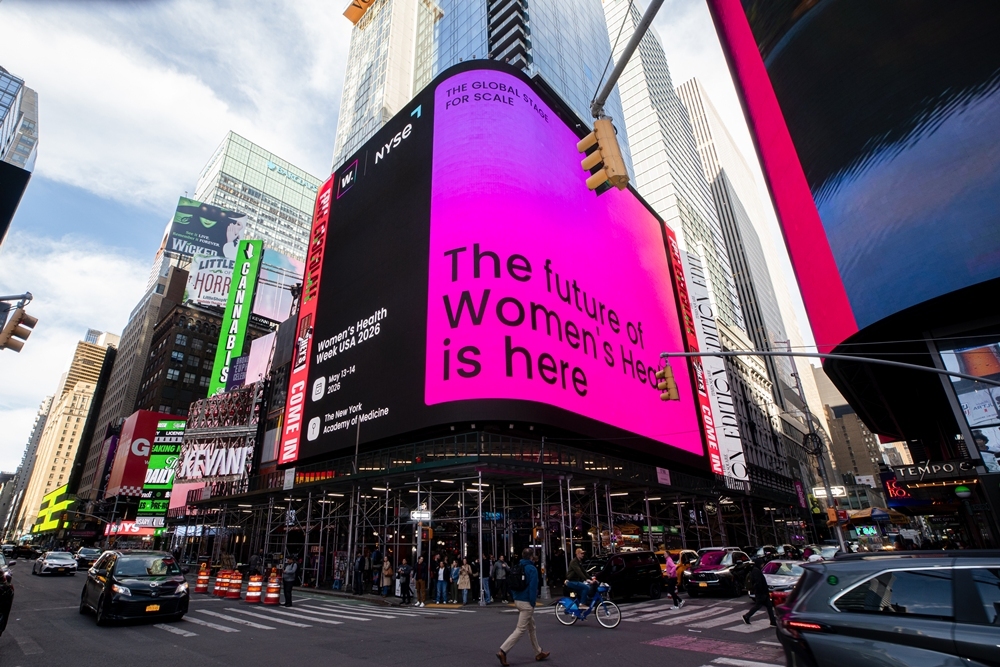
Early bird pricing for W Group’s two flagship October summits – Women’s Health Week Europe 2026 and Women’s Sport Summit Europe 2026 – closes on 11 September.
Both events take place at Emirates Stadium, London, bringing together founders, investors, corporates, and industry leaders shaping the future of women’s health and sport.
Women’s Health Week Europe 2026
7-8 October | Emirates Stadium, London
This year’s edition will be Women’s Health Week Europe biggest one yet: with 700+ attendees, 80+ speakers, and 20+ sponsors, it will also feature two stages – a Global Stage covering market trends and policy, and a Scale Stage focused on company-level growth and commercialisation. WHW takes place across two days of content, business matchmaking, and dealmaking.
Agenda highlights include:
- Where Capital Flows: Funding Trends in Women’s Health – with Merete Clausen (EIF), Ekaterina Gianelli (Calm/Storm), Henriette Hessen (Verdane), Jemma Day (British Business Bank), Ravit Warsha Dor (Telus Global Ventures), Tim Davis (LSEG)
- Six Feet Under-funded: Surviving the Valley of Death in Women’s Health – with Patric Stenberg (Gesynta Pharma), Valentina Milanova (Daye), Amber Vodegel (28x)
- The Women’s Health Label – Gift or Curse? · Live Debate – with Juan Camilo Arjona Ferreira (organon), Marissa Fayer (DeepLook Medical), Christian Lautner (Heal Capital), Annie Theriault (CBIV), Ida Tin (Clue)
- Passport to Scale: Taking Your Women’s Health Business Global – with Vanessa Carpenter (Femtech Across Borders), Annie Theriault (CBIV), Victorine Lançon (Daya Ventures), Dr Mridula Pore (Peppy)
Early bird pricing (ends 11 September):
| Ticket type | Early bird | Standard |
| Startups, Scaleups, Investors, Non-Profits, Government | £599 + VAT | £699 + VAT |
| Corporates, Payors & Providers | £1,799 + VAT | £1,999 + VAT |
| Service Providers & Consultants | £3,299 + VAT | £3,499 + VAT |
Register for Women’s Health Week Europe | See the full agenda for WHW
Women’s Sport Summit Europe 2026
6 October | Emirates Stadium, London
The first-ever Women’s Sport Summit expands W Group’s expertise in connecting key decision-makers to the sports industry.
WSS brings together rights holders, brands, investors, athletes, and media to accelerate commercial growth across the sector.
Agenda highlights include:
- From capital to crowd: the women’s sport cycle at scale – with Omar Shaikh (Arsenal FC), Nicole McWilliams (Google), Kerstin Lutz (Mercury13), Jo Currie (BBC Sport)
- Women’s sport through the investor lens: what gets funded – and why – Hugo Sever (APEX Capital)
- Rethinking ROI: what are we measuring that doesn’t actually matter? – Fi Watherston (Metro Bank), Silvia Keiser (Billie Jean King Cup), Gabriel Akin-Odujobi (Crux Football), Tammy Parlour (WST)
- Beyond the 90 minutes: matchday as a commercial product, not just a fixture – Maggie Murphy (Aston Villa Women FC), Sam Feasey (Diageo/Guinness), Molly Miller (OneFootball), Megan Feringa (The Athletic/The New York Times)
Early bird pricing (ends 11 September):
| Ticket type | Early bird | Standard |
| General Pass | £299 + VAT | £399 + VAT |
| Service Providers & Consultants | £1,799 + VAT | £1,999 + VAT |
Register for Women’s Sport Summit Europe | See the full agenda for WSS
Attending both events?
For group tickets or to attend both summits this October, contact Callum, W Group’s Client Success Lead, at [email protected].

KOVE Medical has raised €1.7 million to support first-in-human studies of an implantable device designed to reduce preterm birth risk after foetal surgery.
The University of Zurich spin-off is developing a device designed to close defects left by surgical instruments following fetoscopy, a minimally invasive procedure performed inside the womb.
Fetoscopies can treat life-threatening conditions before birth but require surgical instruments to pass through the uterine wall and amniotic sac.
This can weaken the protective membrane, causing fluid leakage or rupture and often leading to preterm birth.
KOVE Medical said in a statement on LinkedIn: “This is a crucial step forward for our company, and we are incredibly grateful for the strong support and trust from our syndicate of visionary angel investors.”
KOVE Medical says its device closes the defect at the end of the procedure, stabilising the membrane and preventing complications. The aim is to make in-utero interventions safe enough to become a standard method of care.
The company plans to use the seed funding to reach first-in-human studies, a key milestone for a medical device seeking regulatory approval.
The CHF1.6m round was backed by a syndicate of angel investors.

 Menopause1 week ago
Menopause may not explain rising heart condition in women – study

 Pregnancy2 weeks ago
Paracetamol use may impact future fertility, studies suggest

 Insight1 week ago
Women with birth trauma face 2.5x higher healthcare costs – study
 pain conditions1 week ago
Medical cannabis may improve endometriosis symptoms – study

 Cancer1 week ago
Study could explain why obesity is a breast cancer risk factor
 Menopause2 weeks ago
Menopause hormone therapy may improve cardiovascular health outcomes, study suggests
 AI1 week ago
Evvy secures US$40m for AI-powered vaginal microbiome testing
 Q&A1 week ago
Innovating breast cancer screening with tears
2 Comments