




News
Sex and the censorship: Raven Faber talks about the difficulties of online advertising
“If you start talking about female pleasure then everyone starts clutching their pearls. We can’t say vagina or run any adverts that support vulva pleasure.”


FemTech World speaks to Raven Faber founder of EngErotics about online censorship, sex tech standards and what needs to change
The slogan for this years’ International Women’s Day was #BreaktheBias. However, it remains difficult for femtech or sex tech companies to even attempt this on the very social media platforms promoting the hashtag.
Over 40 companies have signed a petition aimed at highlighting, and ending, the discrimination faced by female-founded companies online. The companies say their posts and accounts have been blocked, shadow banned and paid advertising banned due to explicit content – including posts on endometriosis, sex tech, vagina health and other female-centric content.
Raven Faber founded EngErotics with the aim of moving into well-designed, accessible sex tech. She also began to include CBD in her business through different self-care products that enhance the experience for users. However, with the increase in online censorship, we ask if being in the cannabis industry and the sex tech industry has been difficult.
She said: “When I started EngErotics, I didn’t realise we were going to enter into cannabis as it was strictly sex tech because that’s what I knew. I didn’t know anything about CBD because I had been working in the corporate world where there were zero-tolerance policies.”
When a client reached out to Raven, she began researching what CBD was and also how it could be combined with sex tech to improve a user’s experience. Through research, she noticed that there was a huge issue with consistent quality and standards in the cannabis industry which was similar to the sex device market.
Raven said: “I discovered, similar to what we see in the intimate device work of sex toys that there were no design standards. There were no formulation standards as it was very much the wild west with no checks or accountability for quality, safety or efficacy. This was another place for engineering and tech to shine to help bring good practise and accountability into the industry.”
Online censorship
In the past few months, campaigns have been launched around the censorship experienced by sex tech or femtech companies online. This includes adverts being removed, social media posts taken down, accounts blocked and banned. Femtech companies are arguing that this has a huge effect on the industry – especially for women- as bans have included products specially designed for women. However, adverts for male products do not struggle with the same level of bans.

In a survey, the Centre for Intimacy Justice found that 60 per cent of femtech companies had had an advert removed by Facebook/Meta. Half of the companies who participated had had their accounts removed by Facebook while 100 per cent had had an advert rejected by Instagram.
Raven remembers how difficult advertising was when she started. After hearing reports of how difficult it was to advertise, she decided to use a grassroots approach with Facebook in comparison to a multi-platform advertising strategy or paid advertising.
She said: “I didn’t really bother with paid advertising as I was hearing from other people that they were having a rough time with it. People were having their social accounts shut down so I did the best that I could. We didn’t have an Instagram or Twitter for a long time but we had a Facebook page where people could find us.”
While Meta platforms cannot stop every account that features sex or fem tech, bots look for certain words to flag from obvious choices such as cannabis or sex to the more unusual word, men. It has led to influencers changing the way they spell certain words to avoid triggering a bot response. This is why accounts use words such as s3x, oud or m3n instead of the actual spelling.
Raven said: “In the beginning, it was just me making things up and hoping it would work. I didn’t censor myself so I would spell sex correctly or not abbreviate the word orgasm. We had to be very careful not to post anything explicit or show pictures of the toys or nudity. Maybe it would be a pretty picture of a black woman with a suggestive copy.”
She added: “How could we put this out there in a way that is going to look benign enough where we do not get shut down because so far our account hasn’t been closed. A lot of our growth has been organic, I never bothered with throwing money into paid advertising because a lot of people were getting shut down anyway.”
Social media censorship
Often with smaller, independent or start-up companies, social media can provide a valuable link between customers and businesses. It’s essential in a world where PR campaigns can be too costly for emerging entrepreneurs or start-ups.
Raven explained: “Social media platforms are necessary evils. It’s where people go looking for you now. I’m not against social media but I hate being told what I can and can’t say when it comes to sexual education because it’s important. However, when you deal with industries that are considered to be vice then this is what you run into.”
Vice industries is the term increasingly used to describe the sex toy, adult pleasure, sex tech and cannabis worlds. In many ways, it can feel like a community where the two have almost identical problems such as bans and banking. They can overlap in many ways when it comes to censorship.
Raven said: “It took us over a year to find a merchant processor. There are a lot of people who struggle to find banking in the intimacy device and cannabis industries. I lucked out because when I opened my business, I named it, registered it and got my tax ID before I started making a product. No one told me to do that but it made sense to do it that way. I saved myself a lot of pain by getting in good with a bank first.”
She added: “If you are looking to hire contractors then there may be certain ones that won’t work with you because of the industry you are in. If it’s not the sex tech then it’s the CBD. There have been a handful of people who don’t feel comfortable providing the service because you sell vibrators because of the stigma. It’s all about the perception of what is seen to be shameful or vice. They worry that it will rub off on them and tarnish their reputation.”
The perception of the vice industry and the stigma has also had a huge effect on brands during the pandemic. Vice brands in the cannabis and fem/sex tech worlds were denied a loan during Covid to help with staffing costs or keep businesses alive.
“In 2020, the government gave out loans to businesses that qualified during Covid but businesses they defined as lewd didn’t qualify for assistance. This could include owners of strip clubs trying to pay their bartenders or adult pleasure stores that couldn’t get help. Getting a loan can be really difficult,” Raven said.
“The activity I saw on social media during this time from business owners was that those offering intimacy devices were running into brick walls because the definition of what was defined as a ‘lewd’ business was too broad and subjective. It affected everyone from those who had brick and mortar stores to e-commerce or potentially even sex therapists too. A lot of people didn’t qualify and they were hurting.”
“The funny this was, that a lot of politicians or government workers were enjoying the products they were stigmatising. A lot of my peers in this industry had people on a payroll that they couldn’t afford to pay because they didn’t qualify for this loan.”
The sex tech industry has taken massive steps into the wellness industry in recent years. The backstreet stores and dodgy websites have been replaced by glossy marketing campaigns, well-packaged items with self-care instructions or free chocolates. The vibe in modern times seems to be more focused on masturbation as a part of your wellness and self-care routine making sex tech less scary or inaccessible to all.
Industry progression
But while the industry goes forward, the advertising channels and options seem to be going backwards.
Raven said: “It’s really backwards in that you can’t advertise now. There are some companies that get away with it but a lot of the smaller ones cannot. It’s really unhelpful because you know exactly what a good campaign can do. You pump money into your ad spend with a campaign to increase your reach substantially but it’s hard. It’s difficult to get organic growth and traction.”
She added: “It’s sex educators too who are having their accounts closed down. It’s good educational stuff to do with sex which is so badly needed. It’s heavily biased in that if we are talking about men then you can run ads for erectile dysfunction medication or erectile devices. But if you start talking about female pleasure then everyone starts clutching their pearls. We can’t say vagina or run any adverts that support vulva pleasure.”
When it comes to moving forward, Raven is focusing on the journey rather than the number of followers. She believes the smaller numbers of genuine fans or customers are better than the larger audience.
Raven said: “It takes a lot of tenancy to go after that organic growth. Do we have 40,000 followers on our Instagram? No, but we will get there after a while. What I have noticed with those who follow us is that they are really into what we do. If we have 1000 followers then 60 per cent of those are actual customers in comparison to those accounts with thousands of followers where no one buys a thing.
Make no mistake, social is important. Due to the obstacles and the red tape, I’ve been focusing more on the journey, and the quality rather than the quantity.”
Read more: Sword Health launches bloom: a new pelvic pain product


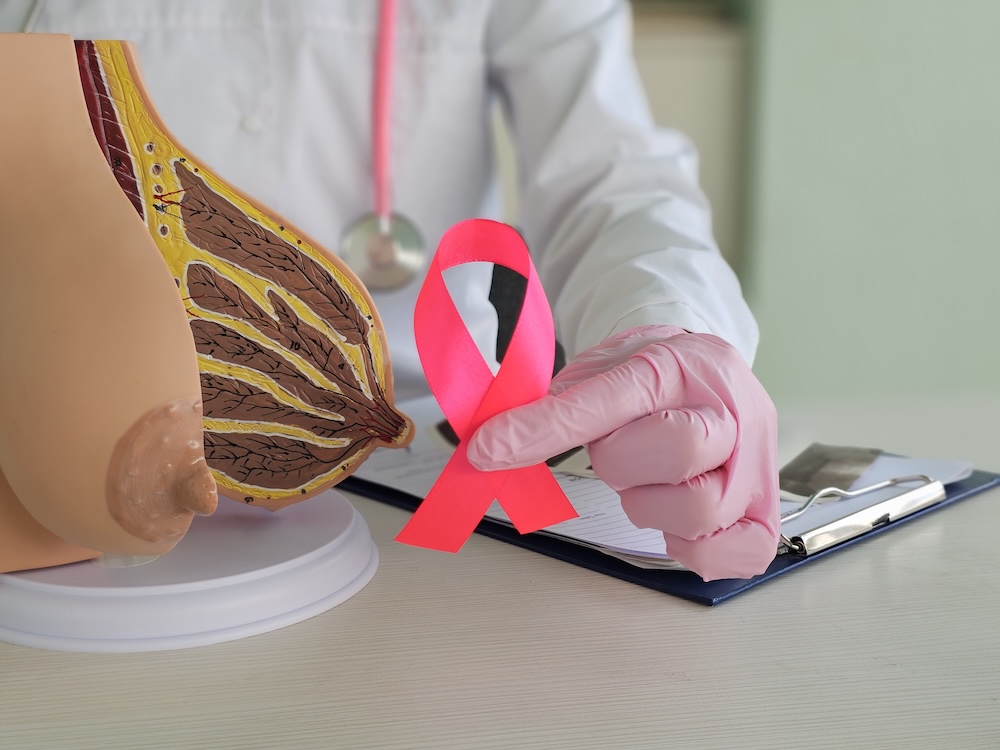
Obesity may reduce a fat-cell process that helps kill breast cancer cells, offering a possible explanation for its link to the disease, a study found.
The findings come from preclinical models, including breast tissue from donors.

The research team at Huntsman Cancer Institute at the University of Utah focused on adipocytes, the fat cells that make up much of breast tissue.
Adipocytes are larger in obesity than in lean tissue and create different environments around cancer cells.
Researchers found that lean adipocytes produced much more of a fatty acid called 9S-HODE than obese adipocytes.
9S-HODE promotes ferroptosis, a form of cell death that helps the body remove old and damaged cells, including cells that could be cancerous.
Cancerous cells died more readily in lean tissue, where levels of 9S-HODE were higher.
Meghan Curtin, first author and a doctoral candidate in molecular biology, said: “We found that the lean adipocytes produce much more 9S-HODE than obese ones. This means that cancerous cells die more readily in lean tissue.
“By producing more 9S-HODE, our bodies are actively protecting us, under lean circumstances, in a way it cannot with obesity.”
In preclinical mouse models, increasing levels of 9S-HODE in obese adipocytes suppressed breast cancer tumour growth.
The researchers believe this understanding could lead to better therapies.
Keren Hilgendorf, senior author of the study and an investigator at Huntsman Cancer Institute, said: “From a clinical perspective, this discovery is incredibly empowering. Because 9S-HODE is naturally present in the body but is lost with obesity, we may be able to restore this protection by putting it back.”
“That could become a very feasible therapeutic approach to slow breast cancer growth.
The researchers stressed that obesity is only one factor that contributes to breast cancer and that the disease can develop for other reasons.
They also said 9S-HODE appears to be produced mainly by fat cells in the breast, although fat cells elsewhere in the body may have a similar protective function that requires further research.


Menopause may not drive rising pulse pressure after midlife, with changes beginning up to two decades before the final menstrual period, a study found.
Pulse pressure, the gap between the upper and lower numbers in a blood pressure reading, is influenced by the stiffness and width of the aorta, the body’s largest blood vessel.
The analysis found that women’s pulse pressure reached its lowest point and began rising in their late 30s, around a decade earlier than in men, regardless of when menopause occurred.
Researchers analysed data from the Framingham Heart Study, a long-running study of cardiovascular risk factors involving three generations of families in Massachusetts.
The study included 6,760 adult women assessed at three health visits over 14 years. Women were grouped according to whether they were premenopausal or experienced early, average or late menopause.
Women whose menopause was induced by surgery or medication were excluded. Researchers also analysed data from 3,248 adult men to examine differences between the sexes.
Pulse pressure typically falls between early adulthood and midlife as the internal space within the aorta increases in diameter, allowing blood to flow more easily.
After midlife, pulse pressure tends to rise as the aorta stops widening and its walls become stiffer. A wider pulse pressure means the heart has to work harder and can contribute to damage in small blood vessels in organs including the brain and kidneys.
The researchers found that the age at which women’s pulse pressure changed from falling to rising was not affected by whether their final menstrual period occurred early, late or at a typical age.
After midlife, pulse pressure increased with age in both women and men, although it rose faster among women. Average pulse pressure was higher in women than men after the age of 60.
Gary F. Mitchell, senior author of the study, said: “To our huge surprise, our results suggest that factors other than the timing of the final menstrual period were likely involved in the accelerated increase in pulse pressure in women after midlife.”
The findings challenge the assumption that hormonal changes associated with menopause contribute to the increase in aortic stiffness seen among women later in life.
However, the observational study could not establish cause and effect. It also relied on participants reporting their age at menopause rather than researchers measuring oestrogen levels.
Most participants were of white European descent, meaning the findings may not apply to people from other racial or ethnic groups.
Wide pulse pressure is an independent risk factor for cardiovascular disease, dementia and kidney disease, according to the researchers, although pulse pressure is not currently included in clinical guidelines for managing blood pressure.
Mitchell said healthcare professionals should consider pulse pressure when assessing middle-aged and older people with high blood pressure, particularly women.
Samar R. El Khoudary, who was not involved in the study, said the findings did not mean menopause had no role in women’s cardiovascular health.
“Vascular aging may begin years before menopause, but that doesn’t mean menopause is irrelevant. The trajectory may accelerate as women enter perimenopause.
“We shouldn’t wait until menopause to start thinking about cardiovascular health.
“By the time a woman reaches her final menstrual period, vascular changes may already have been underway for years. Midlife is an opportunity to identify cardiovascular risk early and intervene before disease develops.”

Women with childbirth-related PTSD had healthcare costs 2.5 times higher than women without PTSD from six to 12 months after birth, a report found.
The analysis estimated that early prevention of traumatic births and childbirth-related post-traumatic stress disorder (PTSD) could save the NHS around £26m each year.
Women with PTSD were also less likely to have returned to work by 12 months after giving birth, suggesting potential longer-term employment and economic effects.
The report from City St George’s, University of London was launched at an All-Party Parliamentary Group (APPG) on Birth Trauma event on 10 September 2026.
Researchers calculated the potential NHS savings using the number of births reported in NHS hospitals in 2024-25 and the UK prevalence of childbirth-related PTSD.
Around one in 20 women in the UK develop PTSD following childbirth, while recent research has shown that the condition remains underdiagnosed.
The findings draw on research that tracked more than 2,000 women in England and Scotland from pregnancy to two years after birth. Researchers assessed mental health, use of health services and employment outcomes.
The research included assessments of childbirth-related PTSD and PTSD arising from other traumatic experiences. It also included a separate Birth Trauma Association survey examining women’s experiences of birth trauma.
Between six and 12 months after birth, healthcare and support service costs for women with childbirth-related PTSD were 2.5 times those of women without PTSD.
Women with low or moderate symptoms, including those reporting one or two PTSD symptoms, also had higher healthcare service costs than women without PTSD.
Just over half, 53 per cent, of women with PTSD had returned to work by 12 months after giving birth, compared with 68 per cent of women without symptoms.
Women with PTSD were more likely to be referred for mental health support, but more than half received no referral.
Those whose PTSD followed a traumatic birth also had slightly higher healthcare costs than women whose PTSD resulted from other traumatic experiences.
The researchers called for routine PTSD assessment and treatment during pregnancy and after childbirth, alongside greater access to specialist perinatal mental health services.
They also recommended training healthcare staff in perinatal trauma, trauma-informed care and identifying women at risk of PTSD.
The report said further research was needed to establish whether screening, treatments and trauma-informed care pathways are effective and evidence based.
The work follows the APPG’s 2024 Birth Trauma Inquiry, which highlighted the effects of birth trauma on women and families and called for evidence on its wider public health and societal costs.
The report focused primarily on healthcare use and did not attempt to calculate all costs associated with birth trauma and postnatal PTSD, including wider employment, family and societal effects.










 Entrepreneur2 weeks ago
KOVE Medical raises €1.7 million to improve safety of foetal surgery

 Pregnancy2 weeks ago
UK study aims to transform maternity care for high-risk pregnancies

 Fertility4 days ago
Paracetamol use may impact future fertility, studies suggest

 Entrepreneur1 week ago
Last chance to save on Women’s Health Week and Women’s Sport Summit: Early Bird pricing ends 11 September

 Hormonal health2 weeks ago
Menopause hormone treatment may ease brain fog, study suggests

 Menopause6 days ago
Cancer drug could tackle osteoporosis menopause weight gain

 News2 weeks ago
Spanish agency criticised for menopause guidelines based on male studies

 Fertility2 weeks ago
NHS IVF access review launched in Scotland