Connect with us

Diagnosis

Ark Surgical secures further institutional backing to accelerate US expansion
Published

on

Women’s health medical device company Ark Surgical has secured further institutional backing from JNF and the Israel Innovation Authority (IIA) as it accelerates the US commercial expansion of its surgical tissue containment technology.

Both organisations have previously backed Ark, making the renewed support a significant vote of confidence in the company’s technology, leadership team and commercial strategy as it moves into its next stage of growth.

The new backing comes alongside Ark Surgical’s ongoing Series A financing round, which has also attracted investment from physicians and experienced medical device executives, adding further industry validation as the company builds its US commercial presence.

The Israel Innovation Authority, Israel’s public agency supporting technological innovation, selected Ark Surgical for additional non-dilutive funding following an extensive evaluation process.

The assessment examined the unmet clinical need addressed by Ark’s technology, its clinical results, business and US go-to-market strategy, Israeli and US teams, execution against milestones and future product pipeline.

JNF, which supports economic development and community-building initiatives in Israel, has also increased its previous backing of Ark Surgical.

The relationship has particular significance given Ark’s roots in northern Israel. The company is headquartered near Nazareth in the Galilee and plans to continue strengthening its manufacturing capabilities in the region as its commercial presence in the US grows.

Together, the continued institutional support and investment from experienced healthcare leaders reflect growing confidence in Ark’s technology and its strategy for US expansion.

Stav Tori, CEO of Ark Surgical, said: “Having organisations that already know Ark, our technology and our team choose to support us again is particularly meaningful.

“It reflects our ability to consistently achieve the clinical, regulatory and commercial milestones we set and gives us additional resources to accelerate our expansion in the US.

“Our ambition goes beyond bringing another medical device to market.

“We want to help establish a higher standard of surgical safety for women undergoing minimally invasive procedures.”

Addressing an overlooked risk in women’s surgery

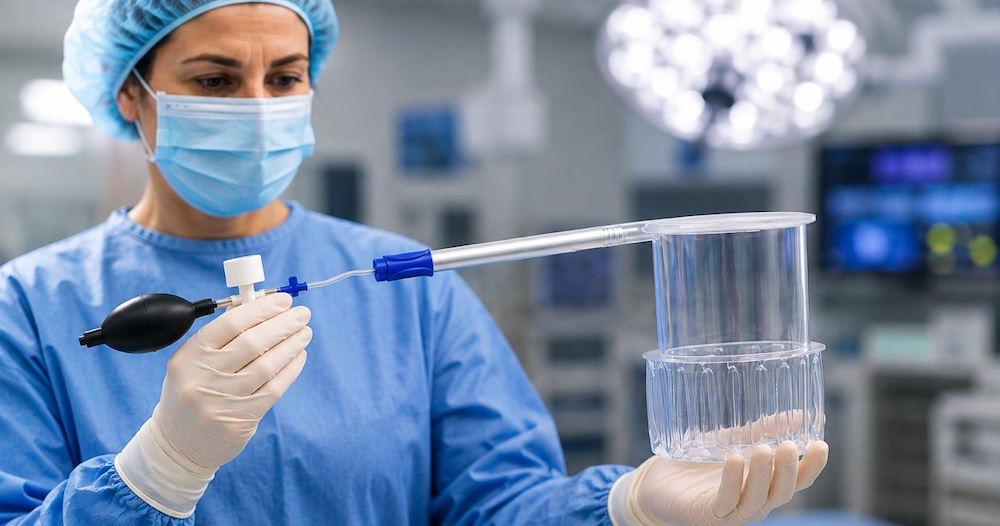
At the centre of Ark’s expansion is LapBox, the company’s FDA-cleared dual-wall tissue containment system developed to address an important safety challenge in minimally invasive gynecologic surgery.

Procedures such as hysterectomy and myomectomy can require large uterine specimens or fibroids to be divided into smaller pieces so they can be removed through small laparoscopic incisions.

This process, known as morcellation, carries a risk of disseminating tissue within the abdominal cavity.

In rare cases where an unsuspected malignancy is present, morcellation can spread malignant tissue and potentially worsen a patient’s prognosis.

But the risk is not limited to cancer.

Even benign uterine tissue can implant elsewhere in the abdominal cavity and grow, potentially resulting in complications such as parasitic fibroids and the need for additional treatment.

LapBox was developed as a dual-wall, bag-in-bag containment system that creates a secured chamber for tissue extraction. The device is FDA-cleared for use with both manual and power morcellation.

From clinical innovation to US adoption

Ark Surgical is now moving beyond its clinical and regulatory milestones to focus on broader commercial adoption.

LapBox™ has already been used in hundreds of procedures, while Ark has been expanding its presence within US hospitals and building relationships with leading minimally invasive gynecologic surgeons.

The latest institutional backing will support the next stage of that strategy, including additional hospital partnerships, key opinion leader engagement, sales leadership and clinical support.

Joseph LaBruzzo, President and CEO of U.S. Operations at Ark Surgical, said: “Ark has reached an important point in its development.

“We have the regulatory clearance, growing clinical experience and increasing engagement from US surgeons and hospitals.

“The focus now is execution and scale.

“What makes this continued backing particularly meaningful is that these are organizations that have followed Ark’s development and seen the team deliver against its objectives.

“Their decision to support the company again provides further validation as we build the commercial and clinical infrastructure needed for broader US adoption.”

That growing adoption is also being reflected in the experience of surgeons using LapBox.

Dr Ramon Yera, a minimally invasive gynecologic surgeon with more than 35 years of experience, said: “Once surgeons use LapBox, they realize this is the bag they should be using for their bread-and-butter procedures.”

Yera believes this reflects a broader shift in expectations around tissue containment in gynecologic surgery.

“Containment is no longer optional. It is an expectation.”

Ark Surgical is continuing its Series A financing round, with additional capital intended to support the next phase of US commercial expansion and development of its broader product pipeline.

Further information for prospective investors is available at ark-surgical.com/investment

Fertility

Jersey PMOS clinic a ‘good start’

Published

on

Jersey is launching a pilot PMOS health check clinic for women to improve follow-up care and access to specialist support.

The clinic will operate at the Assisted Reproductive Unit in St Brelade from October, providing health checks rather than diagnosing or treating the condition.

Women with polyendocrine metabolic ovarian syndrome (PMOS) will need to see their GP before being referred to the service.

Jessica Pinel, chair of PMOS Jersey, described the service as “a good start” but said more could be done.

She said the clinic was in line with draft guidance from the UK’s National Institute for Health and Care Excellence (NICE), which advises annual checks to identify health issues associated with the condition.

Pinel was diagnosed with PMOS in 2023 after spending more than £3,100 on treatment.

She said: “We need to realise that cost may be a barrier to people getting support, even if the cost is going to their GP. But I think we do have to be grateful that we have had this service approved.

“Because the clinic is part of the government health system, it allows for referrals to be made into different pathways like endocrinology, dermatology, so it could actually allow for better support and reduce costs for women with PMOS.

“I think it’s great to see things moving forward and, for women who are newly diagnosed, there’s going to be a more joined-up approach and we’re now taking the long-term health consequences of PMOS more seriously.”

PMOS, which was renamed from polycystic ovary syndrome (PCOS) in May, is a metabolic condition that changes how the ovaries work and affects up to one in eight women, according to the UK’s NHS.

The new name was introduced to reflect the condition’s effects across the body. PMOS has been linked to infertility and weight gain.

The Jersey government said the clinic would help women access further care for PMOS and associated conditions, including type 2 diabetes.

Screening clinic nurse Corrinne Purdy said reviews would take a holistic approach, covering medication, height and weight, sleep, management of the condition, fertility aspirations and mental health.

She said: “We will see whether they’re getting on alright with their medication, how they’re feeling about themselves; we will do height and weight reviews, we will ask them questions about their sleep, how they’re managing their condition.

“We will also speak to them about any particular fertility aspirations and how they’re getting with their mental health as well.”

Purdy said PMOS had been “overlooked” for a long time and that many women struggle with associated symptoms.

The government said women who require specialist management for heavy menstrual bleeding, fertility concerns or other gynaecological conditions would be referred to the appropriate specialist service.

It said existing waiting lists for gynaecology or surgical capacity would not be affected because additional clinical capacity had been identified.

Assistant Minister for Health and Social Services Andy Howell said many women “have been suffering” with PMOS and that the trial was intended to show “that we’re taking them seriously and they’re not going to be dismissed”.

Howell said funding for the clinic would be “managed within the budget that we have at the moment, so it’s not going to cost us any more”.

The Health Department was allocated £381m for 2026 as part of the government’s 2026-2029 budget.

The clinic will also offer investigations including ultrasound scans and endometrial biopsies during the same visit.

Howell said Jersey would base its review of the service on NICE guidance, while Pinel said feedback from women using the clinic would be shared with practitioners to help improve the support provided.

Continue Reading

Hormonal health

Major UK study could be a ‘game-changer’ for heavy periods and endometriosis

Published

on

A UK study will build a menstrual fluid biobank to help women get faster, better treatment for heavy periods.

Thousands of participants will provide menstrual fluid samples over three cycles using specially designed period pads. They will also use a daily tracking app and complete detailed questionnaires.

Researchers from the Universities of Exeter and Bristol will work with participants from two UK birth cohort studies, Children of the 90s and Born in Bradford.

Professor Gemma Sharp, of the University of Exeter, said that the study is set to be a ‘real game-changer’ for menstrual health research.

Sharp said: “We know that menstrual health is a key indicator of overall health, but a lack of high-quality data means it remains poorly understood and under-supported in healthcare.

“We also know that heavy periods can affect many aspects of daily life – for example, our recent research revealed an association between heavy periods, school attendance and lower GCSE attainment – so we urgently need new ways to support the millions of women affected by heavy periods more promptly and effectively.”

The CycleTrack study aims to create the world’s largest menstrual fluid biobank for people in their mid-30s.

By combining these samples with long-term health and genetic data, researchers hope to identify biological signals linked to differences in periods and related conditions.

Researchers hope the findings could support earlier diagnosis, better care plans and tools to identify risks including iron deficiency.

The study is part of The Missed Vital Sign, a programme led by Wellcome Leap that contributes to a broader global effort to reduce the time it takes a woman to receive effective treatment for heavy menstrual bleeding from five years to five months.

Up to 50 per cent of women worldwide experience heavy periods, which can significantly affect physical, emotional and social wellbeing.

Researchers say the work could also improve understanding of menstrual health more broadly and help inform future school and workplace guidance.

Continue Reading

Diagnosis

Millions in England to be offered ‘gamechanging’ home testing kits for cervical cancer

Published

on

Millions of women who have missed cervical screening in England will be offered free NHS home HPV tests.

The initiative is aimed at women who are not up to date with screening, with NHS estimates suggesting as many as 4 million have fallen behind.

The home kits contain a swab for collecting a vaginal sample, which is returned to the NHS free of charge and tested in a laboratory for high-risk human papillomavirus (HPV).

If high-risk HPV is detected through a home test, patients will be asked to attend a cervical screening appointment with a clinician.

HPV is a group of viruses that can be passed on through sexual contact and cause no symptoms. About 13 high-risk types are known to cause 99.7 per cent of cervical cancers.

Starting on Tuesday, eligible women aged between 30 and 65 who have not attended screening appointments will receive invitations through the NHS app, text message, email or letter.

They will then be able to order a testing kit through the NHS app or website.

The scheme is part of the NHS’s target to eliminate cervical cancer by 2040.

Dr Sue Mann, national clinical director for women’s health at NHS England, said: “Screening saves thousands of lives each year by preventing cancers and catching them earlier, but only around two-thirds of women are attending cervical screening appointments when invited by the NHS.

“Offering millions of women an alternative test they can do from the comfort of their own homes will be a gamechanger – making it easier than ever for them to get tested for HPV.”

Women aged between 24 and 64 are invited for cervical screening every five years, or more often if HPV is detected.

NHS England figures show 68.8 per cent of eligible women are up to date with cervical screening, below the 80 per cent target.

Mann said: “There are lots of reasons that may stop women from getting their cervical screening – embarrassment, lack of time, or worries about discomfort – and these kits provide a discreet and convenient option we hope will encourage more women to take up the life-saving test.

“So, if you’re invited to take part, please order a test – it’s a simple swab you can do at home in minutes.”

Athena Lamnisos, chief executive of the Eve Appeal, welcomed the move, saying that self-testing at home would be a “step-change” for many women.

Michelle Mitchell, chief executive of Cancer Research UK, said: “Cervical screening is a powerful tool that saves lives – it can prevent cervical cancer or spot it at an earlier stage when treatment is more likely to be successful.

“While it’s best for cervical screening to be done by a nurse or doctor, there are barriers that make it challenging for some people to attend. At-home HPV self-testing kits will help more people take part in a way that works for them.”

Health secretary Yvette Cooper said the aim was to make it as easy and convenient as possible for women to keep up with their screening.

She said: “This is the future NHS we are building – there for all of us when we need it, and acting as early as possible to stop preventable deaths.”

Continue Reading

Trending

Copyright © 2025 Aspect Health Media Ltd. All Rights Reserved.