




AI
Entries for the Femtech World AI Innovation Award close this Friday


Entries for the Femtech World AI Innovation Award close this Friday at 4pm BST.
Now in its third year, the Femtech World Awards recognise the best examples of leadership, innovation and impact across women’s health.
The AI Innovation category, introduced in 2025, honours an individual or organisation pioneering the use of AI to transform women’s health outcomes.

The award is sponsored by Women’s Health Week, whose flagship women’s health conferences across Europe and the USA unite the complete ecosystem.
This includes visionary founders, strategic investors, multinational corporations, and specialised service providers – accelerating life-changing solutions that address women’s most critical unmet health needs.
To win the award, you’ll need to have demonstrated groundbreaking progress in applying AI to improve diagnosis, treatment accessibility or overall health outcomes for women, pushing the boundaries of what’s possible to create a more inclusive and equitable healthcare future.
The award is open to startups and established companies alike, whether you’re early-stage or scaled, UK-based or a global entrant.
If your technology uses AI to address any aspect of women’s health, you’re eligible to enter.
The Femtech World Awards are completely free to enter.
Whether you win or are shortlisted, you’ll receive extensive coverage across all Femtech World platforms.
Winners also receive a trophy and the chance to be interviewed by the Femtech World team.
Learn more about the awards and enter for free here.





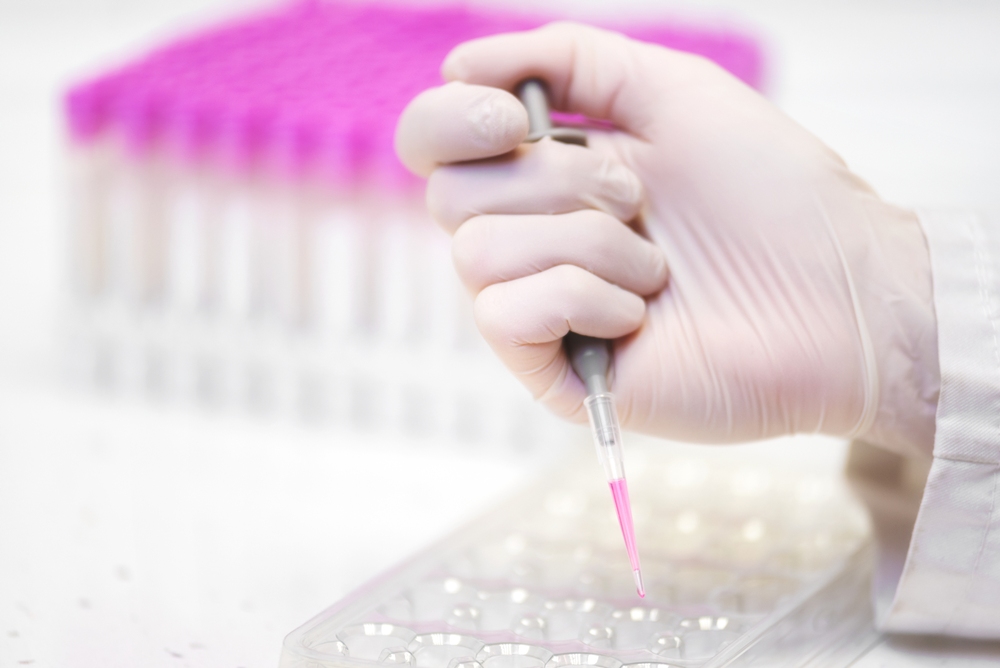
Evvy has raised US$40m to expand its vaginal microbiome platform into reproductive healthcare, starting with fertility and IVF.
The series B funding will also support the expansion of EvvyAI, the data and artificial intelligence platform behind the company’s vaginal healthcare business.
The round brings Evvy’s total capital raised to nearly US$60m across three funding rounds since its launch.

Priyanka Jain, Evvy chief executive and co-founder, said: “Thirty per cent of infertility is categorised as unexplained.
“When you think about the immense emotional and financial effort required to produce a healthy embryo, transferring that embryo into an unexamined, inflamed environment is heartbreaking.
“By measuring and modulating the microbiome proactively, we can tangibly improve clinical outcomes.”
Evvy says it has served more than 100,000 patients and partnered with 3,000 healthcare practitioners.
The company also says 96 per cent of patients opt to contribute their data anonymously to clinical research, contributing to its dataset on the vaginal microbiome and women’s health outcomes.
Its vaginal microbiome testing uses metagenomic sequencing.
Evvy’s at-home Vaginal Health Test analyses more than 700 bacteria and fungi from a vaginal swab and provides clinician-reviewed results, personalised insights and access to prescription treatment where appropriate.
The company’s fertility work builds on 13 peer-reviewed publications and studies conducted in 2025 involving more than 1,000 real-world patients.
The funding round was led by Catalio Capital and included U.S. Fertility through its U.S. Fertility Innovation Fund and Labcorp Venture Fund.
Existing investors General Catalyst, Left Lane Capital, BBG Ventures, Amboy Street Ventures, Ingeborg and Foreground Capital also participated.
Jacob Vogelstein, co-founder and managing partner at Catalio Capital, said: “Its combination of proprietary data, clinical evidence and a growing biomarker discovery engine creates an entirely new foundation for precision women’s healthcare.
“We believe Evvy is building the data platform that will define this category for decades to come.”
Evvy has also expanded into UTI testing, probiotics, suppositories and other vaginal health treatments.


AI may help detect heart disease in women from routine mammograms, according to research involving almost 30,000 women.
Researchers found a machine-learning model could distinguish women with coronary heart disease, high blood pressure or a previous stroke using mammogram images.
The findings suggest breast cancer screening could potentially also flag cardiovascular problems without requiring an additional imaging examination.
Dr Viana Copeland, from Tel Aviv University, presented the findings at the European Society of Cardiology’s annual congress in Munich.
The researcher said: “Despite being the leading cause of death in women worldwide, CVD [cardiovascular disease] is consistently underdiagnosed and undertreated.
“A common finding in our medical centre, and around the world, is that when women do seek medical help, their CVD is already advanced.
“On the other hand, many women do attend routine breast cancer screening, even when they haven’t sought care for cardiovascular symptoms.
Researchers in Israel analysed 97,364 mammogram scans from 29,921 women with an average age of 54 and cross-referenced the images with their medical records.
Among the women, 16 per cent had high blood pressure, 2.5 per cent had coronary heart disease and 2.5 per cent had experienced a stroke.
A machine-learning model was trained to identify women with these conditions.
Using mammograms alone, the model could distinguish women who had experienced a stroke from those who had not 86 per cent of the time.
For high blood pressure, the figure was 79 per cent, while for coronary heart disease it was 78 per cent.
The results were consistent regardless of age or whether a woman also had cancer.
Copeland said analysing existing mammograms for information about cardiovascular health “could potentially offer a scalable approach without requiring an additional imaging examination”.
“Mammography also reaches many women in midlife, an important period for recognising and addressing cardiovascular risk.”
Researchers are working to improve the model’s accuracy, reduce false results and increase the number of heart conditions it can identify.
Elena Arbelo, an expert member of the European Society of Cardiology communication committee, described the findings as “compelling”.
“A mammogram may one day do more than look for breast cancer – it may also offer a window on to cardiovascular health. That matters because CVD in women is still too often recognised late.”
She added: “The challenge now is to establish accuracy and reliability – to move from experimentation to clinical implementation.”

Sahar Abid is a Science Associate at Ema EQ, where she works on cultural sensitivity and bias in AI.
A woman asks an AI health assistant about postpartum depression.
She mentions that her in-laws are telling her to “push through” and skip medical help, even as her symptoms get harder to manage. She never says where she is from or names her background.
The assistant describes the condition and gives her a hotline number. It sounds correct, but it misses what she needs.
That gap is more common than the industry admits, and it points to a blind spot in how we test health AI for bias.
Most bias testing looks at what people explicitly say.
The typical way to check an AI for bias is to label a prompt with someone’s demographic details and see if the answer changes. That catches some problems but misses a bigger one.
Most people do not lead with their identity. They lead with their situation. The woman above told the assistant everything it needed to help her, just not in the form of a label.
Her real question was not only “what is postpartum depression?” It was “how do I get care when the people around me don’t want me to?
When family members hold sway over health decisions, and in many communities they do, advice that asks someone to overrule their family is not something they can act on.
The AI didn’t say anything factually wrong. It answered a different question than the one she was living.
We call this culturally implicit bias, meaning the AI misses the cultural context a situation implies rather than the context a person spells out.
When systems are trained to notice only the explicit cues, they fall back on a default answer built for the majority. For everyone else, the response can feel generic, off-target, or discouraging enough that they stop looking for help.
In health, that is not small. The people most likely to be missed are often the ones the system already underserves.
What we set out to test.
At Ema, we wanted to know how well AI picks up on cultural context that is implied but never stated. So we built our own way to test for it, across a range of communities and real situations like postpartum depression and fertility, using questions that carried cultural meaning without announcing it.
The patterns were consistent. Models often missed the meaning underneath the question. They dropped the specific details a person did share and smoothed them into something generic.
And even when they pointed toward real care, they tended to offer one option instead of choices that might actually fit a person’s life. Any one of those can be the difference between someone following the advice and walking away from care.
Why this matters for anyone building health AI.
Getting this right is the right thing to do, and it also works better.
When an answer reflects a person’s real context, people trust and act on the recommendations more, so they get the help and support they need.
Testing for it is harder than the shortcut most teams use. Swapping a name or a demographic label in and out is easy. Checking whether a model actually understands the human context around a question takes more care.
The shortcut teaches models to perform cultural competence instead of practicing it. No matter how much or how little someone chooses to share, they deserve an answer that is warm, complete, and usable.
A better question.
The bar for equitable health AI should be “does it serve someone who never told you who they are?” It is the harder test, but it determines whether real people get help.
The work of getting there is far from finished, and it is exactly what we are building toward at Ema.
Sources: Naidoo, V., & Chadha, K. K. (2025), Culturally responsive AI chatbots: from framework to field evidence, Computers in Human Behavior: Artificial Humans. Souligne, N., & Subbian, V. (2026), FairLogue: A toolkit for intersectional fairness analysis in clinical machine learning models.





 Menopause6 days ago
Menopause may not explain rising heart condition in women – study

 Fertility1 week ago
Paracetamol use may impact future fertility, studies suggest

 Entrepreneur2 weeks ago
Last chance to save on Women’s Health Week and Women’s Sport Summit: Early Bird pricing ends 11 September
 Insight7 days ago
Women with birth trauma face 2.5x higher healthcare costs – study

 Menopause2 weeks ago
Cancer drug could tackle osteoporosis menopause weight gain

 News6 days ago
Medical cannabis may improve endometriosis symptoms – study
 Cancer6 days ago
Study could explain why obesity is a breast cancer risk factor

 Diagnosis2 weeks ago
FDA approves AstraZeneca breast cancer drug