




News
The six best period tracking apps for 2025

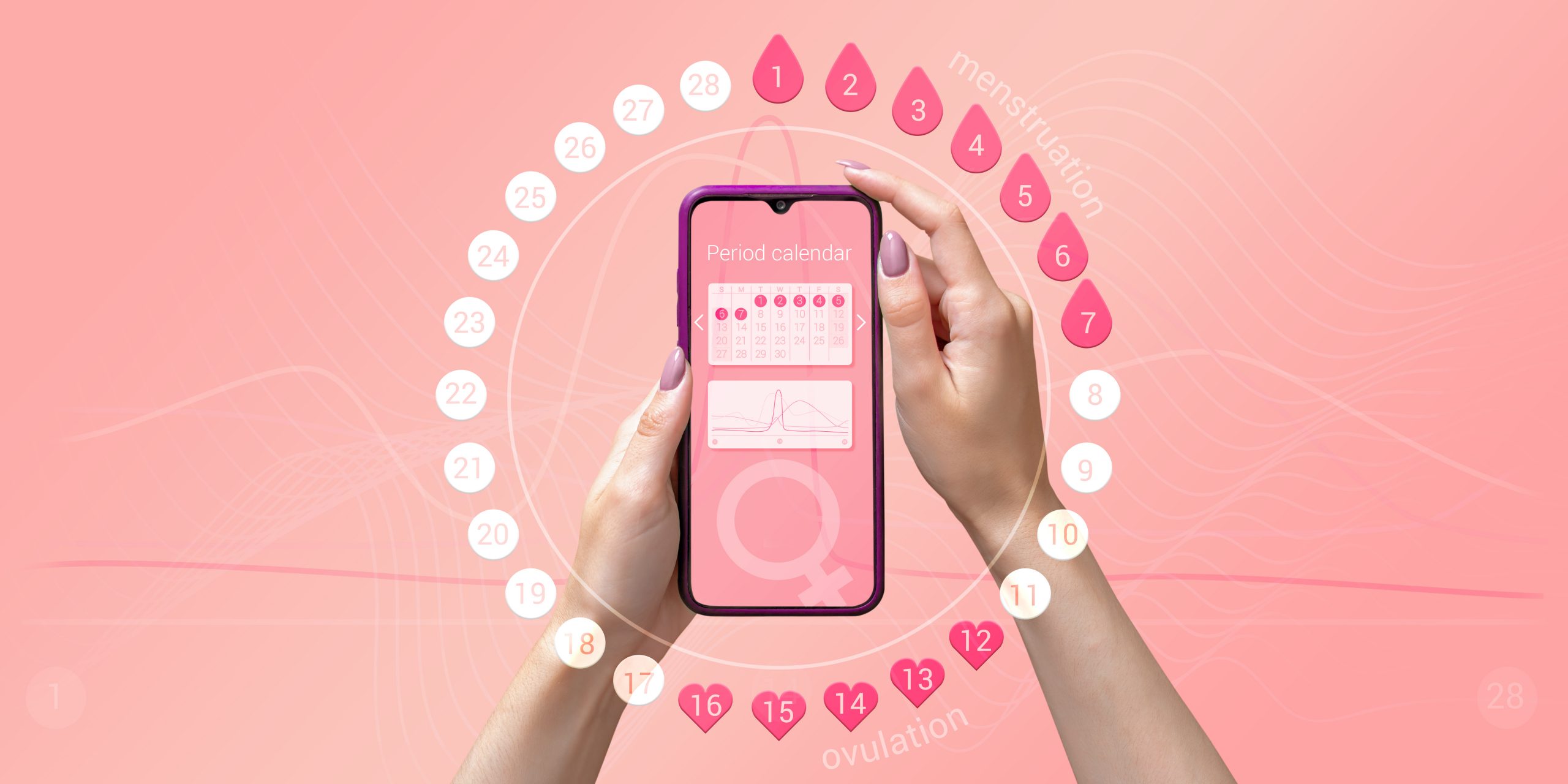
Period tracking apps have become a cornerstone of the femtech revolution, with more than 50 million women worldwide now monitoring their cycle each month. Here’s six top-rated menstrual health apps to simplify your search.
Beyond just predicting your period, these apps can offer valuable insights into your body, help manage symptoms, and even flag potential health concerns.
Tracking your cycle empowers you with knowledge about your ovulation and fertility windows. If you’re planning a pregnancy or practicing birth control, knowing these patterns can be a game-changer.
Many people experience shifts in mood, energy, and physical well-being throughout their cycles, logging these patterns can allow you to anticipate symptoms better and take steps to reduce their impact.
Changes or irregularities in your cycle can also point to underlying health conditions like hormonal imbalances, thyroid issues, or PCOS. While they aren’t a replacement for medical advice, tracking your cycle can alert you to something that’s not quite right.
However, as demand for these products has increased, so has the number of apps coming to market. In 2023, the global menstrual health apps market was valued at USD 1.87 billion and a quick search of the app store brings up dozens of different options. So how do you know which one is right for you?
We’ve curated a list of six top-rated period tracking apps to simplify your search.
Nexus
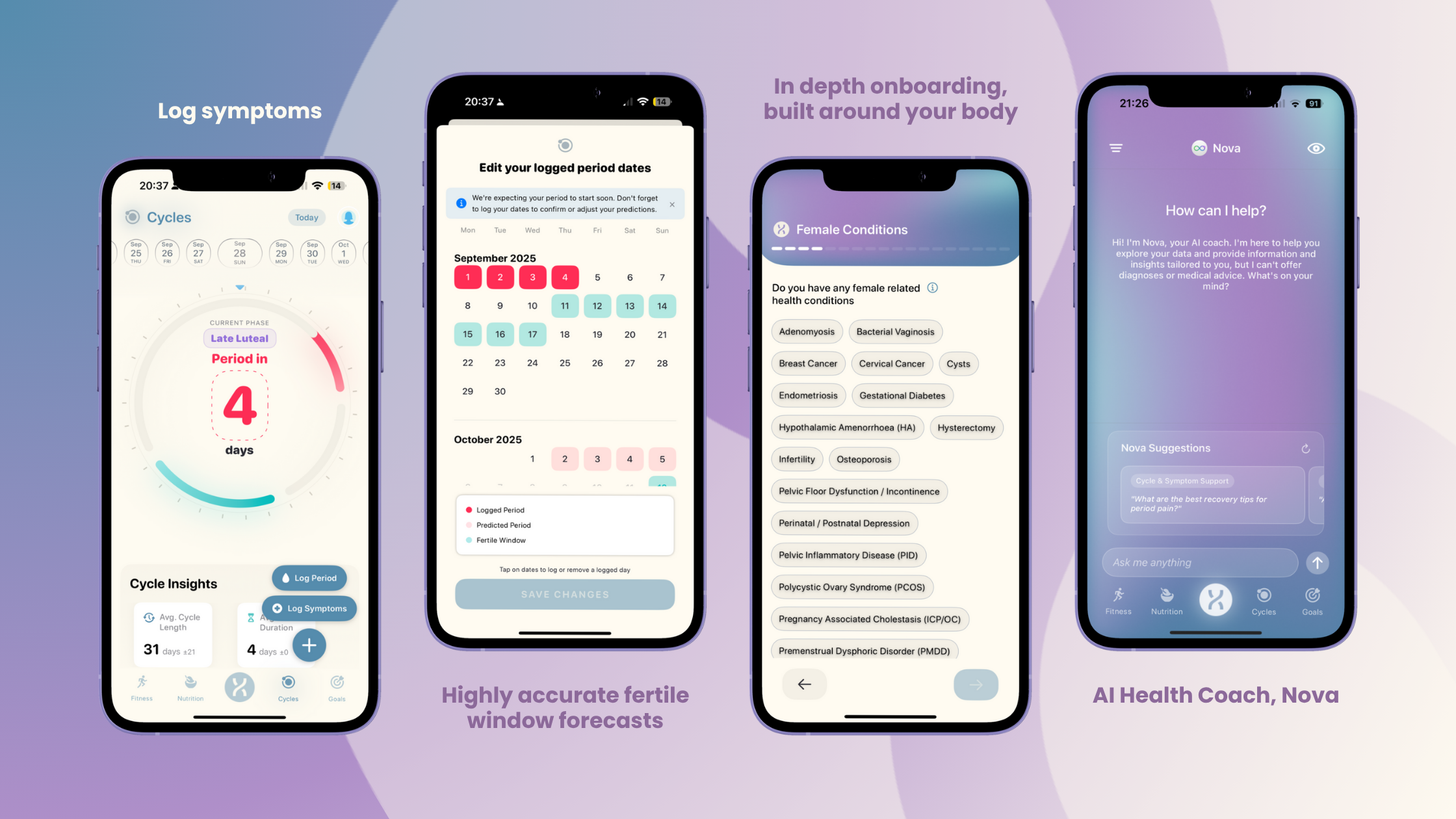
Nexus isn’t just a cycle tracker, it’s a holistic women’s health coach which includes a cycle tracker but also nutrition, exercise and more to give you a more comprehensive experience when engaging with Nova, your AI coach
Nexus bridges this gap with a female-specific onboarding process offering over 50,000 unique combinations of personalised wellness insights.
With Nova, users also have access to an AI coach that truly knows them, offering adaptive, actionable guidance grounded in science and tailored to each woman’s unique physiology and life stage.
The vision behind Nexus is to give women control over their own health data, using it to improve conversations with healthcare providers, reduce medical gaslighting and accelerate diagnosis times through advocacy and education.
At the heart of Nexus lies a proprietary large language model (LLM) and peer-reviewed health database, built specifically for women.
This architecture blends medical research, clinical guidelines and user data to generate precise recommendations, far surpassing the capabilities of off-the-shelf AI systems.
- Built by medical professionals and scientists. Our team of experts have built, reviewed and tested this product.
- AI-powered health coach Nova, built from scratch to handle the bias and hallucinations for women’s health with AI
- Personalized experience: Nexus adjusts predictions and recommendations to each user’s unique cycle and health characteristics.
- Nexus is free with no upsales or features behind the pay wall.
- 5* reviews in the App Store.
- Your data is private. We don’t share your personal data with the AI model or any 3rd parties.
Nexus is only available on the UK Apple app store currently. You can download the app here or join the international / Android waitlist here. Coming early 2026.
Femia app

Femia is a fertility and pregnancy tracking app with a mission to empower women with knowledge about their bodies, making their fertility journey more personalized and smooth. Femia is supported by cutting-edge AI and provides outstanding support for period and ovulation tracking, helping over 35,000 users achieve their dream of conceiving by mid-2024.
Femia app combines science-backed tools with an intuitive design and nice animations to provide a top-notch experience for all users. With its effortless cycle tracking, the app predicts ovulation and menstrual phases with remarkable precision. Users can log various symptoms like mood changes, vaginal discharge, and physical activity to receive tailored insights that help identify fertile windows or early pregnancy signs.
For those planning a pregnancy, Femia’s Fertility Card highlights key cycle dates directly on the Home screen, simplifying family planning. Since early 2024, Femia has included a Pregnancy Mode to continue journey with those users who got pregnant. It allows moms-to-be to easily monitor their health, track their baby’s growth and development, and receive personalized health tips at every stage of pregnancy.
What sets Femia apart:
- Science-backed and expert-reviewed: All content is curated by OB/GYNs, fertility specialists, psychologists, and fitness experts.
- AI-powered health assistant (Mia): Available 24/7, Mia answers fertility questions and guides users through each cycle or pregnancy phase, based on the user’s logged symptoms, ensuring relevant information is always at hand.
- Personalized experience: Femia adjusts predictions and recommendations to each user’s unique cycle and health characteristics.
- Global trust: With over 1.4 million downloads worldwide, Femia supports users in 10+ languages, with Spanish speakers making up 16% of its base.
- Budget-friendly: Femia brings powerful features at a price that fits your budget. With flexible pricing, you get high-quality performance without the high costs.
- Unwavering data privacy: Femia ensures your personal information is secure, providing peace of mind.
Loved by users across platforms, Femia App is rated 4.9 stars on the App Store and 4.7 stars on the Play Market. Whether you’re tracking your cycle, planning a pregnancy, or monitoring your pregnancy journey, Femia delivers exceptional value and insight every step of the way.
Discover the future of fertility tracking—Try Femia today!
Stardust

Founded and built by women, Stardust is the ultimate cycle-informed health tracker that helps you truly understand your body in a whole new way. Combining period, hormone, and pregnancy tracking with modern science and ancient wisdom like lunar syncing, Stardust offers a complete view of how your cycle shapes your overall well-being. Unlike traditional trackers that focus only on ovulation, Stardust gives you personalized insights that go beyond predictions, diving deeper into every phase of your health journey.
What makes Stardust stand out? It’s the only tracker that lets you share your cycle with friends and follow theirs too, creating a supportive community around your health. Plus, the partner version helps keep your partner in the loop with phase-specific updates, so they can support you through every phase. With integrations like Oura, your everyday data becomes a source of wonder, revealing hidden patterns and connecting the dots between your cycle, sleep, energy, and more.
Stardust is free to download, offering an easy and insightful way to stay in tune with your body, whether you’re tracking your period, planning a pregnancy, or navigating the journey to parenthood. With secure data encryption, Stardust is setting a new standard for body literacy, empowering you to make informed decisions every day.
luna

luna is on a mission to be the go-to digital health and wellbeing companion for teens throughout adolescence, co-piloting with parents along the way.
By taking a holistic approach to adolescent health, luna empowers teens and their families to navigate the tricky terrain of adolescence together, from understanding periods to tackling skin issues, mental health, and friendship struggles.
On the luna app (search ‘we are luna’ on App Stores), teens can track their periods, moods, sleep, and skin, receiving personalised insights and actionable recommendations tailored just for them. They also have a safe space to ask anonymous questions and learn from articles, videos, and quizzes – all verified by a team of doctors and safeguarding experts.
The app also enables parents to gain on-the-pulse insights and advice that’s tailored to the real issues facing teens today. Through a dedicated parenting newsletter, parents receive guidance on everything from social media trends to watch out for, to news stories and how to foster open, meaningful conversations.

With luna, parents and teens don’t just co-exist through the ups and downs of adolescence – they thrive together. The app equips teens with tools to understand their bodies, build confidence, and reach out for support when needed – the first of its kind. At the same time, parents are empowered with resources to guide and support their teens through their formative years.
Other member benefits include exclusive discounts through partnerships with aligned health and wellbeing brands, such as Gymshark, free access to webinars run by adolescent experts, plus so much more.
Whether you’re a parent looking to find out what teens of today are really thinking about, or a teen in need of advice and empowerment, sign up to luna and discover how it can help you.
luna is so much more than a tracker – it’s a female-founded community and an absolute necessity to help both parents and teens thrive through adolescence.
Learn more at weareluna.app or sign up for the parenting newsletter here.
Clue

Clue is a Berlin-based, women-led menstrual and reproductive health app that harnesses the power of full cycle intelligence to help you understand your body’s inner workings, beyond bleeding.
What do people who use Clue love the most? No pink. No myths. And no taboos. Clue is an intuitive, science-based, data-driven cycle health tracker with 100+ different tracking options and a powerful algorithm to help you live a life more in sync with your full cycle – not just to predict your period (although it does that too!).
Loved by over 10 million monthly active users across 190+ countries, and available in 20+ languages, the Clue app intuitively guides you through each cycle, change, and choice. From general cycle health awareness and education to fertility, pregnancy, and even navigating perimenopause.
New in 2024, is Clue’s My Health Record feature which uses de-identified data for good, to help close the diagnosis gap for female health conditions.
You can enter confirmed diagnoses for up to 21 different health conditions including endometriosis, polycystic ovary syndrome (PCOS), premenstrual dysphoric disorder (PMDD), uterine fibroids, bleeding disorders, anxiety disorders, and more. With this feature, the Clue community is collectively building an unprecedented dataset linking confirmed diagnoses and tracked cycle data to enable impactful research on the most commonly misdiagnosed and under-researched female health conditions.
The Clue app is free to download and you can unlock deeper insights and additional personalised modes like Clue Conceive, Clue Pregnancy, and Clue Perimenopause with the premium subscription, Clue Plus.
For more, visit helloclue.com.

Premom blends period tracking with powerful ovulation and hormone insights—ideal for anyone who wants to get in sync with their body or is actively trying to conceive.
What makes Premom different? It combines detailed hormone tracking with an AI-powered algorithm that learns from your unique data.
By logging ovulation test results (with digital test reading), basal body temperature (BBT), cervical mucus, you help Premom predict your ovulation and period with greater accuracy—even if your cycles are irregular.
The app includes a simple period and ovulation calendar, plus automatic BBT and ovulation charting, making it easy to spot your fertile window, hormone patterns, and cycle shifts—all in one smart, easy-to-read chart.
Developed by the makers of Easy@Home ovulation tests, over 1 million users have gotten pregnant while using the Premom app*.
Not wanting to wait any longer to conceive? FastPass™ to Pregnancy offers a clear, guided plan to help you get pregnant faster—with smarter ovulation predictions, weekly expert check-in videos, and personalised cycle tips, all backed by data.
Need help interpreting your results or deciding what to do next? Fertility AI Pro gives you personalised, real-time responses based on your hormone test results and logged cycle data—so you’re never left guessing.
Premom also includes a Pregnancy Mode, offering weekly development and body change updates, symptom tracking, and expert tips to support you through every trimester.
And with the Predad™ feature, partners can get synced up, too—giving them insights and tips to be more involved and supportive from conception thru pregnancy.
Want even more support?
Premom Premium unlocks advanced reports, webinars led by fertility experts, and extra tools like a PCOS self-assessment to help you feel more informed and empowered throughout your reproductive journey.
The Premom app is free to download, with the optional upgrades for added support.
Learn more at www.premom.com.
*Over 1 million users logged pregnancy or positive pregnancy test results while using the Premom App



Women accounted for 71.4 per cent of global health workforce growth between 1990 and 2023, according to a study covering 204 countries and territories.
The global workforce almost tripled over the period, rising from 40.9m to 122.1m workers.
Women represented 68.9 per cent of all health workers in 2023, but remained concentrated in professions that generally offer lower pay and fewer leadership opportunities.
The study analysed 20 groups of specially trained health personnel, including doctors, nurses, midwives, pharmacists, dentists and community health workers.
Between 1990 and 2023, the workforce grew by more than 81m people, including an additional 18.9m nurses and 8.7m doctors.
In 2023, there were 33.2m nurses, 15.1m doctors, 7.6m community health workers, 6.8m pharmacists and pharmaceutical assistants, and 6.1m dentists and dental assistants worldwide.
Women made up 80.7 per cent of nurses, 96 per cent of midwives and 89.5 per cent of community health workers, while fewer than half of doctors were women.
A similar pattern was seen in dentistry and pharmacy, where women were more likely to work as assistants than as dentists or pharmacists.
Megan Knight, lead author of the study and researcher at the Institute for Health Metrics and Evaluation, said: “Women have transformed the global health workforce over the past three decades, but they continue to be concentrated in professions that generally offer lower pay and fewer opportunities for leadership.
“Building stronger health systems will require not only expanding the workforce, but also creating equitable opportunities for career advancement, leadership, and safe, supportive working environments.”
Despite the growth, researchers estimated that an additional 34.4m doctors, nurses, midwives, dentists and pharmacists would be needed to achieve moderate levels of universal health coverage.
Universal health coverage means people can access essential health services without experiencing financial hardship.
The estimated global shortage includes 23.9m nurses and midwives, 7.1m doctors, 1.8m dentists and 1.6m pharmacists.
South Asia had the largest estimated shortages, requiring an additional 2.6m doctors and 10m nurses and midwives to reach the study’s benchmark for moderate universal health coverage.
Sub-Saharan Africa also had substantial shortages. Nursing density was estimated at 14.5 nurses per 10,000 people, compared with 121.8 per 10,000 in high-income countries.
At country level, there were 3.2 nurses per 10,000 people in Chad and 3.3 in Madagascar, compared with 171.7 in Belgium and 161.4 in the US.
Dr Annie Haakenstad, senior author of the study and assistant professor of health metrics sciences at the Institute for Health Metrics and Evaluation, said: “Health workers are the foundation of every health system.
“Although the global workforce has expanded dramatically, millions more doctors, nurses, midwives, dentists, and pharmacists will be needed to ensure people everywhere can access essential health services.
“These findings provide countries with minimum thresholds for planning the workforce needed to strengthen health systems and move toward universal health coverage.”
The study estimated that moderate universal health coverage was associated with minimum workforce densities of 23.8 doctors and 64.5 nurses and midwives per 10,000 people, alongside 5.2 dentists and 5.6 pharmacists per 10,000.
Researchers said closing workforce gaps would require continued investment in education, recruitment, retention and working conditions.
They also highlighted gender-responsive policies, including leadership development, workplace protections, paid parental leave and flexible work arrangements, as measures that could support a predominantly female workforce.
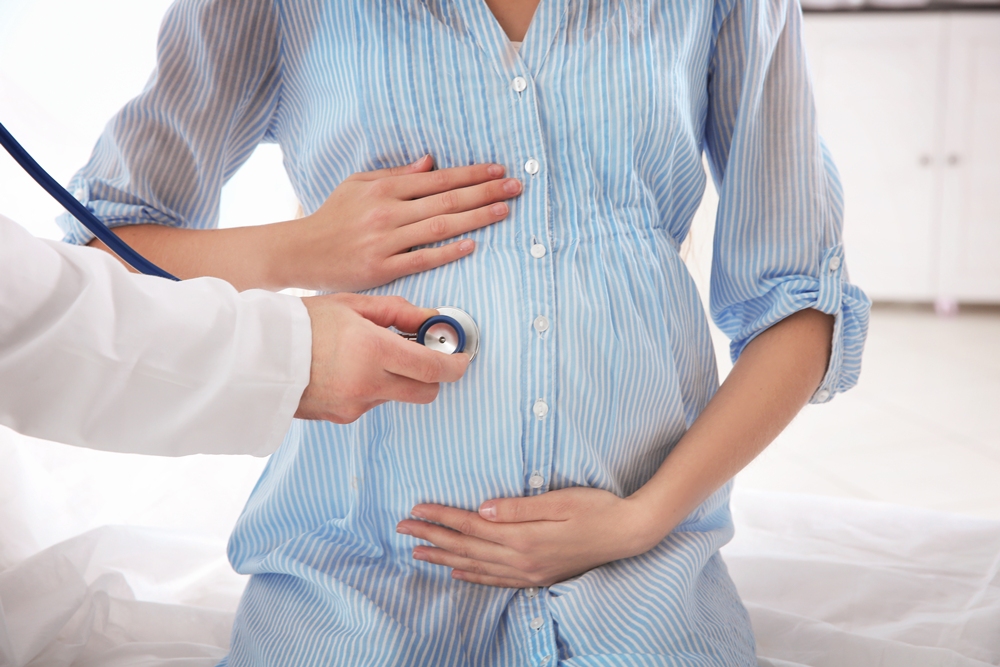
Women entering pregnancy with multiple conditions face a 20 per cent higher miscarriage risk and around four times the risk of anxiety and depression, new research has revealed.
The observational study found women with two or more pre-existing long-term physical or mental health conditions also had a 69 per cent higher risk of severe nausea and vomiting.
They had more than double the risk of venous thromboembolism, when a blood clot forms inside a vein, and a 42 per cent higher risk of pre-eclampsia, a pregnancy complication involving high blood pressure.
Dr Steven Wambua, research fellow in health data science at King’s College London and joint first author, said: “Maternity care is still largely organised around single health conditions, but one in five women now enters pregnancy with two or more.
“By harmonising five datasets covering all four UK nations, we could show consistently and across a much broader range of outcomes than before, that these women face higher risks and that risk climbs with every additional condition.”
Researchers from King’s College London, Queen’s University Belfast, Bristol NHS Foundation Trust, the University of Birmingham, Swansea University and the University of St Andrews analysed more than 2.2m pregnancies and birth events recorded between 2000 and 2022.
The data came from five datasets covering England, Scotland, Wales and Northern Ireland.
Around one in five pregnant women in the UK live with multiple long-term conditions, but their combined impact on pregnancy is poorly understood.
The study found risks rose with each additional condition. Women with three or more conditions had more than three-and-a-half times the risk of venous thromboembolism compared with women without long-term health conditions.
Women with multiple conditions also had a 32 per cent higher risk of placental abruption, when the placenta separates from the womb before birth, and a 26 per cent higher risk of gestational diabetes.
The researchers said maternity care pathways vary considerably and, where they exist, are often organised around individual conditions.
They said the findings highlight a need to restructure these pathways to address the complex needs of women living with multiple conditions.
Professor Krishnarajah Nirantharakumar, clinical professor of public health and health data science at King’s College London, MuM-PreDiCT principal investigator and joint senior author, said: “These findings make a strong case for recognising multiple long-term conditions as a marker of antenatal risk in its own right.
“That means identifying these women at maternity booking, assessing physical and mental health needs together, and joining up obstetric, primary care and mental health services around them.
“The near four-fold risk of antenatal anxiety and depression is particularly striking, and points to perinatal mental health support as an urgent priority.
Dr Kelly-Ann Eastwood of Bristol NHS Foundation Trust and Queen’s University Belfast, joint senior author, added: “Our results help define the urgent clinical challenges facing both women entering pregnancy with multiple long-term conditions, and clinicians caring for them across the UK.
“Supporting recommendations from recent national maternity and neonatal investigation reports, there is a critical need to address healthcare inequalities, and improve support for women with pre-existing mental health conditions.
“These findings highlight the pressing need to restructure existing maternity services to improve antenatal outcomes.
The authors cautioned that, because the study used routinely collected health records, some conditions and outcomes may have been under-recorded or recorded inconsistently.
Further work by the MuM-PReDiCT consortium will examine birth and child outcomes and identify which combinations of long-term conditions carry the greatest risk.

Women using PIEDs reported difficulty accessing reliable information, testing and clinical expertise, according to a qualitative study.
Researchers interviewed nine women who used performance- and image-enhancing drugs, primarily to enhance body composition, physical appearance or sporting performance.
Participants reported problems accessing comprehensive blood and hormone testing and finding clinicians familiar with health concerns linked to women’s use of these drugs.
This has been a male-dominated area of research for a long time, so there are significant gaps in understanding women’s health care needs.
The research, led by University of Queensland School of Psychology PhD candidate Hannah Schuurs, explored how the women managed their health while using PIEDs, which include substances such as steroids and peptides.
Schuurs said: “We interviewed nine women who use PIEDs about how they managed their health throughout their PIED use.
“They reported difficulty accessing reliable information and a lack of clinical expertise and formal health care support.
“The study participants were all active in self-monitoring, tracking changes in their bodies, and actively sought formal health care support.
“But they found it hard to access comprehensive blood and hormone testing, or clinicians who were familiar with the unique health concerns associated with women’s PIED use.”
The study found participants spent considerable time educating themselves about the drugs and their potential risks.
“They often found themselves educating healthcare professionals rather than receiving guidance tailored to their circumstances.
Schuurs said: “The participants had spent considerable time educating themselves about PIEDs and their risks and found they were often educating their health care providers, rather than receiving guidance tailored to their circumstances.”
“Structural and systemic barriers shifted a disproportionate level of responsibility for harm reduction and care coordination onto the women themselves.”
Participants were also aware of sex-specific risks, including hormonal disruption and virilisation. Virilisation is when masculine physical traits develop due to high levels of androgens.
However, the women did not necessarily expect healthcare professionals to have all the answers.
Schuurs said: “Participants were often understanding of gaps in clinical knowledge, provided they were met with openness and a willingness to work collaboratively.
“They emphasised that respectful, nonjudgmental health care relationships were just as important as technical expertise.”
The findings also challenged stereotypes that people using PIEDs are uneducated or indifferent to their health.
Participants reported actively managing their health while navigating stigma, uncertainty and gaps in healthcare.
Schuurs said: “The participants actively managed their health and navigated stigma, uncertainty and gaps within health care.”
“We need health care responses that are collaborative rather than judgmental, as those narratives can oversimplify people’s experiences and make it harder for them to seek support.”
She said the research showed PIED use could form part of wider goals relating to health, wellbeing, performance and self-management.
Schuurs said: “Better understanding women’s experiences is critical if we want health care systems to respond effectively and ensure women can access the support they need.”
“There is a real opportunity to improve education, clinical guidance and support for health care professionals in this space that values and draws from the lived experience of women themselves.”







 News2 weeks ago
UK femtech investment surges 194% in a decade, research finds

 Entrepreneur2 weeks ago
TidalSense raises £14m to expand five-minute COPD test across NHS

 News2 weeks ago
Cross-Border Impact Ventures raises US$58m for women and children’s health
 Entrepreneur1 week ago
Applications close August 18 for Women’s Health Innovation Summit 2026 Innovation Showcase
 News2 weeks ago
Cultural stigma is a barrier to menopause help, black women say

 Menopause1 week ago
Third of women unaware of perimenopause mental health impact

 Motherhood2 weeks ago
One in eight mothers diagnosed with gestational diabetes, research finds
 Hormonal health2 weeks ago
Menstrual data is missing a critical layer: The mind
4 Comments