Connect with us

Wellness

Rem3dy Health secures £1.4m in new funding
Published

on

Midlands-founded health-tech scale-up Rem3dy Health has landed £1.4m in new funding.

The announcement was made at Birmingham Tech Week, as part of their Scale-Up Summit.

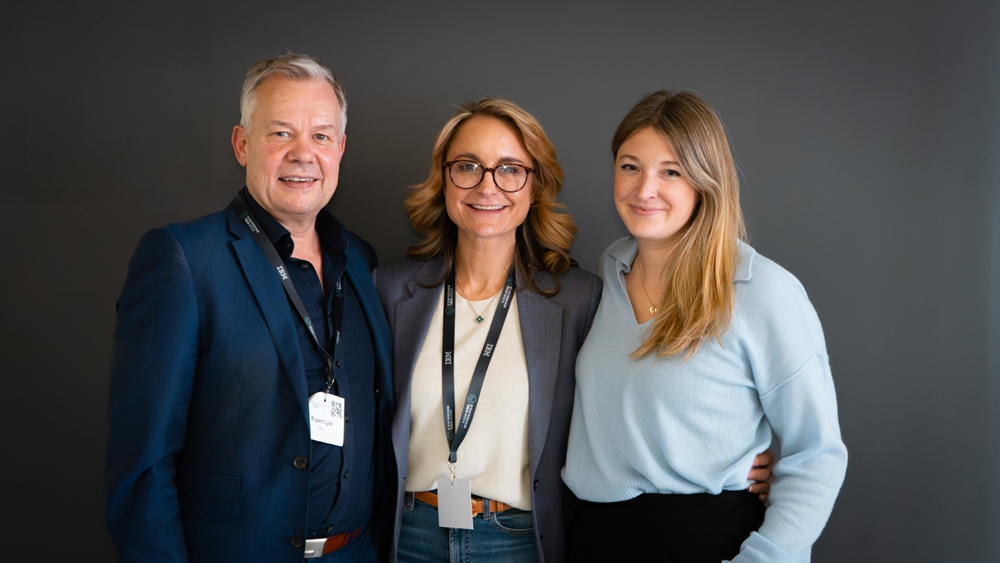
During the event, Founder and CEO Melissa Snover confirmed that the Amsterdam-based Borski Fund, which specialises in backing high-growth, women-led ventures, has invested £900,000 in Rem3dy Health, alongside a further £500,000 investment from Future Planet Capital Regional just a few weeks prior.
Snover said: “This latest round marks a huge milestone not just for Rem3dy Health, but for the Midlands innovation scene.

“Both Borski and Future Planet Capital share our belief that world-class innovation doesn’t have to start – or stay – in London.

“This investment proves that regional founders can raise global capital and scale globally from right here in Birmingham.”

Together, the £1.4 million injection from both Borski Fund and Future Planet Capital Regional will accelerate global expansion and R&D for the company’s personalised nutrition brand Nourished, which uses patented 3D printing technology to deliver personalised, preventative health solutions on demand.

Jen Roberts-Woods, Investment Associate at Borski Fund said: “From our first meeting, Melissa’s vision and drive towards realising Rem3dy Health’s global potential was unmissable.

“The Borski Fund looks forward to working closely with Rem3dy Health as it continues to scale and shape the future of personalised health innovations.”

Rupert Lyle from Future Planet Capital Regional, which manages the West Midlands Co-Investment Fund, added: “Through the West Midlands Co-Investment Fund, we’re proving that the region can be a launchpad for world-class innovation.

“Rem3dy Health’s growth story is an outstanding example of what happens when regional founders are backed by both local and global capital: the outcomes are both commercially and socially transformative.”

Hormonal health

Navigating the summer heat with a new sense of control

Published

on

By Nolynn Palmer, science and partnership lead, EmaEQ and Heather Ritchie, COO, Embr Labs

Summer is reminiscent of many things: the smell of sunscreen, longer evenings, dedicated family time, vacations finally on the calendar, maybe even a wardrobe refresh.

There’s a particular kind of joy that settles in this time of year, a collective breath of excitement.

But for people living with Postural Orthostatic Tachycardia Syndrome (POTS), summer’s signature feature, heat, can turn that joy and excitement into something much harder to navigate.

POTS is a form of dysautonomia that disrupts the body’s ability to regulate blood flow when moving from lying down to standing.

Temperature dysregulation and heat intolerance are core symptoms in POTS.

Heat makes symptoms worse: blood vessels dilate, blood pressure drops, and symptoms like dizziness, fatigue, and heart palpitations intensify. What feels like a beautiful day to most can feel like an obstacle course to someone with POTS.

POTS affects an estimated 0.2 per cent to 1 per cent of the North American population, according to a 2020 NIH study; a figure that’s almost certainly undercounted, and one many researchers believe has grown significantly in the wake of COVID-19.

Roughly 75 per cent to 85 per cent of POTS diagnoses are female, and the average time from symptom onset to formal diagnosis is four to six years.

These individuals spend years researching their symptoms, becoming fluent in their own condition long before receiving a diagnosis.

Since launching its first-generation Embr Wave device, Embr has consistently heard from those with POTS looking for a solution for temperature intolerance and the symptoms that result.

Embr Wave’s temperature delivery system, providing immediate wearable cooling relief, maps directly to one of POTS’s most consistent symptoms, heat intolerance.

Embr’s implementation of Tempura, Embr’s app-based AI Assistant, has provided Embr with even more clarity on the impact Embr Wave can have in this statistically small population.

In the last 90 days, nearly 3 per cent of conversations with Tempura have touched on POTS. Relative to population prevalence, that’s a significant overrepresentation, confirming that individuals with POTS are actively seeking tools that are designed for their symptoms.

Embr Wave provides a model for how designing products for one use case, menopausal women managing hot flashes, can be found to have tremendous benefits for other populations.

The influx of advocacy by those with POTS led to a research study published this year that measured the improvement in Quality of Life factors when supported by thermoregulation wearables.

The product design by its nature, and how customers are using and talking about it, has had a snowball effect in the POTS community, amplifying awareness of a safe, always-available solution for this unmet need.

For someone with POTS, temperature isn’t a minor variable but a sizable trigger. Giving someone a way to manage temperature response hands them back a measure of control they didn’t have before.

Those in the Embr community living with POTS describe using their Wave devices both proactively and in-the-moment: some turn on their Wave’s cool-down signals before leaving the house or entering a crowded event, knowing what’s ahead.

Others use it reactively, when they feel their body beginning to respond poorly, and bring themselves back in balance.

Either way, Embr Wave provides its users with a sense of control around something they cannot control, their environment, allowing one to focus on and enjoy the moment.

No one should have to skip the places or events they love because their body can’t handle the heat. The goal is to help people stay in their lives fully, with less friction and more confidence in what their bodies can handle.

Nolynn Palmer holds a Masters of Global Public Health & Policy with a focus in Sexual & Reproductive Health & Rights. As the Science & Partnership Lead at EmaEQ, she leverages her knowledge of health policy and clinical science to advance AI safety and accuracy across the healthcare industry.

Heather Ritchie has a decades-long background in product management, launching enterprise and consumer solutions that improve health and wellness management. At Embr Labs, she serves as COO and leads the user design and market launch of Embr Wave (2nd Gen).

Continue Reading

News

Experts call for regulation of toxic period product chemicals

Published

on

Academics are calling for regulation banning toxic chemicals in period products as a major menstruation conference prepares to open in Brighton.

The design, health and sustainability of period products will be a central theme at the Menstruation Research Conference 2026.

Keynote speaker Helen Lynn will discuss the lack of regulation and encourage attendees to support an open letter from the Women’s Environmental Network (Wen) calling for change.

Lynn, an honorary researcher at the University of Exeter and senior consultant and research fellow at Wen, said independent tests had found toxic chemicals in period products.

These included PFAS, known as “forever chemicals”, the heavy metals lead, arsenic and mercury, the pesticide glyphosate, biocidal silver and synthetic fragrances.

She said: “Period products are placed in prolonged contact with the highly permeable vulval and vaginal tissues.

“The vaginal tissue itself is thought to be up to 80 per cent more absorbent than the skin elsewhere on the body.

“Repeated tests have shown that toxic chemicals are present in period products.

“Worryingly, we know there are no safe levels of exposure for many of these chemicals, so even small amounts could be harmful.

“We believe everyone who needs them should have access to safe, sustainable and accessible period products, and we’re calling on governments to take action now.”

Lynn’s talk will head two days of events at Brighton and Sussex Medical School on the University of Sussex campus on 7 and 8 July.

The conference is hosted by the Menstruation Research Network and the 4M Consortium, a group of researchers focusing on menstruation and mental health.

The organisations have combined their conferences for the first time, making the event the largest ever held in the UK and one of the largest in the world.

More than 300 research presentations will feature at the conference. Registration remains open.

Co-organiser Professor Gemma Sharp, of the University of Exeter, leads the 4M Consortium.

She said: “We know that research into women’s health has been woefully under-funded, and our conference is crucial to advancing knowledge in this area.

“We’re learning ever more about how menstruation and menopause link to wider issues in our physical and mental health.

“Our conference also brings in the psychological, biomedical and environmental experience across the life course, to foster crucial collaborations to improve health.”

Co-organiser Dr Chi Eziefula, of Brighton and Sussex Medical School, said: “This conference is very international, bringing together researchers from 66 countries with a unique focus on menstruation.

“We’re hosting experts in biological and social science, policy, advocacy, the arts and industry to highlight the latest research, ideas and creative solutions to support good menstrual health across the globe.

“We will highlight the huge range of research that is available to guide policy and to make menstruation and menopause less stigmatised and more healthy.”

Continue Reading

News

Ovum secures US$4m in seed funding

Published

on

Women’s health startup Ovum has raised US$4m in seed funding to develop its AI health journal and expand research using women’s health data.

The round valued the Melbourne startup at US$18m.

Ovum plans to use the funding to develop its artificial intelligence technology and longitudinal datasets, which track health information over time to reveal changes and patterns.

The AI captures symptoms, lifestyle factors, biometric measurements, reproductive health stages, medication, appointments and medical reports.

It uses this information to identify health patterns and create summaries and questions for medical appointments.

Ovum previously raised US$1.7m in pre-seed funding in February 2025 before launching its health journal app in August that year.

Since then, the company says the app has grown by 30 per cent month on month and recorded more than 20,000 downloads.

It has captured 57,000 health data insights and hosted more than 107,000 AI health conversations involving women aged between 15 and 84.

Founder Dr Ariella Heffernan-Marks developed the idea while she was a third-year medical student experiencing chronic migraines and was told that her pain was caused by anxiety.

The company describes the resulting women’s health journal as combining technology and clinical research to make health information more actionable and equitable for women.

Heffernan-Marks said: “I’ve sat on both sides of the desk, as a patient and as a doctor, and that’s why this mission matters so much to me.

“For too long, women have had to navigate healthcare systems that were not designed around their lived experiences or backed by sufficient female health data. Ovum exists to help women better understand their bodies, advocate for themselves with confidence, and contribute to research that improves care for future generations.”

Private health insurer Medibank is an Ovum partner, alongside Fernwood Fitness, Sweat and Menopause Friendly Australia.

Australian Red Cross Lifeblood is also involved in a pilot examining productivity losses caused by women reducing their working hours or leaving employment for health reasons.

Earlier in 2026, Ovum launched clinical trials with St George Hospital and the Royal Hospital for Women to assess AI as a preventative health tool for women.

The research is examining how women currently manage their health, which digital tools they use and whether AI could support health confidence, self-advocacy and continuity of care.

Continuity of care means receiving connected and consistent support across different appointments, healthcare professionals and services.

The funding round was led by Admiralty Capital Group, with participation from Antler, Giant Leap, Aviron Investments, Foggy Valley Aotearoa, Brisbane Angels and Think & Grow.

Existing investor LaunchVic, which is due to merge with Breakthrough Victoria, also participated through its Alice Anderson Fund, which focuses on female founders.

Amanda Andriano, founding partner at Admiralty Capital Group, said the gender health gap was a problem that should not be tolerated.

She said: “Ovum combines mission, market timing and technical capability with an exceptional founder uniquely positioned to lead this movement, and we believe that creates the foundation for a company of global significance.”

Continue Reading

Trending

Copyright © 2025 Aspect Health Media Ltd. All Rights Reserved.