




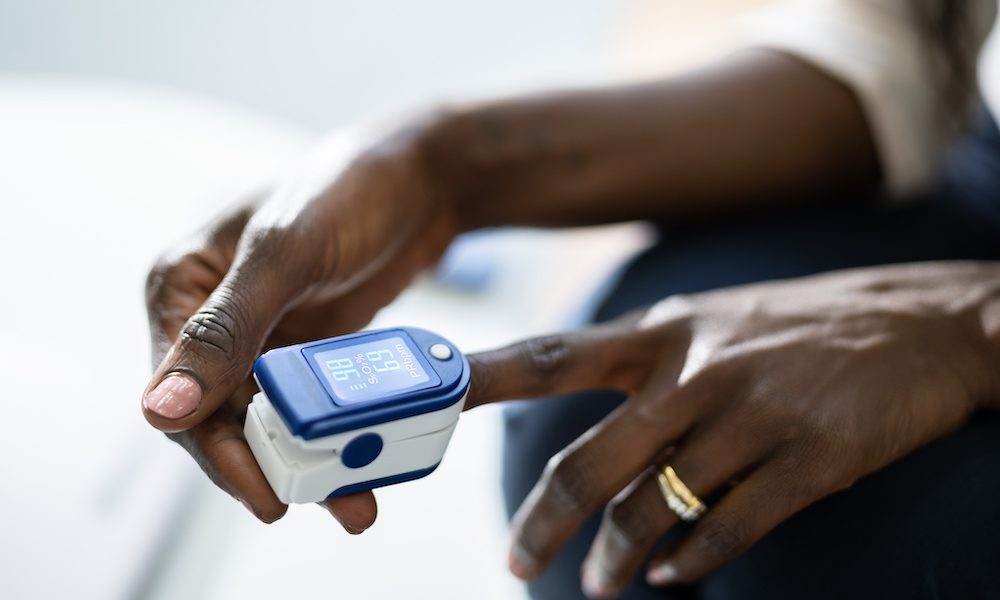
The UK government has announced action to tackle potential bias in the design and use of medical devices after an independent review raised concerns over AI devices and pulse oximeters used in the NHS.
The Department of Health and Social Care commissioned senior health experts to identify potential biases in these devices and recommend how to tackle them.
The government said it fully accepted the report’s conclusions and made a series of commitments, including making sure that pulse oximeter devices used in the NHS can be used safely across a range of skin tones, and removing racial bias from data sets used in clinical studies.
Minister of State, Andrew Stephenson, said: “I am hugely grateful to Professor Dame Margaret Whitehead for carrying out this important review.

“Making sure the healthcare system works for everyone, regardless of ethnicity, is paramount to our values as a nation. It supports our wider work to create a fairer and simpler NHS.”

Ministers agreed that unless appropriate action is taken, ethnic and other unfair biases can occur throughout the medical device life cycle, from research, development and testing, to approval, deployment and post-market monitoring, as well as in the use of devices once deployed.
They said “significant action” is already being taken to overcome potential disparities in the performance of medical devices. This includes:
- the Medicines and Healthcare products Regulatory Agency (MHRA) now requests that approval applications for new medical devices describe how they will address bias
- NHS guidance has been updated to highlight potential limitations of pulse oximeter devices on patients with darker skin tone
- the National Institute for Health and Care Research (NIHR) is currently accepting funding applications for research into smarter oximeters
The government appointed Professor Dame Margaret Whitehead, professor of public health at the University of Liverpool, to lead the review.
The review followed concerns that pulse oximeters – widely used during the pandemic to monitor blood oxygen levels – were not as accurate for patients with darker skin tones, which could have led to delays in treatment if dangerously low oxygen levels in patients with darker skin tone were missed.
However, it found no evidence from studies in the NHS of this differential performance affecting care.
The medical devices review focused on three areas – optical devices such as pulse oximeters, AI-enabled devices and polygenic risk scores (PRS) in genomics.
Professor Dame Margaret Whitehead, chair of the review, said: “The advance of AI in medical devices could bring great benefits, but it could also bring harm through inherent bias against certain groups in the population, notably women, people from ethnic minorities and disadvantaged socio-economic groups.
“Our review reveals how existing biases and injustices in society can unwittingly be incorporated at every stage of the lifecycle of AI-enabled medical devices, and then magnified in algorithm development and machine learning.
“Our recommendations therefore call for system-wide action, requiring full government support. The UK would take the lead internationally if it incorporated equity in AI-enabled medical devices into its global AI safety initiatives.”
The review, Whitehead said, also recommended ways of developing “bias-free” medical devices in the future and to improve standards globally.
Dr June Raine, MHRA chief executive, said: “MHRA acknowledges that inequities can exist within medical devices and we therefore welcome the publication of Dame Whitehead’s independent review.
“We are highly committed to ensuring equitable access to safe, effective and high-quality medical devices for all individuals, and the recommendations set out in this report will support and strengthen the impact of our ongoing work in this area.
“We are committed to working collaboratively with government, regulatory bodies, healthcare professionals and stakeholders to address these issues effectively.
Professor Bola Owolabi, NHS England’s director of healthcare inequalities, added: “Ensuring all patients get equitable access to high-quality healthcare remains crucial to reducing health inequalities and a priority for the NHS.
“I welcome the report’s findings and the NHS will work alongside government and MHRA to implement them and ensure NHS staff have the resources and training they need to tackle racial bias.”
To receive the Femtech World newsletter, sign up here.


Newsletter
Sign up for free weekly updates
The latest femtech news, research and investment, straight to your inbox.




