




Wellness
Device could bring relief to millions suffering from pelvic floor disorders


An innovative pelvic floor device has been developed by University of Porto, Portugal, researchers that could provide relief for millions of women suffering from pelvic floor disorders.
Pelvic floor muscles are vital for supporting pelvic structures such as the bladder, bladder neck and urethra, and in the mechanism of the urethral sphincter, explains the Porto university developers.
Many factors associated with age can impact these muscles and alter their function, such as menopause, vaginal delivery, episiotomy, and high-impact exercise, for example.
This can lead to issues such as urinary incontinence, pelvic organ prolapse, sexual dysfunction and more.
Current pelvic floor exercise devices have limitations, often needing certain parts – such as springs placed in the vaginal canal – to be changed, and also do not have functionality for adding extra weights.
How does the new device work?
According to the Health News research team, the cylinder-shaped device is inserted into the vaginal canal to induce the contraction of the main pelvic floor muscle, called levator ani.
The device, for which a patent application has been filed, includes a monitor that helps to determine the best exercise and weights to be used.
According to the patent application, this newly developed device comprises a set of weights, with variable loads from 5 to 40g, to preferably be used in 5g increments, which can be connected individually or together.
The patent application explains: ” In recent years, clinical treatment, in particular pelvic floor muscle exercising, has proved effective in developing pelvic floor muscle strength.
“Several devices are known for this purpose, including for instance, EDUCATOR® – Pelvic Floor Exercise Indicator, from NEEN-Performance Health, UK. This device consists of an element to be inserted into the vagina, coupled to an external indicator rod.
“This device is shaped forward so that it rests on the vagina and remains there during use. When contracting the pelvic floor, the deep layer of the pelvic floor muscles should shorten and lift. This movement lifts the intravaginal element by moving the indicator rod downward toward the coccyx, indicating a correct contraction.
“One of the main disadvantages of EDUCATOR® is that the movement of the indicator rod always develops in favour of gravity. In addition, its plastic components, such as the flexible external indicator rod, do not make it possible to add any external weight that would impose resistance of different magnitudes on the contraction of the pelvic floor muscles.
“Additionally, it is not possible to quantify the displacement of said external indicator rod.”
The application explains that the device over comes the limitation of other available devices as the resistance applied through the device increases the cephalic and anterior displacement of the urethra, vagina and rectum, which promotes the closure of the structures, improving incontinence of urine and bowel movements and preventing accidental gas passing.
The application reads: “This invention aims to overcome the aforementioned disadvantages of said techniques, proposing for that purpose, a device to exercise the pelvic floor muscles, which allows the addition of external weights, the monitoring and quantification of the resistance imposed on the muscles to exercise, rendering its removal during the exercise session unnecessary.”










Mental health
Poor mental health, poverty and pollution significantly raise women’s heart failure risk – study


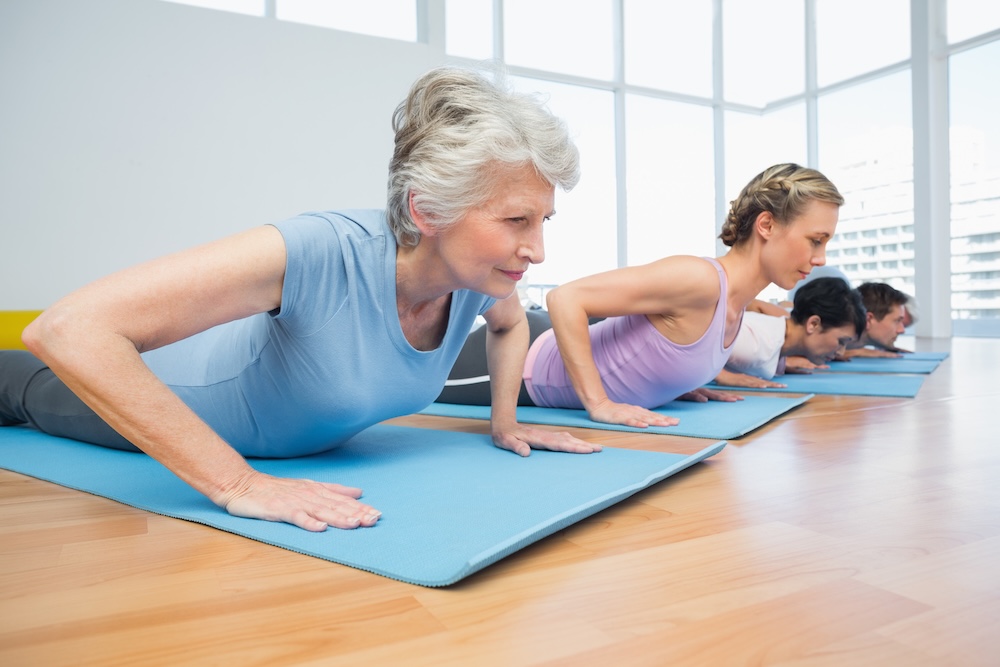
Resistance training improves hip strength, balance and flexibility during menopause and may also improve lean body mass, research suggests.
A study of 72 active women aged 46 to 57 found those who completed a 12-week supervised programme saw greater gains than those who kept to their usual exercise routines.
None of the participants were taking hormone replacement therapy.

The supervised, low-impact resistance exercise programme focused on strength at the hip and shoulder, dynamic balance and flexibility.
Participants used Pvolve equipment, including resistance bands and weights around the hips, wrists and ankles, and also lifted dumbbells of varying loads.
Women in the resistance training group showed a 19 per cent increase in hip function and lower-body strength, a 21 per cent increase in full-body flexibility and a 10 per cent increase in dynamic balance, meaning the ability to stay stable while moving.
Those in the usual activity group did not show any significant improvements.
Previous studies have assessed the decline in lower limb strength and flexibility during menopause, but this is said to be the first study to compare the effect of resistance training on muscle strength and mass before, during and after menopause.
This was done by including participants in different phases of menopause rather than following the same participants over a long timeframe.
Francis Stephens, a researcher at the University of Exeter Medical School in the UK, said: “These results are important because women appear to be more susceptible to loss of leg strength as they age, particularly after menopause, which can lead to increased risk of falls and hip fractures.
“This is the first study to demonstrate that a low-impact bodyweight and resistance band exercise training programme with a focus on the lower limbs, can increase hip strength, balance, and flexibility.
“Importantly, these improvements were the same in peri- and post-menopausal females when compared to pre-menopausal females, suggesting that changes associated with menopause do not mitigate the benefits of exercise.”
Although one of the researchers sits on Pvolve’s clinical advisory board, the researchers said the company did not sponsor the study or influence its results.
Stephens added that any progressive resistance exercise training focused on lower-body strength is likely to yield the same results.
He said: “The important point is for an individual to find a type of exercise, modality, location, time of day etc., that is enjoyable, sustainable, and improves everyday life.
“The participants in the present study reported an improvement in ‘enjoyment of exercise,’ and some are still using the programme since the study finished.”
Kylie Larson, a women’s health and fitness coach and founder of Elemental Coaching, who was not involved in the study, said the results were compelling.
She said: “This is particularly exciting for those that tend to think of menopause as ‘the end’. The study proves that if you incorporate strength training you can still make improvements to your muscle mass and strength, which will also have a positive ripple effect to your ability to manage your body composition.
“In addition, staying flexible and being able to balance are both keys to a healthy and functional second half of life.”
Participants in the study did four classes a week for 30 minutes each session, but Larson said even half that amount of strength training can go a long way, particularly if you emphasise progressive overload, which means gradually increasing muscle challenge through more weight.
Larson said: “Gradually increasing the challenge is what drives real change.
“Lifting heavier over time is what builds strength, protects your bones, and keeps your body resilient through menopause and beyond.”












 Entrepreneur3 weeks ago
Three sessions that show exactly where women’s health is heading in 2026

 Pregnancy3 weeks ago
How NIPT has evolved and what AI NIPT means in 2026

 Menopause4 weeks ago
Watchdog bans five ads for women’s heath claims

 Entrepreneur4 weeks ago
WHIS USA 2026 announces first ticket release for landmark Women’s Health Innovation Summit

 Menopause4 weeks ago
Menopause has no lasting impact on cognition, research finds

 News3 weeks ago
Two weeks left to make your mark in women’s cardiovascular health

 Entrepreneur3 weeks ago
Q1 momentum: Female founders are advancing, but the system still hasn’t caught up

 News4 weeks ago
Endometriosis firm wins NIH prize