




News
Virtual reality training could ‘heal’ disparities in black maternal healthcare


Virtual reality training for physicians could help “heal” disparities in black maternal healthcare, new research has shown.
During a checkup with her obstetrician, Marilyn Hayes tells him about overwhelming exhaustion and possible symptoms of postpartum depression, such as feeling unsafe.
Hayes, a black woman, grows increasingly frustrated as her white, male physician, Dr Richard Flynn, dismisses her symptoms and ignores her wishes when she refuses medication.
Hayes becomes visibly uncomfortable when Flynn touches her without permission and makes comments steeped in black stereotypes, such as assuming that she’s unmarried and the baby’s father is uninvolved with her and their infant.
While Hayes and Flynn are fictional characters depicted in a virtual reality video, Hayes’ experiences are similar to those of many black women and women of colour when they interact with clinicians and their staff members, studies have found.
Hayes’ checkup with Flynn is the first in a series of three virtual reality training modules being developed to heighten physicians’ awareness of implicit bias in patient care.
“Ultimately, this virtual reality training system could become a viable tool for practicing communication with diverse patients across different types of health care professions,” said Charee Thompson, a professor of communication at the University of Illinois Urbana-Champaign who studies physician-patient communication and is one of the team members developing the virtual reality training series.
“There’s no reason why nurses couldn’t also use this across different health care contexts — not just for black maternal health, but chronic pain, diabetes or some of these other health issues in which we know that there are disparities based on markers of difference such as race or class.”
Thompson is the first author of a study about the project. She and her co-authors Mardia Bishop, a professor in the same department and obstetricians and gynaecologists Dr Tiffani Dillard of Carle Foundation Hospital in Urbana, Illinois and Dr Joseph Maurice of Creighton University School of Medicine in Omaha, Nebraska, are leading the team that is developing the modules.
The first module, which focuses on black maternal healthcare, was tested in a pilot study with 30 medical students and resident physicians. Prior to and after viewing Hayes’ and Flynn’s interaction, the study participants completed a survey that taps into physicians’ beliefs about the value of eliciting patients’ opinions about the cause of their illnesses and how it affects their lives, and whether physicians can provide excellent health care without asking patients for their perspectives.
“We know that disparities in black maternal health affect or are connected to disparities for black infants, including preterm birth and low birth weights,” Thompson said. “And so, for me, this is one of the most urgent needs when it comes to the health of women and children.”
In Flynn’s interactions with Hayes, students saw how bias and black stereotypes affect his communication, such as when he leaps to the conclusion that Hayes feels unsafe because her husband is violent, rather than recognising it is a symptom of depression, Bishop said.
“The video depicts the doctor going through the entire postpartum checkup, asking questions about breastfeeding, the incision and healing. Throughout the video, the viewer can see where the provider is behaving or communicating with implicit bias and the effect this has on the patient,” Bishop said.
“Sometimes it can be difficult to recognise bias or realise that what one is saying or doing demonstrates bias. This video shows the many ways that implicit bias can enter a discussion with a patient.”
According to the post-training survey, participants’ awareness of implicit bias, their attitudes toward culturally competent communication and their confidence in their individual communication efficacy increased after the training, Thompson said.
Two open-ended questions on the survey asked participants how they would provide more empathic, individualised care for black postpartum women. The participants responded that they were committed to building rapport with patients by prioritising their concerns and feelings, allowing patients greater opportunities to express themselves and engaging in shared decision-making.
Participants said they would listen more attentively, be more aware of their own body language, display compassion and empathy, and pay attention to patients’ verbal and nonverbal cues.
The second virtual reality training module — which is still under development, along with a third module — promotes self-reflection by helping medical students identify their own biases and learn how to mitigate them, Thompson said. In the third module, students will practice their intercultural communication skills through interactions with a virtual patient.
While the cost of the first module was US$40,000, Maurice said that for universities and medical schools, virtual reality training is a cost-effective option because it eliminates the need to recruit people for role playing with medical students.
“It’s a lot cheaper to produce one video and show it 100 times, as opposed to hiring 100 people to role play with the students,” he explained.
To receive the Femtech World newsletter, sign up here.






The World Health Organization (WHO) has launched an AI tool in beta to help policymakers, experts and healthcare professionals access sexual and reproductive health information faster.
Called ChatHRP, the tool was created by WHO’s Human Reproduction Programme and draws only on verified research and guidance collected by HRP and WHO.
It uses natural language processing and retrieval-augmented generation to produce referenced content and cut the time spent searching through documents across different platforms and databases.
WHO said ChatHRP also has multilingual capabilities and low-bandwidth functionality to support use in a wide range of settings.
The beta-testing phase is aimed at a broad professional audience, including policymakers, healthcare workers, researchers and civil society groups.
WHO said the tool can help users quickly access up-to-date evidence, find sources for academic work and verify information on sexual and reproductive health and rights.
Examples of questions it can answer include the latest violence against women data in Oceania for women aged 15 to 49, recommendations on managing diabetes during pregnancy, and whether PrEP and contraception can be used at the same time. PrEP is medicine used to reduce the risk of getting HIV.
WHO added that the system will be updated regularly as new HRP materials are published and includes a feedback loop so users can flag gaps in the information provided.
The launch comes amid wider concern about misinformation in sexual and reproductive health.
A 2025 scoping review found that misinformation in digital spaces is a systemic issue that can undermine human rights, reinforce discriminatory social norms and exclude marginalised voices.
The review also said misinformation can affect health systems by shaping provider knowledge and practice, disrupting service delivery and creating barriers to equitable care.
WHO said ChatHRP is intended to give users streamlined access to reliable information as a counter to “algorithms, opinions, or misinformation”.
Wellness
Women’s HealthX unveils Northwell Health, Corewell Health, Biogen & more to headline Chronic Disease stage

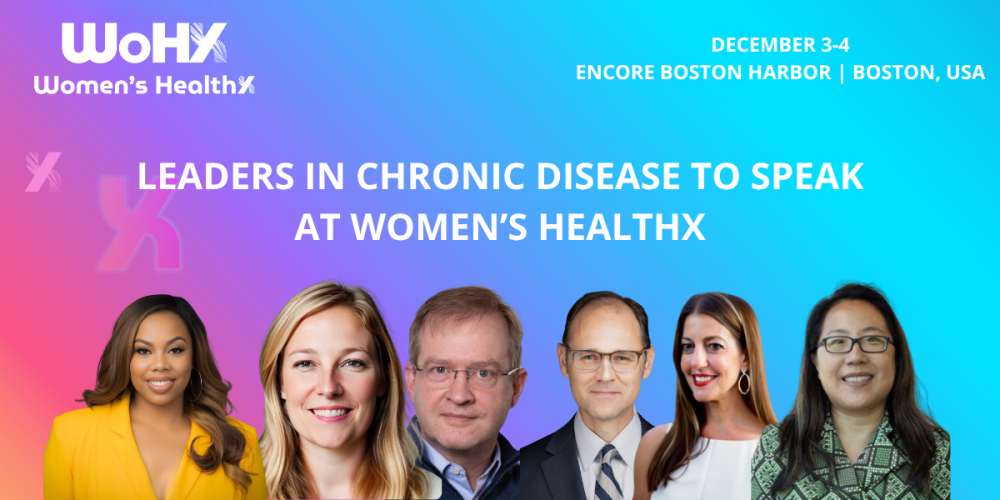
Women’s HealthX has announced its lineup of healthcare trailblazers speaking on Chronic Disease Management, alongside other specialisations including Fertility, Sexual Health, Maternity, Menopause and Cognitive Health, taking a holistic approach to women’s health.
It will bring together 750+ leaders across pharma, health systems, and innovation to address one of the most urgent and underexamined challenges in healthcare; the sex difference gap in data and evidence.
Since cardiovascular disease remains the leading cause of death among women globally, and autoimmune and neurological conditions affect women at significantly higher rates, Women’s HealthX will home in on chronic disease management with 17+ sessions spotlighting case studies and lessons learned.
The Chronic Disease Management Stage at Women’s HealthX responds directly to this gap, convening senior decision makers and innovators to explore how sex specific science, digital health, and new care models can reshape outcomes for women.
Attending pharma & healthcare organisations include:
- Tracy Sims, Executive Director, Cardiometabolic Health, Eli Lilly
- Adrian Kielhorn, Senior Director, Global Head HEOR Neurology, Alexion Pharmaceuticals
- Lauren Powell, Head of Health Equity and Clinical Innovation, Biogen
- Amy Kao, SVP, Head of Neuroscience and Immunology Research, EMD Serono
- Stella Vnook, Executive Chair and CEO, Kaida Biopharma
- Amanda Borsky, Director, Clinical Research, Northwell Health
- Lacey McIntosh, Division Chief, Oncologic and Molecular Imaging, UMass Memorial Medical Center
- Nicole Turck, Vice President Operations, Women’s Health, Corewell Health
- Mette Dyhrberg, CEO, Autoimmune Registry
- Lyn Agostinelli, Principal Consultant, Halloran Consulting Group
Sessions addressing the real gaps in women’s chronic care
The agenda features a series of high impact sessions tackling the structural and scientific gaps in women’s health:
- Improving outcomes in obesity through evidence based person centered care: Eli Lilly
- Tackling sex based health inequities by breaking down barriers and bias: Alexion Pharmaceuticals
- Close the health equity gap in women’s health by improving how autoimmune diseases are diagnosed, treated and managed: Autoimmune Registry
- How a GYN only care model is driving faster access to gynecological care: Corewell Health
- Transforming early detection in ovarian cancer: new pathways to accuracy, safety, and better outcomes: UMass Memorial Medical Center
Panel discussions include:
- Why chronic disease looks different in women and why health systems haven’t adapted: Biogen, Kaida Biopharma, EMD Serono
- How can we better engage with our customers: Northwell Health, Halloran Consulting Group
Health equity starts here. REGISTER YOUR PLACE
Why This Matters Now
Women’s HealthX positions chronic disease not just as a clinical challenge, but as a critical frontier for innovation, investment, and system redesign.
From AI powered monitoring and digital therapeutics to real world data and integrated care pathways, the stage highlights where meaningful progress is already being made and where the biggest opportunities lie.
For the FemTech ecosystem, this represents a pivotal moment: aligning technology, clinical insight, and commercial strategy to finally close the long standing data and care gaps in women’s health.
About Women’s HealthX
Women’s HealthX is where the transformation of women’s health begins at its true foundation: data, science, and evidence.
It’s the leading event dedicated to closing the sex difference data gap and accelerating breakthroughs through science driven, real world case studies.
Taking place on December 3 to 4, 2026 in Boston, USA, the exhibition will bring together more than 750 healthcare leaders, including clinicians, payers, employers, investors, and policymakers.
Seven different stages with 150+ expert speakers taking an holistic approach to women’s health. From fertility, maternity, sexual health, cognitive health, menopause and chronic disease, we address care at every stage of a woman’s life.














 Entrepreneur1 week ago
Future Fertility raises Series A financing to scale AI tools redefining fertility care worldwide

 Entrepreneur4 weeks ago
Three sessions that show exactly where women’s health is heading in 2026

 Pregnancy4 weeks ago
How NIPT has evolved and what AI NIPT means in 2026

 News4 weeks ago
Two weeks left to make your mark in women’s cardiovascular health
 Fertility2 weeks ago
Future Fertility partners with Japan’s leading IVF provider, Kato Ladies Clinic

 Mental health1 week ago
Lifting weights shows mental health and cognitive benefits in older women, study finds

 Menopause2 weeks ago
More research needed to understand link between brain fog and menopause, expert says

 News3 weeks ago
Self-employment linked to better cardiovascular health outcomes in Hispanic women
1 Comment