



Cancer
New treatment avenue emerges from work on breast cancer diagnostic test

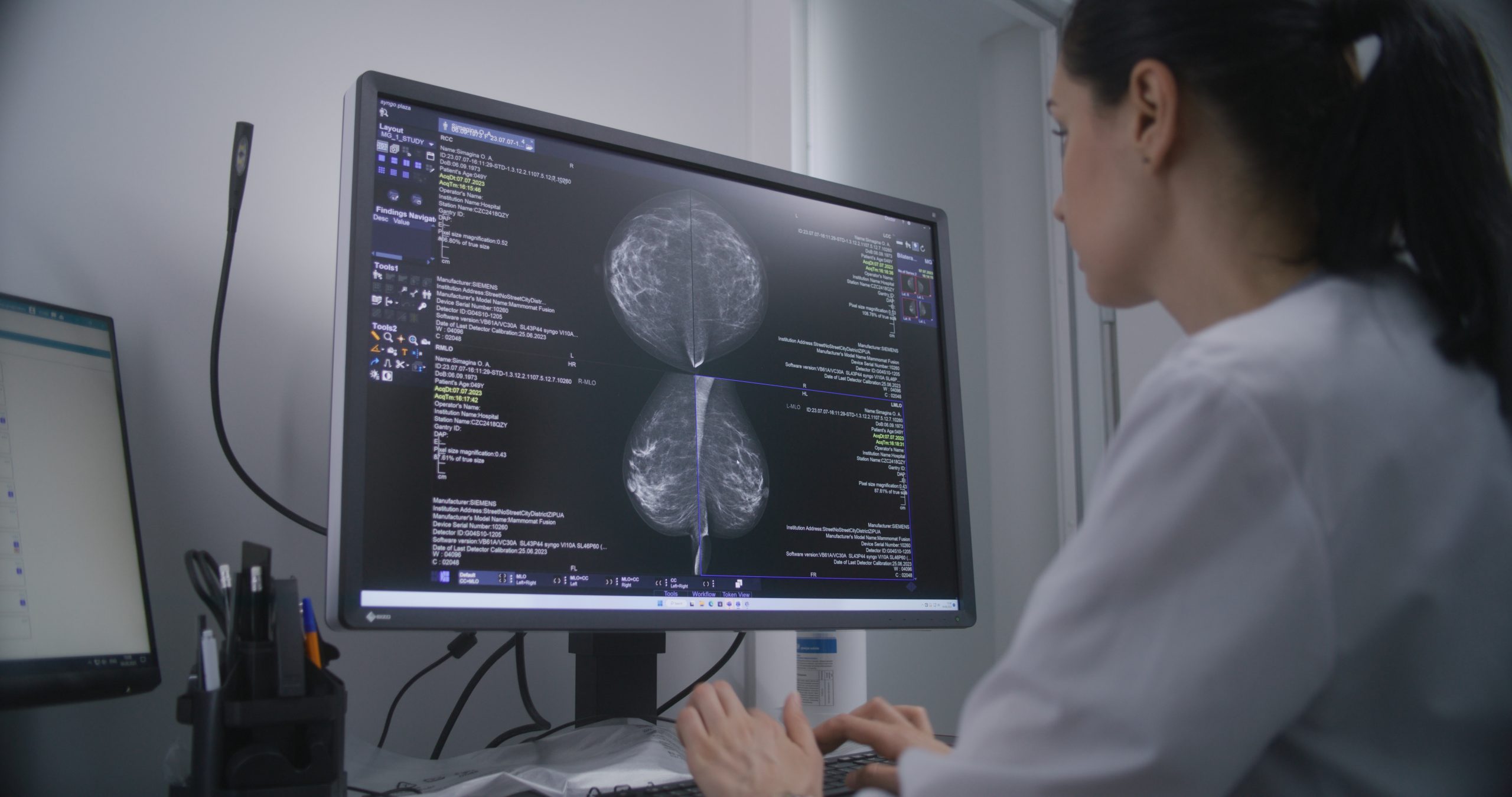
New findings have provided further evidence that anti-fibrosis drugs could improve outcomes from breast cancer.
They come out of the progress of a new diagnostic test that could better predict breast cancer outcomes; building on a recent research breakthrough in identifying a connection between fibrosis and advanced stages of the disease.
The link between breast cancer progression and fibrosis – the development of fibrous connective tissue as a reparative response to injury or damage – was first described in a 2021 study from the University of Arizona.
Researchers at the same institution later developed the MeCo Score diagnostic to potentially predict the likelihood of relapse or recurrence among patients with early-stage breast cancer.
And now a new study from the Spanish National Cancer Research Center has tested the invention, providing further evidence that tissue stiffening in the most common types of breast cancer, HER2-negative, can directly cause disease progression and metastasis, leading to detrimental outcomes for patients.
When standard chemotherapy alone was prescribed, high MeCo Scores were associated with much worse survival compared with low MeCo Scores; however, this difference in survival was minimised in patients who received antifibrotic therapy in addition to chemotherapy.
Among high MeCo Score patients, antifibrotic therapy reduced the risk of recurrence by 62 per cent, with an average follow-up period of 9.7 years after therapy.
The link between breast cancer progression to bone metastasis and fibrosis was first described in a 2021 study published in Cell Reports and authored by Ghassan Mouneimne, an associate professor of cellular and molecular medicine at the University of Arizona’s College of Medicine.
On this latest development, Mouneimne says: “We’re hopeful that additional clinical confirmation of this discovery will firmly establish a new way to determine which patients may benefit from this fundamentally new therapeutic modality.
“As a generic-emergent drug, [fibrosis drug] nintedanib is set for a substantial drop in price in the next couple of years, which may help mitigate the rising cost of treating breast cancer. It’s all about seeking new ways to personalise care and find more cost-effective treatments.
“We are in the initial stages of planning a prospective, multi-centre trial using the MeCo Score to guide nintedanib treatment in patients with luminal, ER-positive breast cancer.”
Mouneimne’s previous work identifying the link between fibrosis and advanced stages of breast cancer provided the mechanistic basis for developing the MeCo Score and led to the launch of MeCo Diagnostics LLC, a startup working to advance the technology so it can be used in the clinic.






Routine mammograms could help assess cardiovascular disease risk in women, new research suggests.
The study found that both the severity of calcium in breast arteries and how it progressed on mammograms predicted future cardiovascular disease.

Researchers at Penn State College of Medicine analysed data from 10,348 women who had repeat mammograms, with an average of 4.1 years between scans.
The X-ray images can detect calcium in the breast’s arteries, a sign that blood vessels are stiffening.
As people age, calcium can build up in arteries, raising heart attack and stroke risk.
In the study, AI software assessed whether calcification was present and how severe it was.
Women with more severe calcification, and those whose calcification progressed over time, had up to two times higher risk of major events such as heart attack, stroke, heart failure and death.
Matthew Nudy is assistant professor of medicine and public health sciences at Penn State College of Medicine.
He said: “We know that women are more likely to be diagnosed at later stages of cardiovascular disease and have worse outcomes following a heart attack compared to men.
“That may be in part because the current cardiovascular risk assessment tools underestimate risk in women. We need better tools.
“In the future, assessment of breast arterial calcification may help improve our ability to predict risk and prevent cardiovascular disease.”
Vascular calcification was present in 19.4 per cent of participants at baseline.
Those who initially had no calcium but developed it on follow-up had a 41 per cent higher risk of an adverse cardiovascular event and death.
Nudy said: “This could be a way to use data that may already be available for different reason and to potentially use it to risk stratify an individual for the development of cardiovascular disease.”










-

 Features1 week ago
Cannabis compounds kill ovarian cancer without harming healthy cells, research finds
-

 Opinion3 weeks ago
Femtech in 2025: A year of acceleration, and what data signals for 2026
-

 News4 weeks ago
Innovate UK relaunches £4.5m women founders programme
-

 News4 weeks ago
Doctors push back on ‘data-free’ ruling on menopause hormone therapy
-

 Insight2 weeks ago
Meta removes dozens of abortion advice and queer advocacy accounts
-

 Wellness4 weeks ago
Why women’s health tech is crucial in bridging the gender health gap
-

 Fertility3 weeks ago
Round up: First wearable detects symptoms of perimenopause, and more
-

 Insight2 weeks ago
Sperm donor with cancer-causing gene fathered nearly 200 children across Europe