



Mental health
Headspace launches mental health resources for fertility patients
The new content aims to support people experiencing fertility issues or undergoing treatment

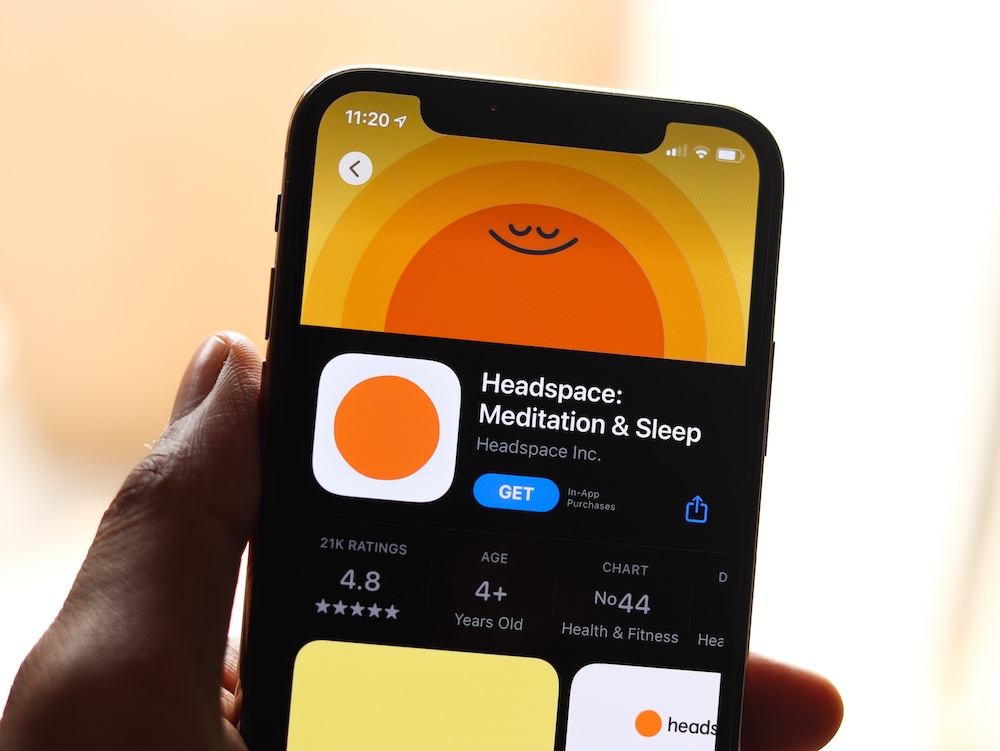
The US mental health platform Headspace has announced new content to support people struggling with infertility.
The free mental health resources, released in partnership with Spring Fertility, aim to help people experiencing fertility issues or undergoing treatment.
One in eight couples struggle to conceive, and 42 per cent of Americans have either sought fertility treatment themselves or know someone who has.
As awareness around fertility challenges becomes more widespread, many are left to navigate an isolating and emotional journey with minimal resources.
From the financial burden to physical demands and an emotional rollercoaster for many, the stress of going through a fertility journey can deeply impact an individual’s and family’s mental health.
The National Institute of Health found that 25-60 per cent of people experiencing fertility challenges report psychiatric symptoms with heightened levels of anxiety and depression significantly higher than controls.
With the overturn of Roe v Wade and the resulting state-by-state pullbacks on IVF access and other reproductive rights, many people report feeling even greater symptoms of depression and anxiety.
“After my third miscarriage, it was incredibly tough not to fall into a sea of self-blame and regret,” said Rosie Acosta, Headspace meditation and mindfulness teacher.
“I began to mourn the loss of my dream of becoming a mother and having the family I once envisioned. The self-blame was crippling.”
Needing a break from the “merry-go-round of guilt, confusion and negative self-talk”, Acosta decided to lean into uncertainty and discomfort and become friends with the normally isolating emotions.
“Through mindfulness and meditation, I was able to ground myself in the present to let go of resentment, grief, and heartbreak associated with my fertility journey,” she said.
“We developed this collection in partnership with leading mental health experts and fertility specialists to help others going through similar experiences.”
The new content collection includes guided meditations and mindfulness exercises, audio conversations, and a video series with insights on listening to the mind and body, coping with feelings of isolation and holding space for grief.
“The road to conception and having a family isn’t easy for many people – in fact, it can be a long, expensive, and painful rollercoaster,” said Eve Lewis Prieto, director of teaching, Headspace.
“As a meditation and mindfulness teacher, I’ve spent years teaching others how to take care of their mind and body, cultivate a balance of mind, and hold themselves with compassion and tenderness when going through tough times.
“While facing a huge unknown myself, I wanted to share meditation practices and mindfulness techniques that have helped me on my own journey.”
When it comes to seeking certain fertility procedures, like IVF, cost is one of the biggest barriers and can add stress to an already challenging time.
Headspace has partnered with Spring Fertility’s grant programme to cover the costs of up to one cycle of IVF for a member of its community, and is collaborating with Rescripted, an online resource where women can find the support and learn to better advocate for themselves.
Dr Nicole Yoder, a fertility specialist at Spring Fertility’s New York City clinic, said: “Infertility can have profound effects on mental health.
“Because of this, it is incredibly important that individuals and couples navigating infertility have access to mental health support and resources.
“In partnering with Headspace on this collection, our hope is that these meditations and conversations can serve as another resource so that more people navigating fertility journeys can feel seen, supported, and not alone.”
To receive the Femtech World newsletter, sign up here.







Inflammation may help flag depression in women with type 2 diabetes, new research reveals, but the link appears to vary by symptoms and by how depression is measured.
The findings suggest both the promise and the challenge of identifying biomarkers, measurable indicators in blood or other tests, for depression.
Women with type 2 diabetes are at higher risk of depression, which can accelerate diabetes complications, impair functioning and increase the risk of death. Research suggests inflammation may be a key link between the two conditions, as certain inflammatory biomarkers are frequently found in both.
Scientists have yet to identify an objective diagnostic biomarker for depression, such as something measured through blood work, a genetic test or a brain scan.
To diagnose and measure depression, mental health providers usually use questionnaires. Some add up the number of symptoms as a checklist, while others measure the severity of different symptoms.
Depression can also look very different from one person to the next, with symptoms spanning physical effects such as sleeping too much or too little, mood-related issues such as persistent sadness, and cognitive difficulties such as trouble concentrating.
Nicole Beaulieu Perez, assistant professor at NYU Rory Meyers College of Nursing and study author, said: “Depression is the most measured construct in all of science, but part of our problem is that we’re not defining depression the same, there may be different types, but we’re lumping them all together.
“The variability in depression symptoms complicates how we diagnose and treat it, particularly in the absence of validated biological markers.”
To better understand the connection between inflammation and different symptoms and measures of depression, researchers at NYU Rory Meyers College of Nursing studied 38 women with type 2 diabetes, many of whom were also living with HIV.
They analysed blood samples for 10 different inflammatory biomarkers, including CRP, IL-6, IL-4 and IL-8.
They also assessed participants for depression using PROMIS, an NIH-developed series of short questionnaires that includes measures of depression, anxiety, sleep and fatigue, as well as the CES-D, an older measure that adds up depression symptoms.
The researchers found that certain inflammatory biomarkers were linked to depression, but the associations varied depending on the measures and symptoms used.
Higher levels of depression and anxiety measured using PROMIS were associated with lower levels of IL-4.
They also found contradictory associations for CRP and IL-6. Both were positively correlated with depression when it was measured using CES-D and negatively correlated when it was measured using PROMIS.
Sleep disturbances measured using PROMIS were associated with IL-8.
Perez said: “It was interesting to see that, in some cases, the direction of these associations flipped entirely based on which measure of depression we were using.”
The findings, while preliminary because of the small number of people studied, suggest that the link between inflammatory biomarkers and depression may not be consistent across all measures or symptoms.
More research is needed to tease out the role of inflammation and whether subtypes of depression can be identified based on symptoms and objective biological markers.
Perez said: “We think there’s something going on with inflammation and depression, but if we look closely, we may find that’s true for some forms of depression but not others.”
She said she hoped that in future, pairing depression measures with biomarkers such as blood tests could provide more objectivity in diagnosing depression, which could help further destigmatise mental illness, as well as help clinicians catch it earlier and guide treatment.
Perez said: “Precision mental health has great potential.
“If we can identify a specific type of depression, for instance, one that appears to be driven by inflammation, this may inform which medications to try to target an underlying biological pathology, hopefully reducing the trial and error often needed to find an effective treatment for depression.
“By identifying specific inflammatory biomarkers linked to different dimensions of mental health, our findings suggest a path toward precision mental health that moves beyond one-size-fits-all approaches.”


Common menopause symptoms such as brain fog and memory problems do not appear to have a lasting impact on cognitive performance, a study suggests.
The study found that while brain fog is a real symptom commonly experienced by perimenopausal and post-menopausal women, there is no evidence that it has an ongoing impact on core cognitive abilities such as memory, attention, problem-solving and decision-making.
Menopause usually happens at about 51, and cognitive symptoms such as forgetfulness and brain fog, including memory lapses, mental slowing and attention difficulties, are reported by 40 to 80 per cent of women.

But findings have been mixed on whether those symptoms are directly linked to cognitive performance. Their biological basis also remains unclear.
Dr Laura Naysmith, postdoctoral research associate at King’s College London and the study’s first author, said: “Cognitive symptoms are very real and often quite a distressing aspect of the menopause.”
“While mental effort [may] need to increase to maintain cognitive function due to these symptoms, we hope it is reassuring to those experiencing symptoms that cognitive abilities can be preserved.”
“Our study found that core cognitive abilities are consistent between menopausal stages.”
Researchers analysed data from 14,234 women aged 45 to 55 in the REACT-Long Covid Study, a large community cohort in England.
Participants were divided into three groups by menopausal stage, pre-menopause, perimenopause and post-menopause, and reported cognitive symptoms before completing eight online tasks designed to test memory and reasoning.
The analysis found only minimal differences in overall cognitive performance across the three groups, with cognitive symptoms only weakly linked to performance in pre-menopause, perimenopause and post-menopause.
The researchers did find a very weak link between symptoms and performance, but further analysis suggested that cognitive symptoms were more closely associated with increased reporting of psychological symptoms, including anxiety and low mood, especially among perimenopausal and post-menopausal participants.
The team said no global cognitive dysfunction was seen, but stressed that the reported symptoms can still have a significant effect on quality of life.
They called for more precise measures of subjective cognitive difficulties in future research.
Adam Hampshire, the study’s senior author, said: “Next we will explore the basis of the observed elevation in cognitive symptoms in more detail, including whether specific aspects of cognitive performance, or particular groups of people with certain symptom profiles or HRT [hormone-replacement therapy] use, show clearer differences.”











 Diagnosis4 weeks ago
Blood test shows promise in endometriosis

 Insight4 weeks ago
Women’s health leaders warn of censorship

 Insight4 weeks ago
Blood test predicts dementia 25 years before symptoms begin

 Menopause4 weeks ago
Study reveals hidden menopause tech privacy concerns

 News3 weeks ago
Femtech World Awards announces deadline extension

 News3 weeks ago
Luna and Kindbody partner to bring data-driven insight to women’s health and fertility care

 News4 weeks ago
Pregnancy may shed brain’s grey matter to prepare women for motherhood – study

 Menopause4 weeks ago
Non-hormonal menopause pill approved for NHS use