




News
Maternal mental health start-up bags US$10.9m in series A funding
Seven Starling aims to help women navigate critical periods in their lives with evidence-based mental health support


The US start-up Seven Starling has secured US$10.9m in series A funding to address unmet needs in women’s mental health.
More than 90 per cent of women do not seek help for perinatal mood and anxiety disorders due to high barriers including a shortage of therapists, limited in-network coverage and mental health stigma.
These conditions affect one in five women during the motherhood journey, yet only 20 per cent are screened for mental health issues, and 75 per cent of those who need treatment do not receive it.
Seven Starling aims to address these challenges by making its services accessible through its in-network coverage, integrated group therapy model, and partnerships with referring providers to make the process of getting started easier for patients.
The investment round, led by RH Capital, is hoped to expand access to essential mental health services for women going through critical periods, such as infertility, miscarriage and loss, pregnancy, postpartum and motherhood.
“We are thrilled to have successfully raised this round of funding, which will allow us to expand our reach and help more women who need support during critical life transitions,” said Tina Beilinson Keshani, co-founder and CEO of Seven Starling.
“This investment is a testament to the demand for a dedicated women’s mental health solution and our commitment to providing accessible, high-quality care. With the new funding, we will continue to successfully reduce the stigma around women’s mental health and ensure that every woman has access to the care she needs, when she needs it.”
The capital raised from this round, Keshani said, would be used to “fuel” national expansion, partnering with Medicaid plans, and developing innovative technology to further integrate with healthcare partners.
Alice Zheng, principal at RH Capital, said: “We are proud to partner with Seven Starling in this new chapter to expand access to maternal mental healthcare, an area of significant need.
“We are excited by the comprehensive and scalable offerings, including group therapy to expand access. As a recent mum of two myself, I have been shocked by the lack of perinatal mental health support available relative to need and am thankful to see Seven Starling filling that gap.”
Mar Hershenson, founder of Pear VC, added: “Seven Starling is addressing a huge problem not just around motherhood but the entire female lifespace from adolescence to menopause.
“Women are nearly twice as likely as men to be diagnosed with depression or an anxiety disorder in their lifetime, but lack a tailored solution designed to meet their unique needs. Pear has partnered with Seven Starling since day one and we are excited to double down on them.”
Kelly Ernst, March of Dimes SVP, chief impact officer, said mental health conditions, such as depression and anxiety, are among the most common complications for women during pregnancy and the postpartum period.
“However, many do not receive treatment they desperately need, which can lead to long lasting clinical, social, and economic consequences,” she explained.
“When these conditions are effectively treated and managed, everyone benefits. We’re proud to be investors in Seven Starling and look forward to seeing how their innovative and comprehensive approach improves the mental healthcare needs of women across the country.”
To receive the Femtech World newsletter, sign up here.



Elation Health has acquired Aster, a women’s health EHR startup created by sisters Fifi Kara and Dr Lailah Kara-Newton.
The deal, announced on 3 June 2026, will see Aster’s team join Elation Health as the company expands development of what it describes as the first agentic operating system for primary care.
An EHR, or electronic health record, is a digital system used by healthcare providers to store and manage patient information.

Aster was founded by Kara and Kara-Newton as an AI-native EHR platform for women’s health providers.
Elation Health said the acquisition would allow Aster to learn from its expertise in AI agents and support development of its agentic operating system for primary care.
Kyna Fong, co-founder and chief executive of Elation Health, said: “The Aster team impressed us with their vision and creative inventions to support independent practices.”
Fong said Elation, like Aster, was founded by siblings who wanted to change the healthcare system.
She added: “That shared north star means they understand what we’re building and why it matters. It was clear right away they would significantly add to our capabilities.”
Kara has spent 10 years creating consumer and business-to-business products across the UK, Europe and the US, and recently supported Meta’s Health & Fitness team, according to Aster’s website.
Kara-Newton previously worked as a hospital doctor in the NHS across medical and surgical specialties, including breast surgery, general surgery, emergency medicine and obstetrics and gynaecology.
Aster launched in 2023 after raising US$2.8m from Zeal Capital Partners, Cornerstone Ventures, Octopus Ventures and others.
Kara, Kara-Newton and Aster’s chief technology officer, Nacho Vazquez, will all join Elation.
Kara said: “From the moment we met Kyna Fong, Ashley Rogers, and the Elation leadership team, it was clear we were aligned on what matters most: that clinicians deserve truly incredible software that brings joy back to their practice. Together, we can now bring that vision to millions of primary care patients across the country.”
The sisters said their work was shaped by Kara-Newton’s first pregnancy, when undiagnosed pre-eclampsia led to an emergency caesarean section and neonatal intensive care admission for her son.
The founders said they wanted to build technology that could help prevent similar outcomes for other women.
The acquisition comes amid continued concern over maternal health inequalities in the US.
In the US, Black maternal mortality remains alarmingly high, with rates nearly double those of white women, and experts point to unequal access to care, implicit bias and fragmented approaches to care.


A four-week Pilates programme may improve heart, metabolic and stress measures in previously sedentary women, a small study suggests.
Pilates is a mind-body form of exercise that has been linked to better fitness, balance, posture, muscular endurance, mental wellbeing and quality of life in different groups.
Built around breathing, concentration, control, precision, centring and flow, Pilates is already used in physiotherapy, rehabilitation and preventive health. The new study looked at whether a structured four-week programme could affect cardiovascular, metabolic, body and stress-related measures in sedentary adult women.

The longitudinal study included 30 sedentary women split into two age groups, 30 to 40 and 50 to 60.
All participants completed a standardised, supervised Pilates programme lasting four weeks, with three sessions a week lasting 50 to 60 minutes.
Researchers measured resting heart rate, systolic and diastolic blood pressure, body mass index, abdominal circumference, fasting blood glucose and serum cortisol at the start and end of the programme.
Systolic and diastolic blood pressure are the top and bottom readings in a blood pressure test. Cortisol is a hormone linked to the body’s stress response.
The four-week Pilates programme was linked to improvements in cardiovascular, metabolic, body and neuroendocrine measures, although not every change reached statistical significance within each age group.
In the younger group, significant reductions were seen in heart rate, blood pressure, body mass index and fasting blood glucose after the intervention.
The reduction in blood pressure after the programme was significantly greater in the older group than in the younger group.
Older participants also showed a greater reduction in glucose and cortisol levels after the intervention than younger participants.
Analysis also found significant links between cardiovascular, metabolic and neuroendocrine changes.
In the younger group, this was particularly seen between heart rate and blood pressure responses.
In the older group, it was particularly seen between changes in body mass index and fasting glucose.
The findings suggest Pilates could be a useful multidimensional exercise approach for cardiometabolic health and stress regulation in previously sedentary women.
The researchers said the larger reduction in blood pressure seen in the older group may reflect a higher cardiometabolic burden at the start, leaving more room for improvement after the programme.
The greater reduction in fasting glucose and cortisol in older participants may similarly suggest that people with higher baseline metabolic and neuroendocrine dysfunction could benefit more from structured exercise such as Pilates.
Although Pilates is known to improve body composition through energy use, neuromuscular activation and support for healthier habits, the researchers said the fall in body mass index over four weeks is unlikely to be explained by Pilates alone.
They noted that participants were also told to avoid alcohol, sugar-containing products and sugar-sweetened drinks during the intervention, which may have contributed to the change.
In the younger group, the link between heart rate and blood pressure suggested coordinated cardiovascular responses after Pilates.
The researchers also found that cortisol appeared to be linked to blood pressure and body mass index, suggesting stress-related changes may be tied to cardiovascular and body regulation after the intervention.
In the older group, the link between body mass index and fasting glucose highlighted the relationship between body fat and metabolic regulation.
A positive link between blood pressure and body mass index in this group also suggested that improvements in vascular regulation may be associated with reductions in body mass.
Overall, the findings suggest Pilates-related physiological changes may involve interconnected cardiovascular, body, metabolic and neuroendocrine mechanisms, with different response patterns by age.
The study has important limits. It did not include a non-exercise control group, so it cannot prove Pilates directly caused the changes.
The sample size was also small, which limits how far the findings can be applied more widely.
The authors also noted that cortisol was measured using a single fasting morning sample, which limits conclusions about broader hypothalamic-pituitary-adrenal axis regulation, the system involved in the body’s stress response.
They said larger studies with longer follow-up will be needed to confirm whether Pilates causes these physiological changes over time.
Article produced in association with Spital Clinic
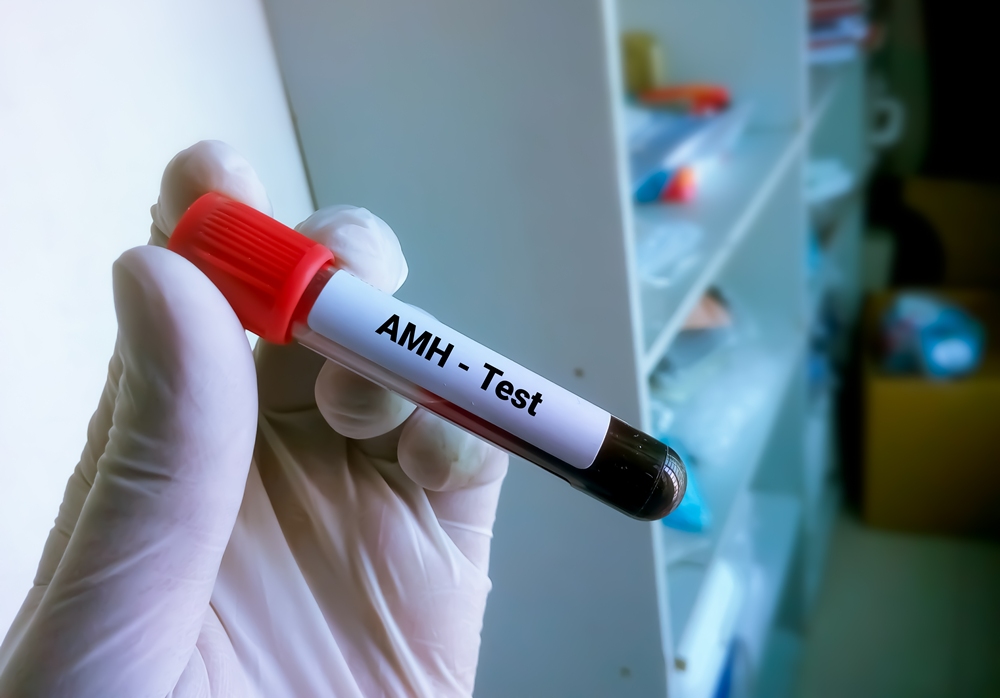
AMH has become one of the most-requested blood tests in private women’s health. The number it gives back is useful, but only when it is read in context.
AMH testing in the UK has gone mainstream over the past few years. Home-testing kits sell it as a snapshot of “your fertility”.
Private clinics include it in screening packages. On social media, individual AMH results are now routinely treated as a verdict on whether a woman will be able to have children.
That reading isn’t accurate. Anti-Müllerian Hormone (AMH) does carry useful information, but only inside a wider clinical picture.
Looked at on its own, it produces a lot of unnecessary anxiety, and often hides the questions that matter more.
What AMH measures
AMH is a hormone produced by the small follicles in the ovaries, the ones that haven’t yet been recruited for ovulation. Because these follicles are relatively stable across the menstrual cycle, the test can be done on any day, without needing to be timed to a period.
A higher AMH level tends to indicate a larger pool of these follicles. A lower level suggests the pool is smaller. That, broadly, is what the result shows.
The HFEA, the UK’s independent regulator of fertility treatment, describes AMH as an indicator of ovarian reserve, while making clear that fertility test results of this kind “are not guaranteed” as a predictor of fertility outcomes.
Put simply: AMH is a count of what is there. It says nothing about how well the body will use it, and it cannot predict if or when conception will happen.
Where AMH fits in a modern fertility assessment
In current UK private practice, AMH is rarely tested in isolation. A meaningful fertility assessment will pair it with a fuller hormone profile (FSH, LH, oestradiol, prolactin and thyroid function), along with markers such as Day 21 progesterone, vitamin D and rubella immunity where relevant.
This is the structure used in a trying-to-conceive screening, and there is a reason for it: each of these tests answers a different question that AMH on its own cannot.
It is this combination, not the AMH number on its own, that gives a clinician enough information to say anything meaningful about an individual’s reproductive picture.
Misconception 1: “A low AMH means natural pregnancy isn’t possible”
This is the misconception that causes the most distress, and it is consistently wrong.
Several large prospective studies of women in their 30s and 40s trying to conceive naturally have found that women whose biomarkers, including AMH, pointed to a diminished ovarian reserve were no less likely to conceive within twelve cycles than women with reassuring results.
That is why neither UK regulators nor national guidance treat AMH as a test that can predict natural fertility in women who have no known infertility issue.
The reason is simple. Natural conception only requires one good egg, released in a normal cycle, in the right window.
AMH doesn’t measure egg quality, and it doesn’t reveal whether ovulation is happening. A woman with low AMH may still ovulate every month with high-quality eggs.
A woman with high AMH (often the pattern seen in polycystic ovary syndrome) may not be ovulating regularly at all.
The NHS emphasises that age is the strongest single predictor of natural fertility. A 35-year-old with a low AMH and regular cycles is, on average, more likely to conceive naturally than a 40-year-old with a normal AMH and irregular ones.
If AMH comes back low for someone who is trying to conceive, the more useful question isn’t whether pregnancy is still possible (the answer is almost always yes), but whether there is reason to investigate the wider picture now rather than waiting twelve months.
Misconception 2: “A normal AMH means everything is fine”
The opposite assumption is just as risky.
AMH tells you about egg quantity. It does not tell you about:
- Egg quality, which is closely tied to age
- Whether ovulation is happening regularly
- Whether the fallopian tubes are open
- Whether there are structural issues such as fibroids, polyps, ovarian cysts or endometriosis
- Sperm parameters in a male partner
- Whether implantation will succeed
A reassuringly normal AMH at 38 still sits alongside age-related changes in egg quality. A slightly lower-than-average AMH at 28 may carry no real-world implications at all.
That is why no UK clinical body recommends AMH as a routine screening test for healthy women who have no fertility concerns. NICE’s fertility guideline, NG73, treats AMH as one component of a broader investigation, not as a verdict in itself.
Imaging is the natural counterpart to the blood test. A transvaginal pelvic ultrasound directly visualises the small follicles that produce AMH, the antral follicle count. It also picks up structural findings a blood test will never reveal, including ovarian cysts, fibroids, polycystic ovarian morphology, and abnormalities in the uterine cavity. A full ovarian reserve assessment normally includes both.
Where the AMH number actually matters
There are three settings in which AMH carries real, decision-relevant information.
Before IVF or egg freezing. AMH is one of the better predictors of how the ovaries are likely to respond to stimulation medication.
A higher AMH usually predicts more eggs collected per cycle, and a very low AMH may shape decisions about protocol or whether to bank cycles before treatment.
During a fertility investigation. If a couple has been trying for twelve months, or six months if the woman is over 35, AMH becomes part of a wider assessment that should also include ovarian ultrasound, a fuller hormone profile, semen analysis and an assessment of tubal patency.
As context for women planning ahead. Women who want to understand their reproductive options before they are ready to conceive (for example, ahead of a decision about egg freezing) can find AMH informative, provided it is interpreted alongside age, antral follicle count, and other markers, by a clinician who can place the number in context.
Reading the number properly
For anyone who has had an AMH test, three things make the result more useful:
- Pair it with age. A “normal” AMH at 25 means something very different from the same number at 38. Age is doing more work in the equation than the AMH value itself.
- Pair it with imaging. Ultrasound shows what is actually in the ovaries today, rather than relying on a single biochemical marker.
- Read it with a clinician. A number on a screen, with no context, no follow-up and no plan, is the worst way to use a test that, properly interpreted, can be very informative.
AMH is a useful tool. It just isn’t the headline it has often been turned into.
Disclaimer
This article is produced for informational purposes only and does not constitute medical advice, diagnosis or treatment. Clinical guidance referenced reflects published HFEA, NHS and NICE information available as at May 2026. Individual circumstances vary; readers are advised to consult a qualified healthcare professional before acting on any information in this article. This piece was produced in association with Spital Clinic, which provided background clinical information for editorial purposes. Hyperlinks to external sources are included for reference only and do not represent an endorsement of any product, service or organisation.












 Menopause2 weeks ago
Perimenopause misinformation ‘putting women at risk’

 Hormonal health3 weeks ago
NHS urged to update website following renaming of PCOS

 Insight4 weeks ago
PCOS renamed after decade-long campaign to end ‘cyst’ misconception

 News1 week ago
Women still being failed when they reach menopause, experts say

 Entrepreneur2 weeks ago
Women’s Health Innovation Summit opens submissions for 2026 Innovation Showcase

 Diagnosis4 weeks ago
Artera receives FDA Clearance for breast cancer platform

 News1 week ago
Three menopause innovators shortlisted for Femtech World Award

 Cancer3 weeks ago
AI could transform ovarian care through personalisation, study finds
1 Comment