




News
Could an artificial sphincter solve condition affecting hundreds of millions of women globally?


The health tech firm UroMems believes it has moved a step closer to a new era of treatment for women with stress urinary incontinence (SUI).
The company has reported on positive progress in its clinical feasibility study for its UroActive system – a smart, automated artificial urinary sphincter – as a treatment for SUI.
UroMems says the entire treatment cohort of women involved in the trial has successfully reached “the six-month primary endpoints”.
“This milestone indicates a new era for millions of women suffering from SUI, and signals an exciting transition for surgeons treating SUI not only in France, where the study was conducted, but also across the US and Europe,” the company said.
One-year results for the first patient later this week at the Society of Urodynamics, Female Pelvic Medicine & Urogenital Reconstruction (SUFU) Winter Meeting in California.
Hamid Lamraoui, UroMems chief executive officer and co-founder, said: “With women suffering from higher rates of SUI and currently no effective solutions available to them, we are ecstatic to be the first to demonstrate the feasibility of our breakthrough technology now in a total of 12 women and men.
“All of the female patients participating in our study have returned to living life fully after years of struggling with SUI. We sincerely thank them for participating in our study along with their physicians and our team for bringing this one step closer to providing a new and effective option to the millions of people suffering from SUI in the US and Europe.”
The female feasibility assessment of the UroActive System was completed through a prospective multicenter clinical study. UroActive is the first smart automated artificial urinary sphincter (AUS) to treat SUI, and the only one to reach this critical milestone.
The six women in the multicentre trial have been implanted with the artificial sphincter for between seven months and almost two years.
The devices have operated as expected with no need for revision nor explant, trial findings show.
Also, “phenomenal follow-up” was received on secondary outcomes measures, including leak rate values and patient quality of life questionnaires.
UroActive is the first smart active implant that treats SUI, powered by a ‘myo electro-mechanical system’ (MEMS). This is placed around the urethral duct and is controlled based on the patient’s activity, without the need for manual adjustments, intending to provide patients with ease of use and a better quality of life than current options.
UroMems recently secured US$47m in funding to support the development of its product.
SUI, or involuntary urinary leakage, affects an estimated 40 million Americans and 90 million Europeans. It significantly impacts quality of life, as it can be debilitating, and often leads to depression, low self-esteem and social stigma. Globally, half of all women over 50 are said to experience some form of incontinence.

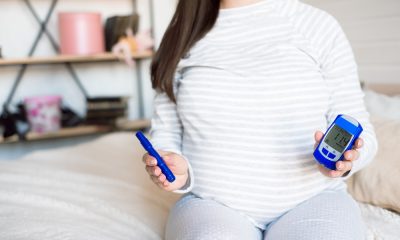








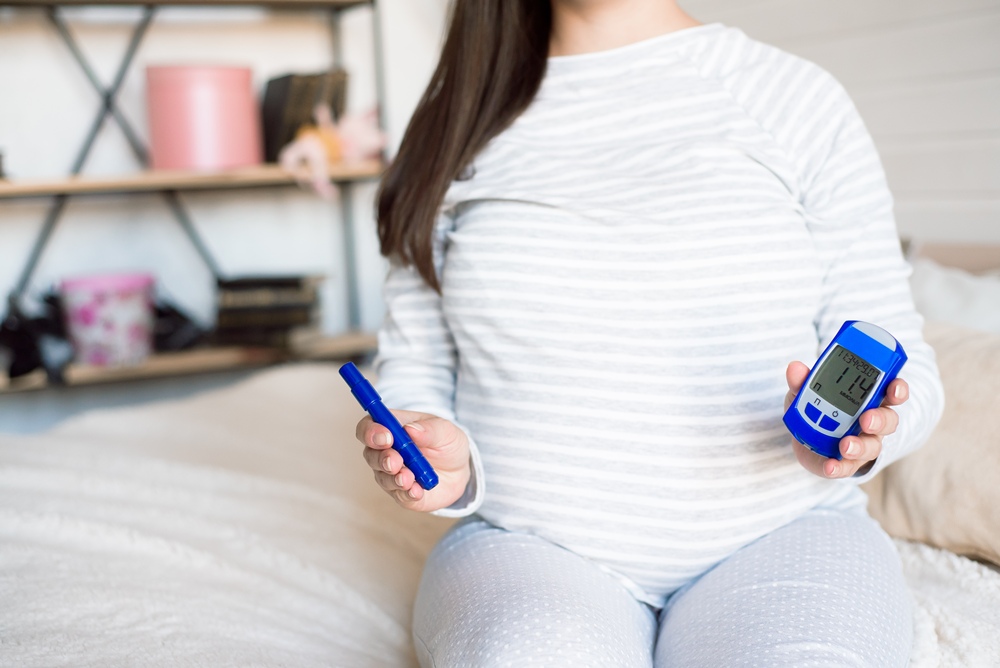
More than half of women with gestational diabetes report stigma from healthcare staff, family, friends and wider society, new research shows.
A survey of 1,800 UK women found widespread emotional distress at diagnosis of the condition, a form of high blood sugar that develops during pregnancy, with effects lasting beyond birth.
Gestational diabetes affects around one in 20 pregnancies in the UK, and the findings highlight the wider toll on women diagnosed with the condition.

The study was funded by Diabetes UK and led by researchers at King’s College London and University College Cork.
Dr Elizabeth Robertson, director of research and clinical at Diabetes UK, said: “Stigma can have a dangerous and devastating impact on pregnant women diagnosed with gestational diabetes, particularly at a time when emotions and anxieties may already be heightened.
“We know that stigma can lead to shame, isolation and poorer mental health, and may discourage people from attending healthcare appointments, potentially increasing the risk of serious complications.
“This research highlights the urgent need for better support systems, based on understanding and empathy to ensure no one feels blamed or judged during their pregnancy.”
More than two-thirds of women, 68 per cent, reported anxiety at diagnosis, while 58 per cent felt upset and 48 per cent experienced fear.
The psychological impact continued beyond birth, with 61 per cent saying the condition negatively affected their feelings about future pregnancies.
Nearly half of women, 49 per cent, felt judged for having gestational diabetes, while 47 per cent felt judged because of their body size.
More than 80 per cent felt other people did not understand gestational diabetes, and more than a third, 36 per cent, concealed their diagnosis from others.
Gestational diabetes stigma was also common in healthcare settings, with 48 per cent reporting that professionals made assumptions about their diet and exercise, and more than half, 52 per cent, feeling judged based on their blood glucose results.
Many women described a loss of control and a sense of disruption during pregnancy.
Nearly two-thirds, 64 per cent, felt they were denied a normal pregnancy, while 76 per cent reported a lack of control over their pregnancy.
More than a third, 36 per cent, felt abandoned by healthcare services after giving birth, and one in four, 25 per cent, continued to experience depression or anxiety postpartum.
Focus group participants described harmful stereotypes, including assumptions that they were ‘lazy’, had ‘poor eating habits’ or ‘lacked willpower’.
Comments from family and friends included remarks such as “should you be eating that?” and “you must have eaten too much, that’s why you have gestational diabetes.”
The researchers are calling for targeted interventions alongside structured emotional support for women during and after pregnancies affected by gestational diabetes, to improve both mental and physical health outcomes.
Professor Angus Forbes, lead researcher from King’s College London, said: “Stigma and emotional distress are far more common in women diagnosed with gestational diabetes than many realise.
“Everyday interactions, even with those who mean well, can deepen this harm, shaping women’s emotional wellbeing and the choices they feel able to make.
“It’s clear that meaningful action is needed to protect women’s mental and physical health.”
Risk factors for gestational diabetes include living with overweight or obesity, having a family history of type 2 diabetes, and being from a South Asian, Black or African Caribbean or Middle Eastern background.


Article produced in association with London Pregnancy Clinic
One of the most common questions in early pregnancy: NIPT or the nuchal translucency (NT) scan – do I really need both? The 2026 evidence gives a clear answer.
The two tests look at different things, and doing them together is how first-trimester screening works at its best.
This is not a debate between old and new technology. NIPT is a genuine advance in detecting chromosome abnormalities from a maternal blood sample.
The NT scan is the first detailed look at how the fetus is forming. What each sees, the other largely cannot.
What NIPT actually tells you
NIPT – non-invasive prenatal testing – analyses fragments of fetal DNA circulating in the mother’s blood. Taken from around 10 weeks, the test measures chromosome proportions to flag the common trisomies: trisomy 21 (Down syndrome), trisomy 18 (Edwards) and trisomy 13 (Patau).
Most panels include fetal sex and sex-chromosome aneuploidies. Extended NIPT adds selected microdeletion syndromes – most commonly 22q11.2 (DiGeorge syndrome) – and the newest whole-genome platforms can detect copy-number variants down to around 1 Mb across every chromosome.
What NIPT does not look at is anatomy. It tells you whether the chromosomes are numerically correct.
It cannot tell you how the heart, brain, spine, kidneys or abdominal wall are forming, because it analyses DNA, not structure.
The NHS offers NIPT as a second-line screening test, reserved for women who receive a higher-chance result from the combined test – precisely because NIPT is best understood as one part of a wider screening picture rather than the whole of it.
What the NT scan actually tells you
The NT scan is an ultrasound performed at 11 to 14 weeks that measures the nuchal translucency – a small fluid-filled space at the back of the fetal neck.
Protocols developed by the Fetal Medicine Foundation, the group that pioneered first-trimester screening under Professor Kypros Nicolaides at King’s College Hospital, combine the NT measurement with additional markers: nasal bone, ductus venosus flow, tricuspid regurgitation, and maternal serum biomarkers (PAPP-A and free β-hCG).
More importantly, the scan is the first structural assessment of the fetus.
Major anomalies already visible at 11-14 weeks include absence of the cranial vault, large body-wall defects such as omphalocele and gastroschisis, megacystis, severe cardiac defects with abnormal four-chamber views, and skeletal dysplasias.
An increased NT measurement itself – even with a completely normal chromosome result – is associated with a notable rate of structural heart defects and monogenic syndromes that NIPT cannot detect.
Why the combination outperforms either test alone
Taken together, NIPT and the NT scan give complementary coverage.
For the common trisomies, NIPT is more sensitive than the NT scan alone. Pooled data place detection of trisomy 21 above 99 per cent with a false-positive rate around 0.1 per cent.
Combined first-trimester screening without NIPT, using NT and serum markers alone, reaches approximately 90 per cent detection – and up to 95 per cent when nasal bone, ductus venosus and tricuspid flow are added – at a 3 to 5 per cent false-positive rate.
For that specific endpoint, NIPT is the more accurate test.
The NT scan picks up almost everything NIPT misses: structural anomalies, early markers of monogenic syndromes, confirmation of viability, accurate dating, twin chorionicity, and placental position.
An increased NT with a normal NIPT result shifts the clinical conversation toward syndromes like Noonan, Kabuki and the skeletal dysplasias – conditions with single-gene origins rather than chromosomal ones.
Working out which is which often requires genetic testing beyond NIPT. Carrier screening and expanded genetic panels – including those offered at Jeen Health – cover the single-gene territory that NIPT does not address.
When the combination matters most
Several patient groups have most to gain from doing both:
- Women conceiving after IVF or with donor gametes, where maternal age and fertility treatment each subtly shift risk profiles
- Women aged 35 and over, where baseline chromosomal risk is higher and soft markers are more likely
- Anyone with a previous pregnancy affected by an anomaly or loss, where reassurance matters
- Twin pregnancies, where NIPT performance depends on fetal fraction and structural assessment is more complex
- Women who have had a raised or borderline result on earlier screening markers
Chromosomes and anatomy are two separate clinical questions. Each needs its own answer.
What happens if the tests disagree
Disagreements between NIPT and the NT scan are not failures of either test – they are the reason both are done.
- NIPT low-risk, NT raised: consider monogenic syndromes, structural cardiac assessment, and early anomaly ultrasound follow-up
- NIPT higher-chance, scan normal: confirmatory diagnostic testing (CVS or amniocentesis) before any major decision
- NIPT no-call: repeat sampling, gestational age check and clinical review – a no-call itself is associated with an increased chromosomal risk
- Both abnormal: a clear indication for specialist fetal medicine review and early diagnostic testing
Professional guidance from the RCOG supports this complementary approach, emphasising that NIPT is a screening rather than a diagnostic test, and that its results are most useful when interpreted alongside ultrasound findings.
Practical guidance for 2026
The most efficient way to run both tests is in a single appointment window, between 10 and 14 weeks, with the blood sample taken first and the scan performed on the same visit.
Results typically return within 5 to 10 working days for standard NIPT panels, and same-day for the scan itself.
This is the logic behind the SMART Test at London Pregnancy Clinic – extended NIPT paired with a full first-trimester ultrasound in a single appointment, delivering both chromosomal and structural information in one visit. For most patients, it removes the false choice of picking one over the other.
The wider picture
The question of NIPT versus NT scan has a settled clinical answer in 2026: the two tests examine different aspects of the pregnancy, and the most complete first-trimester assessment uses both.
For a pregnancy a woman wants to carry with the fullest possible picture, both tests belong in the first-trimester window. The question worth asking is which clinic offers them together, with the pre- and post-test care that makes the results usable.
If you are deciding on first-trimester screening, a consultation with a fetal medicine specialist is the most useful first step.
Disclaimer: This article is produced for informational purposes only and does not constitute medical advice, diagnosis or treatment. Clinical guidance referenced reflects published NHS, Fetal Medicine Foundation and RCOG standards as at April 2026. Individual circumstances vary; readers are advised to consult a qualified healthcare professional before acting on any information in this article. This piece was produced in association with London Pregnancy Clinic, which provided background clinical information for editorial purposes. Hyperlinks to external sources are included for reference only and do not represent an endorsement of any product, service or organisation.

Diagnosis
New meta-analysis further supports low re-excisions and high placement accuracy with the Magseed marker
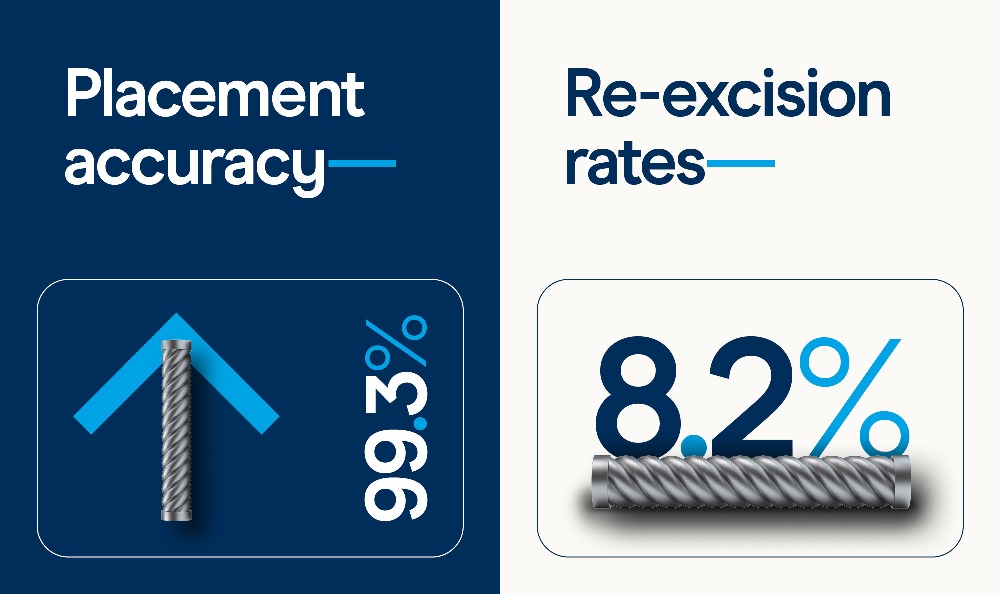
An independent meta-analysis from January 2026, pooling 2,117 patients and 2,176 Magseed marker placements, has reported low re-excision rates (8.2%) and low positive margins (7.6%) when the marker is used to localise non-palpable breast lesions prior to breast‑conserving surgery (BCS).
Al Darwashi et al. (2026) pooled 16 studies to evaluate safety and efficacy outcomes when the Magseed marker was used for preoperative localisation of non-palpable lesions prior to BCS.
The authors reported high placement accuracy, reliable intraoperative retrieval and low rates of positive margins, re-excisions and complications.
In a cohort cited by the review, Moreno‑Palacios et al. (2024) also observed that Magseed marker facilitates less extensive resections compared to guidewires, promising improved cosmetic outcomes while maintaining oncological efficacy.
The key findings
Low re-operation burden: Positive margins occurred in just 7.6% of cases, and only 8.2% required re-excision across the included series.
High placement accuracy: The success rate for Magseed marker placement showed 99.3% positioned within 10 mm of the lesion.
Of note, 96.6% of Magseed markers were placed within an even stricter 5 mm radius.
Reliable retrieval: The pooled intraoperative retrieval success was 99.6% for the Magseed® marker.
“This meta-analysis demonstrated Magseed as a safe and effective preoperative localisation technique for BCS in the management of selected non-palpable breast lesions.” Al Darwashi et al. (2026)
Ready to find out more about the Magseed marker and the Sentimag system?
→ Speak to a Magseed marker expert
Magseed® is a trademark of Hologic, Inc. or its subsidiaries in the United States or other countries. Intended for medical professionals and use in the U.S., UK and the EU only.











 Events3 weeks ago
Three sessions that show exactly where women’s health is heading in 2026

 Pregnancy3 weeks ago
How NIPT has evolved and what AI NIPT means in 2026

 Menopause4 weeks ago
Watchdog bans five ads for women’s heath claims

 Entrepreneur4 weeks ago
WHIS USA 2026 announces first ticket release for landmark Women’s Health Innovation Summit

 Menopause4 weeks ago
Menopause has no lasting impact on cognition, research finds

 News3 weeks ago
Two weeks left to make your mark in women’s cardiovascular health

 Opinion3 weeks ago
Q1 momentum: Female founders are advancing, but the system still hasn’t caught up

 News4 weeks ago
Endometriosis firm wins NIH prize