




Entrepreneur
Manta Cares raises US$5.4m for cancer platform


Manta Cares has secured US$5.4m to expand its digital cancer platform, which helps patients and care partners manage treatment complexity.
The company offers a free platform to track symptoms, medications, appointments, treatment decisions and daily logistics.
Founded and led by chief executive Samira Daswani, a breast cancer survivor and entrepreneur, the company aims to simplify treatment navigation.

Daswani said: “Navigating cancer felt like a treacherous hike where you don’t get access to a map, the right tools, or the right guides.
“Information today is easy to access.
“It’s identifying right from wrong, appropriate from inappropriate, relevant from irrelevant that’s the challenge.”
Manta Cares has collaborations with three of the top 15 pharmaceutical manufacturers, eight health systems and 40 patient advocacy groups.
It also has distribution partnerships with academic hospitals and health systems including Stanford.
The funding round was led by Pear VC and Sozo Ventures, with participation from strategic angels including Dr Stanley Marks, chair of UPMC Hillman Cancer Center and founder of Via Oncology.
Manta Cares is a graduate of CancerX, the AARP AgeTech Collaborative and PharmStars.














A fertility startup has raised US$4m and will open its first lower-cost IVF clinic in West Palm Beach later this year.
It will offer a full IVF cycle, including medications, for US$8,995.

Around 12 per cent of American couples struggle with infertility, according to the company, but only 14 per cent of them receive IVF because of the cost.
A single IVF cycle costs an average of US$23,500, it said, with the cost nearly doubling if further cycles are needed.
Co-founder and chief executive Van Spina said: “We’re building ABC around a straightforward premise: IVF has become unnecessarily expensive, and many patients are priced out before they ever have a real chance to start a family.”
“This is personal for me. My fiancée and I went through IVF ourselves, including multiple failed cycles,” Spina continued, citing Jamie Rapp.
“That experience pushed me to build the kind of fertility company we wished had existed when we began treatment.”
The US$4m seed round was led by Wormhole Capital and Tower Research Ventures.
In a blog post, New York-based Tower Research described ABC as a new model for fertility care, praising its “evidence-based protocols, AI-assisted intake, and modern lab workflows.”
“When we met the team at The American Baby Company (ABC), we saw an opportunity to rethink how fertility care is delivered in the US from the ground up,” the post said.
Co-founder and chief medical officer Dr Paul Magarelli is a board-certified reproductive endocrinologist and one of the most prominent voices in the US on expanding access to fertility care, according to Tower.
Reproductive endocrinology is a branch of medicine concerned with hormones and fertility.
Magarelli developed the Clinical Fertility Physician certification programme, which trains generalist clinicians to deliver routine fertility procedures under specialist oversight.
Spina spent his early career as a technology investor at Warburg Pincus before founding an institutionally backed data business in private credit.
“We’re on a mission to become the place Americans go to start their families,” Spina said.
“Our 10-year goal is to help make 250,000 babies per year.”
News
From Hologic to Ark Surgical: Why Joseph LaBruzzo is betting on the future of women’s surgical innovation
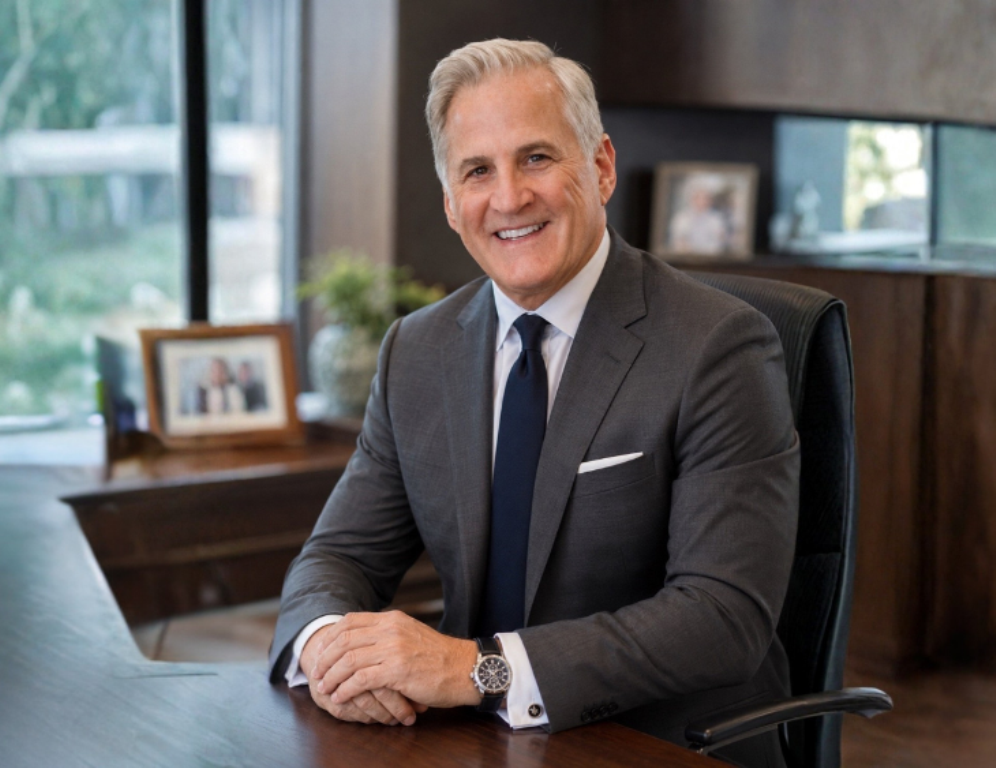
After more than two decades leading organisations at some of the world’s most respected medical device companies, including Hologic, SenoRx Breast Care, and BTL Industries, Joseph B. LaBruzzo is embarking on a new chapter as President & CEO of U.S. Operations and Board Member at Ark Surgical.
We sat down with Joseph to discuss what drew him to Ark Surgical, why he believes women’s surgical innovation is entering a transformative era, and what it takes to bring meaningful technologies from concept to standard of care.
You have held leadership positions at some of the biggest names in MedTech. What attracted you to Ark Surgical?
Throughout my career, I’ve been fortunate to work with organisations that developed technologies capable of changing the standard of care.
What attracted me to Ark Surgical is the opportunity to help address a meaningful unmet need in gynecologic surgery with an innovation that has the potential to improve patient outcomes while preserving the benefits of minimally invasive surgery.
Opportunities like that don’t come along very often.
FemTech World recently highlighted that many women remain unaware of gynecologic cancers and that unexpected diagnoses continue to have a profound impact on patients and families.
How has your own experience shaped the way you think about innovation in women’s health?
Earlier in my career, I witnessed many women receive life-changing cancer diagnoses.
Those experiences stayed with me and reinforced my belief that if there’s an opportunity to reduce risk through better innovation, it’s one worth pursuing.
That’s one of the reasons I was drawn to Ark Surgical.
The vast majority of minimally invasive gynecologic procedures are performed for conditions believed to be benign. Unfortunately, in rare cases, pathology later reveals an unexpected malignancy.
LapBox was designed with a proprietary dual-wall tissue containment system to help facilitate contained specimen retrieval and minimise the risk of tissue spillage during laparoscopic procedures.
I believe innovations like this can help surgeons manage the unexpected while preserving the many benefits of minimally invasive surgery for women.
Women’s health has gained significant momentum in recent years, yet surgical innovation often receives less attention than diagnostics or therapeutics. Why do you think that is?
Women’s health has historically been underfunded and underserved across many areas of medicine, and surgery is no exception.
While we’ve seen tremendous advances in diagnostics and pharmaceuticals, there are still important opportunities to improve the surgical experience for both physicians and patients.
Innovation that enhances safety, efficiency, and outcomes has the potential to make a lasting impact.
What excites you most about LapBox?
LapBox addresses a very real challenge that gynecologic surgeons face during minimally invasive procedures.
It was thoughtfully designed to integrate seamlessly into the surgical workflow while providing an added layer of confidence when tissue retrieval is required.
I believe technologies that solve real clinical challenges in a practical way have the greatest potential to become part of the standard of care.
What do you see as the biggest unmet needs in minimally invasive gynecologic surgery today?
The future of surgery isn’t simply about making procedures less invasive. It’s about making them smarter and safer.
Surgeons need technologies that integrate seamlessly into their workflow while helping them navigate increasingly complex clinical situations.
Every advancement that helps reduce risk while preserving the benefits of minimally invasive surgery has the potential to improve outcomes for both physicians and patients.
That’s where I believe the greatest opportunities for innovation exist.
As you take on this new role, what are your priorities over the next 12 months?
Our focus over the next 12 months is to build a strong foundation for growth. That means expanding physician partnerships, driving early clinical adoption, growing our team, and ensuring that more surgeons have access to technologies like LapBox.
At the same time, we’re focused on building strategic relationships with investors, healthcare systems, and industry partners that support our long-term vision.
What advice would you give entrepreneurs building the next generation of women’s health companies?
Start with a real clinical problem and never lose sight of the patient.
Great technology alone isn’t enough. You also need strong clinical evidence, physician advocates, and a clear market strategy. The companies that succeed are the ones that bring all of those pieces together while remaining focused on improving patient care.
About Joseph B. LaBruzzo
As President & CEO of U.S. Operations and Board Member, Joseph LaBruzzo is leading Ark Surgical’s U.S. growth strategy, physician partnerships, strategic investment initiatives, and organisational expansion, supporting the company’s mission to advance safer minimally invasive gynecologic surgery through innovative technologies.


A market analysis made by Moore Financial Consulting estimates the global market for Zero Candida Technologies, Inc. (TSXV: ZCT) (OTCQB: ZCTFF) (FSE: 9L2) (the “Company” or “ZCT”), a FemTech medical device company advancing next-generation solutions for women’s health, will reach over USD 2 billion by 2030, with a compound annual growth rate of 5.25 per cent globally and 3.9 per cent in North America and 4.2 per cent in Europe.
The analysis emphasis that up to 75 per cent of women will have at least one vaginal yeast infection in their life.
Moreover, recurrent VVC (Vulvovaginal Candidiasis) affects nearly 8 per cent of women globally (for women above the ages of 15-60).
According to the data, 100 per cent of women with Recurrent VVC will purchase a combination of over-the-counter and prescription antifungal treatments, usually with the common use of oral agents.
Compared to women with non-recurrent VCC, 55.2 per cent will purchase prescription antifungal treatment, 37 per cent over-the-counter antifungal, 5.6 per cent will purchase a combination of both treatments, and the rest will not purchase any treatment.
Eli Ben Haroosh, founder & CEO, Zero Candida Technologies, said: “Moore’s market analysis matches our estimations, Zero Candida is a groundbreaking and game-changing company in the world of women’s medicine, and we look forward to be one of the leading companies offering AI-driven, tampon-like device, helping women suffering from VVC .
Zero Candida announced recently that its shares are now successfully listed on the Frankfurt Stock Exchange (FSE).
This listing marks a significant milestone for the Company as it expands its global presence, now cross-listed on both the TSX Venture Exchange and the FSE, providing increased visibility and access to a broader pool of international investors.












 News2 weeks ago
New menopause drug approved for use by NHS in Scotland

 Hormonal health1 week ago
Stardust period tracker shares health data, study reveals

 News6 days ago
Zero Candida market set to reach over US$2 billion by 2030 – report

 News2 weeks ago
Women’s health draws record $1.55bn in equity as capital spreads beyond the mega-rounds

 Insight2 weeks ago
Softening ovaries could extend fertility as women age, study suggests

 Entrepreneur2 weeks ago
Onto Health acquires diagnostics software company Levy Health

 News1 week ago
Congress urged to invest over $20bn to close women’s health gap

 Mental health1 week ago
Nearly 60% of young women get health advice from influencers, research finds