




Menopause
Study reveals hidden menopause tech privacy concerns


New research has revealed privacy and advice concerns surrounding tech aimed at helping women navigate the menopause.
The study, which surveyed 310 UK participants, warns that sensitive data collected from women about their health is often vulnerable to exploitation, ranging from targeted financial scams to workplace discrimination and misinformation.
With nearly one million women in the UK leaving their jobs due to menopausal symptoms, and an estimated 13m currently perimenopausal or menopausal, new digital technology has boomed, promising to provide medical advice and solutions.

However, the research identified significant security gaps in these technologies, including the lack of medical professionals on community forums, leading to the spread of unverified medical advice and misinformation.
The large-scale study, which is the first of its kind, also highlighted a growing tension between the benefits of menopause tech and the privacy risks associated with the intimate data these services collect.
Unlike fertility trackers, which have faced intense scrutiny following legal changes such as the overturning of Roe v. Wade in the US, menopause tech remains under-researched and under-regulated.
Dr Maryam Mehrnezhad, from the information security department at Royal Holloway and co-author, said: “Many women are turning to technology to navigate the diagnostic ambiguity of going through the menopause and to combat the long waiting times often associated with traditional healthcare.”
This makes the absence of trained medical professionals on these tech community forums, who can create misinformation, a real serious threat to participants.
Users we surveyed also expressed deep fears regarding data use, specifically that intimate health data, including emotional symptoms and sexual activity history, could be accessed by insurance companies or employers.
Such data types can be used to discriminate users e.g., in regarding their health insurances and in workplaces.
Dr Taylor Robinson, co-author and post-doctoral researcher at Royal Holloway, added: “Self-tracking apps are becoming essential tools for personal advocacy, allowing users to document their journeys and foster deeper self-reflection, which ultimately improves their interactions with doctors, but more needs to be done to protect those using the apps.”
As the femtech industry is projected to reach nearly US$30bn by 2032, the authors argue that developers and policymakers must prioritise privacy to ensure digital tools remain a safe resource for those experiencing the complexities of menopause.
Rebecca Jones and Sophie Hawkes, PhD students and co-authors, added that digital platforms and social media groups provide a vital lifeline by alleviating the isolation often tied to menopause, offering a dedicated space for users to share advice and validate their experiences and, with much more rigorous scrutiny on real healthcare advice, they can be a great asset for many.
This research provides crucial practical data to inform secure, user-centric design for policymakers and menopause tech developers, noting that many current apps and devices fall short of GDPR standards by making privacy notices difficult to access or understand.














The government and NHS England should work with pharmacies to show how the sector can help women experiencing menopause symptoms, according to a joint statement released by several pharmacy bodies.
A consensus statement endorsed by the Royal College of Pharmacy warned there remains significant unmet need for clear, evidence-based guidance and advice on the condition.
The statement, ‘Menopause, unmissed’, published on 24 April 2026, was endorsed by bodies including the Royal College of Pharmacy, the Company Chemists’ Association and the National Pharmacy Association.
Amandeep Doll, director for England at the Royal College of Pharmacy, said: “Pharmacy teams are highly accessible and already support people experiencing menopause with advice, self-care and signposting to other services.
“We endorsed this statement because improving access to clear information and joined-up care is essential, particularly for those facing inequalities.”
According to the NHS, around 75 per cent of women experience some symptoms during perimenopause and menopause, while 25 per cent report that their symptoms are severe.
In the joint statement, the pharmacy bodies welcomed increased awareness of menopause in recent years but warned this had also led to a sea of misinformation and that there remains significant unmet need, particularly for clear, evidence-based and accessible information and guidance.
The document set out eight recommendations to improve menopause care, including a public awareness campaign on menopause symptoms and opportunities for self-care, alongside guidance on how pharmacies can support women with menopause.
It also recommended that integrated care boards and women’s health hubs should report progress on implementing the upcoming equity framework in menopause care.
In its renewed women’s health strategy for England, published on 15 April 2026, the Department of Health and Social Care set out plans to publish an equity good practice guide to help integrated care boards better understand and reduce inequalities in heavy periods and menopause.
The joint statement asked that the Department of Health and Social Care and NHS England work with champions in minority communities to ensure menopause materials reflect a diverse range of experiences.
It added that women living in areas of high deprivation and those from Black, Asian and minority ethnic communities can experience menopause differently and are more likely to face health inequalities in their care.
Doll said: “With the right support, training and commissioning, community pharmacy can play a greater role in delivering timely, convenient menopause care closer to home, working as part of neighbourhood health teams and in partnership with women’s health hubs.”
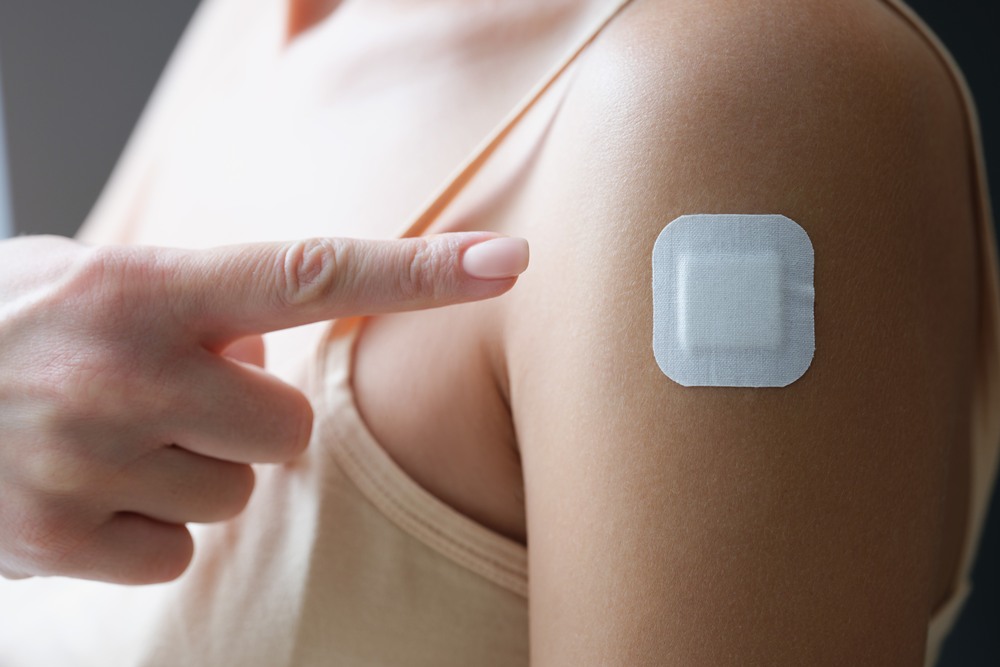
Theramex has been censured over HRT failures that regulators said jeopardised patient safety.
The UK producer of HRT drugs, including Evorel and Intrarosa, was found to have breached fundamental compliance standards.
These included not updating crucial prescribing information, in some cases for several years, and not making clear that one drug must not be used during pregnancy.
The Prescription Medicines Code of Practice Authority issued the public reprimand after Theramex staff blew the whistle over what it described as “alarming” compliance issues and incomplete prescribing information for Evorel and Intrarosa that “jeopardise patient safety”.

Evorel patches, which contain estradiol, are among the most prescribed forms of transdermal HRT, meaning hormone treatment delivered through the skin. More than 250,000 items were issued in the last financial year, according to NHS Business Services Authority figures.
Overall, nearly 10m items of estradiol, including gels, were prescribed in the 2024/25 financial year.
The employees’ concerns included failing to provide comprehensive side-effect information in Evorel’s prescribing information, and not updating Intrarosa’s product information since 2019.
The PMCPA also reprimanded the company over failures to specify in advertising at a reproduction and advertising conference that Yselty, used to treat uterine fibroids, should not be taken during pregnancy.
In total, the PMCPA found Theramex had breached the Association of the British Pharmaceutical Industry’s code of practice 21 times.
The panel said the breaches not only jeopardised patient safety, but that Theramex had “brought discredit upon, and reduced confidence in, the pharmaceutical industry”.
The PMCPA also condemned Theramex’s decision to leave the regulator’s jurisdiction.
“By leaving the self-regulatory framework and requiring the Medicines and Healthcare products Regulatory Agency to assume full responsibility for regulating it, Theramex has inevitably delayed any regulatory action and oversight,” it said.
Dr Amit Aggarwal, medical director of the ABPI, said: “Theramex has fallen seriously short of the standards expected under our strict ABPI code of practice, and it’s right that the PMCPA took action.
“It’s also disappointing that as a result, the company has decided to leave the pharmaceutical industry’s self-regulatory system, which holds companies to standards above and beyond the law.”
Julian Beach, MHRA’s executive director of healthcare quality and access, said he was disappointed Theramex had left the PMCPA, but that the MHRA would take any necessary steps to ensure patient safety.
He said: “Leaving the jurisdiction of the PMCPA does not mean a company escapes scrutiny.
“The MHRA has legal powers to investigate and act on concerns about medicines that may impact public safety. Breaches of regulations can amount to criminal offences.”
A spokesperson for Theramex said: “Upholding ethical standards, compliance, and patient safety is very important to us. We acted promptly to address these historical matters as soon as we became aware of them.
“We take these matters seriously and have undertaken a comprehensive review of our compliance framework, including commissioning an independent external audit and implementing a broad programme of enhancements.
“As part of this process, we concluded it is most appropriate to be regulated with respect to UK medicines legislation by the MHRA, while continuing to uphold the spirit and principles of the EFPIA and ABPI codes of practice.
“Therefore, we withdrew from the PMCPA’s jurisdiction in January 2026. This approach allows us to focus our resources on maintaining high standards of ethical and compliant behaviour, with patient safety.”











 Entrepreneur1 week ago
Future Fertility raises Series A financing to scale AI tools redefining fertility care worldwide
 Fertility3 weeks ago
Future Fertility partners with Japan’s leading IVF provider, Kato Ladies Clinic

 Menopause3 weeks ago
More research needed to understand link between brain fog and menopause, expert says

 Mental health2 weeks ago
Lifting weights shows mental health and cognitive benefits in older women, study finds

 News3 weeks ago
Self-employment linked to better cardiovascular health outcomes in Hispanic women

 News5 days ago
Women’s digital health market set to reach US$5.28 billion in 2026 – report

 Entrepreneur3 weeks ago
Flora Fertility closes US$5m seed round

 News2 weeks ago
Resistance training has preventative effects in menopause, study finds
1 Comment