




Exclusive
Redefining the future of femtech: Milestones that shaped the sector in 2025


As 2025 comes to a close, our editor reflects on some of the key stories, trends and milestones in femtech over the last 12 months.
This year, femtech didn’t just advance in terms of apps and wearables; it became an important part of the wider discussion around addressing gaps and inequalities in public health systems, scientific research and society as a whole.
We take a look at some of the key milestones at the heart of this transformation, and what they say about where women’s health is headed.
A national plan for women’s health?
In July, the publication of the NHS 10-Year Health Plan presented a pivotal moment for the future of women’s health in the UK.
Experts told Femtech World that the plan to shift toward prevention, digital health, and community-based care offers real promise, but as the Royal College of Obstetricians and Gynaecologists (RCOG) and other women’s health leaders pointed out, it still lacks a concrete strategy to close the gender health gap.
There were some positive steps to address this later in the year, when Dame Lesley Regan revealed she has been tasked with ‘revamping’ the government’s Women’s Health Strategy, first published in 2022.
Officials have confirmed the strategy will be renewed in a drive to improve access and tackle inequalities.
Femtech vs Big Tech
The battle between femtech founders and big tech continued throughout 2025 – and the online censorship of women’s health companies finally gained mainstream attention.
A survey of 95 brands, creators, medical professionals, charities, consumers and professionals, carried out by CensHERship, found that 95 per cent of respondents reported at least one issue with the censorship of women’s health and/or sexual wellbeing content online.
In March, six leading startups in the femtech space filed formal complaints with the European Commission over systemic bias and discrimination in content moderation by major online platforms.
Official complaints have also been made to OFCOM regarding Meta’s moderation of women’s health content.
Public and private health collaboration
The NHS 10-Year-Plan was described as a “huge opportunity” to build ethical, evidence-based tools based on the needs of real women.
With the government’s focus on digital health, experts told Femtech World they expect to see more public-private partnerships being pursued to address some of the challenges facing women in the healthcare system.
The authors of the Femtech Focus report also agree that digital technologies and AI have a ‘central role’ to play in ‘boosting efficiency’.
A move towards more inclusive research
New research released in 2025 highlighted critical differences in how women experience neurodegenerative diseases such as Alzheimer’s and Parkinson’s disease, pointing to a need for more sex-specific research, diagnosis, and treatment protocols.
We also saw progress in terms of conduction this long-term, inclusive research with the launch of the first women-focused health tissue bank in Europe.
The scientists behind it aim to build a biobank truly representative of the population to unlock insights into diseases that affect women differently and help advance new and more effective treatments.
Major investment in women’s health
2025 also saw a renewed wave of funding for women’s health, with major philanthropic initiatives pledging hundreds of millions in investment to fund new research into maternal health, reproductive rights, women’s mental health, and underfunded conditions.
This included the launch of the Women’s Health Co-Lab, backed by the investment powerhouse Iconiq Impact and supported by Melinda French Gates, which followed previous funding commitments from French Gates, Pivotal Ventures and Wellcome Leap, enabling research into reducing stillbirths, halving women’s lifetime risk of Alzheimer’s, and accelerating diagnosis for heavy menstrual bleeding.
Re-defining femtech
From chronic diseases which disproportionately impact women, to systemic health inequities and a lack of understanding in how symptoms present, 2025 was the year that experts called for a reframing of the narrative around ‘women’s health’.
Led by Kate Lancaster, CEO of The Royal College of Obstetricians and Gynaecologists, experts behind a UK report agreed that women’s health should be seen not as a subset of reproductive care, but as the broader ‘health of women’.
Experts highlighted that siloed services and the way women’s health is conceptualised are obstacles to a more ‘joined-up’ approach that could help to deliver improved outcomes for women.
This year has demonstrated that femtech’s potential reaches far beyond the latest tech trend or wellness wearable.
If done right, it can help lay the foundation for a more equal healthcare system and society.
But what can we expect from the year ahead?
Look out for our 2026 femtech trends forecast coming soon.










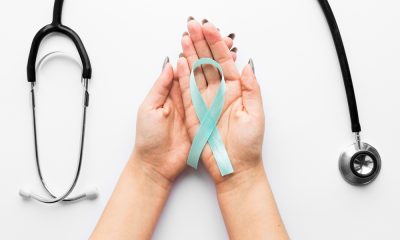


A simple DNA test using circulating tumour DNA could forecast how advanced breast cancer responds to treatment, enabling earlier switches to options more likely to work, researchers say.
The test analyses circulating tumour DNA (ctDNA) (tiny fragments of cancer DNA in the blood) to indicate whether a patient is likely to benefit from a specific therapy.
It could help patients avoid ineffective drugs and move sooner to alternatives, the team said.
Dr Iseult Browne, clinical research fellow at the ICR and first author, said: “Our study shows that a simple blood test measuring circulating tumour DNA can provide an early prediction of whether a patients’ breast cancer will respond to treatment.
“Knowing this at the earliest stage – in this case, at the start of treatment, or after just four weeks – means that we can avoid giving patients drugs that won’t work and provide them with alternatives before their cancer has a chance to grow.
“For example, they could be given an alternative targeted therapy, a combination of drugs, or even enrolled into a clinical trial to test a novel drug.
“Trials are now under way to see if adapting a patient’s treatment based on these early blood tests does indeed improve their outcome – giving them more time of living well with their cancer kept at bay.”
Researchers at the Institute of Cancer Research, London (ICR) measured ctDNA in blood from 167 people with advanced breast cancer before treatment and again four weeks later, after one cycle.
There was a strong association between lower ctDNA at the start of treatment and response. A similar pattern was seen with results taken at four weeks.
The study split patients into two groups based on cancer type and mutations. One group (with ESR1, HER2, AKT1, AKT or PTEN mutations) received matched targeted therapies.
The second group, with triple negative breast cancer, received olaparib (a PARP inhibitor) plus ceralasertib (an ATR inhibitor), drugs that impair cancer cells’ DNA repair.
Among the triple negative group, low pre-treatment ctDNA was linked to longer progression-free survival: 10.2 months versus 4.4 months. Response rates were 40 per cent with low ctDNA versus 9.7 per cent with higher levels.
A weaker but similar association was seen pre-treatment in the mutation-matched group. After four weeks, those with undetectable ctDNA had better outcomes: 10.6 months without progression versus 3.5 months if ctDNA was still detectable.
In the triple negative group, undetectable ctDNA at four weeks was also associated with longer control of disease: 12 months versus 4.3 months.
Browne said: “By analysing circulating tumour DNA in blood samples from patients with advanced breast cancer, we identified a clear link between these levels, both at the start and after one cycle of treatment, and how well patients responded to therapy.
“These findings support the use of ctDNA as a non-invasive biomarker for predicting outcomes and monitoring treatment response.”
Prof Nicholas Turner, professor of molecular oncology at the ICR and consultant medical oncologist at the Royal Marsden, added “This research looked at advanced breast cancer, but these tests could also work for early-stage breast cancers.”
He added that the liquid biopsy “has the potential to make treatment decisions faster, more personalised and ultimately more effective.”


As founding director of Femtech Israel (IL), Shelly Bloch is working to strengthen the femtech ecosystem in Israel and beyond. Here she tells Femtech World about the trends, challenges and opportunities she sees in women’s health innovation, and her hopes for the future.
“My personal passion is women,” Shelly Bloch tells Femtech World on the sidelines of the vast Asia Summit on Global Health in Hong Kong.
The trip, and her speaker slot on stage in front of hundreds of international health innovators is part of her mission to advance femtech awareness, collaboration and progress.
“I did my thesis on the participation of women in the workforce, so this has always been my personal passion.”
With a background in demography and urban planning, Bloch founded FemTech IL in 2021 to address a dearth of both awareness and data in women’s health in Israel.
The organisation provides tools for industry professionals, networking events and conferences and training opportunities.
Bloch’s role puts her at the heart of the femtech ecosystem; a vantage from which she sees “data gaps”, “funding issues” and “male-dominated decision-making” as overriding barriers holding back progress in women’s health innovation.
With increased awareness and collaboration, however, Bloch is optimistic for the future amid strong growth in numbers and engagement within the femtech community.
“I’m drawn to solving inequalities in all kinds of forms,” she says. “When I moved into the tech industry, it was natural for me to go into product management and UX user research.
“As I was looking for a femtech company to work for, I realised that femtech wasn’t known at all – even companies working in the space wouldn’t describe themselves using that term. So I started writing about it and creating connections. Then I understood the need, and femtech became a mission in itself.
As for the scale of the femtech community in Israel, the number of companies and level of investment, sadly, I don’t have that data. There simply isn’t enough research or data collection in this field. One reason is how companies are categorised.
“Some might technically be femtech, but are labelled differently, and so they aren’t counted. Because femtech still isn’t widely recognised, the data we do have doesn’t reflect the full picture.
“I can say, however, that when I started and said ‘femtech’, no one knew what I was talking about. Now, many people do. Organisations are starting to understand what it means, and how to talk about the potential and the challenges. Although I still plan to map the Israeli ecosystem more thoroughly, the environment has definitely changed.”
Bloch says individuals in the FemTech IL network – including entrepreneurs, PhD students, hospital staff, and NGOs – are facing common challenges.
“The first major challenge is research,” says Bloch. “There’s been a persistent data gap for years, and that affects what we know about women’s needs and what we’re able to develop.
“The second is that decision-making in most relevant fields such as investments, academia, and hospitals, is still very male-dominated.
“That’s not to say men can’t do great femtech work. I have many excellent male colleagues, and collaboration is crucial. When teams aren’t diverse, however, it’s much harder to understand the potential, the importance, or even to feel comfortable promoting these kinds of issues.
“The third issue is lack of funding,” she adds.
Collaboration, Bloch believes, is a key factor in fostering more femtech successes that can improve women’s health outcomes.
“You can’t rely on the entrepreneur to be a rock star, the best research, the best product, the best marketing, none of that alone will carry an idea forward.
“Building a startup really does take a village. You need regulation on your side, and often the support of the medical system itself – which means the government and policymakers need to trust you and actively encourage you.
“It’s so important to create those connections. And again, it ties back to funding, male dominance in decision-making, and a lack of awareness. It’s still very hard to find champions who are truly supportive.”
With a focus on growing the femtech ecosystem in Israel, Bloch says the country affords ample opportunity for companies in the sector due to its public healthcare system, with both pros and cons for the sector.
One pro that Bloch highlights is that Israel’s small size means you people connect more easily. Conversely, it’s a relatively small market, so most Israeli startups must think globally from day one.
“That opens the door to solutions that can be highly accessible, whether through research or by incorporating femtech into public services,” says Bloch.
“I’m not saying everything’s perfect, or that I don’t have my criticisms, but when you combine that public healthcare system with strong awareness of women’s rights, among both women and men, and the broader startup ecosystem we already have, it really is very fertile ground.
“Our size means you can connect more easily. You can reach out directly to hospitals or attend physical events without huge barriers. That’s actually still really valuable, even in the age of Zoom.
“For me, as the manager of FemTech IL, it’s feasible to organise in-person events and have meaningful engagement. Israelis tend to be very direct and proactive culturally, which helps a lot when it comes to promoting and building things, even within a small market.”
Considering the bigger femtech picture and the ongoing efforts to close the gender health gap internationally, Bloch says: “Some of the biggest challenges, I think, go beyond direct medical issues.
“For example, think about car safety. Crash test dummies are typically based on the average male body. That means women are 17 per cent more likely to die in a car accident. And depending on the severity of the crash, whether the injury is mild, moderate or severe, women are also more likely to be injured.
“That’s not a medical issue in itself, technically speaking, but it directly leads to health consequences. It’s not just cars. Women carrying babies, for example, have added risks in vehicles or work environments not designed for them. These are design biases, safety regulations and standards based on male bodies, and they have real-world impacts on women’s health.
“My point is that there’s a lot of bias before we even get to the health conditions themselves.
“In developing countries you might see more obvious issues like a lack of access to hygiene products. But even in so-called developed countries, there are huge knowledge gaps. For instance, I recently learned about high rates of diabetes or heart disease in parts of Asia that aren’t widely discussed.
The femtech industry often focuses on clear, direct health issues, and that’s important, but we mustn’t forget the systems and environments that contribute to health outcomes much earlier on.
Femtech World met Shelly Bloch at the Asia Summit on Global Health, facilitated by the Hong Kong Trade Development Council (HKTDC).









 Entrepreneur1 week ago
Future Fertility raises Series A financing to scale AI tools redefining fertility care worldwide
 Fertility3 weeks ago
Future Fertility partners with Japan’s leading IVF provider, Kato Ladies Clinic

 Menopause3 weeks ago
More research needed to understand link between brain fog and menopause, expert says

 Mental health2 weeks ago
Lifting weights shows mental health and cognitive benefits in older women, study finds

 News3 weeks ago
Self-employment linked to better cardiovascular health outcomes in Hispanic women

 Entrepreneur3 weeks ago
Flora Fertility closes US$5m seed round

 News5 days ago
Women’s digital health market set to reach US$5.28 billion in 2026 – report

 News2 weeks ago
Resistance training has preventative effects in menopause, study finds