




News
Pregnant women in England can self-refer to midwife without seeing GP

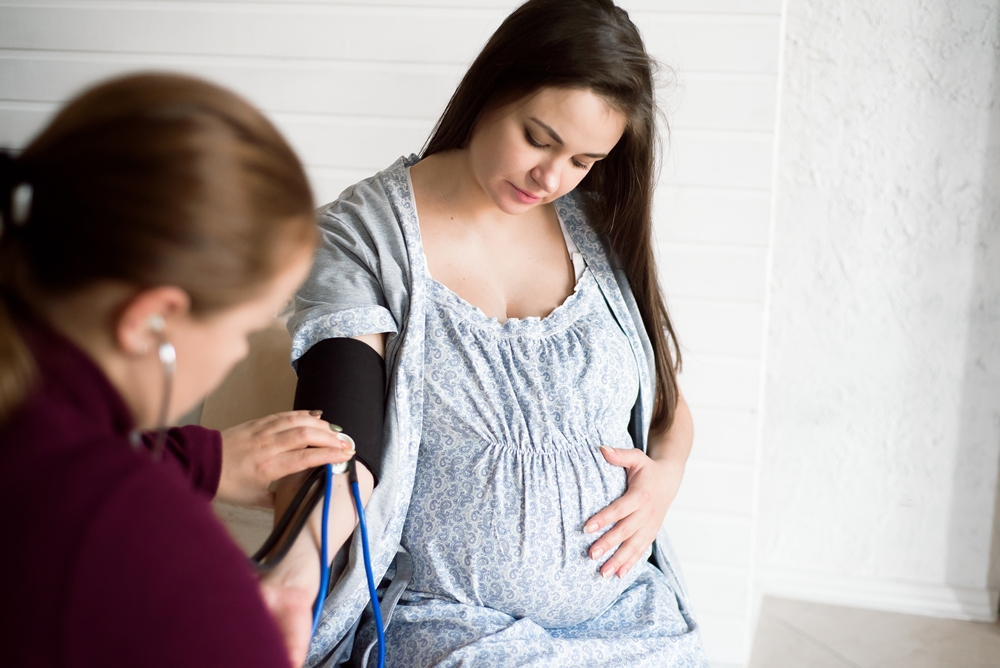
Hundreds of thousands of newly pregnant women across England can now self-refer online to get their “all-important” first midwife appointments quicker, ensuring the best and most personalised care for their baby.
By completing a simple online form on NHS.uk, mums-to-be can refer themselves directly to their local maternity services without seeing a GP first.
The new NHS England service enables families to choose which NHS trust to refer themselves to, helping them to meet their midwife and begin NHS pregnancy care as early as possible.

Kate Brintworth, NHS chief midwife, said: “It’s so important that newly pregnant women get the support they need as soon as possible, so this new tool makes it easier than ever to book that all-important first maternity care appointment.
“Making this process simpler at the touch of a button is a vital step in empowering women to take control of their pregnancy journey right from the very start and improving access to timely, personalised care.”
First appointments are vital to help expectant mums talk through anything that might be worrying them about their pregnancy and arrange important early screening tests, including to identify those with potentially high-risk pregnancies.
While most women do not need to see a GP before they start their pregnancy care with their midwife, anyone can still request to see their GP if they’d like to – and those with other health conditions will still be encouraged to meet with their doctor to discuss any changes to their existing care.
The new NHS drive to help speed up access to pregnancy care comes following latest data showing only 62 per cent of first appointments with maternity services happened within the first 10 weeks of pregnancy in 2023/24.
The NHS’ chief midwife has urged newly expectant mums to refer themselves as early as possible to ensure the safest possible care for their baby and that they can get the support they need.
The earlier mums access care, the sooner the NHS can also offer antenatal screening – tests during pregnancy to check for conditions affecting mother or baby – and the midwife will also ask about medical history, including any past pregnancies, general health, and medications, to develop a personalised care plan.
Early data shows that nearly 60,000 newly pregnant women have started their referral online since the new tool first began to be rolled out in March – with over three-quarters of trusts in England now connected to the service to support hundreds of thousands to access maternity services faster.
Nearly 85,000 (84,678) people have accessed the portal in total to receive information and support.
It is estimated that the new service could also lead to 180,000 fewer calls to GPs and up to 30,000 fewer general practice appointments each year.
Prior to launch of the new tool, expectant mums have been able to self-refer via local trust sites, however it is estimated that only 50 per cent of people were accessing these services directly, with many going unnecessarily via their GP to access maternity care.
Health and social care secretary Wes Streeting said: “Early pregnancy should be about joy and excitement – not wrestling with NHS bureaucracy to book a midwife appointment.
“That’s why we’ve overhauled the online referral system.
“No more endless phone calls or form-filling. Just a simple online service that lets you book those crucial first appointments with a few clicks.
“Almost 85,000 women have visited the service since March – proof that when we embrace technology under our Plan for Change, patients win.
“This is exactly the kind of reform patients are calling for, bringing the NHS into the 21st century and delivering the service people deserve.”















Obesity may be a key driver of rising rates of 11 cancers in adults under 50, a study has found.
The 11 cancers were thyroid, multiple myeloma, liver, kidney, gallbladder, colorectal, pancreatic, endometrial, oral, breast and ovarian cancers.
All except oral cancer are known to be linked to excess weight, with researchers saying raised insulin levels and inflammation may play a part.

The findings come from researchers at the Institute of Cancer Research, London and Imperial College London, who analysed national cancer registry data for England from 2001 to 2019.
In England, around 31,000 cancers were diagnosed in people aged 20 to 49 in 2023, equal to roughly one in every 1,000 people. This compares with 244,000 cases in the 50 to 79 age group, where the rate is around one in 100.
Concerns have been growing in recent years over rising rates of cancers such as bowel and ovarian in younger adults.
Among the younger group, breast cancer was the most common, with 8,500 cases, followed by bowel cancer at 3,000 and melanoma skin cancer with 2,800 diagnoses.
For nine of the 11 cancers identified, rates are rising in younger adults but also increasing in older adults, who are much more likely to develop the disease. Bowel and ovarian cancer were the exceptions, rising only in younger age groups.
The researchers found that bowel cancer rates in younger women linked to BMI rose faster, from 0.9 to 1.6 per 100,000 people, than those not linked to BMI, which rose from 6.4 to 9.6 per 100,000 people. Similar patterns were recorded for men.
However, the authors noted that the overall number of cases of BMI-linked bowel cancer in younger women remained lower than those not linked to BMI, suggesting other factors must be contributing to the increase.
Several suspected contributors, including ultra-processed foods, antibiotic use and air pollution, have been proposed in recent years. However, many of these factors have also shown stable or declining trends in the UK, the team said.
Despite the rise in several cancer rates among younger adults over the past two decades, most established risk factors, including smoking, alcohol consumption, red or processed meat intake, low fibre diets and lack of exercise, remained stable or even declined in the period leading up to diagnosis.
This suggests these traditional risk factors are unlikely to account for much of the increase in cancer cases.
By contrast, overweight and obesity, which have increased steadily since 1995, could be key factors in the rise in cases. The team suggested that between 2001 and 2019, around 20 per cent of the increase in bowel cancer was explained by increases in BMI over that period.
However, the researchers said rises in BMI alone are not enough to explain the overall increase in cancer among younger adults in England and that there are likely to be other causes.
Data also suggest around 15 per cent of bowel cancer in younger people could be linked to being overweight or obese, with around 40 to 50 per cent in total linked to the combined effect of known risk factors such as obesity, lack of exercise, alcohol and smoking.
Montse García-Closas, professor at the ICR, said more research was needed, but “we cannot wait to act”.
She told a media briefing: “Our main conclusion is that although BMI is our best clue, much of the increase still remains unexplained, and we’ve done some additional analysis that show that most likely what’s missing is not just a single cause unexplained, but it’s likely a combination of multiple factors that act together.”
Amy Berrington, professor at the ICR, said: “Although rates have been increasing, cancer in young people is still a rare disease.”
Marc Gunter, professor at Imperial, said obesity was a known risk factor for around 19 different cancers.
He added: “For some of these cancers, including colorectal (bowel) cancer, we think this could be partly caused by higher levels of hormones such as insulin, which is often elevated in people with obesity, as well as inflammation.
“We know people with obesity have higher levels of insulin, and insulin is a growth factor and has been linked to cancer.
“In a recent study, we actually found that insulin in particular might be playing a role in early onset colorectal (bowel) cancer, and this is actually an area of very active research at the moment.”
The researchers called for large, long-term studies to identify all the biological and environmental factors that could explain rising cancer rates in young adults.
García-Closas added: “Tackling obesity across all ages, particularly in children and young people, through stronger public health policies and wider access to effective interventions, could slow the rise in cancer and prevent many cancers and must become a national priority.”
Michelle Mitchell, Cancer Research UK’s chief executive, said: “Globally, and in the UK, we’re seeing a small increase in cancer rates in adults under 50.
“The picture is complex and we need more research to understand what’s driving the trend, but this study helps to fill in some gaps.
“Overweight and obesity doesn’t explain the rise in full though. Improvements in detection are likely to also be playing a part, meaning that more people are being diagnosed at a younger age.
“Preventing cancer cases must be a priority for the UK government. Smoking remains a leading cause of cancer in adults under 50, which is why the Tobacco and Vapes Bill receiving royal assent this week is such a historic moment.
“Measures to restrict the advertising and promotion of junk food, introducing mandatory reporting and targets on healthy food sales, and making nutritious food more accessible to everyone would all help people keep a healthy weight.”

The World Health Organization (WHO) has launched an AI tool in beta to help policymakers, experts and healthcare professionals access sexual and reproductive health information faster.
Called ChatHRP, the tool was created by WHO’s Human Reproduction Programme and draws only on verified research and guidance collected by HRP and WHO.
It uses natural language processing and retrieval-augmented generation to produce referenced content and cut the time spent searching through documents across different platforms and databases.

WHO said ChatHRP also has multilingual capabilities and low-bandwidth functionality to support use in a wide range of settings.
The beta-testing phase is aimed at a broad professional audience, including policymakers, healthcare workers, researchers and civil society groups.
WHO said the tool can help users quickly access up-to-date evidence, find sources for academic work and verify information on sexual and reproductive health and rights.
Examples of questions it can answer include the latest violence against women data in Oceania for women aged 15 to 49, recommendations on managing diabetes during pregnancy, and whether PrEP and contraception can be used at the same time. PrEP is medicine used to reduce the risk of getting HIV.
WHO added that the system will be updated regularly as new HRP materials are published and includes a feedback loop so users can flag gaps in the information provided.
The launch comes amid wider concern about misinformation in sexual and reproductive health.
A 2025 scoping review found that misinformation in digital spaces is a systemic issue that can undermine human rights, reinforce discriminatory social norms and exclude marginalised voices.
The review also said misinformation can affect health systems by shaping provider knowledge and practice, disrupting service delivery and creating barriers to equitable care.
WHO said ChatHRP is intended to give users streamlined access to reliable information as a counter to “algorithms, opinions, or misinformation”.











 Entrepreneur1 week ago
Future Fertility raises Series A financing to scale AI tools redefining fertility care worldwide

 Fertility3 weeks ago
Future Fertility partners with Japan’s leading IVF provider, Kato Ladies Clinic

 Menopause3 weeks ago
More research needed to understand link between brain fog and menopause, expert says

 Mental health2 weeks ago
Lifting weights shows mental health and cognitive benefits in older women, study finds

 News3 weeks ago
Self-employment linked to better cardiovascular health outcomes in Hispanic women

 Fertility3 weeks ago
Flora Fertility closes US$5m seed round

 News5 days ago
Women’s digital health market set to reach US$5.28 billion in 2026 – report

 News2 weeks ago
Resistance training has preventative effects in menopause, study finds