




News
Women’s health problems post-birth are on “nobody’s radar”


Post-maternity incontinence, pelvic pain and sexual and mental health issues are being ignored, a study suggests.
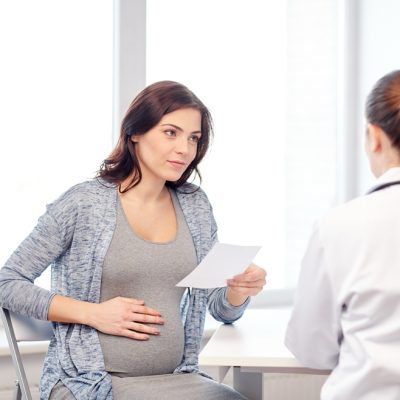
Research conducted by the Trinity College Dublin showed that new mothers have been putting up with conditions relating to post-birth that are on “nobody’s radar”.
Researchers gathered data from over 3,000 first-time mothers across three maternity hospitals in Ireland. The study analysed the trajectory of conditions from before pregnancy to 12 months after childbirth.
Deirdre Daly, associate professor in midwifery at the Trinity College Dublin, said: “There’s a whole silence around women’s health.
“There are some women who have multiple health problems and they’re at the severe end, but overall the health issues that we’re looking at are perceived as not life-threatening.
“But they’re the things that will leave you miserable, absolutely miserable and miserable in motherhood.”
Researchers found that depression rose from 10.9 per cent before pregnancy to 11.8 per cent of women 12 months after childbirth, while anxiety went from 7.1 per cent before pregnancy to 9.4 per cent 12 months after birth.
Prof Daly said: “Our maternity care finishes when a woman is six weeks postpartum. We know that’s far, far too soon.
“These are first-time mothers. There is a need for services for women that go on up to three months afterward, if not longer.”
The study discovered that by three months after birth, one in eight women attended their general practitioner three or more times, one in 20 was readmitted to hospital and one in eight went to an emergency room by three months postpartum.
Breast problems and perineal and caesarean section wound-related complications were the top two reasons for seeking medical help.
“You are going to stop exercising because it triggers leaking. Then you’re into this cycle of lack of exercise and weight gain,” said prof Daly.
“So you’re into this vicious cycle of multiple miserable health problems that are going to wear women down and wear them out.
“When women do not know what is and is not normal postpartum, they may suffer in silence and the consequence is that health problems and issues that are preventable, and treatable, are likely to become chronic.”







Chest Heart & Stroke Scotland has launched a three-year Women’s Health Plan setting out actions to improve prevention, diagnosis, treatment and support for women in Scotland.
The 2026 to 2029 plan includes commitments on health information, prevention and early detection, professional training, peer support, post-diagnosis care, policy and research.
It comes amid disparities affecting women with chest, heart and stroke conditions, including differences in diagnosis, testing and treatment.

Figures cited by the charity show women in Scotland are 50 per cent more likely than men to receive an initial misdiagnosis after a heart attack.
Jane-Claire Judson, chief executive of Chest Heart & Stroke Scotland, said: “Women have been telling us for years that their symptoms aren’t being taken seriously, and the evidence backs them up.
“When we talk about women’s health, we need to look beyond reproductive and maternal health alone.
“Women experience inequalities across a wide range of conditions, including chest, heart, stroke and Long Covid conditions, and they deserve equitable access to the information, support and care they need.
“Our CHSS Women’s Health Plan is about listening to those experiences and turning them into meaningful action.”
Across the UK, women are twice as likely to be misdiagnosed with heart failure, with many waiting an average of 20 weeks for a diagnosis, compared with 3.6 weeks for men.
There are more than 4,600 incidences of stroke in women in Scotland each year, with more than 1,200 dying as a result.
Asthma and chronic obstructive pulmonary disease (COPD) are also more common among women, while women are nearly twice as likely as men to die from asthma.
Women are less likely to be offered diagnostic testing within 72 hours of a heart attack and less likely to be prescribed medication that reduces the risk of a second heart attack, according to the charity.
CHSS also said conditions that predominantly affect women, including Long Covid and heart conditions such as coronary microvascular dysfunction, remain under-researched and under-diagnosed.
Four in five women say they are not listened to by healthcare professionals, while UK female life expectancy has fallen from 20th to 26th place among 38 OECD countries in recent years.
The Women’s Health Plan includes developing women-specific health information and launching a prevention and early detection programme through CHSS’s Health Defence and Community Healthcare Support Service.
Other commitments include raising the visibility of women’s health, strengthening training for healthcare professionals, CHSS colleagues and volunteers, expanding peer support and post-diagnosis care, and campaigning for changes to policy, funding and women’s inclusion in research.
The charity also plans to drive continuous improvement in its women’s health work, shaped by lived experience.
CHSS said it will seek to address inequalities through prevention programmes, professional education, policy influence and improved support for women across Scotland.
The plan builds on CHSS’s women’s health work launched in 2021 and its wider No Life Half Lived strategy. It also aligns with phases one and two of the Scottish Government’s Women’s Health Plan.
More than 140 responses to a national survey helped shape the plan, alongside consultation with health and social care professionals and people with lived experience through CHSS’s Voices of Experience Panel.
Judson said: “By improving awareness, supporting earlier detection and diagnosis, and ensuring women are heard when they seek help, we can begin to address inequalities that have persisted for far too long.
“Our first plan, launched in 2021, established important foundations.
“This next phase builds on that progress and reflects our commitment to a Scotland, where nobody is left behind because of their sex or gender.
“At Chest Heart & Stroke Scotland, our No Life Half Lived mission means working towards a future where everyone can live well with their condition. By bringing together women with lived experience, health professionals, policymakers and partners, we can create lasting change and help build a fairer, healthier Scotland for women.”



Diadia Health, winner of the Femtech World AI Innovation Award, is working to revolutionise women’s health through AI-backed at-home testing.
By analysing genetics, biomarkers and medical literature, Diadia addresses women’s health issues, taking a functional medicine approach to healthcare.
With the goal of making personal healthcare accessible and affordable, Diadia Health uses technology to automate tasks for clinicians and doctors to save time and improve decision making, and provides comprehensive health reports.
Diadia app was founded by machine learning and AI scientist and CEO Elena Ikonomovska, and CTO Andrii Yasinetsky.
Ikonomovska speaks to Femtech World about the inspiration behind the app, how the app helps to find health issues traditional care misses and the future of Diadia in the healthcare system.
What was the inspiration behind the app and what was at the forefront of your mind when developing Diadia?
My research was about learning from infinite data streams, so for a very long time, I’ve been obsessed with the idea of teaching machines how to learn, in a similar way to how humans learn, which is incremental.
Early on I got into the space of machine learning and built multiple products and systems at companies like Google, Reddit, Change.org.
I also built a number of companies which were all AI first companies, always with a social impact in mind as I was creating these products.
I started experiencing health issues during my last company, and I’ve always been someone that has tried to be as healthy as possible – eating healthy, working out – but I was still becoming pre-diabetic.
My health was getting worse and worse. I spoke to four different doctors, changed primary care doctors, providers, and no one actually had any idea what’s going on, and didn’t know how to help me.
Being a scientist, I decided I was going to try to solve it by myself with the help of AI.
At this time, AI was already at a place where it was quite powerful, allowing us to research and read all the medical knowledge and interpret data.
I realised that there’s so much knowledge we have that has not reached healthcare providers because it is specialised knowledge.
The way that the healthcare system is organised is that everything is solved within a specialty, isolated.
The problems are looked at in isolation when, in essence, they’re not isolated. They’re very connected. Everything in the body is influencing everything else.
Through that problem, I actually started learning about this, and I started applying concepts of systems biology, which is used in functional medicine, an area of medicine which is very niche.
They look at the body as a whole system when they’re solving problems.
This is how I discovered answers for my health, over time, I understood the real cause for my issues was thyroid problems.
This was contributing to my insulin resistance and a number of other deficiencies such as iron anemia, that were contributing to the whole problem that needed to be solved all together, so that I could stop myself from becoming diabetic.
At Diadia, you combine genetics, biomarkers, and medical literature to uncover what normal testing tends to miss.
What was the breakthrough that made you realize AI could solve a problem that traditional clinical tools have struggled with?
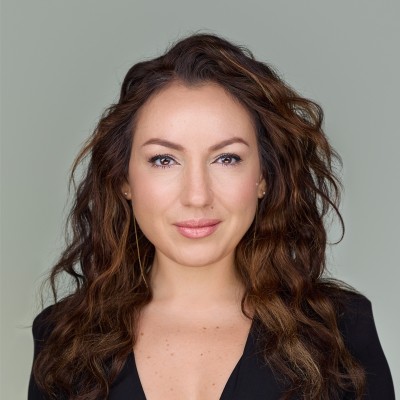
Elena Ikonomovska
AI is capable of connecting the existing knowledge we have with questions and problems.
Initially, we built a system that was capable of seeing the problem only from the five biomarkers without further testing, and that made me realise that this is powerful because it can make the connections between these data points and that represent the different systems in the body intelligently.
This means that it understands the relationships, understands biology, understands how things are like, you know, interacting with each other.
The only thing that we were worried about is that sometimes it might be wrong, as it really doesn’t do proper logical thinking but pattern matches and connects information that statistically is likely accurate together.
There is no protection from fabricating little details that are wrong.
So what we call hallucinations are happening more and more, these are mistakes that AI does that are not obvious.
You can’t catch them by the eye, especially if you’re not an expert. You wouldn’t understand that this is not true.
What we did was we forced logical thinking, we forced logical connections between the evidence that the AI is capable of finding, so that we make sure that the conclusion at the end from the data that is being given is making sense.
It’s logical, and there is research and there is data supporting that connection. That’s something that chatbots don’t do.
I think that’s the reason that makes me sleep well at night because we know that this way we can connect not only genetics – we actually work with gut tests and metabolites, toxins analysis, infections, and all sorts of different tests and biomarker labs.
It enables a multi-specialist view on the problem when you’re analysing the data of the patient in the context.
There may be concern that AI might replace clinical judgment, but you have taken a different approach – what have you learned from working with clinicians about where AI creates the most value?
I don’t believe AI will replace clinical judgment, not yet.
For AI to be able to replace clinical judgment, it needs to be trained over highly dimensional data coming from specialty labs that represent the full body all at once, and such data does not exist.
There is no data of that sort, and also there is no decision making clinical frameworks or choices around how treatments should be ordered and sequenced out that is available to the AI to learn from.
This is knowledge that only clinicians have.
In fact, like the best clinicians have been creating such knowledge and frameworks for decades, practicing in this cutting-edge field of medicine, honing their skills and learning from experience, and embedding the latest research.
That’s the kind of knowledge that is needed to guide these systems to make better decisions over time.
That is also something we are working with clinicians on, because we know that AI cannot on its own come up with the best actual answers, and what we want is the best possible, and the most accurate right analysis, so that we’ll be able to safely deploy such technology to millions of people.
We are working towards that world, and clinicians are a huge part of it.
The more data we generate, the more knowledge we will create about our understanding of disease, human longevity and health span will create more human judgment to continue guiding the tool to uncover more and create more data.
This will be to feed back that data into clinical decision-making processes, because the space is so unexplored, it’s like we’re just entering right now.
At the end of the day, it has to be a human being accountable for another human, and also a human that is there to explain and help the other person incorporate all the things that they need to be doing for their health.
How does Diadia bridge the knowledge gap between patients and clinicians?
The AI is analysing data and prepares very comprehensive reports with clinical priorities and protocols. It explains why certain choices have been made, what it is addressing, and more.
For the patients, there is also really great research to learn more and read more. We give them all the medical research and then it gives them something to hold on to until next time they see their doctor.
Over time we are likely going to have features like chatting functionalities so that the AI will be able to answer certain questions based on the knowledge or the clinical guidelines from a specific clinic.
It is saving hours of analysis time that most doctors don’t have time to really look at. Once you start entering this complex data, it can be hours of analysis where you need to look at 300 biomarkers, or even 1000 in some cases. That’s a long time that a lot of doctors don’t really have.
The AI is in essence cutting that off and giving them a fairly comprehensive insight report that they can quickly understand, look into things, and adjust if needed, and then hand it over to the patient.
As AI and other elements of healthcare such as precision and personalised medicine continue to evolve, where do you see Diadia heading in the next five years, and in women’s health more broadly?
Right now Diadia is being used by clinics who are practicing functional medicine. What we’re capable of, is empowering clinicians to see more patients while maintaining the same high quality standards, as well as being able to grow their practices and train staff.
I hope that as this technology becomes better, we’re going to be able to then bring it into more accessible clinics like direct primary care, and eventually integrated into the healthcare system.
My big dream is that this technology will be covered by insurance. It will be helping millions of doctors in the U.S.
For now we’re in the U.S. market in order to provide this kind of quality care and ultimately offer the service to more women and men as well this personalised precision medicine care that I believe should be the standard of care for everyone.
Finally, what does it mean to win a Femtech World Award?
It’s really an amazing recognition.
As a woman, I put a lot of heart into this. My whole mission is to build a world where women and men, of course, will have the right kind of care that we need, and we will have better data.
I hope that some of the bias and unfairness around women’s health will be fixed.
And so, being recognised that we’ve made a contribution in this direction means a lot to me.
It really helps me do this work and feel more inspired to continue forward.
Women in Europe’s health and care sector face a 19 per cent hourly gender pay gap, according to a new World Health Organization (WHO) report.
Women account for 77 per cent of the sector’s workforce, compared with 45 per cent across all other sectors combined, but make up only 55 per cent of its top earners.
The hourly gender pay gap widens at higher wage levels, from 2 per cent among the lowest earners to more than 22 per cent at the top.
The WHO report found that health and care accounts for almost 17 per cent of all women’s employment in its European Region, compared with 5 per cent of men’s employment.
The sector is the fourth-largest employer overall and the single largest employer of women in the region.
Natasha Azzopardi Muscat, director of the Division for Health Systems at WHO Europe, said: “Women make up the majority of the people who keep Europe’s health systems running, yet they’re paid less than their male counterparts, a gap that compounds over a lifelong career.”
The findings follow a pattern seen across the wider labour market, with structural inequality increasing at higher wage and seniority levels.
Globally, women working in health earn an average of 24 per cent less than men, according to the report, a wider gap than in many other industries.
Some of the difference in pay could be explained by work-related factors, including age, education, public or private sector employment and whether people worked full-time or part-time.
After adjusting for those four factors, the hourly pay gap fell from 19 per cent to 6 per cent, while the monthly gap declined from 28 per cent to 10 per cent.
The remaining difference could not be explained by factors measured in the data.
“Most of this gap isn’t down to women working fewer hours, being younger or working in different parts of the sector,” Azzopardi Muscat said.
“It comes down to how the sector values women’s work. Age, education, working hours and public versus private sector employment only helps explain some of it.”
WHO said the findings point to factors including the undervaluation of care work, occupational segregation and potential discrimination in pay-setting practices.
Occupational categories with a higher proportion of women paid less across managerial, professional and technical roles.
Management jobs in health and care employ more women than management roles in other sectors and pay an average of €22 per hour, compared with €24.70 in comparable roles elsewhere.
WHO described the gender pay gap as one of the most persistent forms of labour market inequality. Given the number of women working in health and care, it said the gap could have important economic and social consequences.
The report said the inequality may lead to lower lifetime earnings and pension entitlements, increase women’s risk of poverty, reduce returns to education and undermine sustainable economic growth.
“It means lower pensions, less financial security in older age, and a higher risk of poverty for women who’ve spent their working lives caring for others,” said Azzopardi Muscat.
“This isn’t a coincidence, and it isn’t about qualifications. Women are being paid less for the same work and passed over for the roles that pay more.”
WHO said closing gender pay gaps was both an equity imperative and an investment in a stronger and more sustainable health workforce.
It suggested measures including greater salary transparency, increased female representation in decision-making roles and action to address gender norms and stereotypes.


 Menopause1 week ago
Menopause may not explain rising heart condition in women – study

 Fertility2 weeks ago
Paracetamol use may impact future fertility, studies suggest

 Insight1 week ago
Women with birth trauma face 2.5x higher healthcare costs – study

 Menopause2 weeks ago
Cancer drug could tackle osteoporosis menopause weight gain
 pain conditions1 week ago
Medical cannabis may improve endometriosis symptoms – study

 Cancer1 week ago
Study could explain why obesity is a breast cancer risk factor
 Menopause2 weeks ago
Menopause hormone therapy may improve cardiovascular health outcomes, study suggests
 AI1 week ago
Evvy secures US$40m for AI-powered vaginal microbiome testing
1 Comment