




News
Tips for Managing Medications While Traveling Overseas


For travellers with ongoing health concerns, managing medications while traveling is one of the most important things to take into account when packing a bag and preparing for a trip. Prescription medications are a vital part of vacation preparation, but ensuring that you will have everything you need can seem like a daunting task.
Making sure that all your health needs will be covered while you explore the globe is vitally important, whether you are boarding a cruise ship to Hawaii or Alaska or backpacking around southeast Asia. Here are a few tips and things to consider when it comes to managing medications while traveling overseas.
Plan Ahead: Check Medication Regulations
Every country’s approach to prescription medication is different, so it is important to do your research before setting off on your travels. Some medications that you use routinely at home might be restricted or even prohibited at your destination, so it is vital that you make sure that both over-the-counter and prescription meds are ok to take with you. It is always worth traveling with a copy of your prescription and even a doctor’s note to avoid complications.
Bring Enough Medication: Pack a Sufficient Supply
Once you’ve made sure you are allowed to bring your meds with you, you should make sure that you bring enough to last the trip. It is always worth bringing slightly more than you need, to cater for delays or accidents, particularly if your medication is critical to your health. You should always split your medications between your carry-on and your large bags. A buffer might just save your life if your checked luggage is lost or your flight is delayed!
Carry Your Medications in Their Original Packaging
While it might save space, don’t be tempted to remove your medication from its original packaging. Keeping drugs in their original boxes or bottles means that customs officials can identify them easily and avoids delays or suspicions. Prescription medication should be packed with all the important information, including name, dosage, and prescribing physician.
Understand Time Zone Differences for Dosing
Taking your medication properly while traveling can also be something of a minefield. Changes in time zones can be tricky when it comes to medication that needs to be taken at a particular time, and it is important to work out your dosing schedule in advance to ensure that you don’t miss a dose due to a change in time zone or while you are in transit.
Consider Medication Storage Needs
Not all medication can be kept at room temperature and some medicines have very specific storage needs. If your destination is a particularly warm one you may need to put together a plan on how to store your medication appropriately. Check the requirements of your prescription and, if necessary, bring portable coolers or insulated pouches. Hotel mini-fridges are usually a good option, but don’t be afraid to ask your hotel to store your meds in their main fridges if necessary.
Learn the Local Language for Medical Terms
It is always helpful to know and understand some of the local language, and when it comes to medications and health issues a few key phrases can be vital. If you can explain your health needs, describe the medication you need, or explain about allergies and other similar issues, it can be immensely helpful if you need to visit a foreign pharmacy or doctor.
Managing your medication on vacation abroad might seem challenging, but it doesn’t have to be a cause of stress or anxiety. With some careful preparation and a few important considerations, you can travel safely in the knowledge that all your health requirements will be fully taken care of.



A preeclampsia study has found unusual cell activity in mothers and babies that could reveal new targets for treatment.
The condition affects 2 to 4 per cent of pregnancies worldwide and is a leading cause of maternal and foetal mortality.
There is currently no cure, and severe cases can put both the mother and baby at risk.

Scientists from UCL and University College London Hospitals found that stressed placental cells, poorly functioning blood vessels and an overactive immune response all contribute to the condition.
Preeclampsia causes high blood pressure during pregnancy. It can affect blood flow to the baby and cause symptoms such as swelling, headaches, blurred vision and pain under the ribs.
Without treatment, it can damage the mother’s health, slow the baby’s growth and, in severe cases, become life-threatening.
Previous research has focused only on the placenta, the organ that develops during pregnancy to support the baby’s growth, rather than the tissues around it.
The researchers said the findings could reveal new therapeutic targets, which are biological processes that future treatments could be designed to alter.
Senior author professor Sara Hillman, of the UCL EGA Institute for Women’s Health, said: “We studied individual cells from both the mother and the baby to see how their activity changes in healthy pregnancies compared with preeclampsia.
“This helped us to confirm some changes already suspected in the condition and also discover new ones.”
The team studied 20 pregnant women recruited at UCLH, including 10 with severe preeclampsia and 10 without the condition.
They used genomic testing to examine individual cells in the placenta and other tissues where cells from the developing baby and mother come into contact.
Genomic testing examines genetic information to help researchers understand how cells behave and the roles they may play.
The other tissues studied were the myometrium, the muscular layer of the womb, and the chorioamniotic membranes, which surround the baby during pregnancy.
The team compared cells from healthy pregnancies and those affected by preeclampsia at different gestational ages, meaning different stages of pregnancy.
They used technology that can read the genetic information of thousands of individual cells at the same time, allowing them to see what each cell was doing and where it was located in the tissue.
In preeclamptic pregnancies where babies were born prematurely, before 37 weeks, during the third trimester, placental cells showed signs of stress and low oxygen levels.
The cells also did not use energy in the normal way.
Some cells responsible for reshaping the mother’s blood vessels were not working properly, the researchers found, which may affect blood flow to the baby.
There were also signs of an overactive immune response in the placenta, nearby tissues and the mother’s blood.
The researchers said this response, together with other stress molecules released by the placenta, helps explain why preeclampsia affects the whole body and can become serious.
They hope the findings will help researchers find treatments for the condition and potentially save lives.
Co-lead author Dr Yara Sanchez Corrales, of the UCL Great Ormond Street Institute of Child Health, said: “These findings point to specific biological processes that could be targeted with treatments. Acting early in pregnancy, especially in more severe early-onset cases, could help improve outcomes and reduce the high risks associated with severe preeclampsia.
“We hope that our findings may set us on the path to reducing premature births and fatalities associated with preeclampsia.”
Co-lead author Mr Theodoros Xenakis, of the UCL Great Ormond Street Institute of Child Health, said: “Future studies may provide an even clearer picture of the biological changes linked to the disease by including more participants and using even more precise methods.”
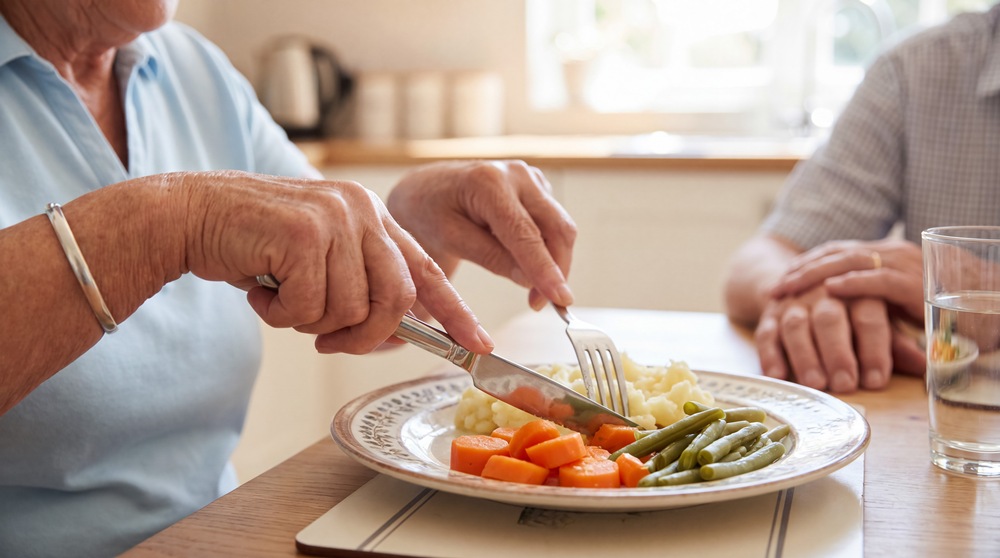
A 20-year study of 66,892 postmenopausal women linked the Planetary Health Diet to lower cardiovascular disease risk.
Women whose eating habits most closely followed the diet had around a 28 per cent lower risk of cardiovascular disease than those in the lowest-adherence group.
Even moderate adherence to the diet was linked with a lower risk.
Donya Shahamati is a doctoral student in public health at the University of California, Irvine.
The researcher said: “Our results suggest that people may not need to follow a perfect or very restrictive diet to see potential heart-health benefits.
“This is especially important for postmenopausal women, because cardiovascular risk increases with age and tends to rise after menopause.”
The diet emphasises fruit, vegetables, whole grains, legumes, nuts and unsaturated fats, while limiting red and processed meats, added sugars, refined grains and saturated fats.
Postmenopausal women are those who have gone through menopause, when periods stop and hormone levels change.
Cardiovascular risk tends to increase with age and rise after menopause.
“Moving towards a more plant-forward, higher-quality diet can be accomplished through small, realistic changes,” said Shahamati.
“These changes might include filling half the plate with vegetables more often; using avocado or olive oil in place of butter; choosing oatmeal or whole-grain cereal for breakfast; or trying a meatless meal once per week.”
For the research, investigators followed 66,892 participants in the Women’s Health Initiative, a long-term national health study funded by the National Heart, Lung and Blood Institute at the National Institutes of Health.
All the women included in the analysis were free from cardiovascular disease at the start of the study, between 1994 and 1998, and had complete information about their diet and other important health and lifestyle factors.
Researchers used information collected through a food frequency questionnaire at the start of the study to calculate a Planetary Health Diet Index score for each participant. Higher scores indicated that a participant’s diet was more closely aligned with the Planetary Health Diet.
They then divided the women into five groups according to how closely their diets followed it.
The women were around 63 years old at the start of the study and were followed for about 20 years to see who developed cardiovascular disease.
When analysing the data, researchers adjusted for factors that could affect cardiovascular risk, including age, race and ethnicity, education, income, smoking, alcohol intake, physical activity, body mass index and total calorie intake.
“We did not only look at overall cardiovascular disease,” said Shahamati.
“We also looked separately at coronary heart disease, stroke and heart failure. This helped us see whether the pattern was similar across different types of cardiovascular outcomes.”
Overall, women whose diets were most closely aligned with the Planetary Health Diet had the lowest risk of cardiovascular disease.
They also had a lower risk of coronary heart disease, heart failure and stroke than women in the lowest-adherence group.
Moderate adherence was also associated with a lower risk, with each 10-point increase in the Planetary Health Diet Index score linked to a further reduction.
The researchers cautioned that, because the study was observational, it could not show that the diet directly caused the lower risk among women.
Observational studies identify links between factors such as diet and disease risk, but cannot prove that one caused the other.
The research team is now exploring other aspects of diet and health among older adults, including how diet quality changes over time.
The researchers said this information could help support healthy ageing and prevent chronic diseases.


A fertility startup has raised US$4m and will open its first lower-cost IVF clinic in West Palm Beach later this year.
It will offer a full IVF cycle, including medications, for US$8,995.
Around 12 per cent of American couples struggle with infertility, according to the company, but only 14 per cent of them receive IVF because of the cost.
A single IVF cycle costs an average of US$23,500, it said, with the cost nearly doubling if further cycles are needed.
Co-founder and chief executive Van Spina said: “We’re building ABC around a straightforward premise: IVF has become unnecessarily expensive, and many patients are priced out before they ever have a real chance to start a family.”
“This is personal for me. My fiancée and I went through IVF ourselves, including multiple failed cycles,” Spina continued, citing Jamie Rapp.
“That experience pushed me to build the kind of fertility company we wished had existed when we began treatment.”
The US$4m seed round was led by Wormhole Capital and Tower Research Ventures.
In a blog post, New York-based Tower Research described ABC as a new model for fertility care, praising its “evidence-based protocols, AI-assisted intake, and modern lab workflows.”
“When we met the team at The American Baby Company (ABC), we saw an opportunity to rethink how fertility care is delivered in the US from the ground up,” the post said.
Co-founder and chief medical officer Dr Paul Magarelli is a board-certified reproductive endocrinologist and one of the most prominent voices in the US on expanding access to fertility care, according to Tower.
Reproductive endocrinology is a branch of medicine concerned with hormones and fertility.
Magarelli developed the Clinical Fertility Physician certification programme, which trains generalist clinicians to deliver routine fertility procedures under specialist oversight.
Spina spent his early career as a technology investor at Warburg Pincus before founding an institutionally backed data business in private credit.
“We’re on a mission to become the place Americans go to start their families,” Spina said.
“Our 10-year goal is to help make 250,000 babies per year.”








 Menopause2 weeks ago
New menopause drug approved for use by NHS in Scotland

 Wellness1 week ago
Stardust period tracker shares health data, study reveals

 News6 days ago
Zero Candida market set to reach over US$2 billion by 2030 – report

 News2 weeks ago
Women’s health draws record $1.55bn in equity as capital spreads beyond the mega-rounds

 Insight2 weeks ago
Softening ovaries could extend fertility as women age, study suggests

 Entrepreneur2 weeks ago
Onto Health acquires diagnostics software company Levy Health

 News1 week ago
Congress urged to invest over $20bn to close women’s health gap

 Mental health1 week ago
Nearly 60% of young women get health advice from influencers, research finds