




Fertility & pregnancy
Occupational therapy eases emotional strain of high-risk pregnancies, study finds


Occupational therapy can ease anxiety and emotional strain for women experiencing high-risk pregnancies, with cognitive-based techniques found to be most effective, new research has revealed.
Joint research from Edith Cowan University and the University of St Augustine for Health Sciences reviewed a range of psychosocial occupational therapy approaches and found that cognitive-based interventions had the strongest impact on managing perinatal anxiety, depression and stress.
The review examined several therapy types, including cognitive-based, counselling-based, sensory-based, emotion-based and integrated approaches.

Dr Thuy Tran is occupational therapy lecturer at Edith Cowan University’s School of Medical and Health Sciences.
The researcher said: “There is a lot of research evidence that reveals high-risk pregnancies result in increased levels of anxiety, stress, depression and a reduced quality of life.
“And while research has been done on how psychosocial occupational therapy could assist in those areas, there was no evidence which method was most effective.”
Around one in five women experience high-risk pregnancies requiring specialised monitoring and care.
Such pregnancies — which may involve conditions like pre-eclampsia, gestational diabetes or multiple births — often cause significant emotional distress, including fear, anxiety and uncertainty.
Occupational therapy helps people manage daily activities and life transitions through targeted interventions.
Psychosocial occupational therapy specifically addresses mental health and emotional wellbeing alongside functional support.
The researchers found that cognitive-based interventions were most effective for managing perinatal anxiety, depression and stress.
Counselling-based interventions had a moderate impact on anxiety, depression and quality of life, but a strong effect on reducing stress.
Sensory-based interventions appeared ineffective for anxiety, with limited evidence of impact on depression, stress or quality of life.
Lead author Dr Sabina Khan from the University of St Augustine for Health Sciences said the findings provide much-needed clarity about which approaches deliver the greatest benefit.
Khan said: “By identifying that cognitive-based and counselling-based interventions are the most effective in reducing anxiety, stress and depression, this research helps guide clinicians toward evidence-based practices that can meaningfully improve women’s wellbeing during a particularly vulnerable time.
“Women facing high-risk pregnancies frequently navigate fragmented systems.
“Embedding occupational therapy early helps close the gap between medical management and real-world function.”
Dr Tran said the research suggests practitioners should include cognitive-behavioural techniques in occupation-based sessions and place greater emphasis on emotional and cognitive assessment during the perinatal period.
The researcher said: “We need to have a holistic approach to working with clients to ensure that our strategies help them to function optimally.
“Whether this is in their new role as a mother, or their role as a mother to multiple children, or as a partner, or in their social role.”
The role of occupational therapists in women’s health is steadily growing in Australia.
Most practitioners work in private practice and are recognised as mental health care providers, making services accessible through mental health care plans, enhanced primary care plans or self-referral.
While some hospitals already employ occupational therapists in this field, there are calls for this to become standard care nationwide.
Dr Tran urged pregnant women, particularly those experiencing high-risk pregnancies, to seek intervention early.
Dr Tran said: “Pregnancy is such an intense phase, with women experiencing significant emotional, psychological and physical changes in their bodies, all while their social and work roles are also transitioning.
“A lot of focus is placed on the baby, but we don’t really talk about the emotional wellbeing of the mother and the transition from one role to the next.
“Having an occupational therapist can provide you with strategies to help that transition.”











Xella Health has integrated Oura wearable data into its women’s health platform, allowing members to share trends with clinicians alongside diagnostic results.
Members can choose to share information including sleep, heart rate variability, resting heart rate, temperature trends, recovery, activity and menstrual-cycle data.
The integration is intended to help clinicians investigate biological factors that may explain changes in members’ wearable data and symptoms.

Kelly Lacob, chief executive and co-founder of Xella Health, said: “Wearables detect that something in the body has changed, but wearable data alone can’t tell a woman why or what to do next with that information.”
“By pairing continuous physiological monitoring from Oura with Xella’s multiomic diagnostics and physician-guided care, we enable women to understand how specific health concerns are impacting her biometrics, and vice versa how her daily habits are impacting her overall health and specific conditions or life stages she is navigating.
“Further, we are able to track how her relevant vitals and biometrics respond to specific interventions or treatment plans, so we can optimise her care more efficiently.
“Ultimately, this partnership helps us better address her symptoms today whilst also proactively optimising her long-term health trajectory for decades to come.”
Xella Health combines AI, multiomic testing and physician-guided telehealth care through a membership platform.
Multiomic testing analyses several types of biological information.
Xella said its testing assesses hormonal and metabolic health, inflammation, nutritional status, reproductive health and cardiometabolic risk.
Physicians use those findings to develop personalised care plans that may include clinical treatments.
Clinicians can then review shared Oura trends alongside diagnostic results and member check-ins to monitor progress and adjust care over time.
The company said providers interpret biometric data in the context of each member’s health conditions, goals and treatment plan.
The integration focuses on fertility, perimenopause, hormonal and cardiometabolic health, as well as women’s longer-term health.
Oura has expanded its women’s health offerings through integrations connecting wearable measurements with other sources of health data.
In February, it partnered with at-home hormone tracking company Mira, allowing users to view hormone test results alongside sleep, temperature and readiness data in the Mira app.
The integration is intended to help users track patterns related to fertility, menstrual cycles and perimenopause.
That month, Oura also introduced a women’s health AI model for testing through Oura Labs.
Integrated into Oura Advisor, the model combines biometric data with clinician-reviewed medical information to provide guidance on menstrual cycles, pregnancy and menopause.
In May, the company launched menopause insights and hormonal birth control support.
Its Menopause Insights offering uses a questionnaire covering 22 symptoms of menopause alongside wearable data, while birth control support helps users understand their biometric trends in the context of hormonal contraception.

Nottingham University Hospitals NHS Trust has apologised after a human error caused 11 years of maternity data to be overwritten.
The incident happened during routine technical work on 18 August, when computer instructions intended to create a copy of a radiotherapy database were mistakenly applied to the maternity database.
Most of the affected information has since been recovered, including notes, observations, test results and other information recorded as part of patient care.
However, the trust has been unable to fully restore the historical record showing who viewed maternity records between September 2011 and November 2022.
Current data was not affected and the incident has had no impact on current maternity services or care provided to women and babies, according to the trust.
It also said no information was accessed or used inappropriately as a result of the incident.
Andy Callow, chief digital and information officer at Nottingham University Hospitals, said: “I am sorry for the concern and distress this incident may cause to women and families affected.
“On 18 August 2026, a human error during a routine technical process resulted in a maternity records database being unintentionally overwritten.
“We took immediate action to investigate the incident and recover the affected information.
“The information needed to support patient care has been restored and there has been no impact on current maternity services or the care provided to women and babies today.
“However, to date, we have been unable to fully restore the historical record showing who viewed maternity records between September 2011 and November 2022.
“We have informed the Information Commissioner’s Office, completed a full investigation and strengthened our processes and controls to help prevent a similar incident from happening again.”
The error occurred when pre-written computer instructions previously used for another hospital system were used during the technical work.
A setting that should have been changed was not altered, resulting in work being carried out on the maternity database instead of the radiotherapy database.
The issue was escalated within minutes of being identified and experts were brought in to recover as much information as possible.
The trust has referred the incident to the Information Commissioner’s Office and notified Nottinghamshire Police, which is conducting a separate criminal investigation into maternity care at the trust.
The force is assessing whether the loss of information about who accessed maternity records could affect that investigation.
The incident follows a maternity review led by midwife Donna Ockenden, which concluded in June after examining the cases of 2,500 families over a 20-year period.
The review found more than 500 mothers and babies suffered potentially avoidable harm, with 162 dying following substandard care. Some babies who survived were left seriously disabled.
Nottinghamshire Police announced its separate criminal investigation, Operation Perth, in September 2023.

The UK government is reviewing a surrogacy firm after complaints that medical insurance claims involving surrogates in Mexico were rejected.
The Department of Health and Social Care (DHSC) is considering whether UK-based provider My Surrogacy Journey should remain listed on gov.uk as one of four domestic surrogacy agencies available to intended parents.
The review follows allegations concerning its Mexican sister company, where surrogates are based.
Health minister Diana Johnson said: “The department is looking into the allegations about My Surrogacy Journey.
“As part of that assessment, the department will consider whether it is appropriate for that company to remain on the gov.uk list of agencies.”
Emails sent by My Surrogacy Journey chief executive Michael Johnson-Ellis and seen by the Guardian suggest multiple surrogate women in Mexico had their insurance claims rejected.
The emails also suggest 300 couples using the company were moved to a new insurance provider because of the increased risk of claims being rejected.
Commercial surrogacy is banned in the UK, where only altruistic arrangements are permitted.
My Surrogacy Journey operates a not-for-profit UK branch alongside for-profit sister companies in Mexico and the US. All three companies have the same owners and chief executives.
The reported insurance issues relate to surrogacy arrangements in Mexico.
One couple told the Guardian they paid tens of thousands of pounds to cover medical costs after their surrogate had a hysterectomy during childbirth and an insurance claim was refused.
The Guardian said it understood that at least five sets of parents said they had to cover medical costs after insurance claims were rejected.
In an email to the couple whose surrogate underwent a hysterectomy, Johnson-Ellis wrote: “We have already told you that the insurance companies have been declining some of the claims and we are actively working with the broker to get this issue resolved but you should also consider that they may not be paid out and there is nothing we are able to do to change this …
“We appreciate this is not an insignificant sum but this genuinely is out of our control.”
Johnson-Ellis also said the company had switched insurance providers, writing: “We’re also managing this for 300 other journeys, which is a complex position to be in.”
Lawyers acting for My Surrogacy Journey said the company did not comment on individual cases, but that existing insurance policies were in place and claims continued to be accepted and processed.
They said the company understood that a small number of claims had been rejected and was supporting people seeking to resolve those claims with an insurer.
Under the surrogacy arrangements, intended parents are understood to be contractually required to cover medical costs not paid by an insurer.
The couple said they had been recommended the company’s Mexico option. Its website advertises that intended parents using the route can have a baby in “under 18 months”.
They said they were told the UK route could take up to five years and that the US option was much more expensive.
Lawyers for My Surrogacy Journey said prospective parents are given information about typical timelines, costs, legal frameworks and practical considerations, and that the 18-month timeframe is indicative only.
The couple said their surrogate developed placenta accreta, a serious condition in which the placenta attaches to the wall of the uterus.
Emails from Johnson-Ellis acknowledged that the insurance provider investigated the birth after the surrogate experienced health complications.
The parents are considering legal action, while the Guardian said it understood at least four other couples were reviewing their options.
Phil Brickell, MP for Bolton West, raised concerns in parliament about a separate couple who had used My Surrogacy Journey.
He said: “Two of my constituents recently travelled to Mexico, where their children were born by surrogacy.
“Those births were facilitated by a company called My Surrogacy Journey, which is listed on gov.uk.
“While in Mexico, they had repeated traumatic experiences with the company relating to issues including insurance for their children, accusations of bullying towards staff and repeated efforts to silence any constructive criticism.
“I understand that other members of this house have received similar complaints.”
Brickell called for My Surrogacy Journey to be removed from gov.uk pending a review by the Human Fertilisation and Embryology Authority.
Lawyers acting for My Surrogacy Journey said the company was communicating with DHSC and was confident any issues could be resolved.








 Diagnosis2 days ago
Trust to decide how far back to review unnecessary breast cancer surgeries

 Diagnosis3 days ago
New test could cut need for invasive womb cancer checks

 Healthy ageing5 days ago
Higher BMI in early adulthood linked to lower breast cancer risk after menopause

 Business & startups4 days ago
Personalising women’s health with AI

 Pregnancy2 days ago
UK commits £254m to boost women’s maternal healthcare choices
 Tech & devices4 days ago
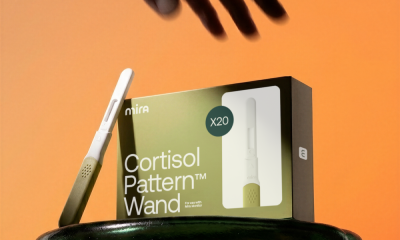
Mira launches at-home cortisol tracking kit

 Diagnosis4 days ago
Targeted nanotherapy shows endometriosis promise

 News5 days ago
EU healthcare’s gender pay gap hits 19%, WHO report finds
2 Comments