




Entrepreneur
Future Fertility unveils ROSE™, a new AI-based egg quality tool that aims to transform donor egg programs


As demand for egg donation grows around the world, Future Fertility is bringing transparency, predictability, and reliability to donor oocyte programs.
The company has announced the launch of ROSE—a new AI-powered oocyte quality workflow and report built specifically for egg banks and donor egg programs.
Jullin Fjeldstad is Head of Clinical Embryology and Scientific Operations at Future Fertility.
Fjeldstad said: “Egg banks have historically lacked tools to assess and manage donor oocyte quality in an objective way.
“ROSE™ brings standardisation into the equation, offering new AI-based insights and a workflow solution that optimise how donor eggs are managed, grouped, and allocated.”
With the number of IVF cycles involving donor eggs increasing globally, clinics and egg banks face rising pressure to deliver quality assurance in donor oocyte distribution.
Experts estimate that donor eggs are used in approximately 10 per cent of all cycles.
Meanwhile, the global donor egg IVF market is projected to reach $6.6 billion by 2032, up from $2.3 billion in 2022.
ROSE provides egg banks with a clinically validated, AI-powered tool that predicts the likelihood of each oocyte developing into a high-quality embryo (blastocyst).
Powered by the world’s largest dataset of oocyte images and associated reproductive outcomes, ROSE has been clinically validated for use with donor egg populations— enabling egg banks to:
- Optimise oocyte distribution by expected blastocyst outcomes
- Provide objective quality assurance for donor oocyte groupings
- Track and manage donor cycles and oocyte inventory with an AI-based tool and custom workflow solution
- Build trust with receiving clinics through intuitive, image-based reports
ROSE was developed in consultation with real egg bank partners who helped define requirements and refine the platform’s capabilities.
Dr. Catello Scarica, Scientific director at New Fertility Group, noted: “We’ve been impressed by how the ROSE tool supports quality control and decision-making in our donor cycles. It gives our team greater confidence in the eggs we distribute and enables better alignment with receiving clinics.”
WeBank’s Development Director, Dr Natalia Basile added: “ROSE is transforming how we manage donor eggs.
“The objective scores, traceability, and reporting help us organise inventory and reduce uncertainty—especially valuable when outcomes don’t meet expectations.”
From a clinical workflow perspective, the platform is designed for seamless integration. ROSE connects directly with microscopes and laser systems, allowing egg banks to capture 2D oocyte images in real time and securely upload them to the cloud.
Within minutes, the AI model—proven to be more accurate than embryologists in multiple studies—delivers predictions about blastocyst potential, with a workflow solution that manages, tracks and optimises groupings of oocytes for distribution.
Dr Danilo Cimadomo is Global Manager of AI and Data Management for Embryological Research at IVIRMA Global Research Alliance.
Cimadomo said: “The future of egg donation lies in complementing information about egg quantity with eggs’ blastulation potential to personalise the number of oocytes allocated per recipient.
“Tools like ROSE, can help maximise success while minimising the number of surplus embryos by matching patients with an ideal number of high-quality eggs based on their unique profile.”
Rafael Gonzalez, Global Head of Sales and Commercial Strategy at Future Fertility, added: “Clinics are asking for greater confidence when it comes to donor egg quality, both recipient clinics and donor egg banks.
“ROSE provides a scalable, data-driven way to meet that demand—giving both donor labs and recipient clinics a shared, objective language to talk about egg quality.”











Entrepreneur
Last chance to save on Women’s Health Week and Women’s Sport Summit: Early Bird pricing ends 11 September
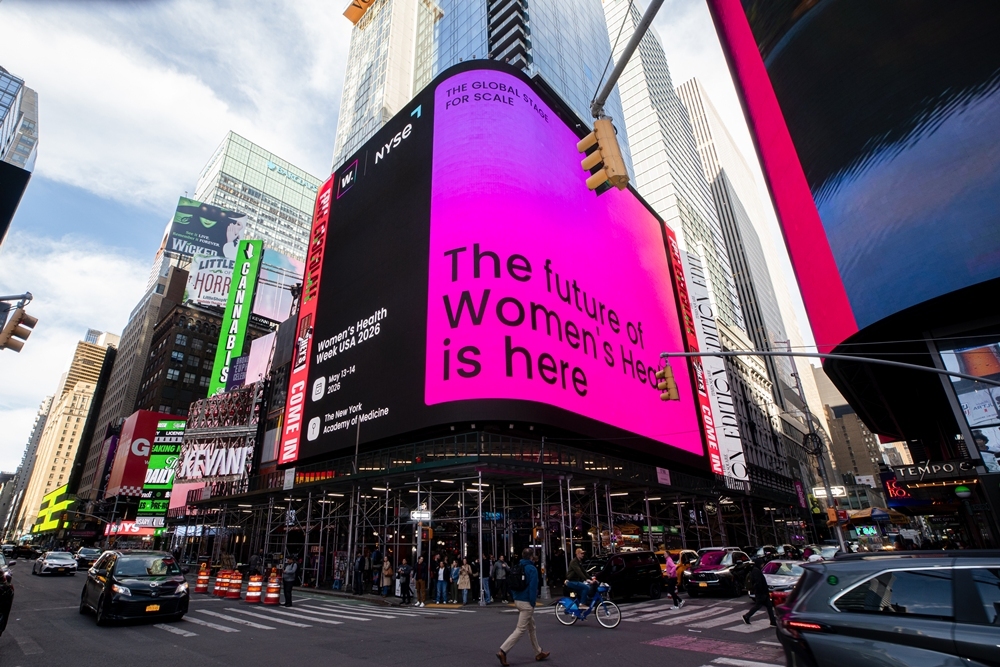
Early bird pricing for W Group’s two flagship October summits – Women’s Health Week Europe 2026 and Women’s Sport Summit Europe 2026 – closes on 11 September.
Both events take place at Emirates Stadium, London, bringing together founders, investors, corporates, and industry leaders shaping the future of women’s health and sport.
Women’s Health Week Europe 2026
7-8 October | Emirates Stadium, London
This year’s edition will be Women’s Health Week Europe biggest one yet: with 700+ attendees, 80+ speakers, and 20+ sponsors, it will also feature two stages – a Global Stage covering market trends and policy, and a Scale Stage focused on company-level growth and commercialisation. WHW takes place across two days of content, business matchmaking, and dealmaking.
Agenda highlights include:
- Where Capital Flows: Funding Trends in Women’s Health – with Merete Clausen (EIF), Ekaterina Gianelli (Calm/Storm), Henriette Hessen (Verdane), Jemma Day (British Business Bank), Ravit Warsha Dor (Telus Global Ventures), Tim Davis (LSEG)
- Six Feet Under-funded: Surviving the Valley of Death in Women’s Health – with Patric Stenberg (Gesynta Pharma), Valentina Milanova (Daye), Amber Vodegel (28x)
- The Women’s Health Label – Gift or Curse? · Live Debate – with Juan Camilo Arjona Ferreira (organon), Marissa Fayer (DeepLook Medical), Christian Lautner (Heal Capital), Annie Theriault (CBIV), Ida Tin (Clue)
- Passport to Scale: Taking Your Women’s Health Business Global – with Vanessa Carpenter (Femtech Across Borders), Annie Theriault (CBIV), Victorine Lançon (Daya Ventures), Dr Mridula Pore (Peppy)
Early bird pricing (ends 11 September):
| Ticket type | Early bird | Standard |
| Startups, Scaleups, Investors, Non-Profits, Government | £599 + VAT | £699 + VAT |
| Corporates, Payors & Providers | £1,799 + VAT | £1,999 + VAT |
| Service Providers & Consultants | £3,299 + VAT | £3,499 + VAT |
Register for Women’s Health Week Europe | See the full agenda for WHW
Women’s Sport Summit Europe 2026
6 October | Emirates Stadium, London
The first-ever Women’s Sport Summit expands W Group’s expertise in connecting key decision-makers to the sports industry.
WSS brings together rights holders, brands, investors, athletes, and media to accelerate commercial growth across the sector.
Agenda highlights include:
- From capital to crowd: the women’s sport cycle at scale – with Omar Shaikh (Arsenal FC), Nicole McWilliams (Google), Kerstin Lutz (Mercury13), Jo Currie (BBC Sport)
- Women’s sport through the investor lens: what gets funded – and why – Hugo Sever (APEX Capital)
- Rethinking ROI: what are we measuring that doesn’t actually matter? – Fi Watherston (Metro Bank), Silvia Keiser (Billie Jean King Cup), Gabriel Akin-Odujobi (Crux Football), Tammy Parlour (WST)
- Beyond the 90 minutes: matchday as a commercial product, not just a fixture – Maggie Murphy (Aston Villa Women FC), Sam Feasey (Diageo/Guinness), Molly Miller (OneFootball), Megan Feringa (The Athletic/The New York Times)
Early bird pricing (ends 11 September):
| Ticket type | Early bird | Standard |
| General Pass | £299 + VAT | £399 + VAT |
| Service Providers & Consultants | £1,799 + VAT | £1,999 + VAT |
Register for Women’s Sport Summit Europe | See the full agenda for WSS
Attending both events?
For group tickets or to attend both summits this October, contact Callum, W Group’s Client Success Lead, at [email protected].


KOVE Medical has raised €1.7 million to support first-in-human studies of an implantable device designed to reduce preterm birth risk after foetal surgery.
The University of Zurich spin-off is developing a device designed to close defects left by surgical instruments following fetoscopy, a minimally invasive procedure performed inside the womb.

Fetoscopies can treat life-threatening conditions before birth but require surgical instruments to pass through the uterine wall and amniotic sac.
This can weaken the protective membrane, causing fluid leakage or rupture and often leading to preterm birth.
KOVE Medical said in a statement on LinkedIn: “This is a crucial step forward for our company, and we are incredibly grateful for the strong support and trust from our syndicate of visionary angel investors.”
KOVE Medical says its device closes the defect at the end of the procedure, stabilising the membrane and preventing complications. The aim is to make in-utero interventions safe enough to become a standard method of care.
The company plans to use the seed funding to reach first-in-human studies, a key milestone for a medical device seeking regulatory approval.
The CHF1.6m round was backed by a syndicate of angel investors.

The Women’s Health Innovation Summit (WHIS), the event uniting the global women’s health ecosystem, has just announced 18 new speakers joining the agenda for its 2026 summit, taking place October 13–15 at Encore Boston Harbor.
The latest additions bring further depth across pharma, clinical research, health systems, venture, and policy, reinforcing WHIS’s role as the only platform where the full women’s health ecosystem convenes under one roof.
Newly confirmed speakers include:
- Kelle Moley, MD – VP, Women’s Health Early Phase Clinical Development, Cardiometabolic Research, Eli Lilly & Company
- Justine Levin-Allerhand – Executive Partner, Chief Corporate Development Officer & COO, Flagship Labs, Flagship Pioneering
- Sebnem Yildirimoglu, MD, PMP – Executive Director, Women’s Health Strategy, Premier Research
- Terri Stewart – Head of Global Healthcare & Government Affairs, EMD Serono
- Dr. Morag Grassie – Executive Director, Blavatnik Fund for Innovation, Yale
- Sandra Butler – Director, Design Impact, Mass General Brigham
- Zhenya Lindgardt – Chief Executive Officer, Sera Prognostics
- Sadie Morahan – Head of US Revenue, Withings Health Solutions
- Angela Drew, PhD – Vice President, Regulatory Strategy, Premier Research
- Dr. Stephanie Lahr – CMIO, Aqurio
- Michelle Andrews – Contributing Writer, KFF Health News
- Charlotte Williams – CEO, My Bump Hub
- Clint Dart, MS – Director, NIH Women’s Health Data Coordinating Center, Premier Research
- Cass Sanford – US Venture Advisor, FemTech Lab
- Megan Mukuria – Founder & CEO, ZanaAfrica
- Tiffany Inglis, MD, FACOG – Chief Medical Officer, Sera Prognostics
- Angelean Hendrix, PhD – Vice President, Pharmacometrics and MIDD, Premier Research
- Amanda Ducach – CEO & Co-founder, EmaEQ
“WHIS is where the women’s health industry comes together to take action,” said Poppy Howard-Wall, Event Director at WHIS.
“This latest wave of speakers reflects exactly the kind of cross-sector expertise our attendees expect – from global pharma and clinical research leadership to venture, health systems, and grassroots innovation.
“It’s this breadth that makes WHIS the room where things actually move forward.”
Bringing the Full Ecosystem Together
These additions join a growing 2026 agenda spanning four content tracks that reflect the full lifecycle of healthcare innovation, from early-stage research and development through to patient delivery, system transformation, and commercial scale.
Attendees can expect over 1,000 senior decision-makers, 120+ expert speakers, four dedicated stages, and more than 10 hours of curated 1:1 meetings.
Full speaker and agenda details are available at whisusa.com/speakers-2026.
About WHIS
The Women’s Health Innovation Summit is the only platform uniting the full women’s health ecosystem – providers, payers, employers, pharma leaders, investors, and innovators -to increase deal flow, expand reimbursement, improve access, and deliver better outcomes for women at every stage of life.




 Menopause5 days ago
Menopause may not explain rising heart condition in women – study

 Fertility1 week ago
Paracetamol use may impact future fertility, studies suggest

 Entrepreneur2 weeks ago
Last chance to save on Women’s Health Week and Women’s Sport Summit: Early Bird pricing ends 11 September
 Insight5 days ago
Women with birth trauma face 2.5x higher healthcare costs – study

 Menopause2 weeks ago
Cancer drug could tackle osteoporosis menopause weight gain

 News4 days ago
Medical cannabis may improve endometriosis symptoms – study
 Cancer5 days ago
Study could explain why obesity is a breast cancer risk factor
 Diagnosis2 weeks ago
FDA approves AstraZeneca breast cancer drug