




Insight
Doctors report first pregnancy using AI system to detect sperm in men previously considered infertile


A couple who had been trying to conceive for 19 years have become the first to achieve pregnancy using an artificial intelligence system designed to detect sperm in men with azoospermia – a condition where no sperm are visible in semen.
The pregnancy was announced in March 2025 by doctors at Columbia University Fertility Center.
It followed the development of the STAR (Sperm Track and Recovery) system, led by Dr Zev Williams, director of the centre.
Male factors are thought to account for around 40 per cent of infertility cases in the US, with azoospermia responsible for roughly 10 per cent of male infertility.
Until recently, there was little doctors could do beyond recommending donor sperm.

Williams explained that semen samples from men with azoospermia can appear normal, but microscopic analysis shows no visible sperm among other cell debris.
As sperm are the smallest cells in the human body, even highly trained technicians often fail to identify them.
The Columbia team spent five years developing STAR, which combines an AI algorithm trained to detect sperm with a fluidic chip that channels the semen through microscopic tubules.
When the AI detects sperm, that portion of the sample is diverted into a separate channel for collection.
The recovered sperm can then be frozen or used for fertilisation.
Inspired by methods used by astrophysicists to find stars and planets, the STAR system is trained to detect what Williams calls “really, really, really rare sperm.”
He said: “If you can look into a sky that’s filled with billions of stars and try to find a new one, or the birth of a new star, then maybe we can use that same approach to look through billions of cells and try to find that one specific one we are looking for.”
He likened the process to finding “a needle hidden within a thousand haystacks,” and noted that STAR is able to do this within a couple of hours and gently enough to preserve sperm for use in IVF.
What makes STAR distinct, he added, is that it not only detects the presence of sperm, but also isolates them automatically—a step that sets it apart from many other AI diagnostic tools.
The system can scan around eight million images in an hour.
Williams recalled the moment he became convinced of the system’s potential: before discarding semen samples deemed sperm-free by embryologists, they were run through STAR.
In one case, after two days of unsuccessful manual searching, STAR found 44 sperm in one hour.
Rosie, 38, who asked to use a pseudonym to protect her identity, and her husband became the first couple to achieve pregnancy using STAR.
They had spent nearly two decades trying to conceive and had undergone 15 unsuccessful IVF cycles. Their Orthodox Jewish faith, Rosie said, kept them hopeful throughout.
Before using STAR, they had explored multiple options to address her husband’s azoospermia, including surgery and bringing in a specialist from abroad to manually search sperm samples.
They also looked into chemical extraction methods, which posed risks to sperm quality.
Rosie said: “There really was nothing else out there.
“Especially because I am running quite a few years ahead of where we should be [for fertility]. I’m not that old, but in fertility years—egg-wise—I was reaching my end.”
They learned about Williams’ programme through a community group and quickly familiarised themselves with the technology.
She said: “We knew exactly what it was, and knew what they were trying to do.
“If they could get sperm in a more natural way without chemicals and hopefully chose the good ones—if the programme was able to do that, we knew we had a better chance.”
The IVF cycle using STAR did not require any extra testing or procedures and followed the same steps as previous attempts.
Rosie said: “We were keeping our hopes to a minimum after so many disappointments.
“We came in, did what we had to do for the cycle, knowing there was probably a very small chance of anything happening. Why should this be any different from every other time?”
Williams explained that in conventional IVF, sperm typically outnumber eggs by a large margin, but in azoospermia cases, the reverse is true.
To maximise the chances of success, his team used STAR to collect several sperm samples in advance, which were frozen.
On the day of egg retrieval, they processed a fresh semen sample through STAR and used any recovered sperm to fertilise the eggs.
The frozen samples were kept in reserve in case no viable sperm were found in the fresh sample.
Within two hours, Rosie was told her eggs had fertilised successfully.
She said: “After the transfer, it took me two days to believe I was actually pregnant.”
Now four months into her pregnancy, Rosie is receiving standard obstetric care, and doctors say everything is progressing normally.
She said: “I still wake up in the morning and can’t believe if this is true or not.
“And I still don’t believe [I’m pregnant] until I see the scans.”
Williams said that azoospermia is just one fertility challenge where AI could be transformative.
Williams said: “There are things going on that we are blind to right now. But with the introduction of AI, we are being shown what those things are.
“The dream is to develop technologies so that those who are told ‘you have no chance of being able to have a child’ can now go on to have healthy children.”












News
From Hologic to Ark Surgical: Why Joseph LaBruzzo is betting on the future of women’s surgical innovation

After more than two decades leading organisations at some of the world’s most respected medical device companies, including Hologic, SenoRx Breast Care, and BTL Industries, Joseph B. LaBruzzo is embarking on a new chapter as President & CEO of U.S. Operations and Board Member at Ark Surgical.
We sat down with Joseph to discuss what drew him to Ark Surgical, why he believes women’s surgical innovation is entering a transformative era, and what it takes to bring meaningful technologies from concept to standard of care.
You have held leadership positions at some of the biggest names in MedTech. What attracted you to Ark Surgical?
Throughout my career, I’ve been fortunate to work with organisations that developed technologies capable of changing the standard of care.
What attracted me to Ark Surgical is the opportunity to help address a meaningful unmet need in gynecologic surgery with an innovation that has the potential to improve patient outcomes while preserving the benefits of minimally invasive surgery.
Opportunities like that don’t come along very often.
FemTech World recently highlighted that many women remain unaware of gynecologic cancers and that unexpected diagnoses continue to have a profound impact on patients and families.
How has your own experience shaped the way you think about innovation in women’s health?
Earlier in my career, I witnessed many women receive life-changing cancer diagnoses.
Those experiences stayed with me and reinforced my belief that if there’s an opportunity to reduce risk through better innovation, it’s one worth pursuing.
That’s one of the reasons I was drawn to Ark Surgical.
The vast majority of minimally invasive gynecologic procedures are performed for conditions believed to be benign. Unfortunately, in rare cases, pathology later reveals an unexpected malignancy.
LapBox was designed with a proprietary dual-wall tissue containment system to help facilitate contained specimen retrieval and minimise the risk of tissue spillage during laparoscopic procedures.
I believe innovations like this can help surgeons manage the unexpected while preserving the many benefits of minimally invasive surgery for women.
Women’s health has gained significant momentum in recent years, yet surgical innovation often receives less attention than diagnostics or therapeutics. Why do you think that is?
Women’s health has historically been underfunded and underserved across many areas of medicine, and surgery is no exception.
While we’ve seen tremendous advances in diagnostics and pharmaceuticals, there are still important opportunities to improve the surgical experience for both physicians and patients.
Innovation that enhances safety, efficiency, and outcomes has the potential to make a lasting impact.
What excites you most about LapBox?
LapBox addresses a very real challenge that gynecologic surgeons face during minimally invasive procedures.
It was thoughtfully designed to integrate seamlessly into the surgical workflow while providing an added layer of confidence when tissue retrieval is required.
I believe technologies that solve real clinical challenges in a practical way have the greatest potential to become part of the standard of care.
What do you see as the biggest unmet needs in minimally invasive gynecologic surgery today?
The future of surgery isn’t simply about making procedures less invasive. It’s about making them smarter and safer.
Surgeons need technologies that integrate seamlessly into their workflow while helping them navigate increasingly complex clinical situations.
Every advancement that helps reduce risk while preserving the benefits of minimally invasive surgery has the potential to improve outcomes for both physicians and patients.
That’s where I believe the greatest opportunities for innovation exist.
As you take on this new role, what are your priorities over the next 12 months?
Our focus over the next 12 months is to build a strong foundation for growth. That means expanding physician partnerships, driving early clinical adoption, growing our team, and ensuring that more surgeons have access to technologies like LapBox.
At the same time, we’re focused on building strategic relationships with investors, healthcare systems, and industry partners that support our long-term vision.
What advice would you give entrepreneurs building the next generation of women’s health companies?
Start with a real clinical problem and never lose sight of the patient.
Great technology alone isn’t enough. You also need strong clinical evidence, physician advocates, and a clear market strategy. The companies that succeed are the ones that bring all of those pieces together while remaining focused on improving patient care.
About Joseph B. LaBruzzo
As President & CEO of U.S. Operations and Board Member, Joseph LaBruzzo is leading Ark Surgical’s U.S. growth strategy, physician partnerships, strategic investment initiatives, and organisational expansion, supporting the company’s mission to advance safer minimally invasive gynecologic surgery through innovative technologies.

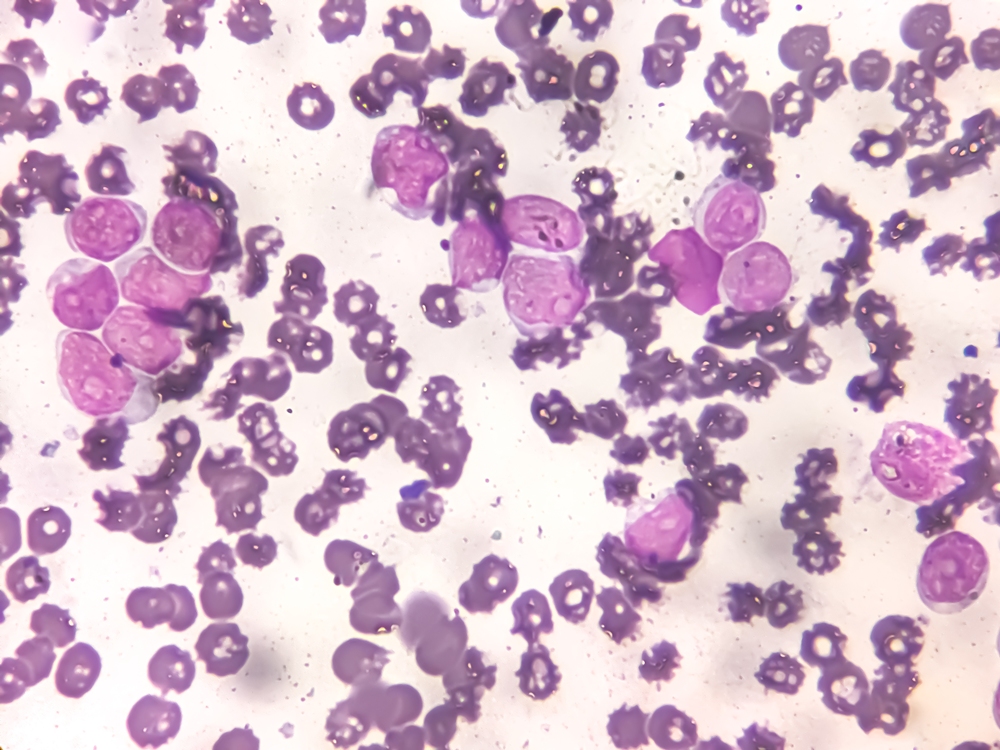
Cancer cells may hijack a fertility protein to repair damaged DNA and survive chemotherapy, research suggests.
The findings could point to a way of making existing cancer treatments more effective.

SYCP1 is a protein normally involved in producing sperm and eggs.
Researchers at the University of Liverpool found that the protein, previously thought to work only in reproduction, can be reactivated in cancer cells, where it helps tumours survive and grow.
SYCP1 usually helps chromosomes pair during meiosis, the form of cell division that produces reproductive cells.
In cancer cells, however, the protein appears to take on another role. It enters the nucleus, the cell’s control centre, binds directly to DNA and regulates genes involved in cell division and DNA repair.
DNA repair is how cells fix damage to their genetic code. In cancer, this process can help tumour cells survive treatment.
The researchers found that removing SYCP1 made cancer cells much more sensitive to chemotherapy drugs that damage DNA.
The findings suggest cancers may use SYCP1 to repair damage caused by treatment and continue growing.
Dr Urszula McClurg, lecturer in biochemistry, cell and systems biology at the University of Liverpool, said: “Our findings show that cancer cells can hijack proteins that normally exist only in reproductive tissues and give them completely new jobs.
“Understanding these unexpected functions opens up exciting opportunities to develop new treatments that make existing cancer therapies more effective.”
The work challenges the long-held belief that proteins active only in fertility have no biological relevance outside the reproductive system.
Researchers say these specialised proteins could provide new treatment targets across many types of cancer.
The study also offers a new view of how cancers evolve by repurposing developmental and reproductive processes.
The findings highlight SYCP1 as a candidate for future precision cancer therapies, which are treatments based on the specific biology of a patient’s cancer.

Women’s health has become one of the most searched and shared topics online, from cycle syncing and cortisol management to menopause hacks, supplements, hormone testing and clinician-creator content.
That surge in attention, sometimes dubbed “healthmaxxing,” is changing how women find, evaluate and act on health information, and it is starting to reshape the relationship between patients, clinicians and the companies building products for this market.
For providers, the shift means patients are arriving better informed but also more exposed to unverified claims, putting pressure on clinicians to engage with online narratives rather than dismiss them.
For femtech and pharma companies, it opens a route to reach and educate consumers at scale, but also raises the stakes on credibility: products and messaging that ride the trend without clinical grounding risk eroding the trust the industry has spent years building.
Investors are watching the same dynamic from a different angle.
Attention-driven demand can be a signal of where the next wave of femtech growth will come from, but distinguishing genuine clinical need from viral momentum is increasingly part of due diligence.
The net effect is a widening gap between companies that treat cultural attention as a distribution channel for credible, evidence-based care, and those that risk being swept up in trends with little clinical substance behind them.
How that gap plays out will shape patient trust, clinical relationships and commercial opportunity across the women’s health industry for years to come.
These themes will be explored in more depth in an upcoming webinar, “Women’s Healthmaxxing: The Opportunity & Risks of Cultural Attention for the Women’s Health Industry,” hosted by the Women’s Health Innovation Summit (WHIS), featuring Ellen Wilcox (Listen Ventures), Jessica Bell van der Wal (Frame Fertility), Dr. Tosin Sotubo-Ajayi (NHS, BBC and more) and Nora Lansen (Elektra Health).
Register free for the webinar on 23 July 2026 at https://events.virtualpro.com/womens-health-series-webinar-july-2026/registration










 News2 weeks ago
New menopause drug approved for use by NHS in Scotland

 Hormonal health1 week ago
Stardust period tracker shares health data, study reveals

 News6 days ago
Zero Candida market set to reach over US$2 billion by 2030 – report

 Insight2 weeks ago
Women’s health draws record $1.55bn in equity as capital spreads beyond the mega-rounds
 Insight2 weeks ago
Softening ovaries could extend fertility as women age, study suggests

 Entrepreneur2 weeks ago
Onto Health acquires diagnostics software company Levy Health

 News1 week ago
Congress urged to invest over $20bn to close women’s health gap

 Mental health1 week ago
Nearly 60% of young women get health advice from influencers, research finds