




Fertility
Carea launches digital IVF support tool as UK fertility demand rises


Carea has introduced a digital support feature for people undergoing IVF, IUI and egg freezing, as clinics across the UK face rising demand and mounting concerns about fragmented care between appointments.
The London-based pregnancy and postnatal platform has added a “Trying to Conceive: IVF/IUI Mode” to its app, designed to support patients with the day-to-day realities of treatment that take place away from clinical settings.
This includes managing medication schedules, administering injections and keeping track of complex protocols at home.

Anastasia Shubareva-Epshtein, founder and chief executive of Carea, said the new feature was shaped partly by her own experience.
“It’s the tool I wish I’d had when I was going through IVF,” Shubareva-Epshtein said, describing the isolation and uncertainty that can accompany treatment.
More than 100,000 fertility treatment cycles were carried out in UK clinics last year, according to industry figures cited by Carea.
Specialists have warned that increasing volumes are contributing to a more transactional experience, with reduced continuity between consultations and limited opportunities for patients to raise questions outside scheduled appointments.
At the core of the new feature is a medication tracker, allowing users to input a personalised treatment plan, set reminders and log doses.
Step-by-step video guidance on medication preparation and self-injection is also included.
The mode offers IVF-focused educational content, such as expert-led articles and podcasts, alongside affirmations tailored to the emotional pressures of fertility treatment.
A visual progress indicator helps users see where they are in their cycle.
The feature was developed with input from women currently undergoing fertility treatment, including those managing multiple medications daily while balancing work and family life.
Although IVF is often portrayed as closely monitored, much of the practical workload falls to patients at home.
Daily injections, precise timing and last-minute protocol changes can add significant stress, particularly during the gaps between appointments.
The launch comes amid ongoing disparities in access to fertility services.
NHS-funded IVF accounts for around 27 per cent of treatments, according to public data referenced by Carea, and many local authorities fund only one cycle for eligible women under 40.
As a result, a substantial number of patients turn to private providers, where costs can run into several thousand pounds per cycle, excluding medication and additional procedures.
Dr Anil Gudi, founder of Fertility Plus and medical adviser at Carea, said many patients report a lack of continuity in care.
He said: “Unfortunately, IVF care in the UK is becoming increasingly impersonal.”













Weight loss surgery was linked to more regular periods and fewer polyendocrine metabolic ovarian syndrome (PMOS) symptoms in women aged 18 to 45 living with obesity in a recent study.
The researchers recommend that women undergoing the procedure have access to preconception care and reproductive counselling to support their reproductive health.

Researchers at the University of Surrey analysed data over 24 months from 84 women who underwent bariatric surgery and 18 women living with obesity who did not have surgery.
Of those who underwent surgery, 49 had gastric bypass procedures and 35 had gastric sleeve surgery.
Women who underwent metabolic bariatric surgery lost more than 30kg on average at 12 and 24 months after the procedure.
Among women with polycystic ovaries, the condition persisted in only 10 per cent after 24 months.
Women also reported a resolution of clinical hirsutism, or excess body hair, by 12 months.
Women who had previously experienced irregular periods reported more regular menstrual cycles after surgery.
Professor Martin Whyte, co-author of the study and professor of metabolic medicine at the University of Surrey, said: “A large proportion of those undergoing bariatric surgery are women of reproductive age, who may be planning a pregnancy in the coming years.
“So much remains unknown about the impact of this type of surgery on women who are planning to have children.
“This raises the question of when the ideal time after surgery is to conceive.”
Women have a higher prevalence of obesity than men, with 57 per cent of women in the UK classified as overweight and 27 per cent living with obesity, which can affect fertility and the health of an unborn baby.
The researchers said 17 women had healthy pregnancies following surgery.
Although this was not specifically examined in the study, no difference in birth weight was observed between babies conceived within or after the first year.
Dr Kathryn Hart, co-author of the study and associate professor in nutrition and dietetics at the University of Surrey, said: “What we have found is that bariatric surgery positively affects the reproductive health of women living with obesity and can improve the likelihood of them having a healthy pregnancy after surgery.
“Dysregulated hormone levels, irregular periods and conditions such as polycystic ovaries are affected by obesity.
“By reducing this, what we have seen is that it can lead to improvements without the need for medication.
“We would suggest that clinicians consider medical intervention for obesity to treat irregularities in the menstrual cycle and issues with fertility.”


The Scottish government has launched a national review into whether NHS IVF access should be extended to single women.
The review will also consider whether wider access should be offered to couples who have children from previous relationships.
Health secretary Angela Constance said: “Access to NHS IVF treatment should be fair, timely and reflect the way people’s lives and families look today.”
Most single women are not currently eligible for NHS IVF treatment in Scotland.
Campaigners have welcomed the review.
Katie Rollings of Fertility Action said: “It’s an essential and long-awaited decision that will impact a huge number of people who are struggling to grow their families.
She said there is “no evidence” that having two parents rather than one determines whether a child will thrive.
She added: “What matters is whether a child is loved, safe, supported and has stable, positive relationships around them.”
Figures from the Human Fertilisation and Embryology Authority show Scotland is the only UK nation where NHS-funded IVF cycles outnumber privately funded cycles.
In 2024, more than 6,000 cycles of fertility treatment were carried out among more than 4,000 patients in Scotland. Both figures were slightly lower than the record highs recorded in 2022.
The past 20 years have also seen a rise in the number of same-sex female couples and single women receiving fertility treatment.
In 2024, 625 IVF cycles were carried out for women in same-sex couples in Scotland, with more than one third funded by the NHS.
There were 330 cycles involving single women, of which 50 were NHS-funded.
In England, single women can access IVF through the NHS, although eligibility varies according to the local health trust’s policy.
Current Scottish rules state that couples are eligible if they have been living in a stable relationship for two years and neither partner has been sterilised.
Couples where one partner already has a child can be eligible, but those where both partners have children from previous relationships are not.
Eligibility rules also require a body mass index above 18.5 and below 30, and state that couples must not smoke, drink alcohol or take drugs during treatment. The mother must be under 42.
The Scottish government said the review would also examine consistency of access to fertility preservation, including during cancer treatment, as well as reducing waiting times for donor eggs and sperm.
Same-sex female couples already have access to NHS IVF, but they can face long waits for donor eggs or sperm, as can heterosexual couples who require donor treatment.
The National Fertility Group will lead the review and make “costed, demand-modelled recommendations”, which are due to be published by early summer 2027.
The group will include fertility experts from Scotland’s four NHS-assisted conception units in Glasgow, Edinburgh, Aberdeen and Dundee.
Prof Sarah Martins Da Silva, an NHS consultant and chair of fertility medicine at Dundee University, said there were questions to be answered in a resource-stretched NHS.
“As a fertility specialist I’m never going to be disappointed if the criteria is widened,” she said.
“But with single people, as an NHS clinician looking at the competing demands we have, I’d ask the question about whether being single is a health condition that needs to be funded.”
Da Silva said NHS waiting lists were full of couples who require donated eggs or sperm because of medical conditions including cancer and could face longer waits.
“It’s slightly a disservice to them,” she said.
“There would need to be a real investment and resource without making everybody wait an extraordinary long time.
“With the current financial environment we work in, if you’re talking about new money, where would that come from?”
She said she would welcome changes that encouraged more people to donate eggs or sperm and questioned whether arguments about children needing two parents were necessarily relevant to the debate.
“On the one hand bringing up a child is quite an expensive process, and if you don’t have that support, it can be very difficult.
“But on the other hand, many people start off as a couple and divorce.”
Da Silva also welcomed plans for the review to consider eligibility for couples who already have children, describing the move as “fantastic”.












 pain conditions2 weeks ago
Major UK study could be a ‘game-changer’ for heavy periods and endometriosis
 Entrepreneur1 week ago
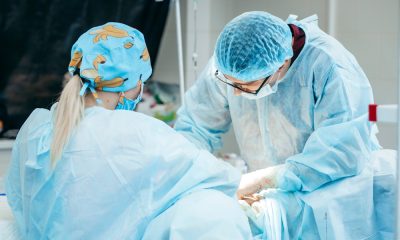
KOVE Medical raises €1.7 million to improve safety of foetal surgery
 Fertility2 weeks ago
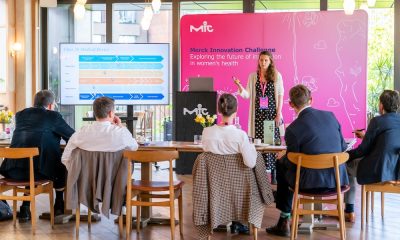
One week left to apply: W Accelerate with Merck KGaA and M Ventures

 Pregnancy1 week ago
UK study aims to transform maternity care for high-risk pregnancies

 Mental health2 weeks ago
PMDD after SSRIs or hormones: Why the brain may be the missing treatment target

 Diagnosis2 weeks ago
Ark Surgical secures further institutional backing to accelerate US expansion

 Menopause5 days ago
Menopause hormone treatment may ease brain fog, study suggests

 Motherhood2 weeks ago
Thousands of UK women develop undiagnosed PTSD after childbirth each year – study
Pingback: fluconazole tablet over the counter
Pingback: lansoprazole
Pingback: generic stendra 200 mg
Pingback: semaglutide effetti collaterali quanto durano in italia
Pingback: tadalafil purchase online
Pingback: ketoconazole for fungal infections
Pingback: terbinafine overview
Pingback: ivermectin strongyloides peer‑reviewed data
Pingback: sildenafil molecular action
Pingback: vardenafil 5 mg information
Pingback: vardenafil mode of action
Pingback: orlistat meal timing
Pingback: penicillin allergy immune mechanisms