Pregnancy
Canadian company bags CAD$2.4m grant to discover new non-hormonal contraceptives
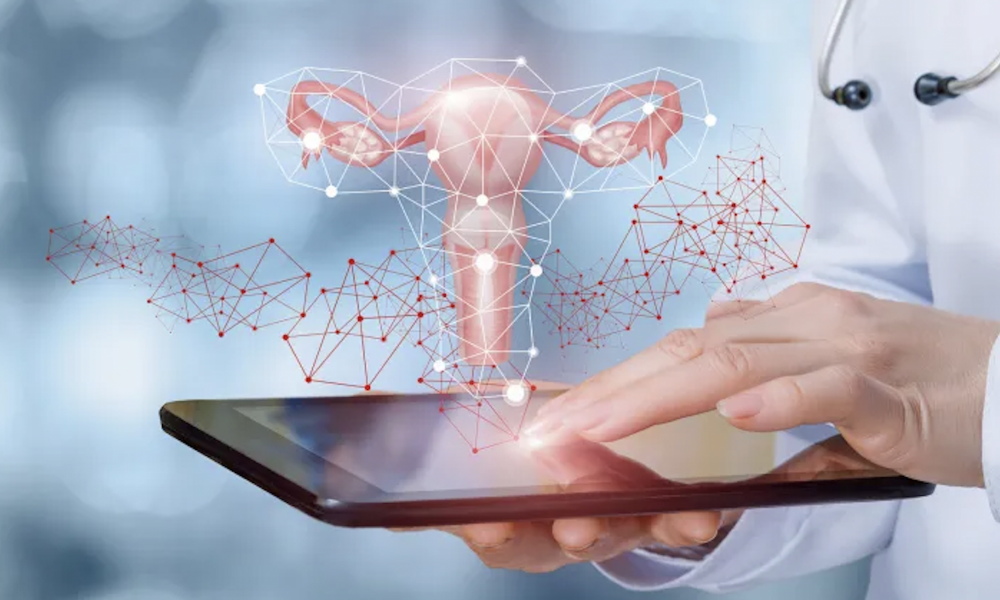
The grant from the Bill & Melinda Gates Foundation will help Cyclica to advance contraceptive medicines

The biotech company Cyclica has received a CAD$2.4m grant to identify new non-hormonal contraceptive options.
The grant from the Bill & Melinda Gates Foundation is hoped to enable Cyclica to use its AI drug discovery platform to find new therapeutic options for multiple low-data biological targets to expand the range of accessible non-hormonal contraceptive choices and give women the ability to better plan their futures.
Historically, hormone-based contraceptives are known to cause side effects that tend to reduce their appeal.
The Toronto-based company, however, says that a widely available non-hormonal contraceptive would provide an additional safe, effective choice for women and girls looking to take charge of their reproductive health.

To date, research on discovering non-hormonal contraceptive agents has been hindered by a dearth of validated and enabled drug targets.
While there are a small set of targets with sufficient supporting biological data and technical feasibility to warrant substantial investment, there are a set of less mature and emerging targets where the availability of new chemical starting points would enable novel target assessment and biological investigation.
Cyclica aims to make an impact, as its platform is optimised for drug discovery against low-data drug targets.
“While Cyclica builds and advances a commercial portfolio of drug discovery programmes, it is part of our corporate ethos to work alongside nonprofit organisations to advance research for unmet medical needs,” said Naheed Kurji, Cyclica CEO.
“Among women who want to delay or avoid pregnancy, concerns about side effects are the most common reason they give for not using modern contraception.
“We are honoured to have received support from the Bill & Melinda Gates Foundation to work towards discovering new, hormone-free contraceptives that will expand the range of contraceptive options available to women and girls.”
Mike Palovich, Cyclica chief science officer, said: “Cyclica has a track record of success in the low-data target area for unmet clinical needs.
“We have the experience needed to tackle this currently undrugged, high-need opportunity, and progress it to the clinic on a faster and less costly trajectory than that offered by traditional methods.
“I’m impressed by the level of domain expertise within the BMGF scientific team, and we’re looking forward to collaborating with them toward this shared goal.”
Pregnancy
Pregnant women told to avoid runny eggs amid salmonella outbreak

Pregnant women are being advised to avoid runny or under-cooked eggs when eating out amid a developing salmonella outbreak.
The advice also applies to freshly made products that may contain uncooked eggs, including mayonnaise, soufflé and hollandaise sauce.
The FSA said well-cooked eggs served in restaurants, cafés and takeaways remain safe to eat.
The warning follows the UK Health Security Agency declaring a national outbreak of salmonella food poisoning after one person died and hundreds more fell ill.
Imported eggs or dishes containing them are thought to be behind the outbreak.
FSA chief scientific adviser Ian Young said: “If people are eating out or consuming eggs or egg-containing products from cafes and restaurants then for those people in particular who are young, elderly, pregnant or vulnerable, it’s important to make sure that any eggs or egg products that you consume in those settings have been very well cooked.”
He described the outbreak as “unusually large and rapidly increasing”, adding that “people need to be careful”.
The FSA said British eggs bought from supermarkets are not linked to the current outbreak because chickens bred in the UK are vaccinated against common strains of salmonella.
“There is no link to those eggs to this current outbreak,” Young said.
Mark Williams, chief executive of the British Egg Industry Council, said British eggs were safe to eat when runny, including for vulnerable people, and were widely available in restaurants and cafés.
“Customers who want to enjoy a runny egg should simply ask whether British Lion eggs are being used,” he said.
More than 200 cases in the UK have been linked to the outbreak, with the majority across England.
Genetic testing suggests the infections are part of the same outbreak and show similarities with previous outbreaks involving imported eggs.
Investigations into individual cases also suggest the eateries involved were buying eggs from abroad.
Salmonella are a family of bacteria that typically live harmlessly in the digestive systems of animals including cattle, pigs and chickens, which is why eggs and poultry are among foods commonly associated with infection.
People can become infected by eating contaminated food that has not been properly cooked, through cross-contamination between raw and cooked food or by coming into contact with infected animals.
Symptoms can include stomach cramps, diarrhoea, vomiting and fever.
Most people recover without further treatment, but older people, babies and people with weakened immune systems are at greatest risk of severe illness.
Hospital treatment with fluids and, in some cases, antibiotics may be needed for severe infections.
People who are concerned are being advised to contact their GP or out-of-hours service in the first instance.
Pregnancy
Women with multiple long-term conditions face increased pregnancy risks – study

Women entering pregnancy with multiple conditions face a 20 per cent higher miscarriage risk and around four times the risk of anxiety and depression, new research has revealed.
The observational study found women with two or more pre-existing long-term physical or mental health conditions also had a 69 per cent higher risk of severe nausea and vomiting.
They had more than double the risk of venous thromboembolism, when a blood clot forms inside a vein, and a 42 per cent higher risk of pre-eclampsia, a pregnancy complication involving high blood pressure.
Dr Steven Wambua, research fellow in health data science at King’s College London and joint first author, said: “Maternity care is still largely organised around single health conditions, but one in five women now enters pregnancy with two or more.
“By harmonising five datasets covering all four UK nations, we could show consistently and across a much broader range of outcomes than before, that these women face higher risks and that risk climbs with every additional condition.”
Researchers from King’s College London, Queen’s University Belfast, Bristol NHS Foundation Trust, the University of Birmingham, Swansea University and the University of St Andrews analysed more than 2.2m pregnancies and birth events recorded between 2000 and 2022.
The data came from five datasets covering England, Scotland, Wales and Northern Ireland.
Around one in five pregnant women in the UK live with multiple long-term conditions, but their combined impact on pregnancy is poorly understood.
The study found risks rose with each additional condition. Women with three or more conditions had more than three-and-a-half times the risk of venous thromboembolism compared with women without long-term health conditions.
Women with multiple conditions also had a 32 per cent higher risk of placental abruption, when the placenta separates from the womb before birth, and a 26 per cent higher risk of gestational diabetes.
The researchers said maternity care pathways vary considerably and, where they exist, are often organised around individual conditions.
They said the findings highlight a need to restructure these pathways to address the complex needs of women living with multiple conditions.
Professor Krishnarajah Nirantharakumar, clinical professor of public health and health data science at King’s College London, MuM-PreDiCT principal investigator and joint senior author, said: “These findings make a strong case for recognising multiple long-term conditions as a marker of antenatal risk in its own right.
“That means identifying these women at maternity booking, assessing physical and mental health needs together, and joining up obstetric, primary care and mental health services around them.
“The near four-fold risk of antenatal anxiety and depression is particularly striking, and points to perinatal mental health support as an urgent priority.
Dr Kelly-Ann Eastwood of Bristol NHS Foundation Trust and Queen’s University Belfast, joint senior author, added: “Our results help define the urgent clinical challenges facing both women entering pregnancy with multiple long-term conditions, and clinicians caring for them across the UK.
“Supporting recommendations from recent national maternity and neonatal investigation reports, there is a critical need to address healthcare inequalities, and improve support for women with pre-existing mental health conditions.
“These findings highlight the pressing need to restructure existing maternity services to improve antenatal outcomes.
The authors cautioned that, because the study used routinely collected health records, some conditions and outcomes may have been under-recorded or recorded inconsistently.
Further work by the MuM-PReDiCT consortium will examine birth and child outcomes and identify which combinations of long-term conditions carry the greatest risk.
Pregnancy
Climbing during pregnancy may be safer than long assumed, study finds

Climbing during the third trimester was not linked to higher rates of self-reported pregnancy complications in a global study.
The findings provide direct evidence on an activity pregnant women have traditionally been advised to avoid because of concerns about falls.
Researchers surveyed 692 people about climbing during pregnancy, falls, maternal and baby health outcomes and their return to the activity after giving birth.
The study recorded almost 64,000 hours of climbing among participants.
During that time, participants reported 155 “hard falls”, defined as falls or catches forceful enough to be remembered or cause concern.
The rate of adverse clinical events, meaning negative medical outcomes affecting the pregnancy or baby, was 0.03 per 1,000 hours of climbing exposure. All babies in the study were born live.
Researchers found no significant difference in pregnancy or foetal health outcomes between participants who stopped climbing at or before 27 weeks and those who continued beyond that point.
The findings suggest continuing the activity into the third trimester was not associated with increased self-reported complications among those surveyed.
The survey also found 96 per cent of participants said that, despite concerns about climbing while pregnant, they felt “happy” or “very happy” that they had continued.
Margie Davenport, professor in the Faculty of Kinesiology, Sport, and Recreation and lead author of the study, said the preliminary findings challenge an assumption about maternal exercise that had been based on opinion rather than research.
She said: “For decades we have restricted pregnant women from activities like climbing due to concern for their health and the health of the baby, but our evidence suggests it’s beneficial for both mental and physical health.”
Entrepreneur2 weeks agoApplications close August 18 for Women’s Health Innovation Summit 2026 Innovation Showcase
Menopause2 weeks agoThird of women unaware of perimenopause mental health impact
Fertility1 week agoChelsea FC Women to launch first-of-its-kind player fertility fund
Menopause2 weeks agoMenopausal hormone therapy may lower dementia risk, study suggests
Opinion1 week agoanna perimenopause app launches across 39 markets
Hormonal health2 weeks agoWe are wrapping our children in plastic and calling it care
Pregnancy2 weeks agoChemicals in plastics may be linked to high blood pressure during pregnancy
News2 weeks agoWomen with endometriosis face 46% higher risk of type 2 diabetes – study


2 Comments