




Insight
Online abuse and deepfakes ‘pushing women out of public life’


Deepfakes, AI-assisted rape and unwanted advances are pushing women out of public life, a report has found.
Online violence against women in public life is becoming increasingly technologically sophisticated, with perpetrators able to use AI tools to fabricate intimate images of their targets.
Survey responses suggest these attacks are often deliberate and coordinated, aiming to silence women in public life while undermining their professional credibility and personal reputations.

The report, “Tipping point: Online violence impacts, manifestations and redress in the AI age”, was published by UN Women and produced in partnership with City St George’s, University of London, and TheNerve, a digital forensics lab founded by Nobel laureate Maria Ressa.
It analysed the experiences of 641 women journalists and media workers, activists and human rights defenders from 119 countries. The women were surveyed between 27 August and 13 November 2025.
Researchers found that 27 per cent of women respondents were targeted with unsolicited sexual advances via direct message, receiving unwanted intimate images, “cyberflashing”, sexual innuendos or non-consensual sexting.
A further 12 per cent had their personal images, including those of an intimate nature, shared without their consent, while 6 per cent had been subjected to deepfakes or manipulated images and videos.
The impacts included an alarming rate of mental health diagnoses and self-censorship. Nearly one-quarter, or 24 per cent, of respondents had experienced anxiety and/or depression linked to online violence, while 13 per cent reported being diagnosed with post-traumatic stress disorder, or PTSD.
The findings also pointed to widespread self-censorship, with 41 per cent of respondents saying they self-censored on social media to avoid being abused, and 19 per cent doing so at work.
The study found that while 25 per cent of respondents had reported incidents of online violence to the police and 15 per cent had taken legal action, justice still eluded them. Some 24 per cent of the women who had reported online violence felt victim-blamed by the police, having been asked questions such as “What did you do to provoke the violence?” The same proportion said the police made them feel responsible for shielding themselves from further violence.
Julie Posetti, professor of journalism and chair of the Centre for Journalism and Democracy at City St George’s, is the project’s principal researcher and the report’s lead author.
She said: “AI-assisted ‘virtual rape’ is now at the fingertips of perpetrators. This phenomenon accelerates the harm from online violence inflicted on women in public life.”
“This violence serves to fuel the reversal of women’s hard-won rights in a climate of rising authoritarianism, democratic backsliding and networked misogyny.”
“The rollback of women’s rights is enabled and exacerbated by technologies which, by design, amplify misogynistic hate speech for profit.”
Co-author Lea Hellmueller, associate professor of journalism and associate dean for research and innovation at City St George’s, added: “The chilling effect of online violence is pushing women out of public life.”
“Law enforcement is outsourcing the responsibility for protection to the survivors by telling women to remove themselves from social media, to avoid speaking publicly about controversial issues, to move into less visible roles at work, or to take leave from their respective careers.”
“This shows that avoidance techniques, self-censorship or quitting, are still significantly more likely to be used by women rather than resistance techniques such as reporting online attacks to the police.”
Pauline Renaud, lecturer in journalism at City St George’s and fellow co-author of the study, said: “Going to the police or taking legal action do not necessarily lead to justice for survivors.”
“We need more effective education and training of law enforcement and judicial actors to support action in cases of technology-facilitated violence against women and girls.”
“This needs to be matched by political will to effectively regulate Big Tech companies that use their outsized financial and political power to undermine progress in this area.”











News
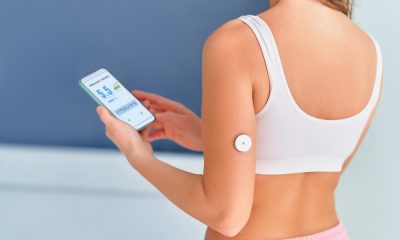
Bridging the metabolic wealth gap: The telehealth platform bypassing insurance to democratise care


As weight-loss treatments remain locked behind prohibitive paywalls, a new direct-pay initiative is cutting costs in half for low-income patients, and it could provide a new blueprint for health equity.
It is one of the most persistent, frustrating paradoxes in modern healthcare: the medical innovations most capable of addressing widespread chronic conditions are overwhelmingly priced out of reach for the populations most vulnerable to them.
Nowhere is this more evident than in the current landscape of metabolic health and weight management.
As state governments and insurance providers increasingly restrict coverage for advanced weight-loss medications due to skyrocketing costs, a stark dividing line has emerged. Clinical need is no longer the primary factor in who receives treatment. Affordability is.
This financial barrier disproportionately impacts women, who not only face high rates of metabolic conditions but also frequently serve as the primary caregivers in their households.
For a single mother managing childcare, grueling work hours, and the relentlessly rising cost of living, personal well-being is often the first casualty of a tight budget.
These patients are forced into a holding pattern, watching their conditions progress year after year while highly effective, life-changing treatments remain separated from them by a paywall.
Now, a telehealth platform called Amble Health is attempting to dismantle that wall by bypassing the traditional insurance apparatus entirely.
A Structural Shift for Access
Today, Amble Health announced the launch of the Amble Cares Program, a national initiative designed to cut the cost of medical weight-loss treatments in half for low-income Americans.
The programme arrives at a critical inflection point.
Today, roughly one in eight U.S. adults have utilized advanced metabolic medications, according to a recent KFF Health Tracking Poll.
This surge in adoption has driven a fundamental shift in preventative care, but the distribution of that care has been deeply uneven.
Through the Amble Cares Program, eligible patients can access comprehensive medical weight-loss programmes, which may include prescription medications if clinically appropriate, at up to 50 per cent below standard rates.
To ensure the discounts reach the intended demographic, eligibility is determined by an independent, third-party verification partner, based on verified financial need.
The programme explicitly prioritises individuals and families with limited disposable income, including parents and guardians whose financial flexibility is tied up in providing for dependents.
Once verified, patients are connected directly to licensed clinicians to begin treatment immediately, stripping away the friction of waiting periods.
“Healthcare should not be a luxury item,” said Joey Stiver, CEO of Amble Health. At Amble, we believe that a patient’s zip code or income shouldn’t dictate their metabolic health outcomes.
“The Amble Cares Program is our direct response to the cost of living crisis, moving beyond talk of ‘affordability’ to actually delivering it to the people the traditional system has left behind.”
The Direct-Pay Trade-Off
However, this rapid, lower-cost access comes with a significant structural trade-off.
To achieve these price reductions and eliminate the administrative delays, denials, and red tape associated with traditional healthcare, Amble Health operates strictly as a direct-pay platform.
This means participants cannot use outside coverage. The programme does not accept Medicaid, Medicare, commercial insurance, or even HSA/FSA funds.
For some patients, being entirely locked out of utilizing their existing health benefits may present a new kind of hurdle.
But for those who have already found themselves abandoned by traditional coverage networks, facing outright denials, unnavigable prior authorisations, or insurmountable deductibles, the direct-pay model offers a predictable, transparent alternative to a broken system.
Ultimately, the Amble Cares Program is making a bold bet: that the most efficient way to deliver equitable healthcare to disenfranchised populations isn’t to fix the traditional insurance system, but to innovate entirely around it.
















 Menopause1 week ago
Perimenopause misinformation ‘putting women at risk’

 News4 weeks ago
NIH Grant terminations disproportionately impact minority scientists, research finds

 Adolescent health4 weeks ago
WUKA brings Period-Positive Pool Party to London Aquatics Centre to keep girls swimming through puberty
 Insight3 weeks ago
PCOS renamed after decade-long campaign to end ‘cyst’ misconception

 Hormonal health2 weeks ago
NHS urged to update website following renaming of PCOS

 Menopause4 weeks ago
CBT shows promise for menopause insomnia and hot flashes
 Events4 weeks ago
WHIS 2026 unveils agenda and first speakers for the leading women’s health summit

 News7 days ago
Three menopause innovators shortlisted for Femtech World Award