




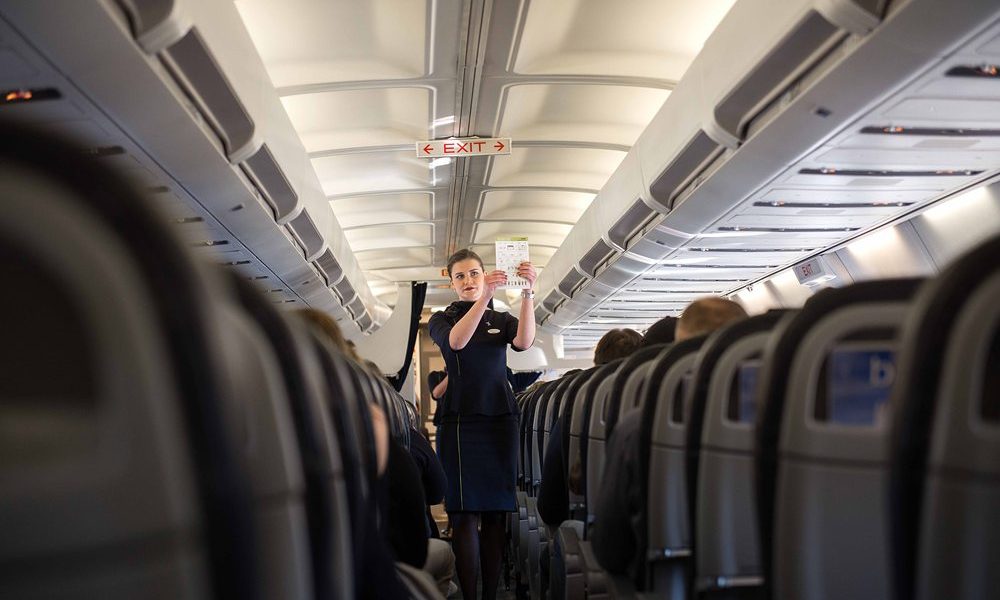
A French court has linked cosmic radiation to a former flight attendant’s breast cancer for the first time.
Sophie Lainault, 59, had sought to have her cancer recognised as an occupational disease linked to her working conditions.
The court in Bayonne ruled that cosmic radiation was one of three carcinogenic, or cancer-causing, hazards arising from her profession, alongside passive smoking and prolonged night work.
Smoking was authorised on Air France flights until 2000.

The ruling means Lainault, who is in remission, can take early retirement and have any further treatment fully reimbursed by the French health system.
Lawyers said the decision has also cleared the way for similar claims by recognising breast cancer as an occupational risk for flight crews.
Lainault said: “My dearest wish is that the decision encourages other women who up until now have not had the courage to take this step.”
Lainault worked as a stewardess and later a purser on Air France aircraft, recording 12,600 flight hours between 1989 and 2019. More than half of those hours were at night.
Many of her long-distance, high-altitude flights from Paris would have taken her near the North Pole, where exposure to cosmic radiation is most intense.
Cosmic radiation consists of particles originating from the sun and other stars.
A study this month at Harvard Medical School in the US involving more than 500 professions found that flight attendants and pilots had the highest proportions of radiation-related cancer deaths.
About 6.9 per cent of deaths among flight attendants and 6.7 per cent among pilots were from radiation-related cancers, according to the analysis.
The proportions were higher than in other professions, including nuclear technologists, who are routinely exposed to radiation from non-cosmic sources and ranked 12th in the analysis.
It has long been known that high-altitude air travel exposes people to cosmic radiation, although the dose received by most travellers is regarded as statistically insignificant. Exposure is higher at the poles because elsewhere the Earth’s magnetic field acts as a shield.
Lainault’s lawyer Elisabeth Leroux said: “In France the link between breast cancer and certain hazards has been established for a number of professions, such as nurses … but this is the first time for an air-hostess.”
Air France said it had not been involved in Lainault’s legal case and had not seen the reasoning behind the court’s decision.
“The health and security of our staff is an absolute imperative,” the airline said. “Every employee has a medical accompaniment that goes well beyond the regulatory minimum.”


Newsletter
Sign up for free weekly updates
The latest femtech news, research and investment, straight to your inbox.




