




News
New precision medicine platform for menopause launches in the US
FemGevity aims to “level the playing field” and make healthcare accessible to more women facing menopause symptoms


A women-led telemedicine platform focused on menopause care has officially launched in the US.
FemGevity aims to offer women a more holistic approach to menopause care, in contrast to the “one-size-fits-all” mentality that has done little to help women struggling with symptoms.
Menopause is a significant health issue affecting over one million women annually in the United States.
But despite the diverse ways it can affect women, care and treatment have been standardised, argues FemGevity.
The current approach, the company says, fails to consider that women experience menopause differently and have unique needs.
“We are no longer asking the question: ‘How do I manage this chronic disease?’ We are changing the narrative to ‘is my health optimal for my age?’,” says Kristin Mallon, co-founder, and CEO of FemGevity.
“Just because your lab values are normal doesn’t mean they are optimal. At FemGevity, we are optimising health for women at any age, including menopause and beyond.”
The platform aims to make precision medicine services available and affordable to all women, “levelling the playing field” and making healthcare accessible to more people.
The company says this would involve personalised one-on-one consultations with doctors, laboratory testing and analysis as well as longevity retention plans.
“At FemGevity, we recognise the unique challenges and experiences faced by women of colour during this time, and we’re committed to providing personalised resources and support to help them take control of their health and well-being,” explains Dr Rachel Villanueva, a medical advisor at FemGevity.
“Our approach allows patients and doctors to collaborate and tailor treatment plans to meet specific needs.”
Michele Wispelwey, co-founder and president of FemGevity, says: “Empowering women to be confident in this transitional period in their lives and encouraging the medical community to focus on feminine longevity to develop more effective treatments and interventions to help women navigate this transition smoothly is our ultimate goal.”







Cancer
The most measured cancer in women’s health still decides half its cases without the measurement


Breast cancer has more molecularly targeted options than any other tumour in women’s health. The evidence now shows that the limiting factor is no longer the drug, and no longer the science. It is the test – and the decision it is supposed to inform.
By Wolfgang Hackl, MD, OncoGenomX
A paradox worth sitting with
Hormone-receptor-positive, HER2-negative breast cancer is roughly 70 percent of female breast cancer, according to the National Cancer Institute’s SEER programme, and it has more approved biomarker-directed treatment options than any other subtype.
Yet in a 12,377-patient real-world cohort followed to March 2025 and reported at the San Antonio Breast Cancer Symposium, 51 per cent of women with ER-positive, HER2-negative metastatic disease had never once been tested for an ESR1 mutation – the marker that both ASCO and ESMO say to look for at progression.
That is not a science gap. It is an infrastructure gap, and it lands on women.
Breast cancer was the first solid tumour to be managed molecularly, and HER2, germline BRCA, PIK3CA, AKT1, PTEN, ESR1 and HER2-low expression have each since been added as a gate to a specific class of drug.
By any reasonable measure this is the best-equipped disease in women’s health. The delivery data tell a different story.
In an 8,049-patient analysis presented at ASCO, only 37 per cent of women received any next-generation sequencing between 2017 and 2021, and 92 to 93 per cent of that sequencing happened only after first-line therapy had already been chosen.
Community practice has improved – testing before second line rose from 9 per cent in 2018 to 69 per cent in 2024 – but in data through January 2025, nearly one-third of women still entered a second line untested, and the share of PIK3CA-mutant patients actually receiving a matched targeted therapy fell from 32 to 27 per cent in second line over the same period.
Testing is scaling. Converting a test into the right prescription is not.
Four ways the current test fails the woman in front of it
The first failure is timing.
A result arriving after the most valuable line of therapy has been committed cannot influence it – and on the ASCO figures above, that is the majority pattern, not an edge case.
The second is the specimen, and it is a structural double bind rather than a laboratory shortcoming.
SEER analysis shows bone is involved in 72.1 per cent of hormone-receptor-positive, HER2-negative disease at first metastatic presentation.
Bone is also the site where molecular testing fails hardest: in a PLOS ONE series of image-guided biopsies, 53.3 per cent of bone and 43.2 per cent of breast specimens were inadequate for sequencing; a 614-case series in the American Journal of Clinical Pathology traced 91 per cent of failures to insufficient DNA input; and routine strong-acid decalcification is known to degrade nucleic acids severely.
Blood does not rescue this. In a matched comparison of 5,780 tissue and 1,670 liquid profiles, PTEN loss appeared in 4.1 per cent of tissue but 0.2 per cent of plasma. Both routes fail in overlapping populations of the same women.
The third is reproducibility, and it now sits directly on top of drug access. HER2-low and HER2-ultralow categories decide eligibility for an effective antibody-drug conjugate, and they sit exactly where pathologists agree least.
In a 2026 Korean Society of Pathologists consensus study, seven pathologists reading 15 whole-slide sets reached unanimity in 5 of 15 cases; a nine-site local-versus-central rescoring exercise produced HER2-ultralow concordance of 43.3 per cent.
The same holds at the oestrogen receptor 1 to 10 per cent boundary. Add that the French ESME national cohort found hormone receptor or HER2 status changing between primary tumour and metastasis in 27.0 per cent of cases, and a quarter of women carry an unresolved biological conflict that is arbitrated case by case, invisibly, without an audit trail.
The fourth is conceptual, and it is the deepest.
Presence of a mutation is used as a proxy for activity of the pathway it sits in. In the pooled SAFIR02-BREAST analysis published in Nature Medicine, matched therapy on high-tier actionable targets produced an adjusted hazard ratio of 0.41, while matching beyond those tiers gave 1.15 – no benefit at all.
Precision is not binary. The quality of the match is itself the variable, and today’s report does not measure it.
The blind spot this readership should care about most
Invasive lobular carcinoma is 10 to 15 per cent of breast cancer and molecularly distinct: The Cancer Genome Atlas found CDH1 mutation in 63 per cent of lobular versus 2 per cent of ductal tumours, and a 2025 JAMA Network Open analysis showed PIK3CA and NF1 enrichment persisting in metastatic disease.
It is also under-measured, because lobular-enriched alterations are exactly the ones plasma detects worst, and under-studied: of 93 phase III and IV trial manuscripts reviewed in npj Breast Cancer, only 14.0 per cent documented lobular inclusion at all.
The outcome gap is measurable – in the 13,111-patient ESME database, lobular histology carried an overall survival hazard ratio of 1.17 in hormone-receptor-positive, HER2-negative disease.
A subtype that behaves differently, is measured worse, is studied less and does worse on the same treatment is not a rounding error. It is an unmet design requirement.
What the next generation of tests has to do
The failure chain above is specific enough to read as a specification. None of it requires a scientific breakthrough; all of it requires a different architecture.
- Read mechanism, not only lesion – report whether the relevant biology is actually running, not only whether a licensed alteration is present. That distinction separated a hazard ratio of 0.41 from one of 1.15 in the same trial programme.
- Treat pre-analytics as a design constraint, not a caveat. A test that needs ideal input will not reach the women who most need it. It has to work from archival material that already exists in every pathology department, and declare its limits rather than fail silently.
- Condition interpretation on histology instead of averaging across it. Lobular and ductal disease must be allowed to yield different recommendations from the same molecular pattern.
- Resolve the ambiguous zones by declared rule, not private judgement. Rules of precedence stated in advance, applied identically to identical inputs, versioned and auditable – that is what converts an interpretation into an accountable act.
- Settle the endpoint with regulators first. A progression-free survival hazard ratio of 0.45 on a molecular trigger recently drew a 6-to-3 vote against clinically meaningful benefit from the US Food and Drug Administration’s advisory committee, while European regulators adopted a positive opinion on the same data.
Why this is a women’s health equity question
Three arguments make this more than a laboratory debate. The first is geography.
In a survey of 118 Italian institutions, 88.1 per cent could obtain PIK3CA analysis but only 57.6 per cent on site, and 46.6 per cent held no molecular accreditation; an NHS genomic hub audit found identical assays succeeding at rates between 68 and 81 per cent across referring centres.
Where a woman is treated determines what is knowable about her tumour, which makes a test built to run on ordinary archival material an equity instrument before it is a technical one.
The second is money, and payers are widely misread here.
Testing is not the cost driver: in the only comparable payer modelling available, from Ontario and in a different tumour type, it represented 1.0 to 2.4 per cent of total two-year cost, while the Journal of Managed Care and Specialty Pharmacy put first-line CDK4/6 inhibition plus endocrine therapy at 62,229 US dollars per patient per year in a Medicare population.
A BMJ Medicine analysis found additional Medicare spending on accelerated-approval cancer indications between 2012 and 2022 of 20.1 billion US dollars, 59.2 per cent of it going to indications with no demonstrated overall survival benefit – and breast cancer was the largest single contributor at 7.4 billion.
Meanwhile US coverage policy still requires that tissue profiling be infeasible before plasma profiling is reimbursed: payers fund the expensive half of precision oncology while restricting the cheap half.
The third is the patient, and it should settle the matter.
In a 2,662-patient real-world series in Breast Cancer Research and Treatment, progression-free survival fell from 16.3 months in first line to 9.1 in second and 6.2 in third; only 54.8 per cent of women reached a second line, 28.5 per cent a third and 7.0 per cent a fifth, and the median patient received two lines in total. A mis-selected first or second line therefore does not cost one interval.
It consumes a large share of everything that woman will ever receive.
For developers the same logic runs in reverse: industry analysis of clinical development success rates associates patient preselection with a likelihood of approval from phase I of 15.9 per cent, against 7.6 per cent without it.
The biology is largely known. The drugs are largely approved.
The money is already being spent – and a meta-analysis of 193 studies and 283,110 patients finds that 13.9 per cent of women treated for early breast cancer still recur at a distant site, 23.3 per cent of those beyond ten years.
What is not yet built is the layer that decides.
For an industry that has learned to ask who benefits from innovation and who is left out of it, that layer is where the next decade of value in women’s cancer care will be created – or quietly forfeited.
AUTHOR BIOGRAPHY
Wolfgang Hackl, MD, is an oncologist and the founder, Chief Executive Officer and Chief Medical Officer of OncoGenomX, a molecular diagnostics company in Allschwil, Switzerland, working on treatment-selection support in hormone-dependent breast cancer.
He has led cancer research, development and translational medicine programs for over two decades, and currently runs multi-site clinical validation studies with US Department of Veterans Affairs medical centers.


A UK study will build a menstrual fluid biobank to help women get faster, better treatment for heavy periods.
Thousands of participants will provide menstrual fluid samples over three cycles using specially designed period pads. They will also use a daily tracking app and complete detailed questionnaires.
Researchers from the Universities of Exeter and Bristol will work with participants from two UK birth cohort studies, Children of the 90s and Born in Bradford.

Professor Gemma Sharp, of the University of Exeter, said that the study is set to be a ‘real game-changer’ for menstrual health research.
Sharp said: “We know that menstrual health is a key indicator of overall health, but a lack of high-quality data means it remains poorly understood and under-supported in healthcare.
“We also know that heavy periods can affect many aspects of daily life – for example, our recent research revealed an association between heavy periods, school attendance and lower GCSE attainment – so we urgently need new ways to support the millions of women affected by heavy periods more promptly and effectively.”
The CycleTrack study aims to create the world’s largest menstrual fluid biobank for people in their mid-30s.
By combining these samples with long-term health and genetic data, researchers hope to identify biological signals linked to differences in periods and related conditions.
Researchers hope the findings could support earlier diagnosis, better care plans and tools to identify risks including iron deficiency.
The study is part of The Missed Vital Sign, a programme led by Wellcome Leap that contributes to a broader global effort to reduce the time it takes a woman to receive effective treatment for heavy menstrual bleeding from five years to five months.
Up to 50 per cent of women worldwide experience heavy periods, which can significantly affect physical, emotional and social wellbeing.
Researchers say the work could also improve understanding of menstrual health more broadly and help inform future school and workplace guidance.
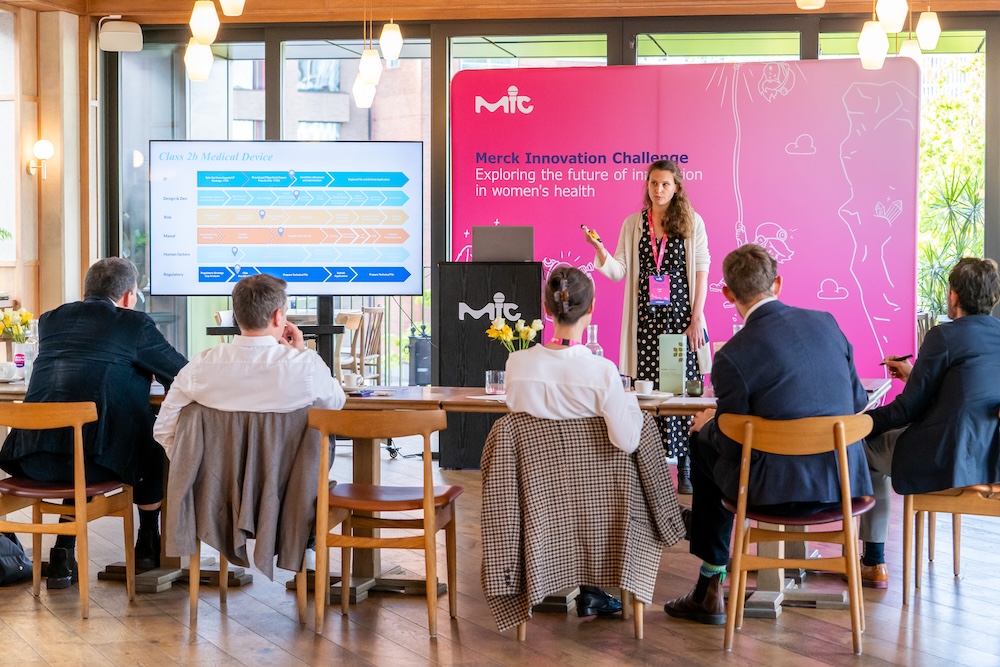
Applications close 2 September at 12pm BST for W Accelerate with Merck KGaA and M Ventures, a fast-track programme offering startups, scaleups and spinouts in reproductive and maternal health direct access to decision-makers at one of the world’s leading reproductive health companies.
With a single application, innovators connect with Merck KGaA’s partnership team and investment professionals from M Ventures, Merck’s corporate venture arm.
Selected companies will be notified on 11 September and invited to pitch at W Accelerate in London, at One Hundred Shoreditch, on 5 October.
During the event, they will receive a private 30-minute session with Merck and M Ventures leadership, small-group guidance from regulation and investment specialists, an “Ask Merck Anything” roundtable, and access to a VIP networking reception.
Applications are open to companies working on breakthrough solutions across reproductive and maternal health, including fertility, endometriosis, adenomyosis, ovarian health, preeclampsia and pregnancy comorbidities.
Applicants can choose one of three lanes, depending on whether they’re seeking strategic collaboration, investment, or both: Partnership Lane, Investment Lane, or Dual Lane. Direct-to-consumer and over-the-counter products are outside the programme’s scope.
Thang Vo-Ta, CEO & co-founder of Calla Lily Clinical Care and participant of a previous edition of W Accelerate with Merck Healthcare and M Ventures, said: “The opportunity to pitch directly to senior leadership at Merck and M Ventures sparked conversations that became the foundation of relationships leading to our eventual strategic collaboration with Merck. I’ve yet to see another event run with this level of excellence.”
For more information, visit W Group’s website: wplatform.co
Applications close 2nd September 2026, 12pm BST
W Accelerate event: 5th October 2026 at One Hundred Shoreditch, London (travel and accommodation not provided)
Apply here












 Entrepreneur2 weeks ago
Applications close August 18 for Women’s Health Innovation Summit 2026 Innovation Showcase

 Menopause2 weeks ago
Third of women unaware of perimenopause mental health impact

 Fertility1 week ago
Chelsea FC Women to launch first-of-its-kind player fertility fund

 Menopause2 weeks ago
Menopausal hormone therapy may lower dementia risk, study suggests

 Opinion1 week ago
anna perimenopause app launches across 39 markets

 Diagnosis2 weeks ago
Chemicals in plastics may be linked to high blood pressure during pregnancy

 Sponsored Content7 days ago
The perfect ‘period pair’: WUKA launches first-ever Teen Starter Kit in Tesco

 News2 weeks ago
Women with endometriosis may lose a month’s salary each year – study