




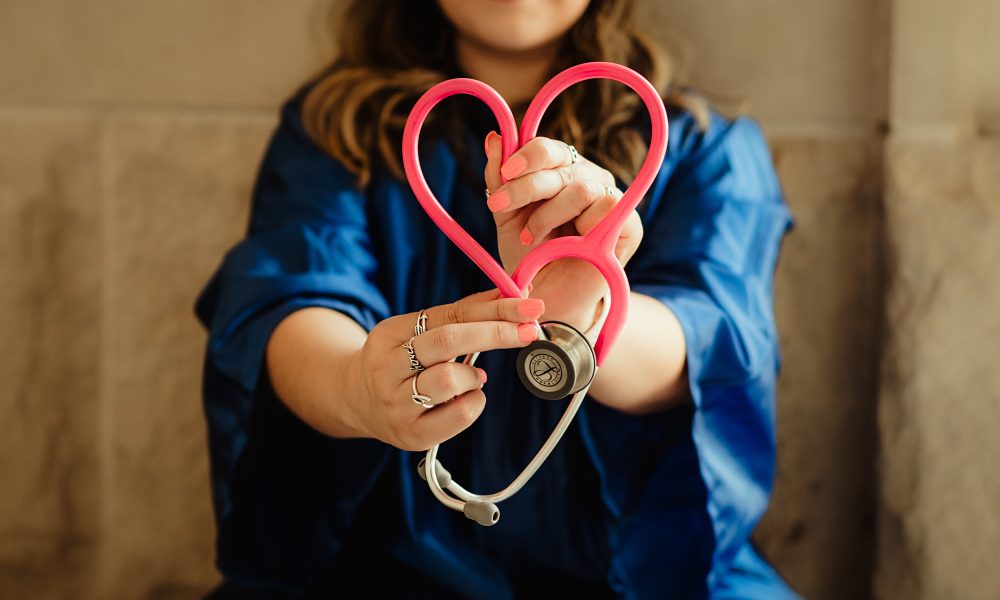
After they led the fight against Covid, nurses remain four times more likely to take their own lives than people working in any other profession.
The impact of the pandemic on healthcare services has been immense, reads a 2021 BMJ report. For the over 500,000 nurses in the UK, Covid’s mental health toll has been intensified by physical and emotional exhaustion and an increased risk of burnout.
Despite interrupted training and fear of exposure to the virus, surveys have shown that nurses strived to provide excellent care and support for their patients and colleagues, sometimes at personal cost.

“Nurses were stretched more than ever during the pandemic,” says Michaela Nuttall, cardiovascular nurse specialist and founder of the online educational platform Learn With Nurses.
“At a time when they were forced to work extra hours, look after their kids and take care of their parents, they were left with little to no support and no time for training.”
The sudden disruption in health services along with staff shortages have meant that face-to-face nursing courses had to move online.
However, letting people have time off for training proved extremely difficult, says Nuttall. “Because nurses can’t be at work during training, many were left with no access to training.”
Having worked in cardiovascular disease training herself, Nuttall decided to host a Zoom meeting about the importance of blood pressure control at the start of the pandemic and invited people to join through social media nursing groups.
“I was really missing training and I wanted people not to forget about cardiovascular disease,” she explains. “I put the Zoom link online and about 200 people registered for the first session.
“The need was definitely there. So, I started working with other nurses to build a bigger platform and we went from nothing to everything in a very short space of time.”
Learn With Nurses, now a global online community of specialist nurses, provides free educational support to healthcare professionals and helps them improve the quality of care while promoting evidence-based clinical practice guidance.
“It is not meant to replace formal training,” the founder says. “Our aim is to make training much more accessible and give people a free platform where they can learn, ask questions and interact with other healthcare professionals. We now use a platform called MedAll instead of Zoom because it makes our job much easier and allows thousands of people to join and we try to have a relaxed style that almost feels like you’re talking to a friend over a coffee.”
The courses, delivered in bite-sized sessions of 30-40 minutes, cover a different subject each week, allowing nurses to understand some of the most common health conditions they treat in hospital.
“We’ve made a commitment at the beginning that we will always provide our courses without any barriers to learning,” Nuttall says.
“People tell us how much Learn With Nurses has helped them and although we are looking at memberships and donations to help us fund the training, we don’t want money to be a barrier.”
Nurses like Nuttall say that the NHS is still facing challenges. According to the cross-party Health and Social Care Committee, health services in England are currently facing “the greatest workforce crisis in their history” with the NHS losing millions of full-time equivalent days to staff sickness caused by anxiety, stress and depression.
“Nurses remain under extreme pressure,” says Nuttall. “Almost 90 per cent of them are female and they need our support more than ever.
“Our ambition is to give more visibility to all nurses, but particularly to those from minority backgrounds. I hope that through Learn With Nurses they will find a diverse community where they could feel represented and supported.”


Newsletter
Sign up for free weekly updates
The latest femtech news, research and investment, straight to your inbox.




