Cancer
AI analysis of mammograms can detect heart disease, study suggests

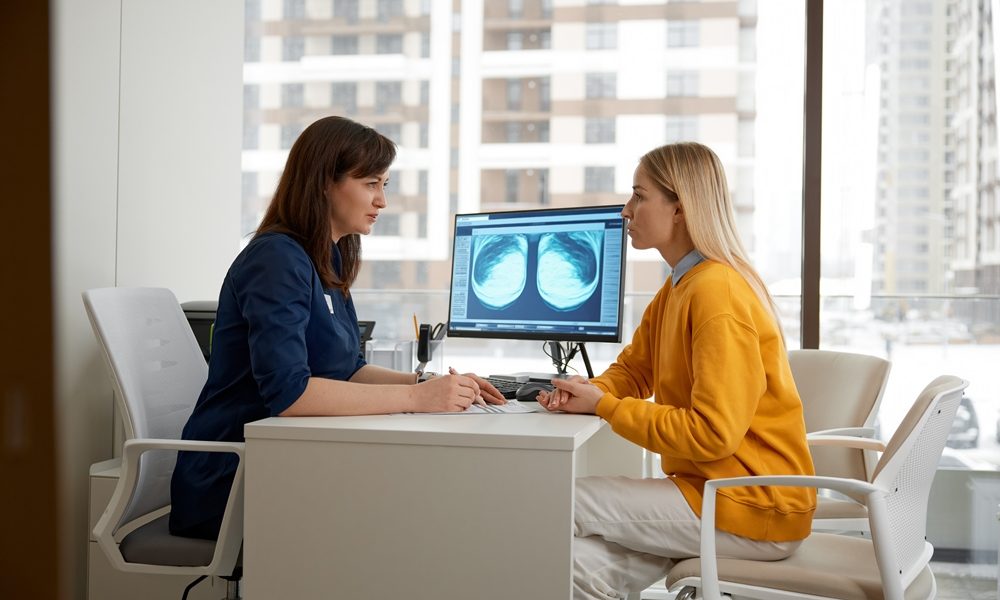
AI may help detect heart disease in women from routine mammograms, according to research involving almost 30,000 women.
Researchers found a machine-learning model could distinguish women with coronary heart disease, high blood pressure or a previous stroke using mammogram images.
The findings suggest breast cancer screening could potentially also flag cardiovascular problems without requiring an additional imaging examination.
Dr Viana Copeland, from Tel Aviv University, presented the findings at the European Society of Cardiology’s annual congress in Munich.

The researcher said: “Despite being the leading cause of death in women worldwide, CVD [cardiovascular disease] is consistently underdiagnosed and undertreated.
“A common finding in our medical centre, and around the world, is that when women do seek medical help, their CVD is already advanced.
“On the other hand, many women do attend routine breast cancer screening, even when they haven’t sought care for cardiovascular symptoms.
Researchers in Israel analysed 97,364 mammogram scans from 29,921 women with an average age of 54 and cross-referenced the images with their medical records.
Among the women, 16 per cent had high blood pressure, 2.5 per cent had coronary heart disease and 2.5 per cent had experienced a stroke.
A machine-learning model was trained to identify women with these conditions.
Using mammograms alone, the model could distinguish women who had experienced a stroke from those who had not 86 per cent of the time.
For high blood pressure, the figure was 79 per cent, while for coronary heart disease it was 78 per cent.
The results were consistent regardless of age or whether a woman also had cancer.
Copeland said analysing existing mammograms for information about cardiovascular health “could potentially offer a scalable approach without requiring an additional imaging examination”.
“Mammography also reaches many women in midlife, an important period for recognising and addressing cardiovascular risk.”
Researchers are working to improve the model’s accuracy, reduce false results and increase the number of heart conditions it can identify.
Elena Arbelo, an expert member of the European Society of Cardiology communication committee, described the findings as “compelling”.
“A mammogram may one day do more than look for breast cancer – it may also offer a window on to cardiovascular health. That matters because CVD in women is still too often recognised late.”
She added: “The challenge now is to establish accuracy and reliability – to move from experimentation to clinical implementation.”

Diagnosis
Ark Surgical secures further institutional backing to accelerate US expansion

Women’s health medical device company Ark Surgical has secured further institutional backing from JNF and the Israel Innovation Authority (IIA) as it accelerates the US commercial expansion of its surgical tissue containment technology.
Both organisations have previously backed Ark, making the renewed support a significant vote of confidence in the company’s technology, leadership team and commercial strategy as it moves into its next stage of growth.
The new backing comes alongside Ark Surgical’s ongoing Series A financing round, which has also attracted investment from physicians and experienced medical device executives, adding further industry validation as the company builds its US commercial presence.
The Israel Innovation Authority, Israel’s public agency supporting technological innovation, selected Ark Surgical for additional non-dilutive funding following an extensive evaluation process.
The assessment examined the unmet clinical need addressed by Ark’s technology, its clinical results, business and US go-to-market strategy, Israeli and US teams, execution against milestones and future product pipeline.
JNF, which supports economic development and community-building initiatives in Israel, has also increased its previous backing of Ark Surgical.
The relationship has particular significance given Ark’s roots in northern Israel. The company is headquartered near Nazareth in the Galilee and plans to continue strengthening its manufacturing capabilities in the region as its commercial presence in the US grows.
Together, the continued institutional support and investment from experienced healthcare leaders reflect growing confidence in Ark’s technology and its strategy for US expansion.
Stav Tori, CEO of Ark Surgical, said: “Having organisations that already know Ark, our technology and our team choose to support us again is particularly meaningful.
“It reflects our ability to consistently achieve the clinical, regulatory and commercial milestones we set and gives us additional resources to accelerate our expansion in the US.
“Our ambition goes beyond bringing another medical device to market.
“We want to help establish a higher standard of surgical safety for women undergoing minimally invasive procedures.”
Addressing an overlooked risk in women’s surgery
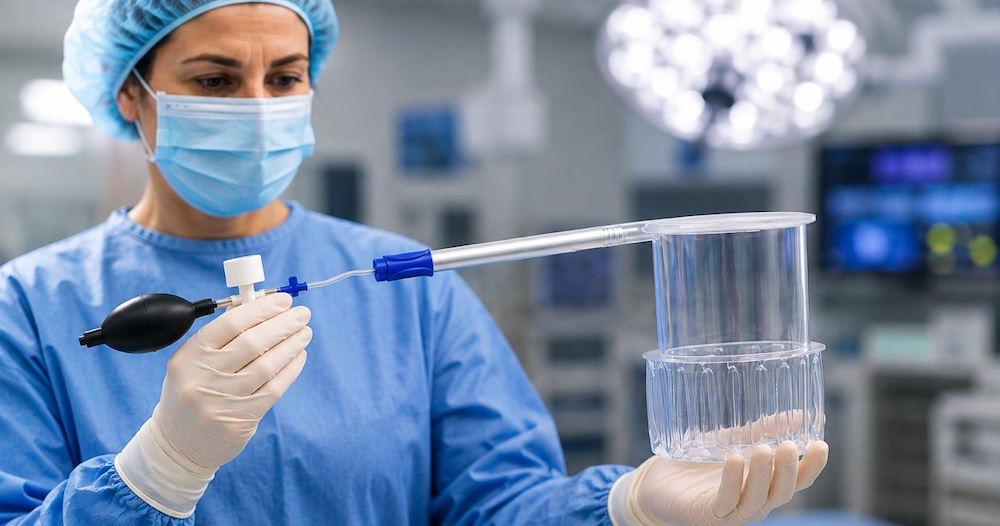
At the centre of Ark’s expansion is LapBox, the company’s FDA-cleared dual-wall tissue containment system developed to address an important safety challenge in minimally invasive gynecologic surgery.
Procedures such as hysterectomy and myomectomy can require large uterine specimens or fibroids to be divided into smaller pieces so they can be removed through small laparoscopic incisions.
This process, known as morcellation, carries a risk of disseminating tissue within the abdominal cavity.
In rare cases where an unsuspected malignancy is present, morcellation can spread malignant tissue and potentially worsen a patient’s prognosis.
But the risk is not limited to cancer.
Even benign uterine tissue can implant elsewhere in the abdominal cavity and grow, potentially resulting in complications such as parasitic fibroids and the need for additional treatment.
LapBox was developed as a dual-wall, bag-in-bag containment system that creates a secured chamber for tissue extraction. The device is FDA-cleared for use with both manual and power morcellation.
From clinical innovation to US adoption
Ark Surgical is now moving beyond its clinical and regulatory milestones to focus on broader commercial adoption.
LapBox™ has already been used in hundreds of procedures, while Ark has been expanding its presence within US hospitals and building relationships with leading minimally invasive gynecologic surgeons.
The latest institutional backing will support the next stage of that strategy, including additional hospital partnerships, key opinion leader engagement, sales leadership and clinical support.
Joseph LaBruzzo, President and CEO of U.S. Operations at Ark Surgical, said: “Ark has reached an important point in its development.
“We have the regulatory clearance, growing clinical experience and increasing engagement from US surgeons and hospitals.
“The focus now is execution and scale.
“What makes this continued backing particularly meaningful is that these are organizations that have followed Ark’s development and seen the team deliver against its objectives.
“Their decision to support the company again provides further validation as we build the commercial and clinical infrastructure needed for broader US adoption.”
That growing adoption is also being reflected in the experience of surgeons using LapBox.
Dr Ramon Yera, a minimally invasive gynecologic surgeon with more than 35 years of experience, said: “Once surgeons use LapBox, they realize this is the bag they should be using for their bread-and-butter procedures.”
Yera believes this reflects a broader shift in expectations around tissue containment in gynecologic surgery.
“Containment is no longer optional. It is an expectation.”
Ark Surgical is continuing its Series A financing round, with additional capital intended to support the next phase of US commercial expansion and development of its broader product pipeline.
Further information for prospective investors is available at ark-surgical.com/investment
Adolescent health
Almost a third of women in their 20s have never been screened for cervical cancer – study

Nearly a third of women aged 21 to 29 have never been screened for cervical cancer, according to research tracking screening trends over 20 years.
The proportion of women in their 20s who reported never being screened for cervical cancer has increased over the past two decades.
Among women aged 30 to 64, almost 15 per cent also reported never having been screened.
Researchers at MUSC Hollings Cancer Center analysed self-reported data from the National Health Interview Survey to examine the proportion of women who said they had never received screening in their lifetime.
Cervical screening aims to detect precancer and early-stage cancer, when treatment can be easier. Human papillomavirus (HPV) vaccination is the first line of defence against cervical cancer, with regular screening the next.
First author Kalyani Sonawane, assistant director for data science and analytics at Hollings, said: “A lot of times national surveys look at the up-to-date rate, meaning how many women are up to date on their screening.
“But this paper is slightly different because it measures the proportion of women who reported that in their lifetime, they’ve never received screening.”
Because the data was self-reported, the researchers said some women may have misremembered whether they had previously been screened.
The proportion of women who had never been screened increased by 5 per cent each year, while diagnoses of regional- and distant-stage cervical cancer also increased among women aged 30 to 64.
The researchers said lower screening rates could potentially contribute to cancers being detected after they have spread, once a woman notices symptoms and goes to the doctor, but the study was not designed to determine whether the two trends were linked.
The findings also showed that 45 per cent of women in their 20s were not vaccinated against HPV.
Sonawane said the researchers were unsure why the proportion of women who had never been screened was increasing.
In previous unpublished work, the team examined women’s responses about why they had not been screened. Many reported having no particular reason or said their healthcare provider had not raised screening with them.
Sonawane also suggested some women vaccinated against HPV might believe they no longer need screening, although screening guidelines continue to recommend it after vaccination.
The research found further disparities, with uninsured women, women living in the South and racial minorities particularly likely to report that they had never been screened.
Insight
Court recognises radiation as factor in flight attendant’s breast cancer
Hormonal health2 days agoMajor UK study could be a ‘game-changer’ for heavy periods and endometriosis
Fertility1 week agoChelsea FC Women to launch first-of-its-kind player fertility fund
Menopause2 weeks agoMenopausal hormone therapy may lower dementia risk, study suggests
Opinion1 week agoanna perimenopause app launches across 39 markets
Menopause3 days agoQuarter of women miss work due to menstual symptoms, survey finds
Sponsored Content1 week agoThe perfect ‘period pair’: WUKA launches first-ever Teen Starter Kit in Tesco
Diagnosis4 days agoStudy to tackle years-long delays in endometriosis diagnosis
Motherhood2 weeks agoHealth visitor support helps new mothers stay smoke-free, study finds