Hormonal health
Calla Lily joins US$50m antibiotics programme
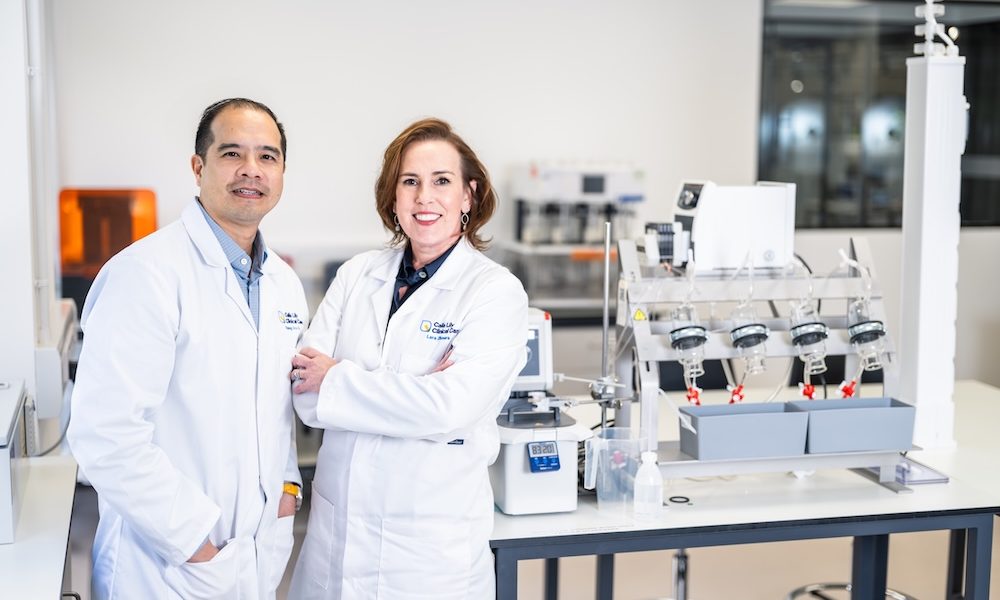
Calla Lily Clinical Care has joined a US$50m antibiotics programme to assess vaginal delivery of UTI treatments through its Callavid platform.
The women’s health medical technology company will evaluate whether antibiotics can be delivered directly through the vaginal wall to treat urinary tract infections (UTIs).
The project will use Callavid, the company’s intravaginal drug delivery platform, aiming to deliver treatment to the site of infection while limiting systemic exposure.
Calla Lily has been selected for Wellcome Leap’s Focused Antibiotics programme, which is exploring ways to reformulate existing antibiotics so they reach infections while sparing the gut microbiome without loss of efficacy.

Dr Serena de Gelidi, Principal Investigator and R&D Manager, Calla Lily Clinical Care
The programme is backed by US$50m and aims to investigate technologies that could reduce the unintended effects of antibiotic treatment.
UTIs are among the most common bacterial infections in women. According to the source material, women are prescribed almost 40 per cent more antibiotics than men between the ages of 16 and 54.
Calla Lily will assess whether Callavid can deliver antibiotics through the vaginal wall while bypassing gastrointestinal transit and first-pass metabolism.
The company expects the approach could keep systemic exposure below 5 per cent.
There is currently no first-line UTI antibiotic available in a mass-manufactured vaginal formulation, according to Calla Lily.
The company said a successful project could contribute to the wider programme’s goal of reducing antibiotic-driven resistant infections by up to 40 per cent a year.
Callavid has a patented, leak-free, tampon-like design intended to deliver medicines and hormones through the vagina.
The platform is already being assessed in the NIHR-funded FREEDOM trial, which is studying vaginal progesterone delivery using Callavid.
That study began in April 2026 and is examining safety, user acceptability and drug absorption. According to the company, it has passed its safety stopping rule and 90 per cent of patients have completed their first round of dosing.
Dr Lara Zibners, co-founder and chair of Calla Lily Clinical Care, said: “Women are disproportionately impacted by urinary tract infections, yet the consequences of that repeated systemic exposure have been largely overlooked. Organisations such as Wellcome Leap play a vital role in tackling major healthcare challenges through bold innovation. We are honoured to be part of the Focused Antibiotics programme and to explore the potential of Callavid in a foundational antibiotic application, demonstrating how women’s health innovations can deliver benefits far beyond fertility and reproductive care.
Thang Vo-Ta, co-founder and chief executive of Calla Lily Clinical Care, said: “Being selected by Wellcome Leap, one of the world’s most ambitious health innovation funders, is a significant validation of what we are building at Calla Lily Clinical Care. Our ambition has always been for Callavid to become the defining platform for intravaginal drug delivery across a wide range of indications. The Focused Antibiotics programme gives us the ideal partner to pursue one of the most consequential of those indications: treating the world’s most common bacterial infection in women while helping to address a global resistance crisis that, left unchecked, could claim eight million lives annually by 2050. This marks a pivotal moment in demonstrating that when you solve for women, you solve for everyone.”
The project will be led by Dr Serena de Gelidi, principal investigator and R&D manager at Calla Lily Clinical Care.
She will be supported by Professor Andrew Lewis, principal scientist at the company and an international authority on drug-eluting systems, with 58 patents and more than 260 peer-reviewed publications.

Mental health
Endometriosis linked to higher use of mental health meds, study finds

Women later diagnosed with endometriosis used more antidepressant and anxiety medication than other women, with the pattern emerging years before diagnosis.
The difference was evident up to 10 years before diagnosis and continued for a decade afterwards, according to a large Danish registry-based study involving 136,842 women.
Women with the condition also had substantially more contact with psychiatric hospital departments than those without it.
Researchers at Aarhus University found that women with endometriosis redeemed 29 per cent more prescriptions for antidepressants and 16 per cent more for anxiety medication in the years before diagnosis.
After diagnosis, the differences rose to 40 per cent for antidepressants and 46 per cent for anxiety medication.
Marie Josiasen, PhD student at the department of public health and one of the researchers behind the study, said: “What surprised us was how clear and persistent the pattern was, and that the difference did not diminish over time. On the contrary. Women with endometriosis consistently redeemed more prescriptions for antidepressant medication than women without the disease throughout the entire period, from ten years before to ten years after diagnosis.”
The study does not provide an answer as to what causes the mental strain.
Josiasen said prolonged pain, uncertainty about the cause of symptoms and fertility problems could be among the factors contributing to psychological strain.
She said: “It’s possible that prolonged pain, uncertainty about the cause of the symptoms, and frustration over not being able to live the life one wants may be among the reasons. For some women, fertility problems can also be a major psychological burden.”
Researchers also found that the gap compared with women without endometriosis did not narrow after diagnosis. Instead, it became more pronounced in the years that followed.
Josiasen said: “A diagnosis can be a relief, but it also involves coming to terms with having a chronic illness.”
The study does not indicate whether diagnosing endometriosis earlier could reduce psychological strain.
As part of her PhD project, Josiasen will investigate the role hormonal contraception may play in the mental health of women with endometriosis.
She said: “We can see that many receive medication and are in contact with psychiatric services. But we still lack an understanding of what actually helps these women. That’s what I want to help find out.”
Hormonal health
Coffee linked to healthier body composition and distinct sex hormone changes – study

Higher coffee consumption has been linked to lower body fat, greater muscle mass and differing sex hormone patterns in men and women in a Finnish study.
Researchers found people who drank more coffee had lower levels of total and visceral fat, the fat stored around internal organs, as well as greater skeletal muscle mass.
These associations were seen even though participants had a similar body mass index (BMI), a measure of weight relative to height.
The University of Oulu study analysed data from 2,264 people aged 46 who were part of the Northern Finland Birth Cohort 1966, looking at habitual consumption alongside circulating metabolites, cardiometabolic risk markers and sex hormones.
In both men and women, higher consumption was correlated with lower circulating levels of branched-chain amino acids.
Persistently high levels of these molecules have previously been linked to insulin resistance, when the body responds less effectively to insulin, and a higher risk of type 2 diabetes.
The strongest differences between the sexes were seen in men. Higher consumption was linked to a more favourable glucose and insulin profile, higher total and bioavailable testosterone and increased levels of sex hormone-binding globulin (SHBG).
SHBG is a protein that carries sex hormones such as testosterone through the bloodstream and influences how much hormone is available for the body to use.
At the same time, free testosterone and the free androgen index were modestly lower in men.
Among women, hormone associations were more limited, mainly involving higher SHBG and lower measures of free androgens, a group of hormones that includes testosterone.
Luca Verroest, lead author of the study and doctoral researcher at the University of Oulu, said: “Coffee is consumed by millions of people every day, yet we still know surprisingly little about how it relates to our metabolism and hormones.
“What stood out in our findings was a distinct hormonal signature that didn’t disappear even after we took into account BMI and lifestyle factors, with several of these associations differing between men and women.”
The researchers said hormonal pathways could partly explain the relationship between consumption and metabolic health.
However, the research was observational, meaning it can identify associations but cannot establish that drinking coffee caused the biological differences seen among participants.
The study is particularly relevant in Finland, one of the world’s highest coffee-consuming countries, where annual consumption averages around 11.8 kilograms per person.
Researchers are now investigating whether coffee itself drives the biological changes and which compounds could be responsible, initially using animal models.
The longer-term aim is to move to human intervention studies, although the researchers said further research would be needed before the findings could be used to inform dietary recommendations.
Hormonal health
We are wrapping our children in plastic and calling it care

By Ciara Donlon, founder & CEO of MOSS
A baby is born.
In the first hours of their life, before they have tasted food, before they have felt sunlight, before they have learned the sound of their own name, they are wrapped in a nappy.
That nappy, in most cases, is made from plastic, synthetic polymers, and wood pulp sourced from trees that took decades to grow.
It will be used for two hours. It will sit in landfill for five hundred years plus.
We do this up to eight times a day. For three years. For every baby born.
I have spent the better part of my adult life working with bamboo, not as a founder chasing a trend, but as someone who has watched this material perform under the most demanding conditions imaginable.
Before MOSS, I built THEYA Healthcare, one of Ireland’s first femtech companies, pioneering bamboo-based care for women undergoing breast cancer treatment, backed by clinical trials from UCD (University College Dublin).
When I turned to what came next, the answer was staring at me from every buggy on the street.
We are living through a crisis our children will inherit entirely. Conventional nappies are the third largest single-use plastic item in household waste.
An estimated three hundred million go to landfill every year.
The tree-derived wood pulp in their absorbent cores is responsible for the destruction of one billion trees annually, and the plastic components that make them leak-proof make them essentially indestructible once discarded.
A child who goes through approximately 6,000 nappies in three years generates a legacy of waste that will outlast not just them, but generations to come.
I am not writing this to make parents feel guilty. Parents are doing the very best they can. I am writing this because the industry has not given them a genuine alternative, and I believe that is something we have a responsibility to change.
MOSS was built on one question: what would a nappy look like if it were designed entirely around what was best for the baby’s skin and best for the planet they will grow up in?
The answer was bamboo, and I say that not from instinct, but from evidence.
Through THEYA’s research at University College Dublin, bamboo viscose fibre was tested against cotton across every performance metric that matters for fabric worn against the most sensitive skin.
In antibacterial testing, bamboo resulted in a 97 per cent reduction in tested bacteria. Cotton produced a 0 per cent reduction. In absorbency and breathability testing, bamboo outperformed cotton and all leading competitor products.
When I turned to nappies, manufacturer testing confirmed what the clinical evidence had shown.
MOSS’s bamboo absorption core matches or outperforms conventional wood pulp cores on every performance measure: faster second-cycle absorption, significantly less rewet against the skin, and higher total absorption capacity across every size.
In the MOSS parent product trial: 88 per cent of parents felt their baby was drier, 93 per cent found them softer, 73 per cent reported fewer leaks, and 87 per cent said they would recommend MOSS.
Bamboo is 59 per cent more absorbent than cotton. Ten times more bamboo can be grown per square metre.
It requires no irrigation, no pesticides, no insecticides, no synthetic inputs, while cotton accounts for nearly 30 per cent of global pesticide and insecticide sales and needs 20,000 litres of water to produce a single T-shirt.
Bamboo sequesters five times more carbon per hectare than most trees, regenerates from its own root system without replanting, and harvesting it does not kill the plant.
What that means in practice: a softer material better for the health of the baby’s skin, proven to reduce bacterial load and regulate temperature, is also the most sustainable choice available.
These are not competing priorities. They are the same priority.
We are the only nappy brand in Europe that does not require a single tree to be cut down for production.
MOSS nappies contain no tree-derived pulp, no PFAS, no fragrance, no alcohol, no bleach. They are between 60-100 per cent bamboo.
THEYA Healthcare was recognised by the Cartier Women’s Initiative Awards for its work at the intersection of materials science, sustainability, and women’s health.
That recognition mattered less than what it signified: designing for the people the industry had left behind is not a niche. It is the future.
When I turned to nappies, I brought the same lens. Who is being left behind?
Two groups: the baby, whose skin deserves a material free from synthetic chemicals; and the planet, which cannot absorb another generation of single-use plastic waste at current volumes.
MOSS exists for both of them.
I think often about what it means to build something for babies in 2026. These children will live into the 2100s.
The decisions we make in the next decade, about materials, about what we choose to manufacture and what we choose to discard, will shape the world they inherit in ways that are difficult to overstate.
One nappy brand will not solve the climate crisis. But founders have a responsibility to ask harder questions, to look at an industry built on cheap plastic and ask: does it have to be this way?
It does not.
What I found when I went looking was that the sustainable choice was also the better choice for the baby. Bamboo is softer than cotton. More absorbent. Naturally antibacterial, temperature-regulating, and proven to support skin health at a clinical level.
The product that was better for the planet turned out to be better for the child wearing it.
I built MOSS because I believe that the standard of care we offer newborns, in the materials we choose, the ingredients we exclude, should be as considered as every other decision a parent makes.
And because when parents are given a genuine choice, they will make it.
We owe it to them to make that choice available. We owe it, even more, to the children and future generations.
About the author
Ciara Donlon is a multi award-winning entrepreneur with nearly 30 years of experience in corporate strategy, e-commerce, and medical devices.
She is the Founder & CEO of MOSS and the founder of THEYA Healthcare, one of Ireland’s first femtech companies. THEYA’s bamboo fabric research was conducted at University College Dublin in conjunction with four Dublin teaching hospitals. Ciara is a Cartier Women’s Initiative laureate for Europe.
After a decade working in e-commerce in the corporate world, in 2010, Ciara transitioned to entrepreneurship, founding a lingerie business inspired by her interactions with breast cancer survivors, revealing a gap for non-toxic underwear for women undergoing treatment.
This led to Theya Healthcare, where she pioneered bamboo-based post-surgical innovations, backed by clinical research and protected by global patents.
Under her leadership, Theya gained international acclaim for its innovative approach to comfort and safety.
Now, as CEO of MOSS, she is transforming the baby care market, driven by a simple belief: that the everyday essentials of parenthood should give parents genuine peace of mind and protect babies, without compromising their health or the planet.
MOSS publicly launches 5th October 2026. Founding Members can register from 7th September at mossnappies.com
News2 weeks agoUK femtech investment surges 194% in a decade, research finds
Diagnosis2 weeks agoTidalSense raises £14m to expand five-minute COPD test across NHS
News2 weeks agoCross-Border Impact Ventures raises US$58m for women and children’s health
Insight2 weeks agoWomen urged to be wary of menopause misinformation on social media
News2 weeks agoCultural stigma is a barrier to menopause help, black women say
Entrepreneur6 days agoApplications close August 18 for Women’s Health Innovation Summit 2026 Innovation Showcase
Mental health6 days agoThird of women unaware of perimenopause mental health impact
Motherhood2 weeks agoOne in eight mothers diagnosed with gestational diabetes, research finds