Connect with us

Pregnancy

Type 2 diabetes raising twice as fast in younger womem, research finds

Published

on

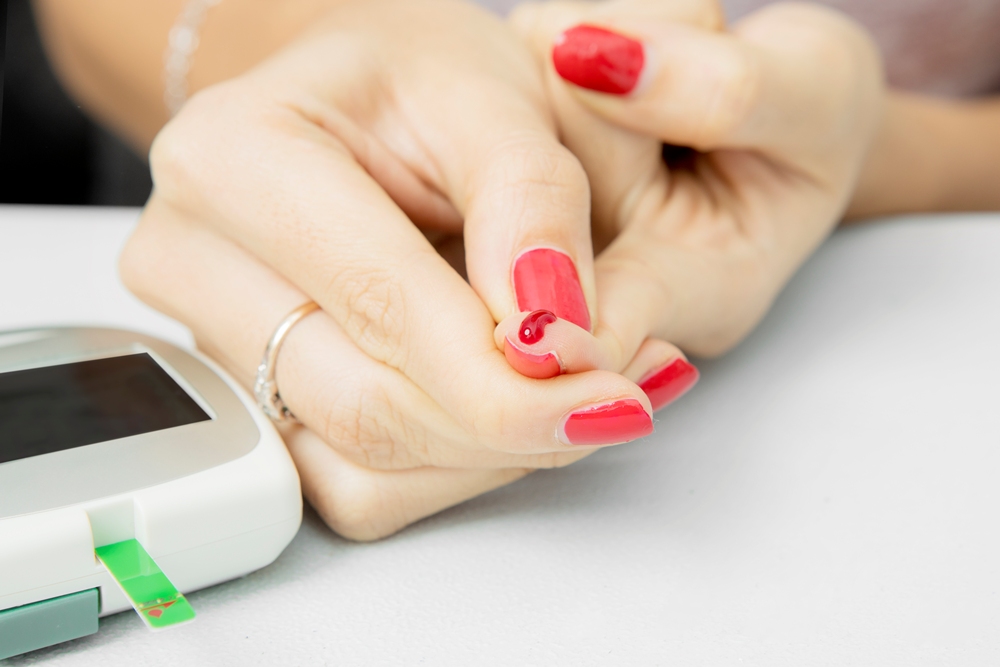
Type 2 diabetes diagnoses are rising twice as fast in women under 40 as in women over 40, new data shows.

Type 2 diabetes is a serious condition and can lead to complications such as heart attacks and strokes. When it develops in younger people, it can be more aggressive and have more severe and acute effects.

Diagnoses in women under 40 rose by 47 per cent between 2017/18 and 2023/24. By comparison, diagnoses rose by 22 per cent in women aged 40 to 79.

During the same period, type 2 diabetes diagnoses in men under 40 increased by 34 per cent.

Diabetes UK said it is concerned about the follow-up care offered to women who have had gestational diabetes, also known as GDM, which increases the risk of developing type 2 diabetes after pregnancy.

Gestational diabetes is high blood sugar that develops during pregnancy and usually goes away after birth, but it raises the risk of type 2 diabetes later.

Colette Marshall, chief executive at Diabetes UK, said: “These figures should be a wake-up call. Type 2 diabetes is rising twice as fast in younger women compared to older women, and a crucial opportunity for prevention is being missed. Every diagnosis is life-changing, but when it develops in younger people, type 2 diabetes is even more aggressive.

“Pregnancy shouldn’t be a pathway to ill health. Yet despite facing a much higher risk of type 2 diabetes, too many women with GDM receive little or no follow-up care after pregnancy.

“As the Government turns its Strategy into action, support for women who have had gestational diabetes must not be overlooked.”

Last year, the NHS published the first national GDM audit for England in 2024/25, which revealed inconsistencies in follow-up care.

Only 57 per cent of women with GDM received an annual HbA1c test, which should be offered to every woman with GDM.

An HbA1c test measures average blood sugar levels over the previous two to three months.

Only 4.5 per cent of women had received support through the NHS Diabetes Prevention Programme.

The report also found that 11 per cent of women developed prediabetes within five years of having GDM, while 15 per cent developed type 2 diabetes within 10 years.

Prediabetes means blood sugar levels are higher than normal and a person has a higher risk of developing type 2 diabetes.

A recent survey funded by Diabetes UK also found that more than a third of women with GDM felt abandoned by healthcare services after giving birth.

If you live in England and have had gestational diabetes, you can self-refer to the NHS Diabetes Prevention Programme, which supports people at risk of developing type 2 diabetes. If you live in Northern Ireland, Scotland or Wales, you can speak to your GP about support.

Diabetes UK has written to women’s health minister Baroness Merron calling for urgent improvements to postnatal support for those diagnosed with GDM during pregnancy.

GDM affects between 10 and 20 per cent of pregnant women, but Diabetes UK said cases have long been underreported and UK-wide data on the condition has not been readily available.

The charity said poor follow-up care for women who have had GDM may be contributing to rising rates of type 2 diabetes in younger women.

It is calling for consistent postnatal follow-ups for women after GDM, more referrals to the NHS Diabetes Prevention Programme, greater accountability for improvements in postnatal care, and action on inequalities affecting women from deprived and minority ethnic communities.

Pregnancy

Wales becomes first UK nation to unite maternity care under a single digital record

Published

on

System C has completed the national rollout of BadgerNet Maternity across all seven NHS Health Boards in Wales. This is the first time any UK nation has unified its maternity care under a single digital record and patient-facing app.

With approximately 26,000 babies born annually in Wales, BadgerNet connects maternity information across organisational boundaries in the country.

Expectant parents can access their records, maternity appointments and key updates digitally through a single app, wherever they receive care while clinicians have secure access to the right information at the point of care.

The national three-year agreement across all Heath Boards replaces a patchwork of separate local systems and eliminates the need for paper hand-held notes.

Anthony Tracey is director of digital at Hywel Dda University Health Board, the final of the Welsh Health Boards to go live with BadgerNet.

He said: “The rollout of BadgerNet across Wales is a vitally important step forward in modernising our maternity services and providing a consistent service across the country.

“By giving expectant parents direct access to their information and enabling clinicians to share data more effectively, we are strengthening safety, transparency and consistency in maternity care nationwide.”

For expectant parents, the single digital maternity record transforms how they engage with their care.

Instead of carrying paper notes and repeating information at every appointment, parents can access key details, appointments and updates digitally, supporting more informed conversations and shared decision-making.

The result is greater transparency, fewer administrative frustrations and a more joined-up experience throughout pregnancy and into the postnatal period, regardless of which health board they fall under.

For clinicians and Health Boards, the joined-up approach reduces duplication and streamlines handovers across teams and sites. Information is digitally captured once and made available securely wherever it is needed, helping to minimise errors, reduce time spent tracking down notes and support more efficient multidisciplinary working.

At a national level, linking maternity data across Wales creates a foundation for safer, more consistent care.

Aggregated, standardised information enables earlier identification of trends and variation, supports evidence-based policy decisions and enhances long-term service planning.

With a comprehensive view of maternity activity and outcomes across the country, Wales is now better positioned to raise standards for parents, babies and families.

Guy Lucchi, managing director of healthcare at System C, added: “Delivering a truly national approach across all seven Health Boards is a significant achievement for Wales.

“One shared system means information flows with the patient, not the organisation.

“That reduces duplication, supports earlier identification of risk and frees up valuable clinical time.

“Crucially, linking maternity data at a national level provides powerful insight to drive improvement. Health Boards can benchmark, plan services with greater confidence and ensure resources are targeted where they are needed most, while expectant parents benefit from clearer communication and a more connected experience of care.”

Continue Reading

Pregnancy

Early birth safer in high blood pressure pregnancies – study

Published

on

Early birth may cut serious complications and stillbirth risk in high blood pressure pregnancies without increasing caesarean rates, a Cochrane review suggests.

Planned early birth after 34 weeks cut serious maternal complications by nearly half compared with watchful waiting, the findings suggest.

It also likely reduced the risk of stillbirth by about 75 per cent, although the authors said this should be interpreted with caution.

Catherine Cluver, senior author of the review and researcher at Stellenbosch University and Tygerberg Hospital, said: “These findings give clinicians and women clearer guidance about the timing of birth when high blood pressure develops in pregnancy.

“For women with pre-eclampsia in particular, the evidence supports offering planned early birth from 34 weeks, and no later than 37 weeks.”

This Cochrane review, led by King’s College London, pooled data from six randomised controlled trials involving 3,491 women.

The trials compared planned early birth after 34 weeks with watchful waiting in women with one or more hypertensive disorders of pregnancy.

Hypertensive disorders of pregnancy, including pre-eclampsia, gestational hypertension and chronic hypertension, are the second leading cause of maternal death globally.

For women with pre-eclampsia, early birth remains the only definitive treatment, as the condition is driven by the placenta and will only resolve once it is delivered.

The trials took place in the Netherlands, UK, US, India and Zambia.

The review found high-certainty evidence that serious maternal complications were nearly halved in women who had planned early birth compared with those managed with watchful waiting.

The finding on stillbirth was based on moderate-certainty evidence and was driven by a single trial in India and Zambia, where stillbirth rates are higher. No stillbirths were recorded in the high-income country trials.

The review also found that planned early birth likely does not increase neonatal unit admission, although this finding was also based on moderate-certainty evidence.

The authors said the maternal benefit held across both high- and low-income settings, suggesting early birth reduces complications even when women are already receiving appropriate monitoring and care.

Alice Beardmore-Gray, lead author of the review and obstetrician at King’s College London, said: “Judging when to offer birth is the question that we battle with clinically every day.”

The authors added that in two of the trials, more than half the women allocated to watchful waiting ended up needing emergency birth before 37 weeks.

They typically gave birth just three to five days later than women allocated to planned early birth and often experienced more complications.

Beardmore-Gray said: “A common misconception is that by waiting longer, mum and baby are gaining more time, but often what you are doing is just delaying an inevitable emergency birth, when both may be in a worse condition.”

The review found high-certainty evidence of no increased risk of caesarean section associated with planned early birth.

Beardmore-Gray said: “That is the first question anyone asks when you offer them an early induction: won’t it increase my risk of a C-section?

“Being able to clearly answer no is a really important piece of information to give women when counselling them about the timing of their birth.”

The authors said the timing of birth should take into account the woman’s preferences and the severity of her condition.

They said these findings are consistent with and reinforce current international guidelines, which recommend that all women with pre-eclampsia should be offered planned early birth no later than 37 weeks.

Women with gestational hypertension or chronic hypertension without severe features may choose to continue with careful monitoring, with planned early birth considered from 39 weeks onwards.

Further research is needed on longer-term outcomes for infants born late preterm and on the long-term cardiovascular health of mothers affected by hypertensive disorders of pregnancy.

Continue Reading

Pregnancy

App tracks heart risk after high-risk pregnancies

Published

on

A recent study developed a new “digital companion” to support the prevention and follow-up of maternal cardiovascular risk in women with pregnancy complications.

Cardiovascular disease, or CVD, is the leading cause of premature death and illness in women, yet sex-specific causes remain understudied and women are underrepresented in research.

Pregnancy complications, including hypertensive disorders of pregnancy, or HDP, and gestational diabetes mellitus, or GDM, are strong predictors of future CVD, with pregnancy itself acting as a natural stress test.

Despite CVD accounting for 35 per cent of female deaths worldwide in 2019, systematic postpartum prevention remains limited in practice and incidence continues to rise.

Myocardial infarction, commonly known as heart attack, and stroke are the main fatal CVD events in women. Up to one-third of women develop hypertension within a decade after HDP, especially as maternal age rises.

Obstetric guidelines have historically lacked clarity on early CVD prevention after HDP and GDM, often relying on expert consensus rather than evidence.

Some cardiology guidelines now recommend personalised approaches, such as periodic hypertension and diabetes screening. Norwegian guidelines recommend cardiovascular risk evaluation at three months and one year postpartum, but adherence in practice is uncertain.

Effective risk reduction requires intervention before middle age. The immediate postpartum period following HDP or GDM is a critical window for early detection and intervention, offering an opportunity to engage women in cardiovascular health management, particularly as pregnancy can encourage long-term lifestyle awareness.

Electronic health, or eHealth, refers to the use of digital technologies and electronic communication tools to support healthcare services, medical information management and related health activities.

Systematic, eHealth-supported postpartum prevention can improve maternal health literacy and long-term cardiovascular outcomes.

However, there is a significant gap in targeted, eHealth-based postpartum interventions for cardiovascular risk management after HDP and GDM, despite strong patient demand and international calls for coordinated digital health strategies.

Home blood pressure monitoring shows promise, but broader digital support remains limited.

A cardiovascular postpartum follow-up programme was created as a mobile app based on Norwegian and international guidelines.

The MumCare app was developed through co-creation involving users, stakeholders and clinical experts. Five qualitative interviews and 10 user testing sessions informed improvements.

This study primarily analysed the iterative co-creation process used to develop the app, rather than evaluating clinical outcomes.

The MumCare project team in Oslo included an IT expert, obstetricians, a midwife, a GP, two sociologists and two cardiologists, all with relevant experience in eHealth and women’s health. A medical student with technological and medical expertise also helped turn ideas into app features for young women.

User representatives from two national patient associations contributed to information, recruitment, design and testing of the MumCare app.

Both associations provided user perspectives and took part in interviews and app testing. Additional users with HDP or GDM at Oslo University Hospital were also involved throughout the co-creation process.

The app’s digital infrastructure prioritises security and privacy, using encryption, de-identification and two-factor authentication.

User data is stored securely on the app and, for research purposes and with consent, on a dedicated University of Oslo server in line with GDPR and Norwegian regulations.

A linear Stage-Gate model structured the co-creation process, dividing it into phases with quality checkpoints reviewed in project meetings.

This approach balanced internal development with external user feedback, helping ensure the app is evidence-based, technically robust and user-centred.

The MumCare app guides postpartum women through tracking blood pressure, weight, physical activity and lab results, and provides personalised feedback to support self-management, mainly during the first postpartum year.

It also includes educational resources such as videos and guideline-based information to support understanding and engagement.

The app is also designed to support the transition from specialist pregnancy care to long-term follow-up with general practitioners.

It is described as a “digital companion” or health coach and does not replace clinical diagnosis or function as a medical device.

The co-creation process followed four phases focused on technical and procedural development.

In phase 1, input from expert organisations and user representatives established the app’s technical foundation.

It also reminds users of the one-year postpartum follow-up with their GP, a key time to assess risk factors and future care needs.

User organisation representatives gave feedback in phase 1, directly guiding content and feature development.

Phase 2 interviews confirmed that users want to monitor cardiovascular risk factors after HDP and GDM.

The analysis highlighted three themes: self-care strategies and uncertainties about hypertension, the need for accessible health information, and a more personalised approach to blood pressure monitoring in the app.

Concerns were also raised that frequent monitoring or app use could increase stress or create a sense of burden.

In phase 3, the app’s design and features were revised in response to feedback to improve usability and make sure they met users’ needs.

These changes led to a more intuitive and supportive interface for women during and after pregnancy.

Phase 4 involved building a prototype based on the updated designs, followed by further refinements after testing by the project team and users. Initial pilot testing with a small number of users suggested the app met its objectives and functioned as intended.

The MumCare app was co-created with input from experts, user organisations and patients over four phases.

Early expert and organisational contributions helped define the app’s goals, while ongoing feedback from patients helped ensure the design and content reflected users’ real needs.

This collaborative approach resulted in an app tailored to support women with pregnancy complications.

The MumCare app is currently being evaluated in a randomised controlled clinical trial that began in June 2024, with results needed to determine whether it improves long-term cardiovascular outcomes.

Continue Reading

Trending

Copyright © 2025 Aspect Health Media Ltd. All Rights Reserved.