




AI
Femtech World reveals AI innovation award shortlist

Femtech World is excited to reveal the shortlist for this year’s AI Innovation award.
The honour is one of 10 being celebrated at Femtech World’s third annual awards event.
The AI Innovation award, sponsored by Women’s Health Week, honours the individuals and organisations using AI to do something genuinely difficult: make healthcare work better for women.
Women’s Health Week’s flagship women’s health conferences across Europe and the USA unite the complete ecosystem – visionary founders, strategic investors, multinational corporations and specialised service providers – accelerating life-changing solutions that address women’s most critical unmet health needs.
The AI Innovation award celebrates groundbreaking innovation in diagnosis, treatment accessibility and health outcomes and a clear commitment to building a more inclusive and equitable healthcare future.
This year’s shortlist reflects exactly that ambition.
The three entries will now be judged be a representative from Women’s Health Week, with the winner announced at a virtual event on June 19.
Congratulations to the shortlist and many thanks to everyone who entered.
AI Innovation Shortlist

For millions of women, years of dismissed symptoms end at the same wall: “Your labs are normal.” Diadia was built for those women – and the clinicians who want to help them but have been let down by inadequate tools.
Founded by Dr. Elena Ikonomovska, whose own experience of years of unresolved symptoms drove her from a career building AI at Google to building it for women’s health, Diadia is a genetics-informed AI clinical reasoning platform.
It analyses nearly one million genetic variants, over 200 biomarkers, and more than 310,000 peer-reviewed research papers simultaneously – identifying root causes in complex hormonal, metabolic, and endocrine cases that standard medicine routinely misses.

Developed by ParrotPal Group and anchored at the University of Cambridge, LeanShield is a domain-specific foundational AI model addressing one of the most underrecognised risks in women’s health: muscle loss driven by declining oestrogen during perimenopause.
LeanShield generates a single 0–100 muscle safety score from data women already produce. No clinic visit. No prescription.
Trained on the intersection of nutritional behaviour, training compliance, body composition and medication protocols, it is, in the words of its creators, the measurement standard women’s metabolic health has never had.

PeriGen’s technology stands out as a transformative force in maternal healthcare, using artificial intelligence to address one of the most urgent and persistent challenges in medicine: preventable complications during pregnancy and childbirth.
With more than 80 per cent of pregnancy-related deaths considered preventable, PeriGen’s PeriWatch Vigilance platform delivers real-time clinical decision support by continuously analysing maternal and foetal data.
This enables care teams to detect early warning signs and intervene faster, particularly in high-stakes labour and delivery settings where seconds matter.
By turning complex data into actionable insights, the technology helps standardise care and reduce variability across providers and institutions.











Sahar Abid is a Science Associate at Ema EQ, where she works on cultural sensitivity and bias in AI.
A woman asks an AI health assistant about postpartum depression.
She mentions that her in-laws are telling her to “push through” and skip medical help, even as her symptoms get harder to manage. She never says where she is from or names her background.
The assistant describes the condition and gives her a hotline number. It sounds correct, but it misses what she needs.
That gap is more common than the industry admits, and it points to a blind spot in how we test health AI for bias.
Most bias testing looks at what people explicitly say.
The typical way to check an AI for bias is to label a prompt with someone’s demographic details and see if the answer changes. That catches some problems but misses a bigger one.
Most people do not lead with their identity. They lead with their situation. The woman above told the assistant everything it needed to help her, just not in the form of a label.
Her real question was not only “what is postpartum depression?” It was “how do I get care when the people around me don’t want me to?
When family members hold sway over health decisions, and in many communities they do, advice that asks someone to overrule their family is not something they can act on.
The AI didn’t say anything factually wrong. It answered a different question than the one she was living.
We call this culturally implicit bias, meaning the AI misses the cultural context a situation implies rather than the context a person spells out.
When systems are trained to notice only the explicit cues, they fall back on a default answer built for the majority. For everyone else, the response can feel generic, off-target, or discouraging enough that they stop looking for help.
In health, that is not small. The people most likely to be missed are often the ones the system already underserves.
What we set out to test.
At Ema, we wanted to know how well AI picks up on cultural context that is implied but never stated. So we built our own way to test for it, across a range of communities and real situations like postpartum depression and fertility, using questions that carried cultural meaning without announcing it.
The patterns were consistent. Models often missed the meaning underneath the question. They dropped the specific details a person did share and smoothed them into something generic.
And even when they pointed toward real care, they tended to offer one option instead of choices that might actually fit a person’s life. Any one of those can be the difference between someone following the advice and walking away from care.
Why this matters for anyone building health AI.
Getting this right is the right thing to do, and it also works better.
When an answer reflects a person’s real context, people trust and act on the recommendations more, so they get the help and support they need.
Testing for it is harder than the shortcut most teams use. Swapping a name or a demographic label in and out is easy. Checking whether a model actually understands the human context around a question takes more care.
The shortcut teaches models to perform cultural competence instead of practicing it. No matter how much or how little someone chooses to share, they deserve an answer that is warm, complete, and usable.
A better question.
The bar for equitable health AI should be “does it serve someone who never told you who they are?” It is the harder test, but it determines whether real people get help.
The work of getting there is far from finished, and it is exactly what we are building toward at Ema.
Sources: Naidoo, V., & Chadha, K. K. (2025), Culturally responsive AI chatbots: from framework to field evidence, Computers in Human Behavior: Artificial Humans. Souligne, N., & Subbian, V. (2026), FairLogue: A toolkit for intersectional fairness analysis in clinical machine learning models.

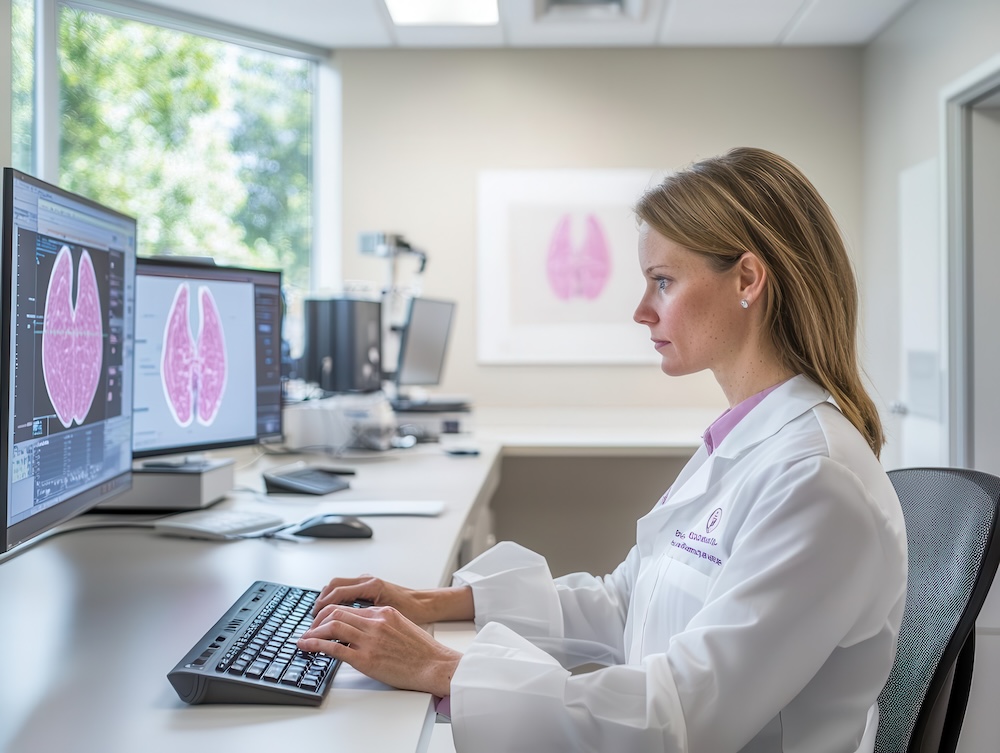
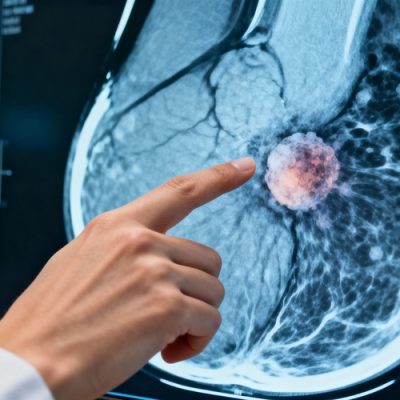
An AI tool has identified microscopic breast cancer patterns that could help medical professionals better forecast disease progression.
The tool, called CenSegNet, was developed to analyse hundreds of thousands of cells in tumour samples and detect abnormalities in structures known as centrosomes.
Centrosomes are small structures inside cells that ensure DNA is divided equally during cell replication. Researchers say abnormalities in these structures have been considered a hallmark of cancer for more than a century.

In cancerous tissue, centrosomes can replicate excessively, driving the progression of the disease.
Scientists at the University of Southampton used the system to study tissue from 127 breast cancer patients being treated at University Hospital Southampton.
More than 330,000 centrosomes were analysed, revealing two distinct abnormalities that had previously been considered part of the same process.
One involved cells developing too many centrosomes, while the other involved centrosomes becoming abnormally enlarged.
Researchers found the two defects behaved independently and could occur in different areas of the same tumour.
Dr Salah Elias, of the University of Southampton’s school of biological sciences and institute for life sciences, said: “For more than a century, centrosome abnormalities have been recognised as a hallmark of cancer, but studying them in patient tissues has been extremely challenging.
“CenSegNet allows us to analyse these defects at single-cell resolution across entire tumours and uncover patterns that were previously impossible to see.
“Rather than viewing centrosome abnormalities as a single phenomenon, our study shows that they have distinct biological states with different spatial distributions and clinical associations.”
The platform also helped uncover a link between different centrosome abnormalities and features of cancer.
Tumours with high levels of enlarged centrosomes were more aggressive, while patients whose cells had lower levels had a better chance of survival.
Dr Elias said: “Specific combinations of defects may influence how a tumour grows, invades surrounding tissues and responds to treatment.
This opens the door to developing new biomarkers and, ultimately, more personalised treatment strategies.”
Researchers hope AI could eventually be used to track disease by analysing the behaviour of cell structures.
The team also plans to combine CenSegNet with more data to explore whether it could help guide treatment decisions.

BACKEER and Netalis Medical have won the Women’s Health × EmbryoNet-AI Startup Competition, an international initiative designed to accelerate the development of artificial intelligence solutions in women’s health.
The two winners will receive technical support worth up to €100,000, along with access to investors, to help them develop and validate their minimum viable products.
In total, the competition attracted 165 teams from Europe, Central Asia, Africa and other parts of the world. The field included early-stage startups, research laboratories and clinical groups applying artificial intelligence to solve women’s health challenges.
“We selected participants based on their potential impact on women’s health, scientific and commercial viability, data availability, alignment with EmbryoNet-AI’s capabilities, programme feasibility, as well as ethical and sustainability considerations. Both winning teams demonstrated outstanding performance across all these criteria,” said Elena Lipilina, co-founder of EmbryoNet-AI.
Kazakhstan-based BACKEER is developing a fibre-optic biosensor platform for the rapid and highly sensitive detection of biomarkers. The technology aims to improve the early diagnosis of breast cancer and increase the accuracy and speed of laboratory testing. The company plans to use the programme’s resources to build the AI-driven platform and interface for the biosensors.
South African startup Netalis Medical is building a solution for ultrasound diagnostics and maternal-fetal health monitoring. The product addresses the shortage of qualified healthcare professionals and diagnostic equipment in underserved regions by offering a more affordable and accessible alternative to conventional ultrasound systems. The company plans to use the support to build an annotated proprietary ultrasound dataset for use in ultrasound diagnostics.
The Women’s Health × EmbryoNet-AI Startup Competition was held in Portugal. It included a Mentor Sprint, where participants worked with experts in technology, marketing and clinical practice to refine their solutions and business models, and culminated in a Live Pitch Day.
The selected teams presented their solutions to investors and industry stakeholders, including femtech strategic advisor Rocsi Chereches; Dr Sabine Seymour, founder of the women’s educational platform Re.punk; Fabien Lanteri, head of health strategy and innovation; Alla Zarifyan, co-founder and head of strategy at Heartgene Science; Evgenia Zaslavskaya, founder and chief executive of communications agency Zecomms; and serial entrepreneur and angel investor Isabel Holguera Vera. They evaluated applications on their potential impact on women’s health, scientific and commercial viability, alignment with EmbryoNet-AI’s capabilities, programme feasibility, and ethical and sustainability considerations.
The winning teams will now enter a build period of eight to 10 weeks, during which EmbryoNet-AI will deliver a fully developed, services-first pilot at no cost. The companies will also gain direct access to investors active in women’s health and AI-driven biotech, as well as enhanced public credibility through investor-ready materials, including pitch decks, and media exposure.
The Women’s Health × EmbryoNet-AI Startup Competition is a first-of-its-kind programme for femtech startups and research labs, bringing together innovators working at the intersection of artificial intelligence and women’s health.
The initiative, launched by the scientific platform EmbryoNet-AI in partnership with FemTech Real Money Talks Media, a European media platform covering innovation in women’s health and femtech, aims to accelerate real-world breakthroughs by transforming early-stage ideas and clinical questions into working AI solutions.







 Events2 weeks ago
Applications close August 18 for Women’s Health Innovation Summit 2026 Innovation Showcase

 Menopause2 weeks ago
Third of women unaware of perimenopause mental health impact

 Fertility7 days ago
Chelsea FC Women to launch first-of-its-kind player fertility fund
 Entrepreneur2 weeks ago
Women’s Health Week Europe 2026 releases fully populated agenda ahead of October summit

 Menopause2 weeks ago
Menopausal hormone therapy may lower dementia risk, study suggests

 Hormonal health2 weeks ago
We are wrapping our children in plastic and calling it care

 Opinion7 days ago
anna perimenopause app launches across 39 markets
 Pregnancy2 weeks ago
Chemicals in plastics may be linked to high blood pressure during pregnancy