





Connect with us

Menopause

Menopause reshapes breast tissue, possibly raising cancer risk – study

Published

on

More than three million cells have been mapped, showing how breast tissue changes with age, with the biggest shifts seen during menopause.

The research, described as the most detailed map of its kind so far, shows that as women age, all types of cells in breast tissue become fewer, those cells divide less often, and the tissue itself changes.

Together, these shifts create what the researchers call a “micro-environment”, meaning a local tissue setting in which cancer cells may find it easier to take hold.

Breast cancer is the most common cancer in women, accounting for 15 per cent of all new cases.

Four out of five cases occur in women over 50, and as many as one in seven women will develop breast cancer in their lifetime.

The study was led by scientists at the Universities of Cambridge and British Columbia.

The team used advanced imaging techniques to analyse breast tissue from more than 500 women aged 15 to 86, including biopsies taken for non-cancer-related reasons.

Pulkit Gupta from the Cancer Research UK Cambridge Institute at the University of Cambridge, joint first author, said: “Even though breast cancer affects well over 2 million women worldwide, we understand very little about why and when it occurs. As cells divide and replicate, they accumulate mutations that can drive cancer, but why is it that the body can get rid of these mutated cells when we’re younger, but struggles later in life?”

By combining the images with data on hormone receptors, immune cells and tissue architecture, the team mapped how breast tissue changes over time in unprecedented detail.

The findings point to reasons why breast cancer risk rises with age and why tumours in younger women differ biologically.

Gupta added: “Our map revealed that as women age, their breast tissue goes through major changes, with the most dramatic changes occurring at menopause.

“There are changes, too, during their twenties, possibly linked to pregnancy and childbirth, but these are far less pronounced.”

The map showed that milk-producing structures known as lobules shrink or disappear, while ducts, the channels that carry milk, become relatively more common.

The supporting layer around the ducts becomes thicker, fat cells increase and blood vessels decrease.

Changes were also seen in the immune environment. Younger breast tissue contains more B cells and active T cells, immune cells that help identify and kill cancer cells.

As tissue ages, these decline and are replaced by other immune cells linked to a more inflammatory and potentially less protective environment.

Co-senior author Dr Raza Ali from the Cancer Research UK Cambridge Institute at the University of Cambridge said: “We don’t know for certain why the types of immune cell change.

We can speculate that one reason may be because breast milk contains a high concentration of immunoglobulins, probably to help build the infant’s immunity, and these are produced by B cells.

At the same time, cells begin to interact with each other less. Immune cells and stromal cells, which form a supportive scaffold within tissue, become physically more distant from epithelial cells, the specialised cells lining the mammary ducts and lobules that produce and transport milk.

This may make it easier for pre-cancerous cells to escape control.

Co-senior author professor Samuel Aparicio from BC Cancer, University of British Columbia, Canada, said: “We’ve previously seen that age-dependent changes in oestrogen activity occur strongly in milk secreting cells of the breast and now we can see the surprising extent of changes in all cell types, including the immune system, with age.

“We are now seeking to understand the relationship between changes in immune cells and surveillance of early mutations that can arise in milk secreting cells over time.”

Dr Ali added: “It isn’t surprising that we should see fewer epithelial cells, as these play a role in producing breast milk, something that becomes less important with age, but the sheer scale of changes across the breast surprised us.

“What is clear from our map is that all of these changes create an environment where cancer cells that emerge naturally find it easier with age take hold and spread.”

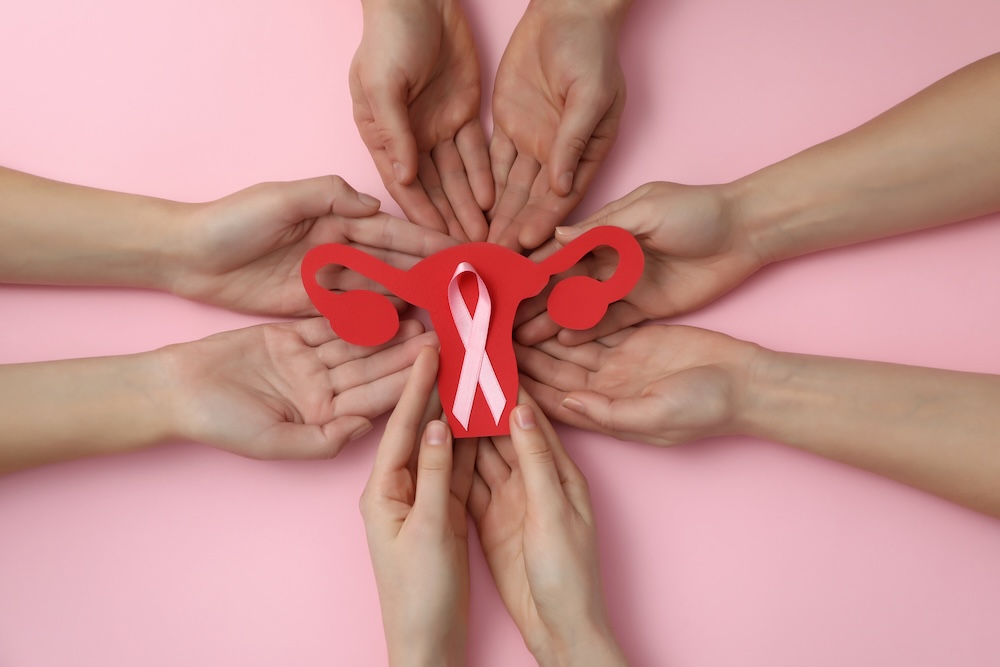
Menopause

Many women still confused about perimenopause, research finds

Published

on

One in three US women older than 35 are no sure whether they are in perimenopause, new research has revealed.

The findings suggest uncertainty remains common, largely because of knowledge gaps, symptom confusion and difficulty getting confirmation or care.

Perimenopause is the transitional stage before a woman’s final period, when hormone levels fluctuate and symptoms can change over time.

It usually begins in the mid-40s, although timing varies widely, and can last for around four to eight years.

Symptoms can include hot flushes, psychological symptoms and urogenital symptoms, which affect the urinary and genital areas.

Dr Stephanie Faubion, medical director for The Menopause Society and one of the study authors, said: “This large study showed that one in three US women aged older than 35 years are not sure whether they are in perimenopause.

“Further, the study highlights that symptom confusion, misconceptions, and barriers to care are leaving many women without the clarity and support they need during the menopause transition.

“Recognising perimenopause uncertainty as a common experience can help shift the conversation from searching for a diagnosis to providing women with the information, validation, and support they need to navigate this natural life transition with confidence.”

More than 7,600 US women aged 35 and older took part in the study, which looked at how common uncertainty around perimenopause is and what may be driving it.

Overall, 34 per cent of participants said they were unsure of their reproductive stage.

Uncertainty varied by age and symptom burden, reaching 42 per cent among women aged 40 to 44 and 37 per cent among those with severe symptoms.

Symptom confusion was the most common factor, cited in 56 per cent of responses.

This included difficulty making sense of bodily changes and telling perimenopause apart from other possible causes, such as premenstrual syndrome, thyroid disease or mental health conditions.

Knowledge gaps and information-seeking made up 28 per cent of responses, reflecting limited awareness, age-based assumptions and attempts to find reliable information.

Barriers to confirmation and care made up 16 per cent, including dismissive healthcare encounters and reluctance to acknowledge perimenopause.

Younger women aged 35 to 39 were more likely to cite knowledge gaps, while healthcare barriers were most common among women aged 40 to 44.

The researchers said clinicians should take a more flexible approach to recognising the emotional, cognitive and physical symptoms that can occur during perimenopause.

They said healthcare professionals should not rely too heavily on irregular periods as the main sign, because some women have symptoms before major cycle changes.


Continue Reading

News

New menopause drug approved for use by NHS in Scotland

Published

on

A new menopause drug has been approved for NHS use in Scotland, offering a non-hormonal option for women who cannot take HRT.

The Scottish Medicines Consortium has recommended that women can now be prescribed fezolinetant, also known as Veoza, for symptoms such as hot flushes and night sweats.

Some women cannot take HRT, leaving them with limited treatment options for symptoms that can be severe and long-lasting.

Dr Timir Patel, medical director of Astellas UK, said the company was “pleased that this important additional treatment option will be available to women in Scotland, helping to support more personalised care for those experiencing hot flushes and night sweats”.

Fezolinetant works by selectively blocking a neurotransmitter in the brain involved in triggering hot flushes.

Clinical trials have shown the drug can reduce both the frequency and severity of hot flushes and night sweats.

About 400,000 women in Scotland are said to be of menopausal age, with manufacturer Astellas Pharma Ltd saying up to 48,000 could benefit from the treatment.

Dr Rob Peel, chair of the Scottish Medicines Consortium, said: “We know that menopausal hot flushes and night sweats can substantially affect quality of life.

“For those who cannot take HRT, effective treatment options are limited. Fezolinetant provides a non-hormonal treatment option, and we know our decision will be welcomed.”

Dr Kay McAllister, consultant gynaecologist and clinical lead for menopause services at NHS Glasgow and Greater Clyde, said: “Today’s decision marks a positive development for the wellbeing of Scottish women.

“In clinical practice, I see how hot flushes and night sweats impact sleep and overall quality of life in my patients.

“The availability of this targeted treatment offers a welcome choice and further options for patients.”

Continue Reading

News

Avni Wellness secures US$470k funding

Published

on

Avni Wellness has secured Rs 4 crore, around US$470,000, in seed funding to expand its products and digital commerce capabilities.

The Mumbai-based women’s health start-up plans to strengthen its online retail operations and increase its presence across digital marketplaces.

It will also expand its cycle nutrition product range and grow its women-led network of micro-entrepreneurs.

Founded in 2021 by Sujata Pawar and Apurv Agarwal, Avni Wellness offers science-backed, toxin-free products spanning adolescence, reproductive years and menopause.

Its portfolio includes a patented antimicrobial reusable sanitary pad and a liposomal iron supplement designed to address iron deficiency among women in India.

Liposomal supplements encase nutrients in tiny fat-like particles intended to support absorption.

The company also offers products for polycystic ovary syndrome, or PCOS, calcium supplementation, urinary and vaginal health and seed-based hormonal nutrition. PCOS is a condition that can affect hormone levels, periods and fertility.

Proteus Partners led the funding round, with participation from angel investors Puru Gupta, Sreejith Moolayil, A. Velumani and Somya Nigam.

Avni Wellness said it aims to address gaps in women’s healthcare in India by focusing on hormonal health, nutrition and long-term wellbeing while incorporating livelihood generation and sustainability into its model.

Continue Reading

Trending

Copyright © 2025 Aspect Health Media Ltd. All Rights Reserved.

