




Insight
Hormone therapy not linked to dementia risk, review finds


Menopause hormone therapy is not strongly linked to dementia, a review of health data from over one million women reports.
The systematic review, commissioned by the World Health Organization, examined links between cognitive health and hormone replacement therapy (HRT).
The WHO currently provides no specific guidance on dementia and HRT, despite recent controversy around the topic.

Researchers at University College London conducted the analysis, which found inconsistent and slight associations with dementia across studies, some positive and some negative, but all with very low certainty.
Lead author Melissa Melville, an ageing cognition researcher, said: “Menopause hormone therapy is widely used to manage menopausal symptoms, yet its impact on memory, cognition, and dementia risk remains one of the most debated issues in women’s health.
“Conflicting research and concerns about potential harms have fuelled public and clinical debate, leaving women and clinicians unsure whether menopause hormone therapy might raise or reduce their risk of dementia.”
HRT replaces ovarian hormones after menopause and is used to treat symptoms such as hot flushes, night sweats, poor sleep, low libido and osteoporosis.
Most studies included in the review were observational, meaning they cannot prove cause and effect.
Formulations, doses and prescription timing varied considerably, making comparisons difficult.
Only one randomised controlled trial (participants are randomly assigned to treatments) found that oestrogen-only products may increase dementia risk in women over 65, but the researchers said certainty was low.
The absolute risk difference was 6.27 additional cases per 1,000 women.
Senior author Aimee Spector, a clinical psychologist at UCL, said: “This review will help to inform the upcoming WHO guidelines on reducing the risk of cognitive decline and dementia, which are expected to be released in 2026.
The findings support a 2024 Lancet Commission on dementia, which also found insufficient evidence to suggest HRT increases or decreases dementia risk.
They also align with the US Food and Drug Administration’s announcement detailing plans to remove warnings on HRT products that had cautioned about increased dementia risk.
The researchers concluded: “Overall, available evidence to date does not support MHT solely for risk reduction of dementia nor does MHT increase dementia risk.”
“There is a need for further high-quality research to clarify the role of MHT in relation to dementia.”
The team called for further data on those who enter menopause prematurely, either through hysterectomy, where the uterus is surgically removed, or oophorectomy, where one or both ovaries are removed.













LGBTQ+ people across the UK face discrimination, funding inequalities and gaps in fertility care, research has found.
Eligibility for NHS-funded treatment varies across the country, while many services are still structured around heterosexual couples.
People with diverse sexual orientations and gender identities can be left navigating complex systems, paying more for treatment and explaining their needs to healthcare professionals.
Co-author Dr Chloe He, of the UCL Institute of Epidemiology and Health Care, said: “Legal access is not the same as equitable access. LGBTQ+ patients are forced to navigate a Kafkaesque fertility care system alone – researching, self-advocating, and often educating the doctors and nurses treating them.
“In our study, we saw clinicians with no formal LGBTQ+ training, gay men pressured into being relentlessly cheerful to prove parent-worthiness to surrogacy services, and patients travelling hundreds of miles for care after experiencing transphobia at local clinics.”
The University of Stirling-led research involved 54 participants and 36 in-depth interviews with people who had used fertility services and professionals working in or alongside fertility care across the UK.
Researchers from Stirling, SKEMA Business School and University College London examined the extra work undertaken by LGBTIQA+ people seeking to have children.
They called this “reproductive labour”, which includes researching treatment, advocating for themselves, covering additional costs and educating clinicians.
The researchers said this work was used to manage “reproductive bioprecarity”, a term describing the uncertainty and vulnerability people can face while seeking reproductive healthcare.
The study, funded by a Santander Universities Research Grant, primarily reflected the experiences of cisgender lesbian participants.
One participant, Amanda, said she and her partner, Amy, spent a long time trying to find a GP willing to discuss fertility with them.
The couple eventually underwent fertility tests through the NHS, but their private clinic rejected the results because they had not been referred by a GP.
They had to repeat the tests and pay for them privately.
The researchers said lesbian couples are often required to self-fund multiple rounds of intrauterine insemination before becoming eligible for NHS support.
Intrauterine insemination, or IUI, involves placing sperm directly into the womb.
Gay men usually have to pursue surrogacy, which is not funded or supported by the NHS, while transgender people can face long waits to save eggs and sperm to allow them to have children.
Lead author Dr Carolyn Wilson-Nash, senior lecturer at the University of Stirling Business School, began investigating the issue after she and her wife made multiple attempts to conceive and faced challenges throughout the process.
The couple funded almost the entire process themselves and consulted a GP who had no experience of supporting same-sex couples seeking fertility care.
The researchers called for clearer treatment pathways, more inclusive services and better training for healthcare staff.
Dr Wilson-Nash, who is now the mother of a three-year-old boy, said: “The way the current system for fertility services is set up in the UK can lead to unequal pathways for the LGBTIQA+ population.
“For example, heterosexual couples can access NHS-funded in vitro fertilisation (IVF), whereas lesbian couples are often required to self-fund multiple rounds of intrauterine insemination (IUI) before becoming eligible for NHS support.
“Gay men usually have to pursue surrogacy, which is not funded by or supported by the NHS.
“And transgender individuals often face long waiting times to save eggs and sperm to allow them to have children. So legal access does not necessarily translate into equitable or inclusive care.
“Building a family should be neither exclusive nor this difficult. Fertility services should be available to all, regardless of their sexual orientation or gender identity.”
Laura-Rose Thorogood, founder of LGBT Mummies and part of the UK’s Fertility Justice Campaign, said: “Right now, intended LGBTQIA+ parents are being discriminated against because of who they are, and who they love.
“This is ultimately forcing them down alternative pathways which in turn put them at long-term risk physically, psychologically and socially.
“By providing access to treatment, our community can thrive and create the families they dream of by their chosen route.”
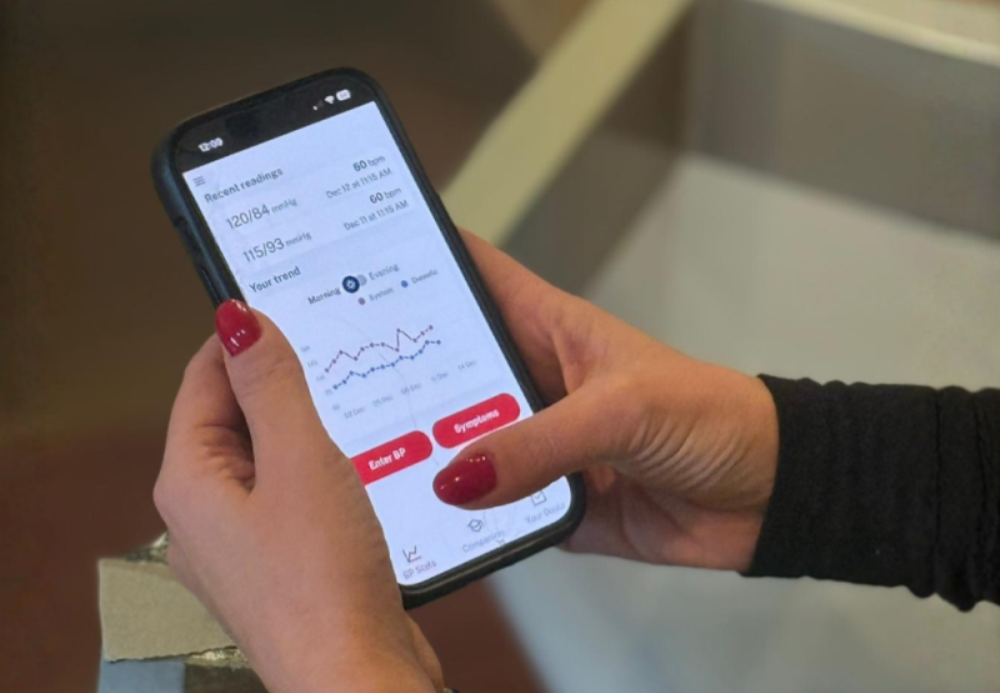
A sold-out summit at the London Institute for Healthcare Engineering will bring together clinicians, researchers, regulators, investors and founders to discuss how artificial intelligence is being applied to women’s health, and what responsible development of these tools should look like.
AI × Women’s Health: Innovation, Challenges and Opportunities takes place on 25 June.
It’s organised by MEGI Health, a femtech company building a digital cardiovascular platform aimed at supporting women’s heart health through pregnancy, postpartum and beyond.
All 140 places have gone, and there’s now a waiting list.
Nina Sesto, CEO of MEGI Health, said: “We are seeing a wave of innovation in women’s health, and AI has the potential to accelerate it.
“The opportunity is enormous, but it only pays off if these tools are built on representative data and designed around the realities of women’s health.
“That is exactly the conversation we wanted to convene, across clinicians, researchers, industry and regulators.”
AI is increasingly being applied across women’s healthcare, with proponents pointing to earlier diagnosis, better risk prediction and more personalised care.
The summit will look at tools in development across fetal and gynaecological ultrasound, maternal cardiovascular monitoring and clinical decision support, alongside the question of whether women risk being left behind as the technology develops.
The timing reflects wider momentum in the sector: women’s health has been drawing more investment and policy attention, and the World Economic Forum and McKinsey Health Institute have estimated that closing the women’s health gap could add at least $1 trillion a year to the global economy by 2040.
A recurring theme for the day is data.
Women have historically been under-represented in medical research, and organisers argue that AI tools trained on incomplete or unrepresentative datasets risk repeating those gaps rather than closing them.
Sessions on data, ethics, privacy and equity will run alongside the more technical and commercial discussions.
Dr Fran Conti-Ramsden is a clinician at Guy’s and St Thomas’ NHS Foundation Trust, academic at King’s College London and Chief Medical Officer of MEGI Health.
Conti-Ramsden said: “Working at the intersection of clinical practice, academia and industry, I see both the tremendous challenges we face in delivering clinical care for women and the need for innovation, alongside the rapid development of AI and digital health technologies.
“But bringing innovation into clinical practice is fraught with challenges.
“I hope this day brings together people from across the landscape to discuss and define those challenges as well as celebrate progress in the field, sparking dialogue on how we should innovate responsibly, and to make sure women’s health is not left behind.”
The half-day programme is split into four sessions, chaired respectively by Professor Eugene Oteng-Ntim, Professor Richard Dobson, an interactive breakout segment, and Professor Asma Khalil. Other speakers include MiRa Jacobs (MHRA), Professor Jane Hirst (The George Institute), Tulsi Patel (Hertility) and Dr Kimberley Peven (Scarlet), among others.
Organisers say they hope the event will help build a longer-term UK community around clinical AI in women’s health.

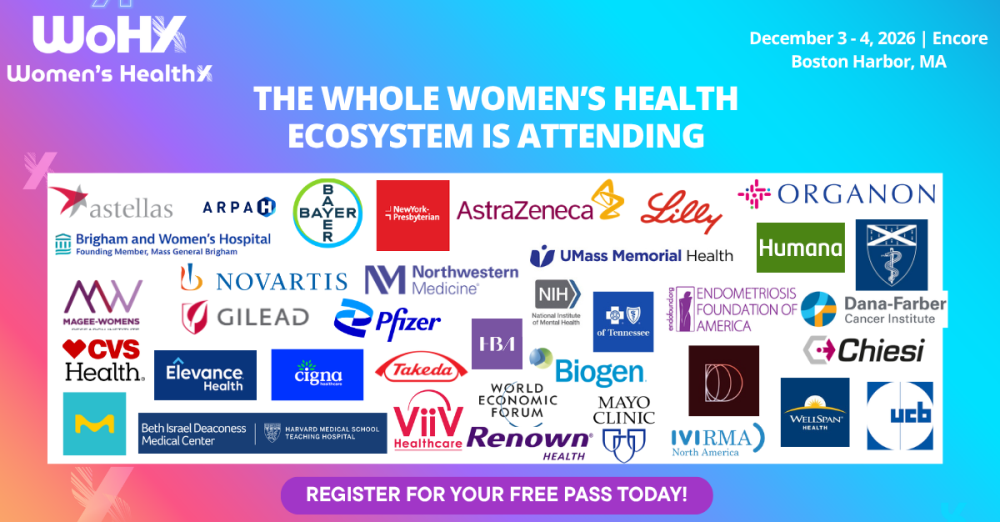
Senior executives from the World Economic Forum, Takeda and Gilead are among the latest speakers confirmed for Women’s HealthX, which takes place on 3–4 December 2026 in Boston, Massachusetts, as the event publishes its full agenda.
The newly announced speakers are Melissa Patel, lead for women’s health responsible investing at the World Economic Forum; Nicola Greenway, chief human resources officer at Takeda; and Jyoti Mehra, executive vice president of human resources at Gilead.
They join more than 75 confirmed speakers and a delegate list the organisers say will exceed 750 leaders from pharma and biotech, hospitals and health systems, payers and policymakers, all focused on closing the sex-difference data gap in healthcare.
Organisations registered to attend span much of the sector.
In pharma and biotech they include Novartis, Merck, Sanofi, AstraZeneca, Eli Lilly, Bayer, Biogen, Johnson & Johnson, Gilead Sciences, Takeda, UCB, Astellas, EMD Serono, Amgen, Bristol Myers Squibb, Boehringer Ingelheim and Chiesi.
Among hospitals, health systems and academic medical centres are Mayo Clinic, Mass General Brigham, Northwell Health, UPMC, Beth Israel Deaconess Medical Center, Dana-Farber Cancer Institute, Weill Cornell Medicine, Massachusetts General Hospital, Northwestern Medicine, Mount Sinai Health System, UMass Memorial Medical Center, Tufts Medical Center, Yale School of Medicine, Harvard Medical School, Columbia University Irving Medical Center, University of Pennsylvania Health System and NYU Langone Health.
Payers and health plans represented include CVS Health, Humana, Cigna Healthcare, Kaiser Permanente, Elevance Health, Blue Cross Blue Shield of Tennessee, Blue Cross Blue Shield of Massachusetts, Evernorth, Fidelis Care, Health Plans Inc and UPMC Health Plan.
On the government, policy and regulatory side, attendees include the U.S. Department of Veterans Affairs, ARPA-H, the FDA, HHS, the NYC Department of Health and Mental Hygiene, Metro Public Health Department, the Association of State and Territorial Health Officials, the NHS, the Northern Mariana Islands Board of Nursing and Planned Parenthood of Florida.
A sample attendee list is available here.
Newly confirmed panels
Patel will join Sheri Schully, deputy chief medical and scientific officer at the All of Us Research Program, and Lindsey Miltenberger, chief advocacy officer at the Society for Women’s Health Research, for a panel titled “Driving Inclusive Health Research on a Global Scale: Using Data to Understand National Priorities and Address Critical Gaps in Women’s Health.”
The session will look at the health priorities countries are focusing on today and how data can be used to identify gaps in women’s health that remain overlooked.
Greenway and Mehra will take part in a panel titled “Empowering Workforces Through Women’s Health,” in which corporate health leaders discuss women’s health priorities from both employee and employer perspectives, and which benefits organisations should be prioritising.
The full agenda is now available, and registration is open.











 Menopause4 weeks ago
Perimenopause misinformation ‘putting women at risk’

 Entrepreneur4 weeks ago
Women’s Health Innovation Summit opens submissions for 2026 Innovation Showcase

 Insight3 weeks ago
British women among angriest in Europe, health survey reveals

 News4 weeks ago
Women still being failed when they reach menopause, experts say

 Menopause2 weeks ago
Apple Health adds menopause and perimenopause tracking

 Menopause4 weeks ago
Sweden eyes domestic production of oestrogen patches amid menopause treatment shortage

 News2 weeks ago
Femtech World Awards 2026: Winners revealed
 News4 weeks ago
Three menopause innovators shortlisted for Femtech World Award
1 Comment