




Features
From SEO to GEO: How women’s health brands can get found in the age of AI


By Martin Piria, senior machine learning engineer at Ema
Search has changed.
For years, Women’s Health companies have invested in SEO, optimising their websites so Google would surface their content.
But now, as consumers increasingly ask health questions directly to AI like ChatGPT, Perplexity, Ema, or Claude, a new frontier is emerging for brands that want to market their women’s health product or service: Generative Engine Optimization (GEO).
Here’s how women’s health brands should think about GEO today.
GEO ≠ SEO — But They Overlap
Think of it like this:
- Google vs Bing: Searching on Bing doesn’t influence what you see on Google.
- LLMs vs Search: Similarly, what OpenAI scrapes to train its models isn’t connected to how Anthropic’s model is built. Each AI has its own training architecture and knowledge base.
SEO remains critical because most grounding searches still pull from Google.
But GEO adds a new layer: how your content is scraped, stored, and tokenized by large language models.
What LLMs “Love”
LLMs aren’t people. They’re statistical machines predicting the next token. To show up inside them, your content needs to be:
- LLM-friendly HTML: Clean, semantic code that models can parse.
- Fact highlights: Clear, authoritative statements that models can confidently repeat.
- Structured links & references: High-authority citations that reinforce your credibility.
- Accessible APIs: Easy integrations for platforms like Bing, Perplexity, or Google’s SGE.
You need to learn which tokens trigger what generations in the LLM.
Tokens that the model has well-modeled won’t go to the web. You want tokens where the model has low confidence, and you want to be the first hit when it grounds the answer.
How to Spot “Weak Tokens”
Weak tokens are concepts or queries where the model has low confidence and goes searching the web for reinforcement. That’s your opportunity.
If your Women’s Health company creates the most authoritative, well-structured page on that concept, you become the go-to reference.
Pro tip: Ask ChatGPT (or another LLM) to generate an answer in your space, then look for where it hesitates, says “I don’t know,” or provides shallow coverage.
Those are your GEO goldmines.
Action Steps for Women’s Health Brands
- Keep building SEO: Traditional search still drives discovery and traffic.
- Audit your content for LLM-friendliness: Is your HTML semantic? Are facts highlighted clearly? Do you have structured data?
- Target underserved queries: Use AI tools to test what’s missing from LLM answers in your domain.
- Be the first grounding result: For low-confidence tokens, make sure you’re the top hit on Bing, Perplexity, and Google.
- Think prevention-first: Just as we design Ema to prioritize safety and clarity, your content should be structured, factual, and easy to cite.
Resources to Go Deeper
- GPT-3 Linguistics 101 (Medium) — a great breakdown of how tokens and vocabularies work in LLMs.
- Research from AI marketing leaders on Generative Engine Optimization (GEO).
- Technical guides on schema markup and structured data for SEO, which often doubles as LLM-friendly content.
The Bottom Line for Women’s Health
- Clarity + authority = visibility. The more accessible and trustworthy your content, the more likely LLMs will surface it.
- Your opportunity: Make your Women’s Health brand the voice that AI turns to when women ask critical questions. SEO found you on Google. GEO will get you found inside the conversations that matter next.
Find out more about Ema at emaapp.co














Alexander Parker is head of wellness at packaging design and manufacturing company, Burgopak.
Burgopak is a world leader in design innovation, with a 25-year-history spanning entertainment, consumer tech and now health diagnostics, including an expanding range of at-home hormone and fertility testing kits.
We speak to Alexander to discover what goes into designing robust, functional but engaging packaging and the sometimes surprising considerations that can make or break a product.
Hi Alexander. Please tell us about your role at Burgopak.
My role is about driving our growth and direction in the healthcare and wellness space, which in practice means everything from packaging to client engagement, to partnerships, to developing the team.
I also sit on the company management committee and help manage our IP portfolio.
Before stepping into this role, I spent 20 years as a designer, 15 of them as head of design – so I bring a hands-on understanding of what it takes to deliver great packaging.
At-home test kits require the user to perform a medical procedure alone, without professional support.
How does that inform your design approach?
It’s a key pillar of a project, heavily influenced by the product and its intended use.
In the case of a test kit being used to collect a sample specimen and return it to a lab, there’s often plenty of opportunity for packaging to help or hinder the process and experience.
There are layers to effective packaging.
● Structure – Physical interventions through the packaging.
● Artwork – The visual identity, messaging and instructions across the pack and instructions for use.
● Signalling – Sometimes-undervalued but what signals are communicated through the packaging – how this makes the user feel about the product, the company behind it and the task at hand.
Careful design of the instructions for use is universally appreciated and often a regulatory requirement.
However, the pack structure and artwork should also work together to communicate a clear user journey.
This could include presenting components in the order they’re used, aligning the pack layout with the IFU steps (Prepare>Test>Return), making the IFU immediately visible as a hero component.
We can also introduce physical aids, like collection tube stands, to help during the sampling process.
The packaging is often used in the return of the sample to a lab so this needs to be considered and intuitively designed.
The structure, materials and artwork are all communicating something to the user.
You want to reassure the user by signalling care, efficacy, trust and in the case of a paid product, value.
In your mind, compare these two pack examples.
One a simple carton with a sea of components loosely filled and rattling around inside. Poor quality print and seemingly damaged in the post.
Contrast that with a suitably robust piece of packaging, with the components arranged and labelled into steps 1, 2, 3.
They might both work, but you can imagine the second building a reassured user experience.
How often do you encounter brands that haven’t thought about the emotional and potentially anxiety-inducing moment of opening a testing kit, and what’s the first thing you fix?
Thankfully it’s not too often, in our case at least.
I think we tend to attract customers who sense there’s more to packaging than just being a container or functionally driven.
The start of a project for us is building a brief with the customer and aligning on values for the packaging – what we want people to feel when opening or using it – as well as defining the technical requirements.
So, if there’s going to be an early fix it’ll probably be here, establishing the emotional intent.
How has the rise in social media ‘unboxing’ videos and product reviews changed what you do?
Is there a tension between designing for social media shareability and designing for the privacy women often want around health testing?
I don’t think there has to be a tension, provided everyone is clear on what the goals of the packaging are, and they are aligned with the product type and its use.
We can’t influence the results of a test or the positive or negative emotional significance it has in someone’s life.
What we can do is design packaging that offers the best possible user experience.
If there’s a shareable moment at the end, packaging might be a prop within a photo or video. But equally it might be a very private experience.
If it’s a test offering a diagnosis or insights into a health condition – you can conceive of a range of emotional outcomes. As you could imagine for certain fertility products too.
The design needs to acknowledge all these possibilities in its structural design, visual identity and the signals they communicate.
For women using a fertility or hormone test, perceived quality signals trust.
How do you stop sustainable choices from reading as cheap?
Do the essentials well, look for small interventions that add value and use attention to detail to signal that the care taken over the packaging, and sustainability, extends to the user.
Material choice is incredibly important.
In the case of paperboard quality can be a spectrum so it’s important to take the time to find and qualify the right one.
One that offers the necessary performance characteristics, is verifiably from responsibly managed forests such as through FSC/PEFC, and from a mill whose activities are aligned with your sustainability targets.
Take care over the design of each touch point and detail. A fitment that holds a device should neatly cradle it. A closure should be intuitive to open and work every time.
If the pack is meant to stand up, then the proportions should be optimised to facilitate that. It’s attention to the details that’s important.
Print quality will have a big impact on perception, not just the messaging or visual identity it renders. If the print quality is poor, then it devalues the product.
Doing it well doesn’t mean using material resources – it’s careful vendor selection and quality assurance.
For some responsible premiumisation you can introduce embossing or debossing details to the artwork, a tactile three-dimensional finish.
This details-led approach is valuable across all packaging but if sustainability is driving a reduction to the essentials, then there is a heightened importance to the execution of what is left.
As at-home health testing moves into NHS and public health contexts, what does good packaging look like when the brief is scale and cost rather than aspiration?
Scale and cost often feature very heavily in the success of projects outside of these settings, so there are parallels between the public and private, but with greater imperative to strip things back.
What is important to understand is success is not a piece of packaging in isolation. It’s efficiency, kitting, quality, distribution, tracking, data management across all activities and partners. Packaging is one part of the bigger picture.
Central to all of this is the need for it to reliably and consistently encourage the correct use of the kit through structure, artwork and instructions.
It is materially efficient and from a robust agile supply chain.
Assembly and kitting might be automated so it will be designed for those production lines or in conjunction with the equipment development.
It is compliant with all transport regulations and the most cost-efficient postal streams to the patient and from them back to the lab.
So, what does good packaging look like? It’s the design that efficiently offers the best patient user experience through a robust, reliable, scalable supply chain.
How do you make the business case for investing in packaging design before the product itself is ready to market?
There’s an opportunity cost.
Packaging has the potential to be a valuable asset when someone invests time and resources into coherent design and development. By starting too late or under resourcing the process you risk having packaging that’s a commercial pain point.
At the earliest opportunity, you at least want to be selecting your packaging partners and have a clear understanding of the development timeline and milestones – structural design, prototyping, stakeholder feedback, artwork/labelling development, regulatory milestones, transit testing, stability testing, wetproofing, manufacturing, delivery.
You must complete these steps before your product can go to market.
What’s the cost to you of delaying launch because you didn’t get packaging underway sooner?
You need to spend time creating packaging that elevates your brand and is a marketing asset that works across ecommerce, retail, advertising, social media.
Engage with the other supply chain stakeholders.
One example would be involving kitting partners in the process to validate and input on packaging improvements. If it’s expensive to kit, your cost of goods go up and if it’s slow to kit you might not have a scalable solution.
You may also find packaging insights influence product decisions.
If you are defining components for a test kit, factor in that larger devices might in turn increase pack size and eventually incur higher shipping costs.
You might work with a device manufacturer on how a USB cable is wound so the packaging volume can be decreased – another potential packaging and shipping cost reduction.
Transit testing and design improvements ensure that products arrive in acceptable condition – reducing costs associated with replacements, damaged reputation and potentially the loss of repeat purchases.
Packaging done well is that opportunity realised – it’s value demonstrated across sales, marketing and operations.
For a founding team approaching a packaging partner for the first time, what does a genuinely useful brief contain, what do most brands leave out, and how much does coming in underprepared add to the timeline and cost?
At Burgopak we build a brief together with the customer and that usually happens in a few stages.
The initial conversation is a chance to learn more about each other, make sure we’re a good fit for one another and the project.
We like to learn more about you, your product, how it’s used and some headline information around timelines, volumes, budget, your packaging ambitions and likes/dislikes.
We explain what we do and how we typically work. This really is the kick-off point – the goal at the end of this stage is being excited to be working together on a project that looks technically and commercially feasible.
In the next stage we build-out a brief capturing the technical and brand-led requirements of the packaging.
It will cover product details, brand & experience, sales & delivery channels, fulfilment and distribution, budget and timelines, compliance and regulations.
The exact questions will vary by product and project, but they span those areas.
From this we can build the project plan – and this might involve working towards answers that aren’t yet defined.
It seems obvious, but knowing exactly what needs to be packaged is fundamental – the product, peripherals – and this can be one of the common missing puzzle pieces.
You can design a container to hold ‘something’.
But when you know exactly what the product is – its size, shape, weight, how it’s used – you can design a piece of packaging that is maximally efficient and effective in elevating the total product experience.
The risk to a successful project is not so much under preparedness at the start – we’re here to help build the brief and a realistic project plan – it’s a loss of momentum through the process.
The packager and the client must work together.
We can be very efficient and agile in doing the work but there’s also the responsibility from the client to keep momentum through rounds of feedback, coordinating product samples or technical drawings and so on.
If there’s a finite timeline and repeated delays within it there can come a crunch point – when delivery dates are pushed out or potentially avoidable compromises made.
Come prepared to collaborate on the brief – but know that the founding teams who get the best outcomes are the ones who stay engaged and keep momentum through the whole process, not just the kick-off.
Learn more about Burgopak at burgopak.com


Elation Health has acquired Aster, a women’s health EHR startup created by sisters Fifi Kara and Dr Lailah Kara-Newton.
The deal, announced on 3 June 2026, will see Aster’s team join Elation Health as the company expands development of what it describes as the first agentic operating system for primary care.
An EHR, or electronic health record, is a digital system used by healthcare providers to store and manage patient information.
Aster was founded by Kara and Kara-Newton as an AI-native EHR platform for women’s health providers.
Elation Health said the acquisition would allow Aster to learn from its expertise in AI agents and support development of its agentic operating system for primary care.
Kyna Fong, co-founder and chief executive of Elation Health, said: “The Aster team impressed us with their vision and creative inventions to support independent practices.”
Fong said Elation, like Aster, was founded by siblings who wanted to change the healthcare system.
She added: “That shared north star means they understand what we’re building and why it matters. It was clear right away they would significantly add to our capabilities.”
Kara has spent 10 years creating consumer and business-to-business products across the UK, Europe and the US, and recently supported Meta’s Health & Fitness team, according to Aster’s website.
Kara-Newton previously worked as a hospital doctor in the NHS across medical and surgical specialties, including breast surgery, general surgery, emergency medicine and obstetrics and gynaecology.
Aster launched in 2023 after raising US$2.8m from Zeal Capital Partners, Cornerstone Ventures, Octopus Ventures and others.
Kara, Kara-Newton and Aster’s chief technology officer, Nacho Vazquez, will all join Elation.
Kara said: “From the moment we met Kyna Fong, Ashley Rogers, and the Elation leadership team, it was clear we were aligned on what matters most: that clinicians deserve truly incredible software that brings joy back to their practice. Together, we can now bring that vision to millions of primary care patients across the country.”
The sisters said their work was shaped by Kara-Newton’s first pregnancy, when undiagnosed pre-eclampsia led to an emergency caesarean section and neonatal intensive care admission for her son.
The founders said they wanted to build technology that could help prevent similar outcomes for other women.
The acquisition comes amid continued concern over maternal health inequalities in the US.
In the US, Black maternal mortality remains alarmingly high, with rates nearly double those of white women, and experts point to unequal access to care, implicit bias and fragmented approaches to care.

Article produced in association with Spital Clinic
Both the copper coil and the Mirena are more than 99 per cent effective as contraceptives — but they work in completely different ways, have opposite effects on periods, and suit very different people.

With the FSRH’s May 2024 licence extension for the Mirena now in effect, this guide covers the five key differences using up-to-date UK evidence, not the older guidance that many sources still repeat.
How Each Device Works
The FSRH March 2023 guideline set out the terminology now used across UK clinical practice: the copper intrauterine device (Cu-IUD) and the levonorgestrel intrauterine system (LNG-IUD).
The copper coil works by releasing copper ions that are toxic to sperm, preventing fertilisation. It contains no hormones at all, making it a strong option for women who cannot or do not want hormonal contraception.
The Mirena — the most widely prescribed 52mg LNG-IUD in the UK — thickens cervical mucus to block sperm, thins the uterine lining, and may suppress ovulation, though most users continue to ovulate normally.
According to Hull University Teaching Hospitals NHS Trust, the hormone levels it produces are lower than those from the combined contraceptive pill — relevant for women advised to avoid higher-dose hormonal methods.
The hormone-free nature of the Cu-IUD is its defining advantage for some; the localised hormonal action of the LNG-IUD is its defining advantage for others.
According to NHS guidance on the copper coil, neither device interacts with medicines or herbal remedies, and both can be fitted in women who have never been pregnant.
The way each device works also determines what it does to periods — often the deciding factor.
Effectiveness and Duration
The NHS confirms both devices prevent pregnancy in more than 99 per cent of users. When it comes to contraceptive effectiveness, there is no meaningful difference between them.
Where they differ significantly is duration. The copper coil lasts up to 10 years, and one fitted in a woman aged 40 or over can remain in place until menopause under FSRH March 2023 guidance.
For the Mirena, the picture changed in May 2024: the FSRH CEU statement on extended LNG-IUD use confirmed that all 52mg LNG-IUDs — including the Mirena, Levosert, and Benilexa — are now licensed for eight years of contraceptive use, up from five under previous guidance.
When the Mirena is used as part of HRT, it protects the uterine lining for up to five years before requiring replacement. Smaller-dose devices such as Kyleena (20mcg) are licensed for five years, and Jaydess for three.
Both are long-acting reversible contraceptives — fertility returns immediately after removal, with no delay or washout period. Both are available without a GP referral through the coil insertion and removal service at Spital Clinic.
What Each Device Does to Periods
The most important practical difference is what each device does to periods — and they go in opposite directions.
The copper coil typically makes periods heavier, longer, and more painful; the NHS notes this may ease after a few months, but heavier bleeding is one of the most common reasons for early removal.
Both devices can cause irregular spotting in the first three to six months after fitting.
The Mirena does the opposite.
According to Hull University Teaching Hospitals NHS Trust, it reduces monthly blood loss by 86 per cent at three months and by 97 per cent at twelve months.
Nine in ten women who use it for heavy periods see a significant reduction; around 20 per cent have no bleeding at all; and 80 per cent report meaningful pain relief.
NHS information on the hormonal coil confirms that periods often become lighter, shorter, and less painful — with many users finding they stop entirely after the initial settling-in period.
For women whose choice of contraception is being shaped by troublesome periods, those statistics make the direction of the decision clear.
For women with already disrupted cycles, it is worth booking a private specialist assessment before deciding — for this group, the choice of coil is as much a treatment decision as a contraceptive one.
Unlike the copper coil, the Mirena is licensed as a first-line treatment for menorrhagia — heavy or prolonged bleeding defined as losing more than 80ml per cycle or periods lasting longer than seven days.
In around half of cases, heavy periods have no identifiable structural cause, making the Mirena’s targeted local action particularly useful: it reduces bleeding at the endometrial level without surgery, general anaesthesia, or high-dose systemic hormones, and offers a non-surgical alternative to procedures such as endometrial ablation.
Side Effects, Risks, and Who Cannot Use Each Device
Both devices carry the same procedural risks. Pelvic infection affects around 1 in 100 women in the first three weeks; expulsion happens in roughly 1 in 20; and uterine perforation occurs in approximately 2 in 1,000 fittings — slightly higher in women breastfeeding within six months of delivery. Ectopic pregnancy, though rare, is a risk if either device fails.
The side-effect profiles diverge beyond those shared risks.
The copper coil carries no hormonal side effects — heavier periods are its main downside. The
Mirena may cause acne, headaches, mood changes, breast tenderness, and ovarian cysts; most resolve without treatment, but they are worth considering for anyone sensitive to progestogen.
The Mirena is also unaffected by vomiting, diarrhoea, or most drug interactions.
Each device has its own contraindications. Neither should be fitted in the presence of an active sexually transmitted infection or unexplained uterine bleeding.
The Mirena is not suitable for women with a history of breast cancer, certain liver conditions, serious cardiovascular disease, or certain uterine abnormalities.
The copper coil, meanwhile, can be used as emergency contraception if fitted within five days of unprotected sex — the only intrauterine option for post-coital protection.
The Fitting Procedure and What to Expect
The fitting procedure is the same for both devices: a 10 to 15 minute clinical appointment, ideally towards the end of a period, though it can happen at any point in the cycle.
The full appointment takes around 30 minutes. Local anaesthetic gel or spray is used to manage discomfort, and the NHS advises taking ibuprofen or paracetamol about an hour beforehand.
No surgery or general anaesthetic is needed. Some cramping and light spotting in the days after fitting is normal and usually settles within a week. Neither device requires you to have had children previously.
Fertility returns immediately after removal of either device — there is no waiting period before trying to conceive.
For most women, the choice between the copper coil and the Mirena comes down to one question: are hormones acceptable or not?
The copper coil suits women who want hormone-free contraception, those who cannot use progestogen, and those who need emergency post-coital protection.
The Mirena suits women who want lighter or absent periods, those managing menorrhagia, and those using it as the progestogen component of HRT.
Both offer equivalent contraceptive effectiveness and full reversibility.
The FSRH’s May 2024 extension of the Mirena’s licence to eight years makes it a stronger long-term option than many comparisons suggest — worth knowing if the information you have found is based on older guidance.
This article is produced for informational purposes only and does not constitute medical advice, diagnosis or treatment. Clinical guidance referenced reflects published NHS and FSRH standards as at March 2025. Individual circumstances vary; readers are advised to consult a qualified healthcare professional before acting on any information in this article.
This piece was produced in association with Spital Clinic, which provided background clinical information for editorial purposes. Hyperlinks to external sources are included for reference only and do not represent an endorsement of any product, service or organisation.





 Entrepreneur2 weeks ago
Applications close August 18 for Women’s Health Innovation Summit 2026 Innovation Showcase

 Menopause2 weeks ago
Third of women unaware of perimenopause mental health impact

 Fertility1 week ago
Chelsea FC Women to launch first-of-its-kind player fertility fund

 Menopause2 weeks ago
Menopausal hormone therapy may lower dementia risk, study suggests

 Opinion1 week ago
anna perimenopause app launches across 39 markets

 Pregnancy2 weeks ago
Chemicals in plastics may be linked to high blood pressure during pregnancy

 News2 weeks ago
Women with endometriosis face 46% higher risk of type 2 diabetes – study
 Sponsored Content6 days ago
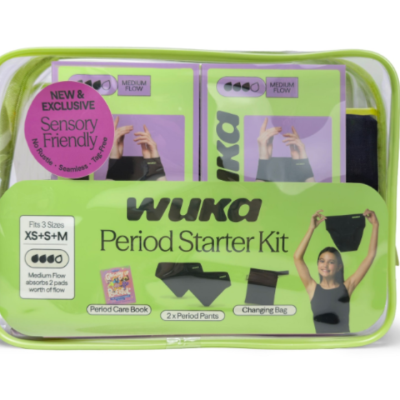
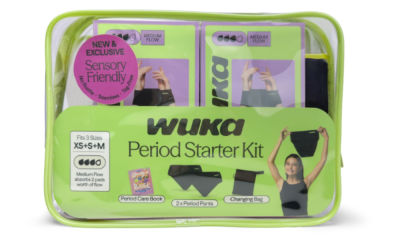
The perfect ‘period pair’: WUKA launches first-ever Teen Starter Kit in Tesco
5 Comments