




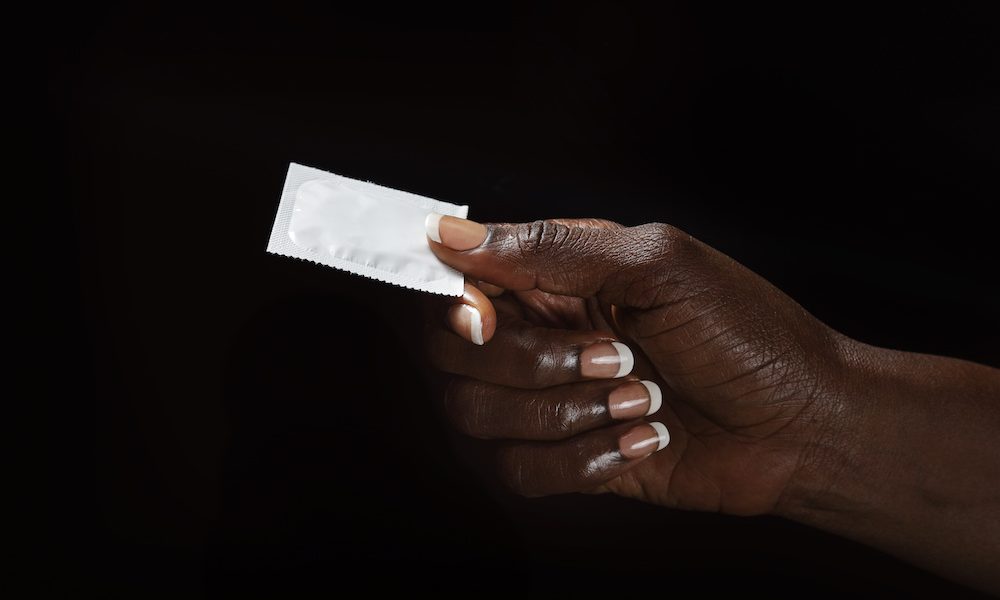
Discrimination, medical mistrust and high costs are just few of the reasons why black women are still underserved when it comes to birth control.
Numerous studies have been conducted about social status, gender and race in relation to contraception access and use. With the US Supreme Court’s recent decision about the right to abortion, the importance of access to birth control comes firstly to mind.
While the Supreme Court decision does not directly impact birth control, experts believe that contraception restrictions could follow the abortion bans.
“The States that are trying to limit abortion from the moment of conception – not even from the moment of pregnancy, as the medical profession would define it – could well try to challenge Plan B, emergency contraception, potentially even IUDS,” said Wendy Parmet, director of the Center for Health Policy and Law at Northeastern University.

Therefore, the Roe decision could potentially impact American women access to birth control, having an even stronger impact on black women.
Happy parents. Healthy children. Stable families. #ThxBirthControl pic.twitter.com/xXgLUSoUVv
— Power to Decide (@powertodecide) July 10, 2022
“The hardest burden is going to largely fall on black women who already have insurmountable challenges just getting health care in this country,” Jennifer Driver, senior director of reproductive rights for the State Innovation Exchange, said. “And now it’s going to be even harder.”
According to WebMD, black women are less likely to use regular birth control than women in other racial groups. Black women aged between 15 and 49 are less likely than other racial groups to use birth control regularly; those between 18 and 24 tend to prefer condoms when they use contraception.
Racial disparities affect birth control access due to the healthcare high costs, to medical distrust, to a desire to avoid hormones, to pharmacy access and to fear about delaying motherhood.
Studies have found that younger black women (aged between 18 and 49) are more likely to have had a range of negative health care experiences. These experiences ranged from being rushed by a health care provider to not being taken seriously about their pain, among other problems.
Among the plenty of reasons why black women are particularly underserved when it comes to birth control access, location plays an important part, especially in healthcare deserts and rural areas.

Choosing method of contraception : Birth control pills, an injection syringe and condom,IUD-method
Driver, a black woman who attended Stillman College in Tuscaloosa said to Nbcnews “They were closing clinics in predominantly Black areas in the heart of Alabama.”
“It’s not just that they closed the clinic, but they didn’t actually tell us where else we could go,” she added. “Had we known, we could have just got across the bridge or a lot closer – but it was intentional,” to promote abstinence.
Dr. Brandi Shah, a family physician from Alabama, said that black women disproportionately deal with a number of reproductive health challenges such as polycystic ovary syndrome and fibroids, where reproductive surgery or contraception is a necessity.
Following the current situation, the dark history of the US seems to resurface. This history includes the government forcing and pressuring black women to limit their fertility. Examples are the “scientific racism” which took place between the early 1900s and 1970s, and birth control and benefits in which low-income black women have been urged to use use permanent birth control.
Hello,
Republicans are mad because I am sharing this information. Too bad!
?⚧ Freedom of choice is an inalienable right. Your bodily autonomy belongs to you.
? Link to my full IG story on how to protect yourself + access abortion in a post-Roe world:https://t.co/JdFoyKdoPl pic.twitter.com/iRk4IJXmvY
— Alexandria Ocasio-Cortez (@AOC) June 28, 2022
While there are policies to help many access birth control for free (such as the Affordable Care Act), there are still massive barriers for those who do not have health insurance, in a state where intrauterine devices or contraceptive implants can cost thousands of dollars for the uninsured.
“The entire overturning of Roe v. Wade removes bodily autonomy, and black women understand that,” Driver said. “We understand the role that this country has played in harms against our bodies – and we understand that we thrive when we re able to decide how we want to parent, when we want to parent, and the communities and structures that need to be around us, for us to parent safely. Our responsibility is really helping legislators understand that point.”


Newsletter
Sign up for free weekly updates
The latest femtech news, research and investment, straight to your inbox.




