




News
Editor’s comment: Is feeling safe the foundation for better health and wellbeing?

Most women know what it feels like to walk home alone at night. Maybe you call a friend, or discreetly slide your keys between your fingers, you probably share your location with a loved one just in case. But we also know how it feels to be cat-called while out running, or have inappropriate jokes made about us in the workplace.
In a post-Me Too world, women are more empowered to speak out about these incidents, yet sexual harassment is still too often dismissed as an inevitable part of women’s everyday lives, ignoring the profound and lasting impact it can have on our health and well-being.
Harassment and sexual violence are not just social harms. The World Health Organization has classified sexual violence as a major public-health issue with research linking it to measurable short-and long-term physical impacts, from cardiovascular health to sleep and chronic pain.

Earlier this month, a study found that women who had experienced stalking were 41 per cent more likely to have a heart attack or stroke. This increased to 70 per cent among those who had filed a restraining order.
Elsewhere, studies have linked childhood sexual abuse and trauma to an increased risk of endometriosis, while women with a history of violence are thought to be twice as likely to develop chronic pain conditons.
Not everyone will experience incidents of these extremes, but the stress that is placed on the mind and body as a result of having to be hypervigilant every time you leave the house to go for a run or enter the workplace, will inevitably take its own toll, even if the true extent of this is difficult to measure.
I recently interviewed the founder of Danish startup, All U Me, which is addressing sexual harassment by developing a range of jewellery that also acts as a safety device. If a woman finds herself in a situation where she feels unsafe, pushing the device three times will alert nearby bystanders via an app, who are trained in how to intervene.
During the interview with All U Me founder, Dorte Knusden, we had an interesting discussion about whether she considered it to be a ‘femtech company’, and where she felt it fit best in the space. It is, of course, femtech in the sense that it is a technological innovation designed primarily to address an unmet need affecting women. The broader sense of community and safety that the app is designed to bring also addresses the fact that women who experience harassment are more likely to go on to develop mental health conditions like anxiety and depression.
But we both agree that All U Me pushes the boundaries of what is typically seen as ‘femtech’. The sector is more often than not associated with reproductive or gynaecological health, health conditions that disproportionately impact women, and occasionally sex and gender differences in diseases. But it often overlooks one important factor in women’s health and wellbeing: feeling safe.
Enabling women to live in a world where they feel safe is crucial for gender equality. When women feel safe, they can fully participate in their communities and contribute to wider society, which we know is important for living a full and meaningful life. But by preventing harassment and violence against them, we would also reduce the risk of women developing mental and physical health conditions further down the line, contributing to long-term health disparities and exacerbating the gender health gap.
Women are more informed and empowered about their health than ever before. We can predict our next period, monitor our glucose levels and test our hormones all from home. Yet we still can’t go for a run without fear of being harassed in the street.
If we want to live in a world where women’s health is taken seriously – and treated equally – we must start from the bottom up, by first examining how society is set up for women and how this could better serve them. The best innovations are not always about the most advanced and expensive technological developments, but those that force us to think differently and put what we already have to better use.
Knusden openly admits that the technology used in her jewellery is no more advanced than Bluetooth and GPS, which all of us access every day via our smartphones. But it’s innovative in the way it shifts the responsibility of women’s safety from the individual to a collective, and in how it centres feeling safe as the foundation to better health, wellbeing and overall quality of life for women. Are these not, after all, the very core principles which underpin all ‘femtech’?












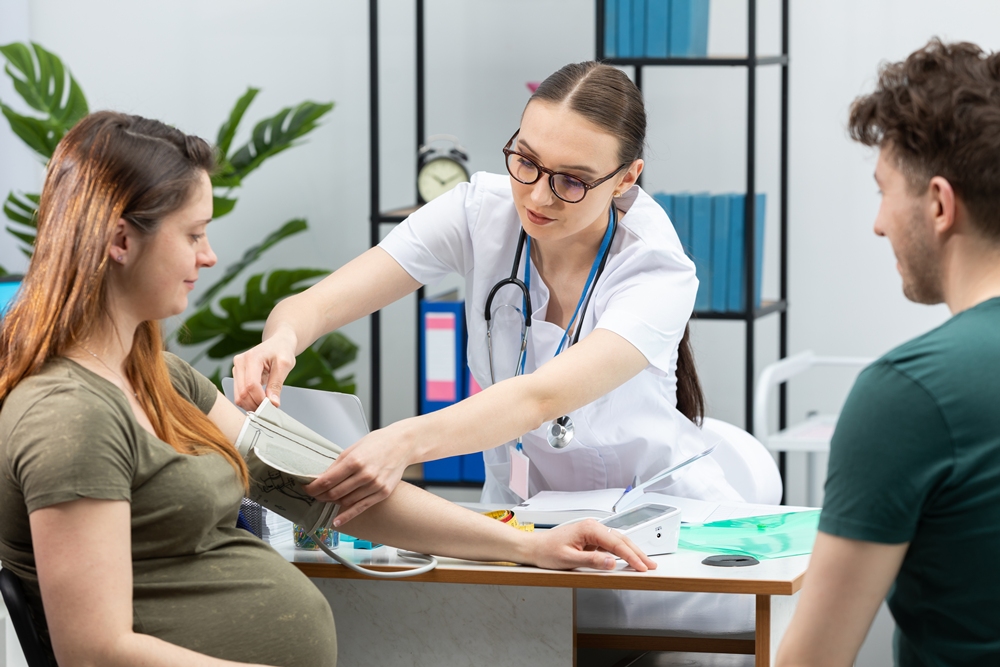
Phthalates found in plastics and personal care products may be linked to higher blood pressure during pregnancy, a study suggests.
Hypertensive disorders of pregnancy, including pre-eclampsia, are a leading cause of maternal mortality in the US.
Higher blood pressure during pregnancy has also been linked to adverse health outcomes for both mothers and children.
While family history and lifestyle are known risk factors, growing evidence suggests exposure to phthalates may also contribute to raised blood pressure during pregnancy.
Phthalates are chemicals found in plastics, personal care products and hundreds of other consumer goods. Some can interfere with the body’s natural hormones.
Kimberly Parra, of Harvard T.H. Chan School of Public Health, said: “Our study suggests that having higher concentrations of personal care products-associated chemicals, known as phthalates, in the body might contribute to elevated blood pressure in pregnancy.
“While our study does not show that phthalates cause high blood pressure during pregnancy, it suggests that reducing exposure to this class of chemicals by limiting personal care products containing these ingredients, particularly those with fragrance, may be a way to address high blood pressure in pregnancy and improve pregnancy health.”
Researchers measured phthalate exposure and blood pressure in 338 pregnant women from the Environmental Reproductive and Glucose Outcomes Study at three points during pregnancy.
They analysed whether higher levels of the chemicals, individually and in combination, were linked to higher blood pressure or an increased risk of pregnancy-related high blood pressure disorders.
Women with higher urine concentrations of phthalates associated with fragrances and personal care products had higher systolic and diastolic blood pressure, markers of increased risk of hypertensive disorders of pregnancy.
Systolic blood pressure is the pressure in the arteries when the heart beats, while diastolic pressure measures it between beats.
Around 13 per cent of participants developed a pregnancy-related high blood pressure disorder.
Women with higher levels of certain phthalates, particularly those found in personal care products, tended to have higher blood pressure later in pregnancy.
Parra said: “More research is needed to better understand these findings, particularly whether the effects are driven by changes in oestrogen-related pathways. Additional studies should also examine the potential role of other phthalates and their replacement chemicals.”
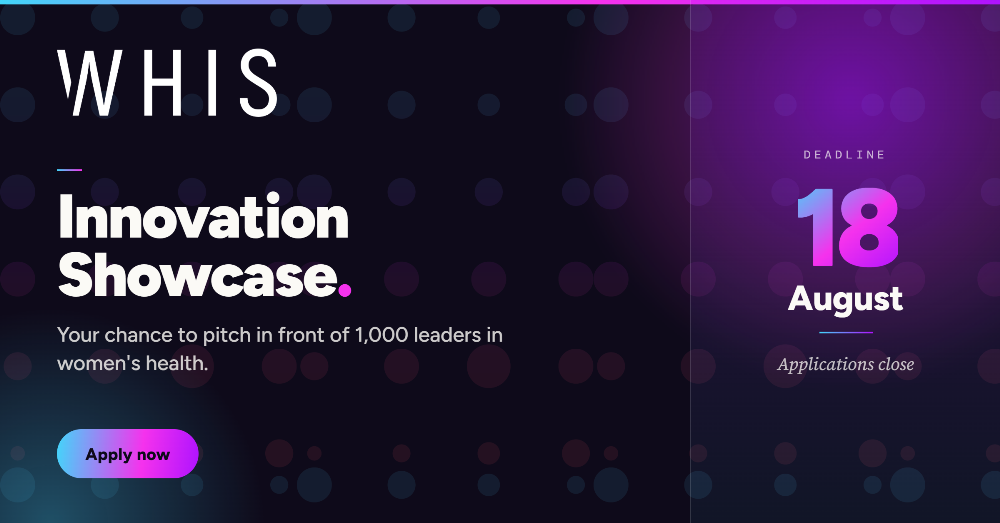
The Women’s Health Innovation Summit (WHIS) has reminded startups that applications for its 2026 Innovation Showcase close on Tuesday, August 18.
The Showcase gives early and growth-stage companies the opportunity to pitch live on stage to the most influential audience in women’s health, at a summit that convenes more than 1,000 senior decision-makers from across the ecosystem, including payers, providers, pharma, and investors.
Now in its eighth year, WHIS takes place October 13–15, 2026 at Encore Boston Harbor.
The event has built a reputation as the leading platform uniting the full women’s health ecosystem, from health systems and health plans to pharmaceutical leaders and the investors funding the next wave of innovation in the space.
A Direct Line to Funding, Partnerships and Adoption
Companies selected for the Innovation Showcase will present directly to an audience with the capital, clinical expertise and commercial relationships to move deals forward.
Past participants have gone on to secure investor introductions, commercial partnerships and clinical collaborations that started as presentations on the WHIS stage and turned into signed agreements.
Applications Reviewed by an Expert Selection Committee
Submissions are being reviewed by a selection committee of leading investors and industry operators, including:
- Parambir Bhangu, Executive Director, External Innovation & Emerging Science, Organon
- Elizabeth Bailey, Co-Founder & Managing Partner, Foreground Capital
- Karla Loken, Founder, Loken and Associates
- Mané Mikayelyan, Associate Partner, DeciBio
- Anna Valcheva, Founder, Managing Director & CEO, Astra Ventures
- Azin Radsan van Alebeek, Co-founder & General Partner, Emmeline Ventures
WHIS is where the women’s health ecosystem comes together to get deals done,” said Poppy Howard-Wall, Event Director of WHIS.
How to Apply
Early and growth-stage companies across digital health, therapeutics, diagnostics, med device and consumer health are encouraged to apply before the August 18 deadline.
Full details and the application form are available at whisusa.com/attend/start-ups.

A third of women surveyed did not know perimenopause could affect mental health, with many experiencing symptoms for months before recognising them.
The survey of 1,000 women found many had been caught off guard by mental health symptoms linked to perimenopause or menopause.
It was conducted by Dynata on behalf of LifeStance Health in June 2026 and included women born between 1960 and 1990 who had, or suspected they had, perimenopause or menopause.
Respondents described anxiety as somewhat or extremely severe in 66 per cent of cases and depression in 54 per cent, with many initially attributing the symptoms to a separate condition rather than a hormonal transition.
Stephanie Eken, chief medical officer at LifeStance Health, said: “Women’s mental health needs change across their life stages, and perimenopause and menopause are among the biggest transitions of all.
“Specialised, life-stage-specific care should be standard practice, and I believe the organisations that build care around this reality, rather than taking a one-size-fits-all approach, will define the next era of women’s health.”
Around 33 per cent of respondents said they did not know perimenopause could cause mental health symptoms.
Almost half, 49 per cent, were surprised that mental health symptoms linked to perimenopause or menopause could last for several years.
A further 22 per cent were surprised that perimenopause could begin shortly after childbirth.
The survey found 74 per cent experienced symptoms for six months or longer before suspecting perimenopause or menopause, while 27 per cent recognised the transition within six months.
Before recognising the symptoms as potentially linked to perimenopause or menopause, 49 per cent believed they were experiencing anxiety as a standalone condition and 39 per cent thought they had depression.
Around 36 per cent were surprised that symptoms linked to perimenopause or menopause could resemble a standalone mental health condition.
Among respondents who tried therapy for perimenopause or menopause-related symptoms, 83 per cent said it was helpful.
Around 82 per cent of those who tried medications such as antidepressants or oestrogen also found them helpful.
Nearly half, 47 per cent, said mental healthcare should be a standard part of perimenopause care, while 59 per cent said they would be more likely to seek mental healthcare if they knew it could meaningfully improve their symptoms.
Around 35 per cent said perimenopause or menopause had a slight to significant negative impact on their overall mental health, while 42 per cent reported a negative impact on mood.
However, 32 per cent reported no impact on their overall mental health and 22 per cent reported no impact on mood.
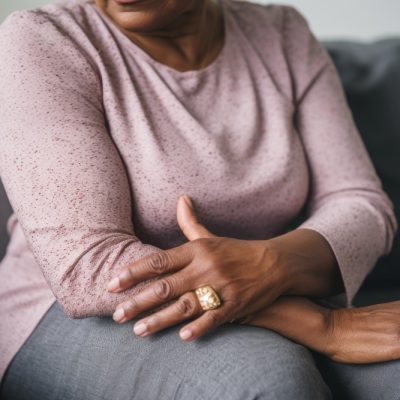
The survey points to women experiencing mental health symptoms for an extended period before connecting them to perimenopause or menopause, with many initially attributing anxiety or depression to an unrelated cause.
That delay may help explain why nearly half did not realise how long these symptoms can persist and why more than a third were surprised they could resemble a standalone mental health condition.
Despite the awareness gap, most respondents who sought treatment, whether therapy or medication, said it had been helpful.
Separate research published in 2023 estimated that menopause symptoms cost the US economy around US$1.8bn a year in lost work productivity.
The estimated cost rose to US$26.6bn when associated healthcare costs were included.
That research was based on more than 4,400 employed women aged 45 to 60, with its authors saying further studies in larger and more diverse populations were needed to confirm the findings.







 News5 days ago
UK femtech investment surges 194% in a decade, research finds
 Wellness1 week ago
Cancer patient receives ‘landmark’ treatment in world-first

 Entrepreneur6 days ago
TidalSense raises £14m to expand five-minute COPD test across NHS

 Sponsored Content2 weeks ago
The room is filling up at WHW Europe 2026 with super early bird pricing ending this Friday

 News5 days ago
Cross-Border Impact Ventures raises US$58m for women and children’s health
 Insight2 weeks ago
Johnson & Johnson offers to pay US$5.5bn to settle talc cancer lawsuits

 Insight1 week ago
Women urged to be wary of menopause misinformation on social media
 News2 weeks ago
Premature menopause is a high blood pressure risk, study finds
1 Comment