




Connect with us

News

Pregnant women urged to get vaccinated amid RSV surge
Published

on

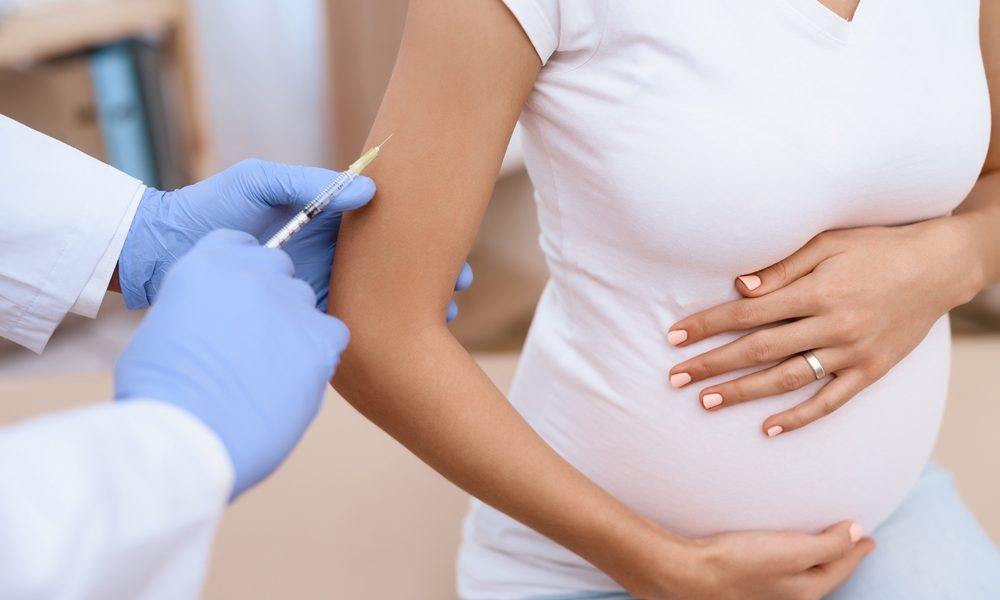
Pregnant women are being urged to get vaccinated against RSV, as NHS England warns of rising cases and expands pharmacy access for those from 28 weeks.

Respiratory syncytial virus (RSV) is a common infection that can cause serious breathing problems, especially in babies and young children.

It is a leading cause of infant death worldwide and a major cause of hospitalisation in young children. Last winter, children with RSV accounted for almost 7,000 hospital bed days in England.

Cases have been rising steadily since early 2025, with nearly half occurring in children aged zero to four years.

Australia’s 2023 winter season – considered a reliable predictor for England – saw the highest number of RSV cases on record.

Kate Brintworth, chief midwifery officer for NHS England, said: “While for most adults RSV only causes mild, cold-like symptoms, for older adults and young children it can lead to serious breathing problems that can end up in hospitalisation.

“Getting vaccinated while pregnant is the best way to protect your baby from the moment they are born, and now is the time for mums to act, to make sure their babies are protected ahead of their first few months this winter, when there tends to be more bugs circulating.”

NHS England is increasing the number of pharmacies offering the vaccine.

Around 100 sites are now providing it across the East of England and the Midlands, up from 40 in the spring. Plans are underway to add up to 150 more, particularly in areas with limited access.

Many of these pharmacy sites will also offer the whooping cough vaccine (pertussis) to eligible pregnant women.

Women from 28 weeks of pregnancy can access the RSV vaccine through their maternity service, local GP practice or participating pharmacy.

Research by the UK Health Security Agency has found the vaccine to be 72 per cent effective in preventing hospital admissions among newborns, when given at least 14 days before delivery.

Older adults aged 75 to 79 are also eligible for the vaccine, which is 82 per cent effective in preventing hospitalisation in this group.

From late September, NHS England will also roll out nirsevimab – a single-dose injection for eligible high-risk and very preterm babies who have not received protection through maternal vaccination. This will not be available in pharmacies or GP practices.

The expanded pharmacy rollout forms part of broader efforts to improve vaccine access and protect vulnerable groups before the peak winter season.

Entrepreneur

Xella launches AI-powered precision health platform

Published

on

Xella Health has launched what it calls the first AI precision health platform built for the XX chromosome.

The company says it aims to address a lack of diagnostic precision and clinical research focused on female biology.

Women make up half of the population and account for 80 per cent of consumer healthcare decisions, but research into women’s health has historically received less funding than male-focused studies.

Kelly Lacob, Xella Health co-founder and chief executive, said: “Women have been trapped in a diagnostic dark age experiencing debilitating symptoms like severe period pain, bloating and GI issues, exhaustion, and brain fog, routinely dismissed by the healthcare system.

“This dismissal results in women being diagnosed four years later than men, on average, for the same conditions, and a seven-to-10-year delay for women to receive an accurate diagnosis for conditions like endometriosis.

Stalling necessary care and treatment results in prolonged suffering with chronic pain, heightened infertility risks, and declining mental health.

Xella is here to replace the systemic medical gaslighting women have endured for generations.

We are handing women the evidence and information they need to advocate for themselves and secure faster, accurate diagnoses before early-stage conditions spiral.”

Xella says its AI examines billions of data points from clinical information and multi-omic biomarkers to assess the probability of more than 130 conditions specific to female biology.

Multi-omic data combines information from several biological areas, including genes, proteins and hormones.

The conditions assessed include polyendocrine metabolic ovarian syndrome, or PMOS, formerly known as polycystic ovary syndrome, as well as perimenopause and endometriosis.

Xella was founded by Lacob, Adriana Dantas and Dr Jesus Ching, who developed the concept while working together on molecular diagnostics at Mammoth Biosciences.

The founders say the platform is designed to provide information about possible underlying causes through advanced testing and long-term care of a kind often available only through expensive concierge services.

They drew on personal experiences to build a service intended to identify small changes in a woman’s biological baseline.

Members complete an initial health questionnaire before having blood taken at a local partner laboratory such as Quest or Labcorp.

A phlebotomist can also visit a member’s home for an additional charge.

The company’s AI analyses biomarker data from genomics, proteins and hormones alongside symptoms, lifestyle risks and medical history.

Xella says this information is used to screen for more than 130 female-specific conditions, including PMOS, Hashimoto’s disease, premenstrual dysphoric disorder, endometriosis and perimenopause timelines.

Hashimoto’s disease is an autoimmune condition in which the immune system attacks the thyroid gland.

Premenstrual dysphoric disorder, or PMDD, is a severe form of premenstrual syndrome that can cause significant emotional and physical symptoms.

The results are processed through Xella’s own dry laboratory, which the company says is certified under the US Clinical Laboratory Improvement Amendments and accredited by the College of American Pathologists.

A dry laboratory analyses data using computing and other non-experimental methods rather than carrying out traditional laboratory procedures.

The findings are turned into a personalised healthcare plan and reviewed with a certified telehealth doctor.

The doctor may recommend immediate clinical action, including personalised hormone therapy or referrals to genetic counsellors, pelvic floor physiotherapists and reproductive endocrinologists.

Reproductive endocrinologists are doctors who specialise in hormones, fertility and reproductive health conditions.

Dantas, co-founder and chief operating officer, said: “Women’s health data has historically been treated in isolated silos – a hormone test here, an ultrasound there – but no one was connecting the dots across the entire biology.

“By tracking unique biological patterns longitudinally across cycles and life stages, we aren’t just providing data, but a clear path forward.”

Xella’s clinical advisers include Dr Allison Kurian, director of Stanford Women’s Clinical Cancer Genetics Program and professor of medicine, epidemiology and population health at Stanford.

They also include Dr Lynn Westphal, a reproductive endocrinology and infertility specialist and chief medical officer of Kindbody.

Xella has received US$4.7m in angel and pre-seed funding from Precursor Ventures, Capital F, Ulu Ventures and Swizzle Ventures.

Other funds and angel investors from healthcare, diagnostics and consumer technology also participated.

Margaret Coblentz, co-founder and general partner of Capital F, said: “Women’s health is one of the highest-momentum categories in the market today, driven by a US$15tn female economy.

“Xella represents exactly how Capital F sees women’s health evolving: deep clinical expertise paired with a consumer-first mindset, and a genuine opportunity to unlock the next generation of healthcare.”

Continue Reading

News

EU committee warns of women’s health ‘blind spot’

Published

on

An EU committee has backed a report warning of systemic inequalities in women’s health research, diagnosis and treatment across Europe.

The European Parliament’s Committee on Women’s Rights and Gender Equality approved the report, which was initiated by Renew Europe.

Women remain under-represented in medical research and clinical trials.

Around 72 per cent of drug trials do not provide data separated by sex and gender, while only five per cent of global research and development funding is dedicated to women’s health.

The report was led by Renew Europe rapporteur Billy Kelleher MEP of Fianna Fáil in Ireland.

It calls for greater investment in women’s health research, stronger inclusion of women in clinical trials and gender-sensitive diagnostics and treatments, particularly for endometriosis, menopause and cardiovascular disease.

Kelleher, first vice-president of Renew Europe, said: “Women’s health remains one of medicine’s biggest blind spots.

“When research, clinical trials and medical data fail to reflect women’s experiences, the result is poorer diagnosis, treatment and care.”

The report also calls for improved access to sexual and reproductive healthcare, including follow-up to the successful European Citizens’ Initiative “My Voice, My Choice”.

Its recommendations include better support for women’s physical and mental health and access to high-quality care throughout pregnancy, childbirth and the postnatal period, free from discrimination.

It also highlights additional healthcare barriers faced by LGBTQI+ people and women in marginalised communities or vulnerable situations.

Kelleher said: “This report is about closing those gaps and ensuring that women’s health is recognised as a core measure of the quality and fairness of our healthcare systems.”

By placing women’s health higher on the political agenda, the report aims to support the implementation of the EU Gender Equality Strategy and shape future European health policies.

A final vote by the European Parliament is expected in September 2026.

Continue Reading

Insight

W Group reveal two-stage programme for Women’s Health Week Europe 2026

Published

on

Women’s Health Week Europe 2026 has released its full programme ahead of the October event at The Emirates Stadium in London on 7–8 October, with 700+ senior decision-makers and 80+ speakers confirmed across what will be the organisation’s most ambitious edition to date.

For the first time, the event will run across two dedicated stages, each built around a distinct set of questions facing the women’s health industry.

The Global Stage takes on the macro forces shaping the sector: where capital is flowing, how AI is transforming diagnosis and treatment, the gender data gap, wearable technology, stigmatised markets, and the policy landscape across Europe.

Confirmed speakers include Merete Clausen (EIF), Frida Polli (MIT), Nichole Young-Lin (Google), Alison Cave (MHRA), Emily Darlington MP, Kerry Buckley (Boots), Tim Davis (LSEG), Henriette Hessen (Verdane), Hillary Ball (Atomico), and Christine Hockley (British Business Bank).

The Scale Stage runs in parallel, focused on execution: how to navigate regulatory approval pathways, survive the valley of death, build the evidence stack that wins payers and partners, implement AI into a women’s health business, and position for acquisition. Sessions include a reverse pitch format, in which corporates and investors pitch to founders, and a founder’s guide to getting acquired.

The programme also includes two Pitch competitions, one per day, across the Consumer & Tech and Medical Devices & Therapeutics categories, with 16 finalists competing on the mainstage in front of the full delegate audience.

Every session is case study-driven, with speakers selected on the basis of having lived the problem they are on stage to solve.

Women’s Health Week Europe 2026 takes place 7–8 October at The Emirates Stadium, London. The full programme is available now.

View the 2026 programme here

Pre-agenda pricing ends 26 June

Tickets are currently available at pre-agenda pricing, with savings of up to £600 off standard pricing. The deadline is midnight on Friday 26 June. After that, prices go up.

Secure your place: https://wplatform.co/summits/womens-health-week-europe-2026?utm_source=advocacy&utm_medium=ext_email&utm_campaign=whw-europe-26-femtech-world#tickets

Also at The Emirates: Women’s Sport Summit 2026

The day before WHW Europe, on 6 October, The Emirates Stadium will also host the inaugural Women’s Sport Summit, a dedicated one-day event bringing together 400+ attendees from across sport, business, and investment. Focused on the commercial side of women’s sport, the Summit covers the full sports cycle: money, product, and market. Where women’s sport means business.

Find out more: https://wplatform.co/summits/womens-sport-summit-europe-2026?utm_source=advocacy&utm_medium=ext_email&utm_campaign=whw-europe-26-femtech-world

Continue Reading

Trending

Copyright © 2025 Aspect Health Media Ltd. All Rights Reserved.

