




Cancer
MIRASOL trial shows benefits for certain ovarian cancer patients

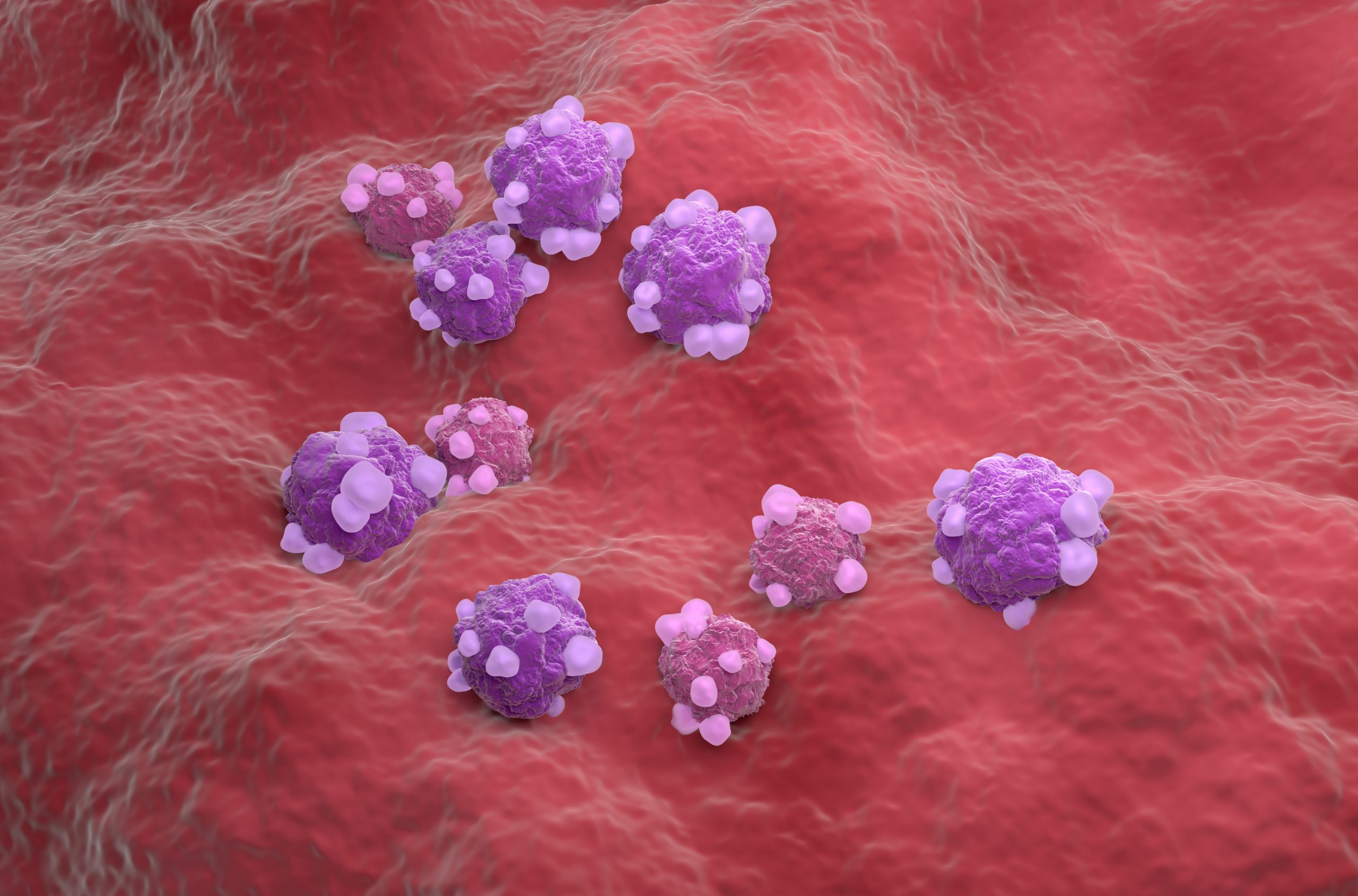
AbbVie has announced the final analysis of the confirmatory Phase 3 MIRASOL trial evaluating the efficacy and safety of ELAHERE (mirvetuximab soravtansine-gynx) in women with folate receptor alpha (FRα)-positive platinum-resistant ovarian cancer (PROC) compared to chemotherapy.
The results showed that at 30.5 months median follow-up, treatment with ELAHERE continued to show significant improvements in progression-free survival (PFS) and overall survival (OS) compared to investigator’s choice (IC) chemotherapy.
Ovarian cancer patients often present with late-stage disease and are historically first treated with platinum-based chemotherapy, which they may become resistant to and require another therapy, such as ELAHERE.

“Ovarian cancer can be devastating, and when cancer cells stop responding to chemotherapy patients may feel hopeless about their journey. The data presented today reinforce the importance of ELAHERE as a transformative therapy for patients with limited options,” said Svetlana Kobina, vice president, oncology medical affairs, AbbVie.
“We remain steadfast in our commitment to bring forward innovative therapies that improve the lives of patients with difficult-to-treat cancers.”
The Phase 3 MIRASOL study included 453 patients with high-grade serous epithelial PROC whose tumours express high levels of FRα and had been treated with up to three prior therapies.
Key findings from the 30.5-month median follow-up include that ELAHERE treatment achieved superior efficacy versus IC chemotherapy, representing a 37 per cent reduction in the risk of tumour progression or death and a higher objective response rate of 41.9 per cent versus 15.9 per cent.
It also demonstrated clinically meaningful overall survival for patients receiving ELAHERE compared to IC chemotherapy, representing a 32 per cent reduction in the risk of death.
“The final data showcase the significant improvement in overall survival benefit of treatment with ELAHERE compared to standard of care chemotherapy,” said investigator and presenter, Toon Van Gorp, professor of Gynecologic Oncology, University of Leuven.
“The significant improvements in survival, along with the well-characterized safety profile, reinforce ELAHERE as an emerging standard of care for difficult-to-treat ovarian cancer and warrants further study of this medicine in earlier treatment settings.”



A drug targeting a key regulator in triple-negative breast cancer reduced tumour growth and cancer stem cell viability in laboratory models.
Triple-negative breast cancer is an aggressive subtype that disproportionately affects women under 40 and accounts for about 15 to 20 per cent of breast cancers.
The disease lacks receptors for oestrogen, progesterone and the HER2 protein, which are targeted by several cancer drugs, making it particularly difficult to treat.

Researchers from the National University of Singapore’s Yong Loo Lin School of Medicine investigated mechanisms that allow triple-negative breast cancer cells to spread and resist treatment.
They examined regulators of Wnt signalling, a pathway involved in processes including cell growth and movement, and identified a master regulator called DP103.
DP103 is a gene that controls a major biological process. The researchers found it creates a cycle in which cancer cells continue to grow and spread while resisting treatment and maintaining cancer stem cells linked to disease recurrence.
The team then investigated whether a targeted drug known as Supinoxin, or RX-5902, could block DP103 and its effects in triple-negative breast cancer.
Analysis of 21 samples, including patient tumour tissue, laboratory-grown breast cancer cells and organoids derived from local cancer patients, found that the drug reduced cancer stem cell viability by 40 to 60 per cent.
Tumour growth in laboratory-grown tumour models fell by about 50 per cent.
In laboratory models, treatment also reduced tumour size by around 90 per cent while largely sparing healthy cells.
It also extended survival, with half of the treated laboratory models reaching 70 days and beyond, compared with none in the untreated group.
DP103 had previously been identified as a biomarker for triple-negative breast cancer by a team led by Alan Prem Kumar, an assistant professor with the NUS Centre for Cancer Research and principal investigator for the new study.
RX-5902 is already being studied as a treatment for breast cancer, and Kumar said the findings could help identify patients who may be more likely to benefit.
“Our findings suggest that DP103 could potentially serve as a diagnostic biomarker to identify the patients most likely to benefit from RX-5902 treatment, paving the way for a more precise, personalised approach to treating triple-negative breast cancer,” he said.
“Instead of treating all patients the same, future clinical trials could focus on those whose tumours have high levels of DP103, where the therapy is expected to have the greatest impact,” said Kumar.
First author Cai Wanpei said RX-5902 could prevent beta-catenin, a protein whose mutation is associated with various cancers, from entering the nucleus of human cells and switching off genes that drive cancer growth and spread.
“This slows tumour progression and triggers apoptosis – the natural death of cancer cells,” said Cai, who was a PhD student at the NUS Centre for Cancer Research and NUS Medicine’s pharmacology department during the research.
Study co-author Celestial T. Yap said triple-negative breast cancer remains particularly difficult to treat because conventional treatments such as surgery, chemotherapy and immunotherapy may not work for all patients.
She said DP103 could represent a “biological vulnerability” in the disease.
“This discovery offers new insights that could support more precise patient selection and open the door to better targeted strategies for durable disease control and improved clinical outcomes,” said Yap, an associate professor with the NUS Centre for Cancer Research and NUS Medicine’s physiology department.
The researchers said abnormal Wnt signalling also drives several other cancers, meaning the findings could offer avenues for treating other aggressive cancers.
Their next steps include validating DP103 as a predictive biomarker in larger patient groups and further developing therapies targeting the regulator for clinical testing.
The team will also investigate combining RX-5902 with existing therapies to further improve treatment outcomes.


Australia’s drug advisory committee has recommended wider funding of triptorelin for women with breast cancer or endometriosis.
The recommendation comes after AstraZeneca announced plans to remove Zoladex from the market, risking leaving more than 7,500 women with breast cancer without an alternative treatment.
Both medicines block the release of oestrogen and testosterone and can be used as part of treatment, or for fertility preservation, in some forms of cancer.

The Pharmaceutical Benefits Advisory Committee met urgently in July and recommended making triptorelin unrestricted under the Pharmaceutical Benefits Scheme (PBS), which would mean it was funded for all uses.
The drug has been listed on the PBS for prostate cancer since 2006.
Triptorelin and Zoladex can also be used to treat endometriosis and to block puberty for either precocious puberty or gender-affirming care.
Vicki Durston, director of policy and advocacy at Breast Cancer Network Australia, described the recommendation as “a significant step forward” and said access to the medicine could mean the difference between life and death for some patients.
She said some women had already chosen to have their ovaries removed because of uncertainty over Zoladex supplies.
Marilla Druitt, Victorian state chair of the Royal Australian and New Zealand College of Obstetricians and Gynaecologists, said it remained unclear whether triptorelin would work exactly the same way as Zoladex, but the recommendation was likely to be positive for patients with endometriosis and pelvic pain.
She said: “I’m glad we’ve got an alternative.”
“That’s fantastic, and it remains to be seen whether or not it will be as good, but pain is so complex, pain is a really hard thing to study because it’s got so many contributors.”
Druitt said further research would be needed after the medicine was introduced.
If accepted by the federal government, the recommendation would also allow PBS funding of triptorelin for puberty suppression in precocious puberty and gender-affirming care.
This would make gender-affirming care federally funded through the PBS for the first time and would remove a financial barrier for transgender children in Queensland and the Northern Territory.
Stuart Aitken, medical director of Gender Health Australia, said the recommendation had sparked “absolute joy” among his patients.
He said: “It takes away a huge barrier to accessing evidence-based care.”
“It means that the ban has a very limited effect.”

An AI tool has identified microscopic breast cancer patterns that could help medical professionals better forecast disease progression.
The tool, called CenSegNet, was developed to analyse hundreds of thousands of cells in tumour samples and detect abnormalities in structures known as centrosomes.
Centrosomes are small structures inside cells that ensure DNA is divided equally during cell replication. Researchers say abnormalities in these structures have been considered a hallmark of cancer for more than a century.
In cancerous tissue, centrosomes can replicate excessively, driving the progression of the disease.
Scientists at the University of Southampton used the system to study tissue from 127 breast cancer patients being treated at University Hospital Southampton.
More than 330,000 centrosomes were analysed, revealing two distinct abnormalities that had previously been considered part of the same process.
One involved cells developing too many centrosomes, while the other involved centrosomes becoming abnormally enlarged.
Researchers found the two defects behaved independently and could occur in different areas of the same tumour.
Dr Salah Elias, of the University of Southampton’s school of biological sciences and institute for life sciences, said: “For more than a century, centrosome abnormalities have been recognised as a hallmark of cancer, but studying them in patient tissues has been extremely challenging.
“CenSegNet allows us to analyse these defects at single-cell resolution across entire tumours and uncover patterns that were previously impossible to see.
“Rather than viewing centrosome abnormalities as a single phenomenon, our study shows that they have distinct biological states with different spatial distributions and clinical associations.”
The platform also helped uncover a link between different centrosome abnormalities and features of cancer.
Tumours with high levels of enlarged centrosomes were more aggressive, while patients whose cells had lower levels had a better chance of survival.
Dr Elias said: “Specific combinations of defects may influence how a tumour grows, invades surrounding tissues and responds to treatment.
This opens the door to developing new biomarkers and, ultimately, more personalised treatment strategies.”
Researchers hope AI could eventually be used to track disease by analysing the behaviour of cell structures.
The team also plans to combine CenSegNet with more data to explore whether it could help guide treatment decisions.












 Entrepreneur2 weeks ago
Applications close August 18 for Women’s Health Innovation Summit 2026 Innovation Showcase

 Menopause2 weeks ago
Third of women unaware of perimenopause mental health impact

 Fertility7 days ago
Chelsea FC Women to launch first-of-its-kind player fertility fund

 Entrepreneur2 weeks ago
Women’s Health Week Europe 2026 releases fully populated agenda ahead of October summit

 Menopause2 weeks ago
Menopausal hormone therapy may lower dementia risk, study suggests

 Hormonal health2 weeks ago
We are wrapping our children in plastic and calling it care

 Menopause7 days ago
anna perimenopause app launches across 39 markets

 Pregnancy2 weeks ago
Chemicals in plastics may be linked to high blood pressure during pregnancy