




Diagnosis
Women pay for AI to boost mammogram findings

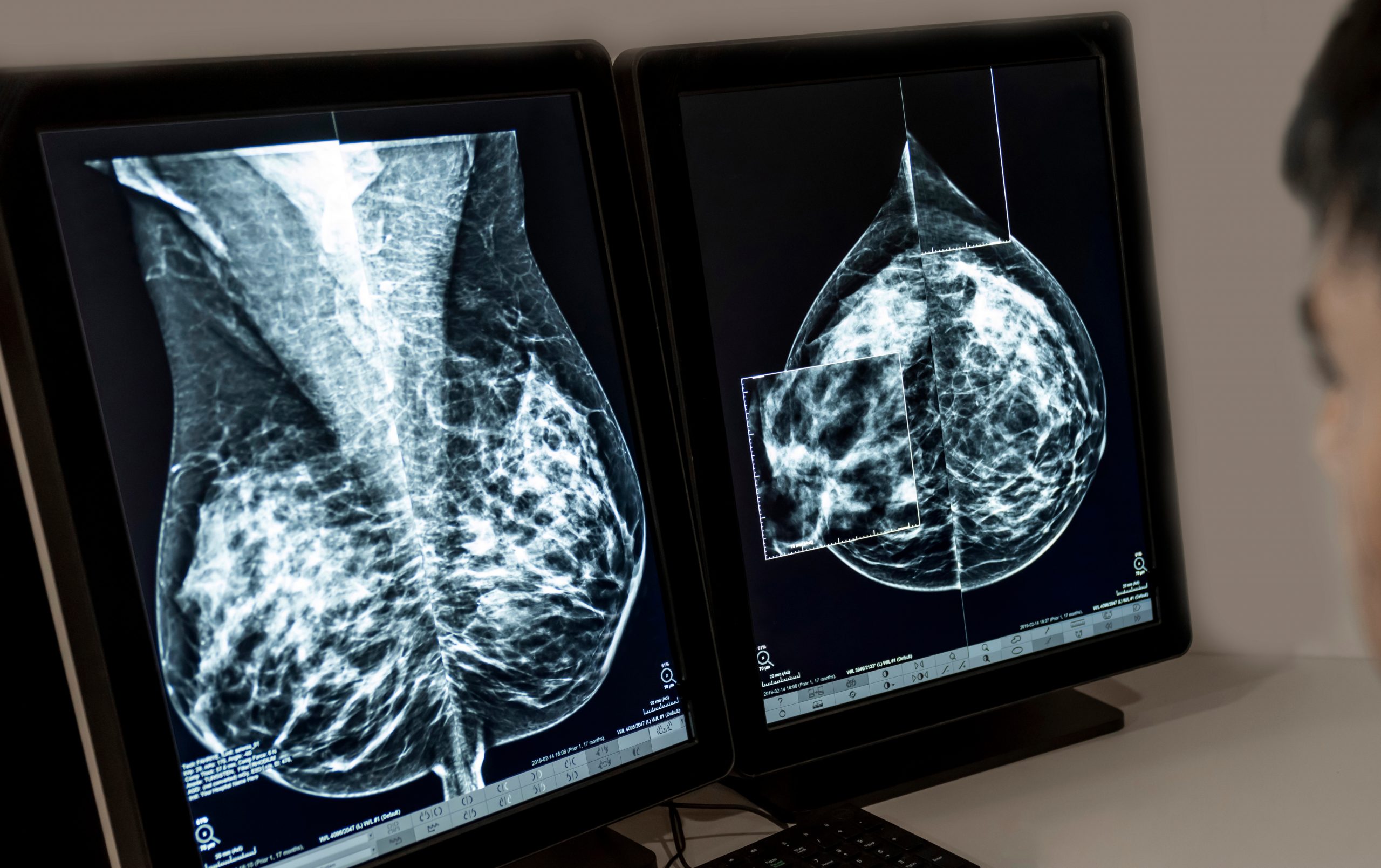
More than a third of women across 10 health care practices in the US chose to enrol in a self-pay, artificial intelligence (AI)-enhanced breast cancer screening programme, and the women who enrolled were 21 per cent more likely to have cancer detected, according to new research.
AI has shown great promise in mammography as a “second set of eyes” for radiologists providing decision support, risk prediction and other benefits.
Despite its promise, AI is not yet reimbursed by insurance in the United States, which likely is slowing its adoption in the clinic. Some practices have elected to offer enhanced workflows enabled by AI at additional cost, much like what was done when digital breast tomosynthesis was originally deployed.
For the study, researchers investigated the impact of AI—including a safeguard review—as a self-pay option in screening mammography.
A self-pay, AI-powered screening mammography program was offered to patients across 10 clinical practices, ranging from a few sites up to 64 sites at the largest practice. Women who enrolled had U.S. Food and Drug Administration-compliant AI software applied to their mammograms.
An expert breast radiologist provided a third, safeguard review in cases where there was discordance between the first reviewer and the AI.
Out of the 747,604 women who underwent screening mammography over an initial 12-month period, the overall cancer detection rate was on average 43 per cent higher for enrolled women than for unenrolled women. The pattern of a substantially higher cancer detection rate in enrolled women was observed at all 10 practices.
Further analysis attributed 21 per cent of the increase in cancer detection to the AI programme. The researchers credited the remaining 22 per cent increase in detection to the fact that higher-risk patients chose to enrol more frequently.
“These data indicate that many women are eager to utilise AI to enhance their screening mammogram, and when AI is coupled with a safeguard review, more cancers are found,” said study senior author Gregory Sorensen, from DeepHealth.
The recall rate—the rate at which women were called back for additional imaging—was 21 per cent higher for enrolled versus unenrolled women. Relatedly, the positive predictive value for cancer was 15 per cent higher for the enrolled women, indicating that each recall resulted in more cancer diagnoses in the enrolled population.
“This is the first report on results from a program that provides an AI-powered enhanced review that patients can elect to enrol in,” said study lead author Bryan Haslam, from DeepHealth.
“The AI-driven enhanced review programme leverages AI in a novel workflow to ensure women with suspicious findings get expert level care that could help detect many more breast cancers early.
“The number of women electing for this program is now at 36 per cent and growing, and the rate of cancer detection continues to be substantially higher for those women.”
In the future, the researchers hope to better quantify the benefit of the AI-driven safeguard review with prospective randomised controlled trials that would eliminate the self-selection bias and provide the highest level of evidence.




Menopause is often absent from women’s electronic health records, a study of nearly 396,000 women has found.
Researchers found menopause appeared almost seven times more often in participant surveys than in electronic health records (EHRs).
The findings suggest important reproductive health information, including age at menopause, may often be missing from health records used for research.

Audrey Hendricks, associate professor of bioinformatics at CU Anschutz and the study’s principal investigator, said: “Ultimately, we cannot study what we do not measure. We cannot treat what we do not know.
“Menopause has enormous implications for women’s health, but if we don’t consistently capture when menopause occurs and other important reproductive health information, we limit our ability to understand how this transition affects disease risk and health outcomes.”
Researchers at the University of Colorado Anschutz analysed data from women taking part in the National Institutes of Health’s All of Us Research Program.
They compared menopause information reported by participants in surveys with menopause diagnoses recorded in their electronic health records.
Around 193,000 menopause observations were identified in survey data, compared with approximately 28,000 diagnoses in EHR data.
Menopause was documented in electronic health records for only about 7 per cent of women in the dataset.
Nearly all participants with a menopause diagnosis recorded in their EHR also reported menopause in survey data. However, substantially fewer women had menopause documented in their health records.
Other important information was also frequently unavailable, including age at menopause, which researchers may use when examining links between menopause and chronic disease risk.
Menopause is a physiological transition that can affect cardiometabolic health and many other aspects of women’s health.
Researchers said relatively little is known about how factors including the timing and type of menopause influence health outcomes across diverse populations.
Large-scale programmes such as All of Us combine participant surveys, electronic health records and genomic data, but menopause-related research depends on relevant reproductive health information being available.
Missing menopause information can make it harder to investigate how the transition relates to health and disease.
The findings may also help researchers using All of Us data define menopause-related study populations, design studies and estimate how many participants are needed.
Hendricks said: “We have an enormous opportunity to use large-scale datasets to understand women’s health across the menopause transition and to identify who may be at greater risk for disease.
“But we need to make sure that the information researchers need is actually being collected.
“We must do a better job of capturing women’s health information, including reproductive health and measures related to menopause.”
Researchers said more complete and consistent collection of menopause and reproductive health information could help future studies examine factors such as age at menopause and their relationship with disease risk and health outcomes.














 Hormonal health2 weeks ago
Major UK study could be a ‘game-changer’ for heavy periods and endometriosis

 Pregnancy1 week ago
KOVE Medical raises €1.7 million to improve safety of foetal surgery

 Fertility2 weeks ago
One week left to apply: W Accelerate with Merck KGaA and M Ventures

 Pregnancy1 week ago
UK study aims to transform maternity care for high-risk pregnancies

 Mental health2 weeks ago
PMDD after SSRIs or hormones: Why the brain may be the missing treatment target

 Diagnosis2 weeks ago
Ark Surgical secures further institutional backing to accelerate US expansion

 Menopause6 days ago
Menopause hormone treatment may ease brain fog, study suggests

 Entrepreneur3 days ago
Last chance to save on Women’s Health Week and Women’s Sport Summit: Early Bird pricing ends 11 September