




News
Robotic-assisted surgery for genital prolapse shows promise


The first surgery in the world using a robotic-assisted minimally invasive method for genital prolapse has been shown to be successful, according to new anaylsis.
If a woman’s pelvic floor is severely weakened, the uterus and vagina may descend. As a result, affected women suffer from prolapse symptoms and possibly bladder, bowel and sexual dysfunction.
If conservative treatment options do not help, the uterus does not necessarily have to be removed, but can be surgically suspended using a synthetic mesh.
Since 2022, single hospitals in Germany have also been performing this procedure using a body’s own tendon.
The urogynaecology team of the Department of Gynaecology and Gynaecological Oncology at the University Hospital Bonn (UKB) has developed this surgical procedure even further. It is the first surgery in the world using the robotic-assisted minimal invasive method – with success, as the analysis of the first ten surgeries shows.
The study has now been published in the International Urogynecology Journal.
The pelvic floor supports our organs in the abdomen and holds them firmly in place.
In women, however, the pelvic floor can be weakened by pregnancy and vaginal births, for example, or due to heredity, age or weight.
Prof Dr Dominique Könsgen-Mustea is Head of the Division of Urogynecology at the Department of Gynaecology and Gynaecological Oncology at the UKB.
The researcher said: “Almost every second woman suffers from a pelvic floor disorder in the course of her life.”
One possible consequence of such disorder is that the uterus descends.
A slight prolapse hardly causes any discomfort, but if it is more severe, it can lead to bladder, bowel or sexual dysfunction, pain in the lower abdomen and back and bulge symptoms.
Sometimes the uterus descends so far that, the vagina bulges outwards or the uterus prolapses through the vagina – which puts a lot of physical and psychological strain on affected women.
Professional pelvic floor training, medication and pessaries, which are positioned in the vagina to support the organs, can help in mild forms of uterine prolapse.
Robotic-assisted procedure with the body’s own tendon
If the symptoms are more severe, surgery can be recommended.
However, the uterus is not necessarily removed: It can be surgically suspended back into its anatomical correct position.
Such a surgical procedure is usually performed using a synthetic mesh.
Recently, it has also been possible to use a body’s own tendon from the thigh – an autologous tissue that has long been used by trauma surgeons as an established procedure for cruciate ligament reconstruction: Using a small incision in the back of the knee, part of the posterior thigh tendon is removed and then fixed to the uterus or cervix.
Prof Könsgen-Mustea, who established the technique at the UKB, said: “The advantage of this method is that no foreign material enters the body.
“And removing the tendon also has no negative effects on the leg: it remains pain-free and, in the long term, unrestricted in terms of mobility.”
Prof Könsgen-Mustea’s team has further developed this surgical technique: In June 2022, it performed the world’s first robotic-assisted cervical suspension using a body’s own tendon.
Since then, the UKB team has been treating women suffering from uterine prolapse with the new procedure.
Dr Carolin Schröder is a gynaecologic specialist from the Department of Gynaecology and Gynaecological Oncology at the UKB.
She said: “The first ten robotic-assisted cervical suspension procedures in the period from June 2022 to February 2023 have now been analysed for their safety, feasibility and effectiveness.”
The gynaecological team examined the objective and subjective patients outcome three and twelve months after the procedure.
Promising surgical technique
The results showed that the ten patients who underwent robotic-assisted surgery had a positive clinical outcome after twelve months as a result of the uterine suspension.
Dr Schröder said: “After three and twelve months no patient suffered from a prolapse.”
In addition, there were no intraoperative or postoperative complications.
Prof Könsgen-Mustea said: “With the DaVinci-robot, we have a highly magnified 3D-image and can therefore perform the surgery very precisely.
“This makes the procedure tissue sparing and bleedingless, and we can easily reach all deep compartments of the pelvic floor.
The patients also reported about the high satisfaction with the surgical outcome.
Head of Urogynecology at the UKB wrote: “This pilot study shows excellent clinical outcomes, with an improved quality of life for the patients.”
The robotic-assisted cervical suspension is therefore considered a promising surgical technique.
Meanwhile, an international network led by the UKB has been established, in order to analyse consecutively the outcome of patients treated by this procedure.
Image: University Hospital Bonn / Alessandro Winkler



Flexible working could help more women entrepreneurs become leaders of family firms by making it easier to balance work and family life, new research suggests.
Digital workplace tools may allow women to take a greater role in strategic decision-making and other leadership duties while maintaining family responsibilities. the report found.
They could also challenge the assumption that effective leaders must always be physically present at work.

Co-author Professor Kirk Chang said: “Technology such as Microsoft Teams and cloud-based collaboration platforms can create new opportunities for talented women to demonstrate leadership. But lasting change depends on family businesses judging leaders by their performance rather than their physical presence.”
Researchers from the University of East London say tools such as Microsoft Teams, Zoom, Google Workspace and cloud-based business systems can shift the focus from office attendance to measurable performance.
Cloud-based systems are online services that give employees remote access to documents, software and business information.
Family businesses are often considered family-friendly employers, but women can still face barriers to senior positions.
Leadership in these companies often passes between generations through informal family decisions rather than formal recruitment.
Traditional expectations around gender roles can make it harder for women with caring responsibilities to be seen as potential successors, particularly when being visible in the workplace is treated as a sign of commitment.
The researchers say digital workplace technology could make women’s contributions more visible while helping them manage work and family responsibilities.
Their proposed framework sets out four ways digital working could support women’s progression: building confidence, creating opportunities to take part in strategic decisions, increasing business knowledge and changing perceptions of who is ready to lead.
The authors stress that technology alone will not remove the barriers women face in reaching leadership roles. Family businesses must also develop cultures that value results over physical presence and actively support women pursuing senior positions.
Dr Ozlem Ozdemir, from the Royal Docks School of Business and Law, said: “Family businesses are built around close relationships, but that does not automatically make them easier places for women to become leaders. It can be tougher for women family members to be seen as ambitious professionals.
“Digital workplace tools can help shift the focus from who is seen most often in the office to who is making the strongest contribution.”
The paper draws its conclusions from existing research and proposes a framework showing how digital workplace innovation may improve work-life balance and support more women to become future leaders in family businesses.

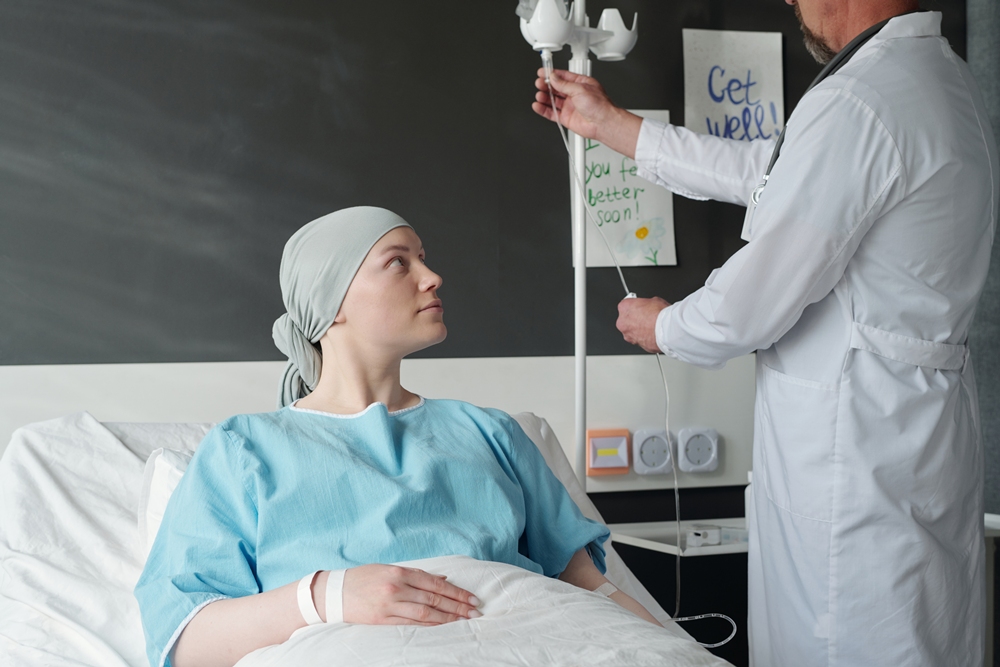
A woman with advanced ovarian cancer has become the first patient globally to receive an experimental off-the-shelf cell therapy.
Tracy Tomlinson, 58, was given the experimental drug ZI-MA4-1 at the Christie NHS Foundation Trust in Manchester.
The treatment forms part of a clinical trial evaluating its use against several cancer types, including ovarian, lung, head and neck cancers and sarcomas.
The Christie is leading the trial, with a second site at the Royal Marsden in London. It involves patients with advanced cancers who may have few other treatment options.
Tomlinson, from Chadderton in Greater Manchester, has undergone surgery and multiple rounds of chemotherapy since she was diagnosed in 2020.
She said: “They’ve got rid of the cancer twice but then it came back about two and a half years ago, and we’ve never seemed to get rid of it since then.
“The chemotherapy has shrunk it but when treatment stops, it has come back.
“It is a lot to live with and there’s been ups and downs – there’s been elation, there’s been disappointment, and bits in between.
“But I try very, very hard to remain very positive. Every day that I wake up is a positive. You’ve got to have hope.”
ZI-MA4-1 combines two approaches to cancer treatment.
It uses natural killer cells, known as NK cells, which are specialist immune cells that identify and destroy abnormal cells.
T-cell receptors on the donor cells are also engineered to recognise and target tumours producing a protein called Mage-A4.
Mage-A4 is found in several types of cancer and is considered by experts to be a potential target for attacking abnormal cells.
Unlike personalised treatments, ZI-MA4-1 is designed as an off-the-shelf therapy using immune cells from donors.
The treatment is manufactured in advance rather than being made separately for each patient, with hundreds of doses potentially produced from one manufacturing batch.
Experts believe this approach could make advanced cell therapies available to more patients, more quickly and at a lower cost.
Tomlinson was diagnosed with ovarian cancer that had spread shortly before Christmas 2020 and began treatment immediately.
By summer 2021, scans showed no evidence of disease, but the cancer returned around a year later.
Despite further treatment and 48 chemotherapy infusions, the cancer continued to return.
The former Civil Service manager was diagnosed with stage 3C ovarian cancer, meaning cancer growths had spread into the peritoneum, the tissue lining the abdominal cavity.
She currently has a tumour between her liver and kidney, as well as smaller tumours elsewhere.
She said: “They’ve got rid of the cancer twice but then it came back about two and a half years ago, and we’ve never seemed to get rid of it since then.
“The chemotherapy has shrunk it but when treatment stops, it has come back.
“It is a lot to live with and there’s been ups and downs – there’s been elation, there’s been disappointment, and bits in between.
“But I try very, very hard to remain very positive. Every day that I wake up is a positive. You’ve got to have hope.”
Tomlinson said she had been target-driven during her working life and had set herself high standards.
“But you can’t control cancer,” she said. “What I can control is how I look at it, how I deal with it, and trying to eat healthily and taking the positives in everything.
“And I’ve learned to appreciate the smallest of things that we take for granted – and the people around you and what they mean to you.
“Also, the beauty of outside and the trees and the colour of the trees and the birds singing.
“We just go from A to B, don’t we? Busy, busy, busy. But we never slow down and take in the wonder of what’s around us.
“I often think, ‘I’m still here’, and that’s helped me think, ‘Why can’t I still be here in 10 years?’, ‘Why can’t I still be here in 15 years?’
“And I believe taking all the treatments offered to me is helping me kick that can a bit further down the road.
“I don’t want to go anywhere. I’ve still got a lot of things I want to do and things I want to achieve.”
Tomlinson said her husband Paul, whom she married in 2022, is her “rock”. She is also close to her son Harry, 28.
Last year, she was referred to the Christie’s early-phase clinical trials team for extensive screening and learned she was eligible for the Zima-101 clinical trial.
She said: “I decided almost straight away that I was going to go for it.
“Then afterwards you think, ‘Am I doing the right thing?’, because it is a little bit scary being the first person in the world to have the treatment.”
She has received three infusions of the therapy, with the option of a fourth depending on her scan results.
She said: “If it benefits me, absolutely fantastic. But if it benefits other people in the future, that’s important too.
“I don’t want to have gone through everything I’ve gone through for nothing. I want to feel like I have made a difference.”
Professor Fiona Thistlethwaite, consultant medical oncologist at the Christie, said: “While this is an early-stage study primarily focused on safety, it represents an exciting step forward in efforts to develop new treatment options for people like Tracy with advanced solid tumours.
“We hope the knowledge gained will help shape future cancer treatments and ultimately improve outcomes for patients.”
Dr Jon Lim, consultant medical oncologist in advanced immunotherapy and cell therapy at the Christie, told PA: “What’s very exciting about this is that these are essentially not kind of antibody-based, but living cells.
“These are live immune cells that are infused in hundreds of millions back to the patient, and the idea of this is that it is a little bit more targeted.
“The reason this is very interesting is because this is the first of its kind globally in this approach, where it’s taking donor immune cells, manipulating or engineering them, and putting them into the recipient.
“Tracy is essentially getting somebody else’s immune cells that have been engineered to ‘see’ her cancer.
“We’re very excited. This is a novel approach in the cell therapy space. We are also really showcasing what we can do in the UK.”
Namir Hassan, chief executive of Norwegian company Zelluna, which makes ZI-MA4-1, described Tomlinson’s first dose as a “landmark moment”.
He said: “It represents the moment when years of research moved beyond the laboratory and into the clinic, offering a new potential treatment option for patients facing advanced cancers with limited alternatives.”
Only around 15 per cent of women survive ovarian cancer for five years or more after diagnosis.
Dr Diana Hernandez, director of immune and advanced therapies at Anthony Nolan, said: “NK cells have huge potential as off-the-shelf therapies, and this trial takes us one step closer to a wider application of engineered NK cells in the targeted treatment of cancers.”

Daily beetroot juice may help support kidney health during pregnancy in women with chronic kidney disease, early research suggests.
Pregnancy puts additional strain on the kidneys. Around half of women with moderate to severe chronic kidney disease experience a decline in kidney function while pregnant.
Despite these risks, outcomes for pregnant women with the condition have changed little over the past 30 years.
Many medicines used to manage kidney disease are also unsuitable during pregnancy, meaning women often need to stop taking them for at least nine months.
Researchers at King’s College London examined whether dietary nitrate from beetroot juice could offer a simple and safe way to support kidney function during pregnancy.
Beetroot juice is naturally rich in nitrate, which the body converts into nitric oxide. Nitric oxide widens blood vessels and improves blood flow, which could reduce the strain placed on the kidneys during pregnancy.
The study involved 108 pregnant women with stage 2 to 5 chronic kidney disease across eight UK hospitals.
Before reaching 25 weeks of pregnancy, participants were randomly assigned to receive either standard care or a daily beetroot juice supplement containing dietary nitrate.
The study was mainly designed to assess whether a larger clinical trial would be practical. However, the findings also suggested possible benefits for mothers and babies.
Kate Bramham, consultant nephrologist at King’s College Hospital, professor at King’s College London and senior author of the study, said: “For women living with chronic kidney disease, pregnancy has always meant navigating a difficult trade-off between preserving their own health and keeping their baby safe, often with few tools to do both.
“These results are an encouraging first step towards a low-cost, low-risk intervention that could genuinely make a difference for this group of women, who have been underserved by research for far too long.”
Women receiving beetroot juice experienced around 70 per cent fewer serious adverse events overall than those receiving standard care. Of the serious adverse events that occurred, around half affected newborn babies.
Among women with more advanced kidney disease, researchers also observed trends towards better kidney function after pregnancy, fewer newborn admissions to neonatal care and a reduced need for blood pressure medication during pregnancy.
The researchers found no safety concerns linked to beetroot juice supplementation during pregnancy, including no increase in hyperkalaemia, which means unusually high potassium levels in the blood.
There have been concerns that beetroot juice could increase the risk of hyperkalaemia in pregnant women with chronic kidney disease, with some online advice recommending that they avoid it. However, no increase was recorded among women receiving the supplement.
Dr Priscilla Smith, a nephrologist, King’s College London PhD student and first author of the study, said: “Pregnancy can put additional stress on the kidneys, and for women with chronic kidney disease there are currently limited options to protect kidney function during this time.
“Our findings suggest beetroot juice could offer a simple and accessible approach that is safe and worth exploring further.”
The researchers said larger clinical trials are now needed to determine whether beetroot juice can significantly reduce kidney function decline and improve long-term outcomes for mothers and babies.
If confirmed, the intervention could offer an inexpensive and widely available way to support women with chronic kidney disease during pregnancy, when safe treatment options remain limited.
The research was supported by funding from Kidney Research UK.
Dr Andrew Webb, clinical senior lecturer at King’s College London and a co-author of the study, said: “By increasing nitric oxide production, dietary nitrate from beetroot juice may help improve blood vessel function and support kidney health.
“These early findings provide an important foundation for future research into protecting women with chronic kidney disease during pregnancy and their babies.”










 Entrepreneur2 weeks ago
Zero Candida market set to reach over US$2 billion by 2030 – report

 News2 weeks ago
From Hologic to Ark Surgical: Why Joseph LaBruzzo is betting on the future of women’s surgical innovation

 Entrepreneur1 week ago
Fertility startup American Baby Company secures US$4m

 News2 weeks ago
Applications open for Propel’s final 2026 healthtech cohort

 Wellness2 weeks ago
AstraZeneca drug approved for breast cancer in EU

 Insight1 week ago
Natural Cycles receives sixth FDA clearance for fertility algorithm

 Sponsored Content2 weeks ago
Two opportunities for women’s health founders closing this autumn
 Wellness2 days ago
Cancer patient receives ‘landmark’ treatment in world-first