




Entrepreneur
Maven plans fresh investment into fertility and virtual care platforms


The world’s largest virtual clinic for women’s and family health has raised US$125m to further develop its fertility benefits and virtual care platforms.
This brings Maven Clinic’s total funding to more than US$425m, with this latest round coming from existing investors General Catalyst, Sequoia, Oak HC/FT, Icon Ventures, Dragoneer Investment Group, and Lux Capital.
More than 2,000 employers and health plans globally utilise Maven’s digital programmes, which provide clinical, emotional, and financial support to employees. Focus areas span fertility, maternity, parenting, paediatrics and menopause. Clients include Amazon, Microsoft, AT&T, Morgan Stanley and L’Oreal.
Maven will use the funds to further invest in Maven Managed Benefit, its fertility benefits administration platform. It will also support the further development of its virtual care platform.
Kate Ryder, founder and CEO, said: “Over the last 10 years, Maven has created and scaled a comprehensive virtual care model in one of the most underfunded sectors in healthcare
“The next decade is about transformation. We now have the platform breadth, depth, and data required to create the scaled change this industry so sorely needs. With each member supported, we continue to prove that to build better healthcare for everyone we must first build it for women and families.”
Maven Managed Benefit provides fertility education and “trying-to-conceive” coaching, giving couples a pathway to conceive without IVF, while also ensuring those who need IVF receive the support and benefits they need to reach a healthy pregnancy.
It has a network of 475+ fertility clinics which are integrated with virtual services, allowing members to get real time updates on their benefits and costs on the same platform they receive fertility education and coaching.
In the last year, Maven has become the largest fertility benefits provider globally by lives under management. Ryder founded the company in 2014.








You have until Friday to nominate your femtech company of the year.
The award is one of 10 featuring at Femtech World’s third annual awards event, which attracts entries from across the UK, EU and Europe.
The Company of the Year Award is for companies that have demonstrated exceptional leadership in tackling women’s health needs through groundbreaking products, services or platforms that are shaping the future of global femtech.

If your company is driving innovation, impact and growth in this space, this award was made for you.
About the sponsor: Femovate
The category is backed by Femovate, the global femtech incubator using design to fuel innovation across every stage of a woman’s health journey, from proactive prevention through to personalised treatment.
Femovate has invested over US$2 million in design capital, working side-by-side with founding teams to bring market-ready solutions to life.
The startups it supports have collectively raised US$120 million, launched 30 products, and secured seven FDA clearances.
Why enter?
The Femtech World Awards are free to enter.
Winners and shortlisted companies receive extensive coverage across all Femtech World platforms.
Winners will also receive a trophy and the opportunity to be featured in an interview for the publication.
Find out more about the Femtech World Award and enter here by 4pm BST on Friday 17.


By Chaitra Vedullapalli, founder and president, Women in Cloud
Today’s leaders are carrying more than responsibilities.
They are carrying caregiving roles, financial pressures, legal complexities, and the quiet emotional weight of sustaining performance in unpredictable times.
And yet, most leadership forums still focus on productivity, growth, and scale, rarely addressing the human systems that enable sustained leadership.
At Women in Cloud, we believe the next generation of leadership will not be defined by endurance alone, but by discipline, preparation, and self-respect.
That is why we are proud to announce the #WICxWellness Summit 2026: The Disciplined Advantage.
This is a wellness summit focused on leadership preparedness.
Why This Summit Matters Now
Across our global community, a clear pattern has emerged.
- More professionals and executives are quietly navigating:
- Life-threatening health crises, personally or within their families
- Financial stress caused by medical, caregiving, or business shocks
- Legal and healthcare decisions with long-term consequences
- Career interruptions due to caregiving responsibilities
- Chronic exhaustion, grief, and emotional isolation
These experiences are widespread, yet rarely discussed in executive settings.
#WICxWellness 2026 brings these realities into the open with compassion, clarity, and practical guidance, so leaders can prepare, adapt, and continue forward without breaking.
This is wellness as a leadership discipline.
What We Will Explore
This year’s summit is designed to provide grounded, immediately applicable insights for founders, executives, and senior leaders.
Executive Function Under Chronic Stress
Keynote with Jennifer Brown

Focus Areas:
- Understand how chronic stress alters judgment, focus, and emotional regulation
- Identify early warning signs of cognitive overload in leadership roles
- Adaptability as a Cognitive Anchor: Navigating rapid change without compromising decision-making.
- Resilience Through Connection: Building human-centric teams to mitigate the stress of uncertainty.
- Navigating Change with Emotional Intelligence: Regulating stress responses to maintain clarity and empathy.
- Systemic Agility in High-Pressure Environments: Creating foundations of psychological safety that protect organizational function
Labs That Matter (And What to Do With Them)
Fireside Chat with Chelsey Galipeau and Chaitra Vedullapalli

Focus Areas:
- Which health tests are worth the time and investment
- Interpreting results without panic
- Preventive strategies for executive longevity
- Avoiding unnecessary medical spending
Caretaking Without Collapse
Panel With Karen Fassio, Anca Platon Trifan, Scilla Andreen, Clara Schroeder, Sheena Yap Chan

Focus Areas:
- Managing family and professional demands without burnout
- Setting humane boundaries
- Building sustainable support systems
- Ending silent sacrifice in leadership
Food as a Stability System (Not a Diet)
Fireside Chat with Nancy Watt and Meagan T. Copelin

Focus Areas:
- Nutrition for sustained energy and clarity
- Blood sugar and decision-making
- Realistic eating during travel and stress
- Food as operational resilience
Autoimmunity, Hormones & Cardiac Risk in Real Life
Fireside Chat with Dr. Linda Bing

Focus Areas:
- Managing invisible health risks
- Hormonal transitions and stamina
- Flare prevention at work
- Energy mapping for leadership performance
A Different Kind of Leadership Conversation
At Women in Cloud, we have learned something fundamental:
Performance is visible. Discipline is invisible.
Yet discipline determines whether leaders can serve, build, and lead over decades, not just quarters.
The Disciplined Advantage is about building that resilience intentionally.
Through science, lived experience, and practical frameworks, this summit equips leaders to:
- Anticipate strain instead of reacting to a crisis Design sustainable work rhythms
- Protect cognitive and emotional capital
- Lead from grounded strength
This is leadership infrastructure for the next decade.
Join Us
If you are a founder, executive, technologist, or senior professional navigating complexity and determined to lead well without sacrificing your health, clarity, or longevity, this summit is for you.
The #WICxWellness Summit 2026 is where performance meets preservation. Where ambition meets sustainability. Where leadership becomes truly durable.
We look forward to welcoming you. The Disciplined Advantage begins here.
Secure your spot: https://www.eventbrite.com/e/wicxwellness-summit-2026-tickets-1981616382945?aff=oddtdtcreator

Femtech World is continuing the search for a company to be crowned Startup of the Year.
The award is one of 10 to feature at the third annual Femtech World Awards.
The Startup of the Year Award celebrates an early-stage company making a bold impact in women’s health through innovation, vision and execution.
The winning startup will have demonstrated strong potential to transform care, accessibility, or awareness in women’s health with a scalable solution.
Consideration will be given to innovation, market traction, inclusivity, impact and the ability to address unmet needs.
The award is sponsored by Future Fertility.
The company is transforming fertility care with AI-powered solutions that close critical information gaps along the IVF journey.
Its clinically validated, non-invasive tools analyse oocyte images to predict each egg’s reproductive potential, supporting decision-making across key pathways: VIOLET™ for egg freezing, MAGENTA™ for IVF-ICSI, and ROSE™ for donor programmes and egg banks.
These reports deliver personalised insights into egg quality and ploidy potential, empowering patients and clinicians to make more informed decisions regarding next steps.
Today, Future Fertility’s technology is used in more than 300 clinics across 35+ countries.
Developed with the world’s largest oocyte image dataset linked to reproductive outcomes, Future Fertility’s AI models generate quality scores that not only guide treatment planning and manage expectations, but also serve as objective, actionable KPIs for labs—driving improved outcomes and transparency in fertility care worldwide.
The awards are free to enter, with winners receiving a trophy and an interview with Femtech World.
Find out more about the awards and enter for free here.






 Entrepreneur2 weeks ago
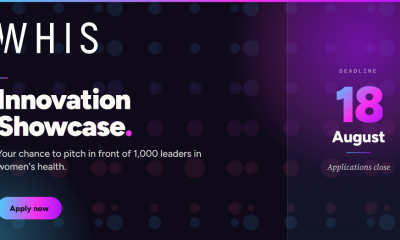
Applications close August 18 for Women’s Health Innovation Summit 2026 Innovation Showcase

 Menopause2 weeks ago
Third of women unaware of perimenopause mental health impact

 Fertility7 days ago
Chelsea FC Women to launch first-of-its-kind player fertility fund
 Events2 weeks ago
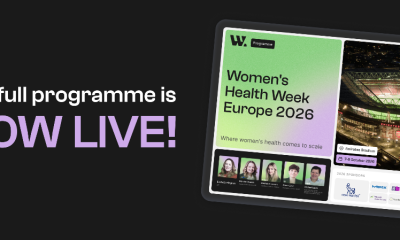
Women’s Health Week Europe 2026 releases fully populated agenda ahead of October summit

 Menopause1 week ago
Menopausal hormone therapy may lower dementia risk, study suggests
 Hormonal health2 weeks ago
We are wrapping our children in plastic and calling it care

 Opinion7 days ago
anna perimenopause app launches across 39 markets

 Diagnosis2 weeks ago
Chemicals in plastics may be linked to high blood pressure during pregnancy
3 Comments