




Wellness
Online tool supports decisions about breast reconstruction after mastectomy


For women with breast cancer undergoing mastectomy, an online decision aid can help in making informed decisions regarding immediate breast reconstruction (IBR).
Breast reconstruction for women undergoing mastectomy can improve psychosocial outcomes such as body image and sexual functioning. Among the complex decisions facing these patients is whether to undergo breast reconstruction immediately after mastectomy or at a later time, or not to have reconstruction. Rates of IBR have increased in recent years, although considerable variations remain.
Patient decision aids (pDAs) are tools to support the process of shared decision making between patients and doctors. Although pDAs have been shown to reduce decisional conflict for a range of treatment decisions, “there are limited interventions to support patient decision making about breast reconstruction available, particularly when the healthcare context is considered,” the researchers of the new randomised trial write.
“In our study, use of a patient decision aid helped women feel better prepared to discuss their options on whether or not to undergo IBR with the plastic surgeon,” comments Eveline M.A. Bleiker, PhD, of Netherlands Cancer Institute, Antoni van Leeuwenhoek, Amsterdam.
Professor Bleiker and colleagues evaluated a newly developed pDA to support informed decision-making about IBR.
The study included 250 patients with breast cancer scheduled for mastectomy at eight Dutch centres. Patients were randomly assigned to receive the online pDA or a standard informational leaflet.
The pDA provided evidence-based information on breast reconstruction options and support in clarifying patients’ personal values affecting their treatment decision. On completing the pDA, patients received a summary sheet including their breast reconstruction preferences.
Women using pDA ‘feel better prepared for decision making’
The two groups were compared on measures of decisional conflict – uncertainty about choosing between competing options – and other aspects of the decision-making process. Nearly all patients assigned to the pDA used the online tool; just over half discussed their summary sheet with the plastic surgeon.
With either the pDA or informational leaflet, decisional conflict decreased over time. In both groups, about 13 per cent of patients had clinically significant decisional conflict.
Women assigned to the decision aid “reported feeling better prepared for decision making than those in the control group,” the researchers write.
Other assessments were similar between groups, including shared decision making and satisfaction with breast reconstruction information.
Knowledge increased in both groups, with no difference in decision regret. With either source of information, about 70 per cent of women opted for IBR.
“Our findings indicate that both the online pDA and the information leaflet are helpful for breast cancer patient having to make a decision about IBR,” Bleiker and co-authors write.
“The online format of the pDA more easily allows for adaptions required by future developments in breast reconstruction options and scientific evidence, and for the further tailoring of information to patients’ personal situation and information needs.”
Publication of the new study is timed to coincide with Breast Cancer Awareness Month and Breast Reconstruction Awareness Day.
Celebrated October 16 this year, “BRA Day” is designed to educate women about post-cancer breast reconstruction options and outcomes – including the federal requirement for insurance coverage for breast reconstruction surgery.
BRA Day events worldwide bring attention to the varied options and procedures available plus give information to patients and their supporters so they can make informed decisions about their care.
The research has been published in the journal Plastic and Reconstructive Surgery.



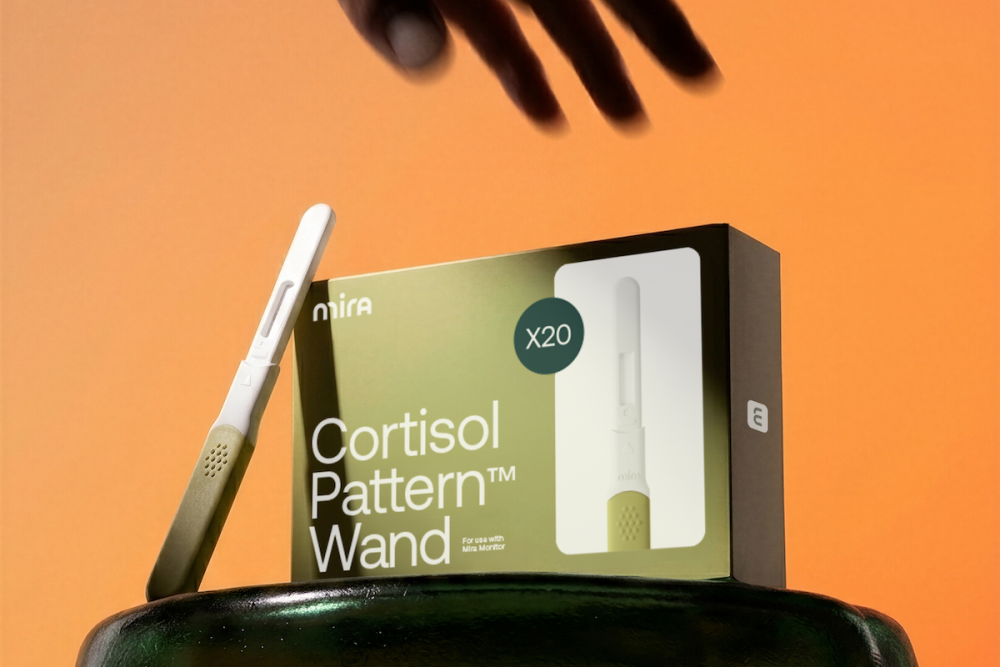
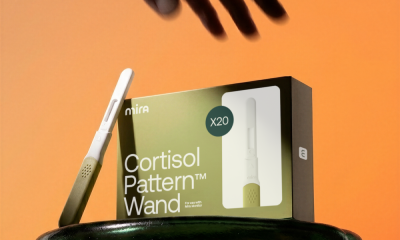
Mira has launched an at-home cortisol tracking kit that allows women to monitor stress-related patterns over time using urine samples.
The Cortisol Pattern Kit measures urinary free cortisol directly from a urine sample and displays results through the company’s existing monitor and app.
The system is intended for repeated testing rather than a single measurement, allowing users to compare results with a personal baseline built from their own data.
Mira said consistent daily testing can establish a baseline in about a week. It recommends testing in the morning and evening to see how cortisol patterns change throughout the day.
Cortisol is involved in the body’s stress response but is not a direct or complete measure of stress. The company said the kit is intended for general wellness use and is not designed to diagnose stress, an endocrine condition or any other medical condition.
The Cortisol Pattern Wands use the same lateral-flow testing format as Mira’s existing hormone tests. Users dip a wand into a urine sample, insert it into the Mira Monitor and view the result in the app within minutes.
The company said cortisol data can be viewed alongside cycle, hormone and daily routine information.
Sylvia Kang, founder and chief executive of Mira, said: “The Cortisol Pattern™ Kit gives women a new way to understand their stress patterns over time, in the context of their own biology.”
She added: “We built Mira to give women answers they had spent far too long searching for, beginning with the TTC journey and expanding into hormone and cycle tracking across life stages, including perimenopause. Now, we’re taking Mira beyond reproductive health and into everyday wellness, bringing personalised stress-pattern tracking directly into women’s homes.”
Mira said more than 350,000 women already use its platform to track their cycle and hormones.
Waitlist sign-ups for the Cortisol Pattern Kit and Cortisol Pattern Wands opened on 22 September, with wand refills available to pre-order in 20- and 30-count options.

Manchester City has launched a female athlete health platform covering menstrual, pelvic and breast health, as well as nutrition.
The Her City website is designed for the club’s women’s first-team players, coaches, support staff, academy players and parents.
Manchester City says the platform is the first of its kind in the Women’s Super League and was developed over two years.

The project was led by director of performance services Emma Deakin, physical performance scientist Rosie Anderson and PhD student and first-team nutritionist Sarah Malone.
It grew out of PhD research into menstrual, pelvic and breast health and nutrition, with the team seeking to turn that work into an online educational resource.
The website divides the four areas into separate sections and provides peer-reviewed information that the club says has been critically analysed by experts.
Content will continue to be reviewed and updated as further evidence emerges.
Resources include posters, visual explainers, audio materials and downloadable educational content, with information tailored to different groups including players and parents.
The platform aims to improve knowledge, develop critical analysis skills and strengthen communication within football and at home.
It also includes material to help users assess misinformation they encounter on social media or elsewhere.
A confidential contact form allows users to raise concerns or ask questions directly of experts at Manchester City.
Parents of academy players can also access the platform, with resources intended to help them support their children during a key phase of their development.
Manchester City said its longer-term aim is to make the platform available to all women working across City Football Group.











 Diagnosis2 days ago
Trust to decide how far back to review unnecessary breast cancer surgeries

 Diagnosis3 days ago
New test could cut need for invasive womb cancer checks

 Healthy ageing5 days ago
Higher BMI in early adulthood linked to lower breast cancer risk after menopause

 Tech & devices4 days ago
Personalising women’s health with AI

 Pregnancy2 days ago
UK commits £254m to boost women’s maternal healthcare choices

 Pregnancy2 days ago
Parents given new right to two weeks’ leave after pregnancy loss
 Menstrual & gynaecological health4 days ago
Mira launches at-home cortisol tracking kit

 Researcher / academic4 days ago
Targeted nanotherapy shows endometriosis promise
1 Comment