




Wellness
Innovative intravaginal ring aims to transform HIV prevention efforts


Oak Crest Institute of Science has showcased an intravaginal ring that aims to transform HIV prevention efforts.
Global leaders in HIV prevention gathered under the theme “Building Bridges to the Future” for the 2024 MATRIX Investigators Meeting last month in Nairobi, Kenya. Oak Crest Institute of Science participated in the meeting, hosted by MATRIX, a five-year programme funded by the U.S. Agency for International Development (USAID).
The meeting was a nexus for advancing innovative HIV prevention products, particularly for adolescent girls and young women in sub-Saharan Africa. It created a dynamic platform for funders, researchers, and stakeholders to collaborate on developing safe, effective, and affordable solutions that can be scaled and delivered where needed most.
Four Oak Crest researchers provided updates on the OneRing—a dual-purpose product containing a non-antiretroviral agent and a non-hormonal contraceptive for the prevention of both HIV and unplanned pregnancy, being developed under MATRIX.
“We were excited to showcase the OneRing and its potential to address two critical needs simultaneously—HIV prevention and prevention of unintended pregnancies—with the use of totally novel agents,” said Dr. Marc Baum, Senior Faculty at Oak Crest, and Principal Investigator of the OneRing project.
“This innovative intravaginal ring has the potential to transform HIV prevention efforts, especially for young women in sub-Saharan Africa, by providing a practical solution to urgent health needs.”
Though not related, a standout moment was the presentation by Drs. Thembela Sonti and Kanyisile Mhlana, post-doctoral fellows from the Holistic Drug Discovery and Development Centre (H3D) at the University of Cape Town, South Africa, who had spent four months in Southern California working with Oak Crest scientists to develop novel flow chemistry methods for the synthesis of active pharmaceutical ingredients (APIs) used in anti-HIV products.
They are now installing a flow reactor at UCT to enable this work to continue, with the goal being the capacity for API manufacturing to take place in Africa.
Development of the spin synthesis process for technology transfer and cost-effective manufacturing of APIs in Africa is the aim of an Independent Special Project funded by USAID through MATRIX, which is being led by Professor Kelly Chibale, founder and director of H3D, and being conducted as a partnership involving H3D, CPT Pharma in South Africa, KinetiChem based in Los Angeles, and Oak Crest.
Drs. Sonti and Mhlana were recognised for their pivotal roles in building the link between South Africa and California with the special “Building Bridges to the Future” award they received at the close of the investigators meeting.
MATRIX unites organisations and researchers from the United States, Kenya, South Africa, and Zimbabwe, all committed to providing women, especially those in sub-Saharan Africa, with a diverse array of HIV prevention options.



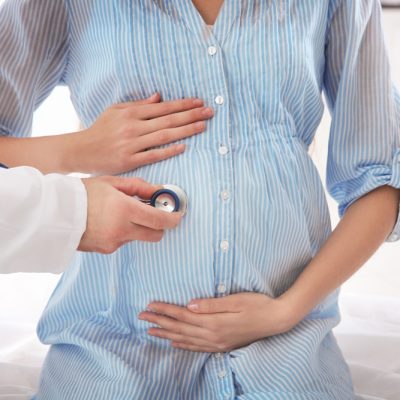
Pregnant women are being advised to avoid runny or under-cooked eggs when eating out amid a developing salmonella outbreak.
The advice also applies to freshly made products that may contain uncooked eggs, including mayonnaise, soufflé and hollandaise sauce.

The FSA said well-cooked eggs served in restaurants, cafés and takeaways remain safe to eat.
The warning follows the UK Health Security Agency declaring a national outbreak of salmonella food poisoning after one person died and hundreds more fell ill.
Imported eggs or dishes containing them are thought to be behind the outbreak.
FSA chief scientific adviser Ian Young said: “If people are eating out or consuming eggs or egg-containing products from cafes and restaurants then for those people in particular who are young, elderly, pregnant or vulnerable, it’s important to make sure that any eggs or egg products that you consume in those settings have been very well cooked.”
He described the outbreak as “unusually large and rapidly increasing”, adding that “people need to be careful”.
The FSA said British eggs bought from supermarkets are not linked to the current outbreak because chickens bred in the UK are vaccinated against common strains of salmonella.
“There is no link to those eggs to this current outbreak,” Young said.
Mark Williams, chief executive of the British Egg Industry Council, said British eggs were safe to eat when runny, including for vulnerable people, and were widely available in restaurants and cafés.
“Customers who want to enjoy a runny egg should simply ask whether British Lion eggs are being used,” he said.
More than 200 cases in the UK have been linked to the outbreak, with the majority across England.
Genetic testing suggests the infections are part of the same outbreak and show similarities with previous outbreaks involving imported eggs.
Investigations into individual cases also suggest the eateries involved were buying eggs from abroad.
Salmonella are a family of bacteria that typically live harmlessly in the digestive systems of animals including cattle, pigs and chickens, which is why eggs and poultry are among foods commonly associated with infection.
People can become infected by eating contaminated food that has not been properly cooked, through cross-contamination between raw and cooked food or by coming into contact with infected animals.
Symptoms can include stomach cramps, diarrhoea, vomiting and fever.
Most people recover without further treatment, but older people, babies and people with weakened immune systems are at greatest risk of severe illness.
Hospital treatment with fluids and, in some cases, antibiotics may be needed for severe infections.
People who are concerned are being advised to contact their GP or out-of-hours service in the first instance.


Chelsea FC Women is to launch a fertility fund giving players access to assessments, treatments, counselling and workshops.
The initiative is part of a new partnership with London fertility clinic Fertility Plus, which has been named the club’s official fertility partner.
Chelsea said the fund will be available to every player in its women’s team, with support tailored to individual needs.

Giulia Mazzia, commercial director for Chelsea FC Women, said: “At Chelsea FC Women we are never done pushing for progress for our players and our community.
“This first-of-its-kind partnership with Fertility Plus will open up the conversation about fertility, help to raise awareness for our incredible fanbase and beyond, and give practical support to our players off the field as well as on it.”
Support through Fertility Plus will include fertility assessments and treatments, as well as counselling and workshops.
The partnership will also provide evidence-based information about reproductive health and address misconceptions around fertility.
Chelsea cited previous research on fertility knowledge which found that 41 per cent of respondents actively trying to conceive did not know when their fertile window was.
The club and Fertility Plus plan to provide educational content, resources comparing fertility myths with medical evidence and insights from Chelsea FC Women ambassadors.
Dr Amit Shah and Dr Anil Gudi, co-founders of Fertility Plus, said: “Elite sport asks a lot of women during the very years when fertility matters most, yet it’s a conversation the game has rarely had.
“Partnering with Chelsea FC Women allows us to help change that by giving players, staff and supporters access to trusted fertility expertise and compassionate, consultant-led care.
“We’re proud to work alongside a club that’s setting a new standard for supporting women’s health, both on and off the pitch.

Climbing during the third trimester was not linked to higher rates of self-reported pregnancy complications in a global study.
The findings provide direct evidence on an activity pregnant women have traditionally been advised to avoid because of concerns about falls.
Researchers surveyed 692 people about climbing during pregnancy, falls, maternal and baby health outcomes and their return to the activity after giving birth.
The study recorded almost 64,000 hours of climbing among participants.
During that time, participants reported 155 “hard falls”, defined as falls or catches forceful enough to be remembered or cause concern.
The rate of adverse clinical events, meaning negative medical outcomes affecting the pregnancy or baby, was 0.03 per 1,000 hours of climbing exposure. All babies in the study were born live.
Researchers found no significant difference in pregnancy or foetal health outcomes between participants who stopped climbing at or before 27 weeks and those who continued beyond that point.
The findings suggest continuing the activity into the third trimester was not associated with increased self-reported complications among those surveyed.
The survey also found 96 per cent of participants said that, despite concerns about climbing while pregnant, they felt “happy” or “very happy” that they had continued.
Margie Davenport, professor in the Faculty of Kinesiology, Sport, and Recreation and lead author of the study, said the preliminary findings challenge an assumption about maternal exercise that had been based on opinion rather than research.
She said: “For decades we have restricted pregnant women from activities like climbing due to concern for their health and the health of the baby, but our evidence suggests it’s beneficial for both mental and physical health.”







 Entrepreneur2 weeks ago
Applications close August 18 for Women’s Health Innovation Summit 2026 Innovation Showcase
 Menopause2 weeks ago
Third of women unaware of perimenopause mental health impact

 Fertility1 week ago
Chelsea FC Women to launch first-of-its-kind player fertility fund

 Menopause2 weeks ago
Menopausal hormone therapy may lower dementia risk, study suggests
 Hormonal health2 weeks ago
We are wrapping our children in plastic and calling it care

 Opinion1 week ago
anna perimenopause app launches across 39 markets
 Diagnosis2 weeks ago
Chemicals in plastics may be linked to high blood pressure during pregnancy
 News2 weeks ago
Women with endometriosis face 46% higher risk of type 2 diabetes – study
4 Comments