




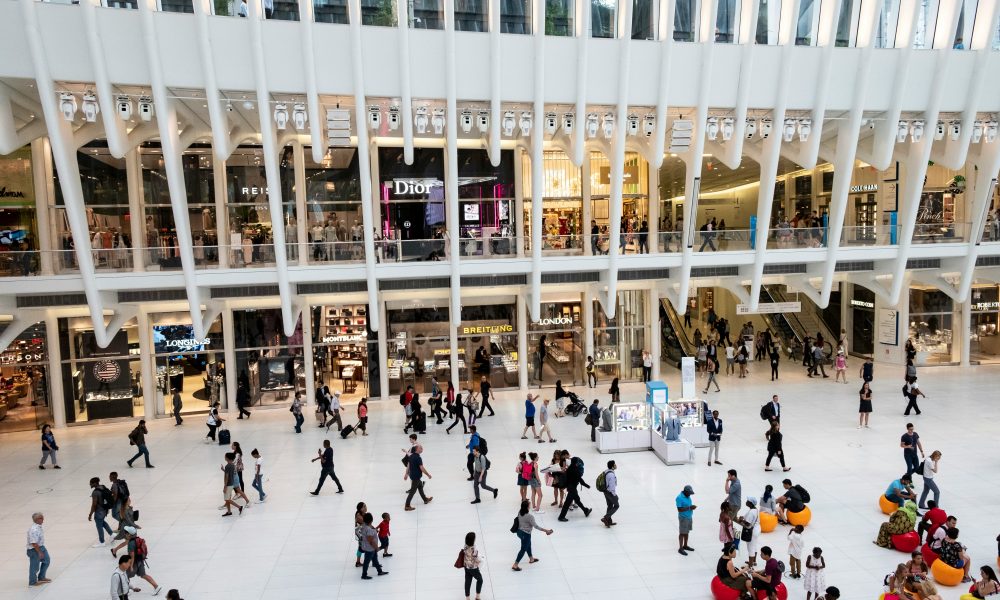
Tech in retail is transforming the shopping experience. Despite the popularity of online shopping, brick-and-mortar retailers are investing in technology to support steady revenue and customer loyalty.
Technology in Retail: Changing Shopping Habits
With technical advancements in a wide range of industries, many people estimated that in-person visits to clothing stores would soon die out because online shopping offered more convenience.
Retail footfall year-on-year change in the UK April 2024, by location.

Retail footfall saw a decrease of 7.2 percent in April 2024 in the United Kingdom (UK), driven by shopping centres.
However, retail businesses have the potential to attract more customers than ever before if they embrace the opportunities new technologies have to offer.
Here’s how tech in retail can improve the customer experience for the better.
Streamlined Checkout Process
One of the many great things about technology is its ability to streamline time-consuming tasks.
We all know the frustration of standing in line at the checkout while the person at the till counts their cash at snail’s speed.
It’s frustrating and takes up precious time.
Retailers are aware of this and they know it’s causing a loss in customers. So, they’re taking action.
Now, retailers are utilising the benefits of technology to streamline the in-store checkout process.
Payment solutions like a portable card machine let customers purchase through contactless payment either by tap-to-pay on their phone or contactless cards.
Card machines can help speed up your overall checkout time, reduce long queues in your store and incentivise impulse purchases.
Additionally, with many card machines for small businesses being portable, retailers can accept payments from anywhere – whether in-store or at a pop-up event.
RFID Tags
RFID tags are essentially sensors that allow retailers to manage a real-time inventory.
RFID tags track items as they are taken off shelves and moved from one place to another.
RFID tags are a great way to monitor products and customer habits so that the in-store experience can be optimised to boost sales and increase convenience.
RFID tags are also being used to improve the customer experience by providing product information, allowing customers to request new sizes, and even including the ability to call store assistants for some in-person support.
This high-tech solution is transforming the way people shop and supporting retailers with their inventory management like never before.
Smart Screens
Smart screens have been around for a while now.
You’ve likely come across them when filling up your drink at a restaurant and choosing from the array of options.
However, smart screens aren’t just limited to restaurants.
They’re now available in retail; improving the customer experience by supporting a more convenient shopping experience.
Clothing retailers are utilising touchscreen technology to help customers view products and build their wardrobes.
Smart screens offer retail customers the convenience of online shopping in-store.
By enhancing the customer’s experience in this way, retailers are seeing an increase in sales and customer loyalty.
Self-Service Machines
Self-service machines have been in supermarkets for many years now.
And they’ve made quite the impact, reducing queues and eliminating the need for small talk at the till.
Reports reveals the number of self-checkouts in supermarkets have increased from 53,000 to 80,000 over the past five years.
But now, self-service machines have made it into retail stores and they are changing how shoppers checkout.
While retail stores offer in-person assistance at the till, many people are shy to approach real people and would rather purchase their shopping without any interaction.
Retailers hoping to boost customer satisfaction and retention are utilising this technology to improve their service.
Digital self-scanners in retail stores allow shoppers to look up products, scan prices, and purchase items independently.
There’s no need to ask for help or stand in a queue at the till.
This allows for a seamless shopping experience and keeps customers returning time and again.
Chatbots
Chatbots in retail stores are harnessing the convenience of technology to offer the convenience of an in-store shopping assistant.
Rather than trailing around the store in search of help, customers can communicate with a Chatbot and receive an immediate and personalised service.
Whether it’s a question about sizing, prices, or an item’s availability, chatbots are a great way for retailers to offer one-to-one customer support without hiring extra staff.
What’s more, this kind of customer service can become tiring for humans who get fed up answering the same questions repeatedly.
So, Chatbots are a great alternative. They allow customers to receive support as and when they need it.
Click and Collect Services
We all love the convenience of click-and-collect at the supermarket.
Someone else does your shopping, bags it, and all you need to do is pick it up? Yes, please!
Now, click and collect is being introduced in retail stores to help retailers market their products, boost sales, and sell to more customers. And it’s working.
The click-and-collect economy in Northern Ireland is worth over £1.34bn.
Click-and-collect technology isn’t just a convenient, money-saving option for customers, it’s also a great way for stores to attract more customers through their doors.
In-store Virtual Reality Experiences
Retail brands are harnessing the power of virtual reality to heighten the in-store shopping experience.
Virtual reality allows shoppers to explore a product within a virtual environment.
For example, people shopping for clothes can get a better idea of how they’d look by virtually trying them on.
Virtual reality is supporting in-store purchases by making shopping more accessible and convenient.
Whether shoppers want to visualise a product in a particular space or they want to understand how an item of clothing might look (but they don’t have time to try it on) virtual reality makes this possible.
Virtual reality gives customers the confidence they need to make a purchase.
Summary
Technology has had a significant impact on people’s lives; changing the way we do almost everything – from shopping and banking to work and social interactions.
And the retail industry is no exception.
As you can see, technology is transforming the way we shop.
It’s improving the customer experience by giving back control which in turn builds trust and increases loyalty.
Retailers introducing technology into their stores are not only setting themselves apart from the competition, but they’re setting themselves up for success.


Newsletter
Sign up for free weekly updates
The latest femtech news, research and investment, straight to your inbox.




