




News
Foundation launches initiative to advance women’s health in midlife
The Women’s Midlife Health Policy Institute is planning to publish a white paper sharing focus and need areas to advance women’s health


The US National Menopause Foundation has launched the Women’s Midlife Health Policy Institute (WMHPI) in an effort to improve research, education and policies related to women’s health in midlife.
In the US almost one and a half million women become menopausal each year. By the year 2025, the number of postmenopausal women worldwide is expected to surpass one billion.
Symptoms, which may include hot flashes, insomnia, anxiety, depression, brain fog, memory loss and genitourinary problems, have a significant impact on women’s quality of life and career growth.
A recent Mayo Clinic study found that 15 per cent of women cut back on hours or missed work entirely due to their symptoms, costing them about US$1.8bn a year in lost wages.
“Despite the prevalence and impact of menopause, there is a lack of research, education and resources dedicated to addressing menopause-related health issues and many women feel underserved and unsupported in navigating this life stage,” said Claire Gill, founder and president of the National Menopause Foundation.
According to the Study of Women’s Health Across the Nation (SWAN), which began in 1994, there are racial and ethnic differences with respect to menopausal symptoms and risk for diseases that impact women at a higher rate postmenopausal.
Black women are more likely to report heavy bleeding, have hysterectomies and have higher rates of vasomotor symptoms, known as hot flashes.
Hispanic women develop metabolic syndrome, type 2 diabetes, anxiety, depression and VMS while non-Hispanic Caucasian women have the greatest incident of low bone density.
The WMHPI aims to bring together women’s health advocacy stakeholders, thought leaders and clinicians to “uncover” opportunities for a shared policy agenda and action plan.
The institute is planning to create a white paper sharing focus and need areas to advance women’s health in midlife.
Gill, National Menopause Foundation president, said: “The WMHPI will coordinate a collective policy agenda that amplifies the needs of women at midlife and targets united action among stakeholders to inspire policy that can have a systemic impact on improving women’s health.”








Michigan State University researchers are launching a novel project to transform how medications are developed and prescribed for women.
A US$4.6m award will fund computer models designed to predict how hormonal changes affect the way medicines move through and act in women’s bodies.
The funding is the first instalment of an award worth up to US$12.8m over three years, supporting work intended to account for hormonal changes throughout women’s lives.
Researchers plan to examine factors including menstrual cycles, pregnancy, contraceptive use, menopause and hormone replacement therapy, which can affect responses to medicines.

Teresa K. Woodruff, lead investigator on the project, said: “Because female hormone levels are constantly shifting, precision medicine allows us to map out these complex interactions.
“This NIH-backed initiative will create the first computationally driven clinical tool designed to guide medical care across every stage of a woman’s life.”
The project is led by researchers at Michigan State University and funded by the National Institutes of Health, with collaborators from Rutgers, Emory, Tulane, the University of Colorado Anschutz, the University of Michigan and the University of Utah.
Thirteen researchers will develop computational models to predict how changes in female hormones influence the way medicines move through and act within the body.
The work is part of the NIH Computational Modeling of Hormone Homeostasis Initiative, which is awarding US$21m nationally to support research into sex-specific hormonal biology.
The team plans to use artificial intelligence to digitise and organise more than 40 years of hormone research data in a publicly accessible database.
Researchers will also develop a standard computer model of a 28-day menstrual cycle, alongside models of how hormones regulate organs and tissues involved in processing nutrients, including the liver, muscle and fat.
Real-world patient data will then be used to expand the models to represent groups including women going through menopause or taking birth control, as well as women with conditions such as diabetes and obesity.
The project will also use three-dimensional human tissue models and lab-grown organoids, including liver, muscle and ovarian tissue, to test and refine the computer predictions.
Researchers plan to examine medicines including metformin, insulin and GLP-1 drugs, with the aim of developing tools that could help clinicians tailor doses and avoid harmful side effects.
Qiang Zhang, associate professor at Emory University, said: “Empowered by AI, novel assays and legacy human data, we will develop mechanistically based computational models of female physiology that can make translational, quantitative predictions for women’s responses to metabolic therapies.”
The researchers said the work could help address differences in how women respond to treatments for metabolic conditions including obesity, type 2 diabetes, cholesterol imbalances and thyroid disorders.
Nanette Santoro, professor at the University of Colorado Anschutz and president of the Endocrine Society, said: “Women experience large shifts in reproductive hormones at several points in their lifespan: puberty, pregnancy and menopause.
“During reproductive years, women also undergo profound day-to-day changes in reproductive hormone levels, giving them a markedly different endocrine backdrop than men.
“Using state-of-the-art computational technology to examine how these changes interact with commonly used medications is a critical pathway toward supporting life-course women’s health.”
The project team said its computer models and data will be made freely available to researchers and healthcare professionals when the work is completed.

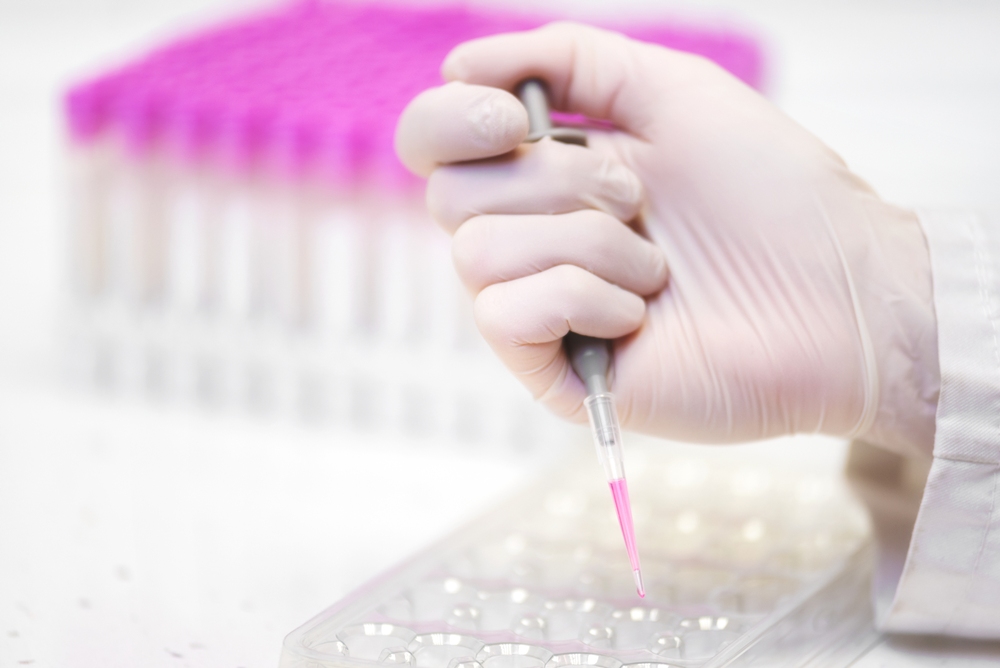
Evvy has raised US$40m to expand its vaginal microbiome platform into reproductive healthcare, starting with fertility and IVF.
The series B funding will also support the expansion of EvvyAI, the data and artificial intelligence platform behind the company’s vaginal healthcare business.
The round brings Evvy’s total capital raised to nearly US$60m across three funding rounds since its launch.
Priyanka Jain, Evvy chief executive and co-founder, said: “Thirty per cent of infertility is categorised as unexplained.
“When you think about the immense emotional and financial effort required to produce a healthy embryo, transferring that embryo into an unexamined, inflamed environment is heartbreaking.
“By measuring and modulating the microbiome proactively, we can tangibly improve clinical outcomes.”
Evvy says it has served more than 100,000 patients and partnered with 3,000 healthcare practitioners.
The company also says 96 per cent of patients opt to contribute their data anonymously to clinical research, contributing to its dataset on the vaginal microbiome and women’s health outcomes.
Its vaginal microbiome testing uses metagenomic sequencing.
Evvy’s at-home Vaginal Health Test analyses more than 700 bacteria and fungi from a vaginal swab and provides clinician-reviewed results, personalised insights and access to prescription treatment where appropriate.
The company’s fertility work builds on 13 peer-reviewed publications and studies conducted in 2025 involving more than 1,000 real-world patients.
The funding round was led by Catalio Capital and included U.S. Fertility through its U.S. Fertility Innovation Fund and Labcorp Venture Fund.
Existing investors General Catalyst, Left Lane Capital, BBG Ventures, Amboy Street Ventures, Ingeborg and Foreground Capital also participated.
Jacob Vogelstein, co-founder and managing partner at Catalio Capital, said: “Its combination of proprietary data, clinical evidence and a growing biomarker discovery engine creates an entirely new foundation for precision women’s healthcare.
“We believe Evvy is building the data platform that will define this category for decades to come.”
Evvy has also expanded into UTI testing, probiotics, suppositories and other vaginal health treatments.

Women with endometriosis reported less pain and better sleep after taking medical cannabis, with improvements lasting for two years in a UK study.
Researchers cautioned that the findings do not prove medical cannabis caused the improvements because the study had no control group and participants received different products and doses.
The observational study followed 101 women prescribed cannabis-based medicines and also recorded improvements in anxiety, quality of life and the effect of pain on daily activities.
The women were followed through the UK Medical Cannabis Registry and completed questionnaires before treatment and after one, three, six, 12, 18 and 24 months.
Pain measures improved at every follow-up point, while improvements in sleep, anxiety and overall quality of life continued throughout the two-year period.
The study also recorded a reduction in prescribed opioid use. Average use fell from the equivalent of 19.9mg of morphine a day at the start of the study to 14.8mg after two years.
Among the 46 participants prescribed opioids at some point during the study, 12, around 26 per cent, recorded what researchers considered a clinically meaningful reduction by 24 months.
Most participants were prescribed cannabis oil or a combination of oil and dried cannabis flower. At the start of the study, 33 received oil alone, 60 received flower alongside oil and eight received flower alone.
Eighteen of the 101 women reported 165 adverse events during the study, around half of which researchers classed as mild.
Fatigue, lethargy and headaches were the most commonly reported adverse events.
The authors said no randomised controlled trials have specifically examined cannabis-based medicines for endometriosis-associated pain and called for further trials to establish effectiveness and safety.
Previous research has also suggested some people with endometriosis use cannabis to manage symptoms, although much of the evidence has come from surveys and observational studies.
A 2024 survey of 912 people with endometriosis in Germany, Austria and Switzerland found that 114 reported using cannabis. Among those users, 91 per cent reported improved sleep, 90 per cent reported improvements in menstrual pain and 80 per cent in non-cyclical pelvic pain.
A separate Phase 2 trial is now examining a CBD oral solution in up to 100 women with endometriosis-associated pain in Scotland.
The ENDOCAN trial, led by Dr Lucy Whitaker alongside Professors Andrew Horne and Philippa Saunders at the University of Edinburgh, is double-blind and placebo-controlled.
Participants are being randomly assigned to receive either Ananda Pharma’s MRX1 CBD oral solution or a placebo for 12 weeks. The study is designed to provide stronger evidence on whether CBD itself can reduce endometriosis-associated pain.









 Entrepreneur2 weeks ago
KOVE Medical raises €1.7 million to improve safety of foetal surgery

 Menopause1 day ago
Menopause may not explain rising heart condition in women – study

 Pregnancy2 weeks ago
UK study aims to transform maternity care for high-risk pregnancies

 Fertility5 days ago
Paracetamol use may impact future fertility, studies suggest

 Entrepreneur1 week ago
Last chance to save on Women’s Health Week and Women’s Sport Summit: Early Bird pricing ends 11 September

 Menopause2 weeks ago
Menopause hormone treatment may ease brain fog, study suggests

 Menopause1 week ago
Cancer drug could tackle osteoporosis menopause weight gain

 Insight2 days ago
Women with birth trauma face 2.5x higher healthcare costs – study
1 Comment