




News
How femtech is closing the gender gap in healthcare and research


By Dr Amina Hersi, GP and Founder of Polybiotics
For too long, women’s health has been treated as an afterthought.
Funding remains limited, particularly when our conditions are framed solely as reproductive.

Ask any woman living with PCOS, endometriosis or adenomyosis if their experience begins and ends with fertility.
They will tell you about the chronic pain, mood swings, fatigue and the years spent navigating an often dismissive system that affects their work, education and relationships as much as their physical health.
Research into these conditions often relies on male-centred data or models that do not reflect female physiology.
This means the so-called “evidence base” guiding care for millions of women is often incomplete or misleading.
A new era of data and discovery
This is where femtech has the power to transform everything.
By making data more accessible, analysable and applicable, femtech tools can highlight trends and patterns that traditional research has long overlooked.
A recent study by Flo Health found that the psychological symptoms of menopause, such as anxiety, low mood and irritability, often appear years before the more stereotypical hot flushes.
This insight, derived from real-world user data, challenges long-held assumptions and shows how technology can uncover what clinical research has missed.
Women are also more likely than men to engage with and consistently use digital health tools, particularly apps related to tracking cycles, fertility, mood and wellbeing.
This creates a large, engaged data source.
Now, with plug-ins that connect to wearables measuring everything from heart-rate variability to sleep quality, the data becomes not only self-reported but also objective.
This integration of lived experience with measurable biometrics takes the science to another level, bridging the gap between personal insight and clinical evidence.
We are entering a new phase of evidence generation.
With femtech, it is possible to run retrospective studies based on real-time, real-life data.
We can map the pathways that lead to diagnosis, identify risk patterns and connect dots that were once invisible.
It is not just data collection; it is data empowerment.
Ethics, equity and representation
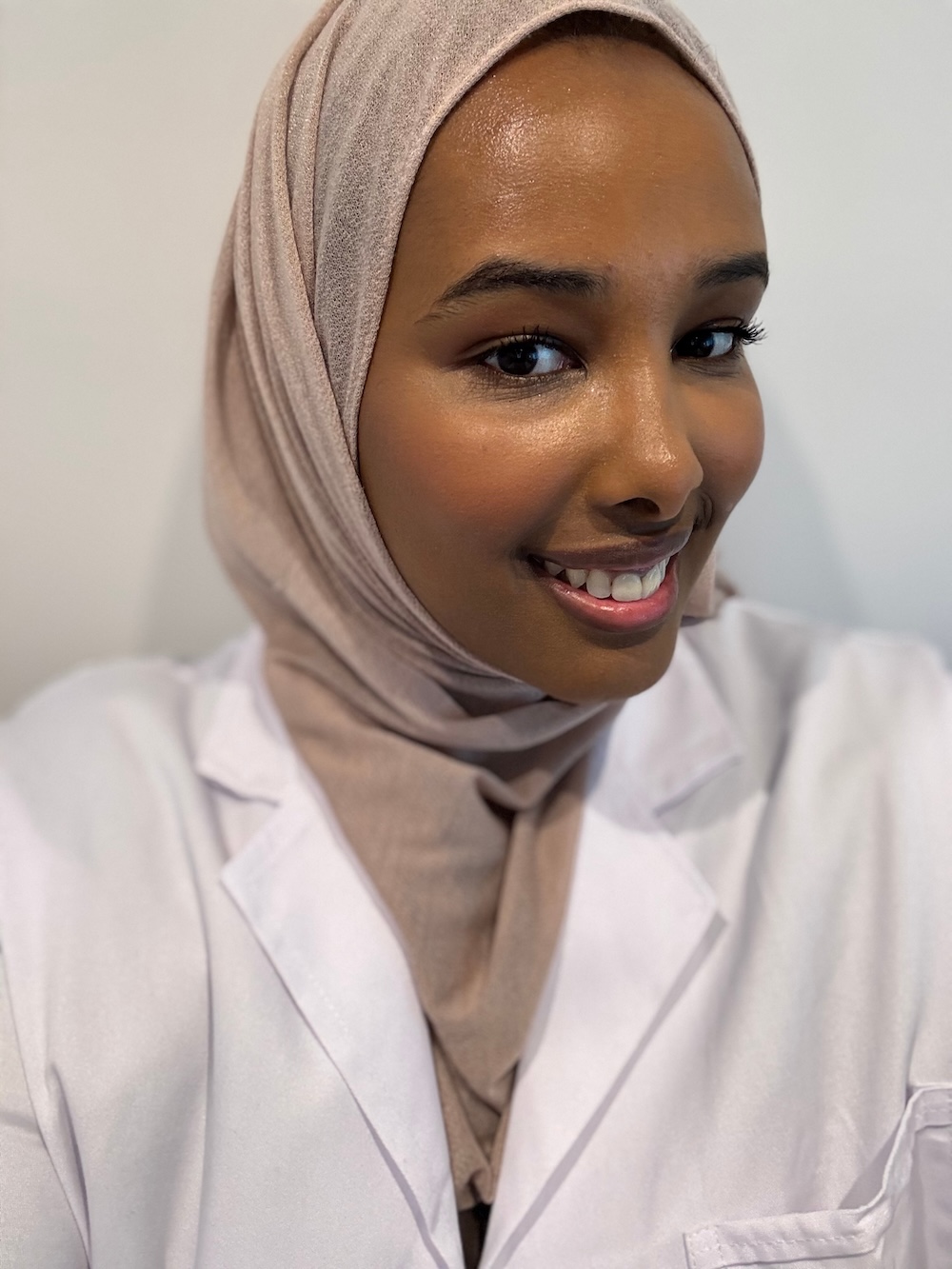
Dr Amina Hersi
This progress comes with responsibility.
The same technology that empowers women can also be used to exploit them if not managed carefully.
Hormones influence mood, cognition and even impulsivity, which means poorly regulated data could one day enable targeted advertising based on a woman’s menstrual phase.
That is a line that must not be crossed.
Femtech can also help bridge the gap for Black, Asian and other ethnic-minority women who have historically been excluded from research.
People will only feel comfortable sharing intimate health data if they see tangible outcomes from it.
Collecting information is not enough; it must lead to meaningful improvements in care and policy.
Diversity must also exist within the companies creating these products.
A product is only as inclusive as the people who build it. Homogeneous teams produce limited solutions.
From the lab to real life
As the founder of a women’s health brand, I have seen first-hand how biased or flawed research can distort understanding.
When researching inositol, the hero ingredient in our supplements, I discovered that many of the “physiological” ratios cited in studies on women were based on samples that included male participants.
This was highlighted in a paper examining the ratio of myo-inositol to D-chiro-inositol in the treatment of PCOS.
Including men in these studies is not a small detail.
It can shift the average ratios used to guide clinical decisions and marketing claims, leading to conclusions that do not accurately reflect female physiology.
It shows how evidence that is meant to guide women’s health can be built on foundations that were never designed for us in the first place.
Beyond bias, there is another uncomfortable truth.
Research fraud is common in the women’s health sphere (5).
Questionable methodologies, undeclared conflicts of interest and even fabricated data have all contributed to shaky conclusions that shape clinical practice and public perception.
Femtech can help override this by decentralising evidence collection and validation.
Real-world, large-scale, anonymised datasets gathered through apps and wearables are harder to manipulate and easier to verify.
They offer transparency, traceability and reproducibility, three things that traditional research often lacks.
Femtech places power back into women’s hands.
It makes health tracking and data collection non-invasive, affordable and accessible.
By capturing real-world experiences from diverse populations, it has the potential to create a more complete picture of women’s health that is representative, inclusive and credible.
A future built on real women’s data
We are only scratching the surface of what femtech can achieve.
From improving early diagnosis to personalising treatment pathways, it is redefining how we understand and support women’s health.
More importantly, it gives us the chance to correct historical biases and rebuild the evidence base on women’s terms.
Femtech gives us the tools to rewrite the narrative, close the data gap, diversify research and finally place women’s experiences at the centre of healthcare, combining technology with equity, understanding and lasting change.










Simultaneous exposure to toxic chemicals and climate-related heat may be worsening fertility harms across humans and wildlife, research suggests.
The review of scientific literature looks at how endocrine-disrupting chemicals, often found in plastic, together with climate-related effects such as heat stress, are each linked to lower fertility and fecundity, meaning the ability to reproduce, across species including humans, wildlife and invertebrates.

Though the reproductive harms of each issue in isolation are well studied, there is little research on what happens when living organisms are exposed to both.
“Together, the two issues are likely to pose a greater threat to fertility, and the additive effect is “alarming”, said Susanne Brander, a study lead author and courtesy faculty at Oregon State University.
“You’re not just getting exposed to one, but two, stressors at the same time that both may affect your fertility, and in turn the overall impact is going to be a bit worse,” Brander said.
The paper looked at 177 studies.
Shanna Swan, a co-author on the new paper, co-produced a 2017 study that found sperm levels among men in western countries had fallen by more than 50 per cent over four decades. Other research has suggested human fertility has been declining at a similar rate.
The University of Washington’s Institute for Health Metrics and Evaluation has previously said the world was approaching a “low-fertility future”, with more than three quarters of countries below replacement rate by 2050.
The new paper’s authors focused on the effects of endocrine-disrupting chemicals and substances, including microplastics, bisphenol, phthalates and PFAS.
These are thought to cause a range of serious reproductive problems, disrupt hormones and be a potential driver of falling fertility.
Brander said the harms linked to these chemicals are often similar across organisms, from invertebrates to humans.
Phthalates, for example, have been linked to altered sperm shape in invertebrates, spermatogenesis in rodents, meaning sperm production, and reduced sperm counts in humans.
PFAS are also thought to affect sperm quality, and both have been linked to hormone disruption.
The chemicals are widespread in consumer goods, so people are often regularly exposed.
Meanwhile, previous research has shown how rising temperatures, lower oxygen levels and heat stress, among other effects linked to climate change, may also worsen infertility.
Heat stress has been found to affect human hormones, and is linked to spermatogenesis in rodents and bulls.
Research shows temperature also plays a role in sex determination in fish, reptiles and amphibians.
The species has evolved to choose which sex it produces in part based on temperature, and the heating planet can “push it too far in one direction or the other, which overrides that evolutionary benefit”, Brander said.
Similarly, many endocrine disruptors may alter environmental sex determination.
The study set out some of the overlapping effects of chemical exposure and climate change across taxonomic groups, from invertebrates to humans.
In birds, for example, exposure to increased temperature, PFAS, organochlorines and pyrethroids may each individually cause abnormal sperm, increased fledgling mortality, abnormal testes and population decline.
“What happens if they’re exposed to more than one of those stressors at the same time? There has been little exploration of that question.
“Even if there have not been a lot of studies looking at these simultaneously, if you have two different factors that both cause the same adverse effect, then there’s a likelihood that they are going to be additive,” Brander said.
Katie Pelch, a senior scientist with the Natural Resources Defense Council nonprofit, who was not part of the study, said the authors had reviewed high-quality science.
She said she wanted to see more examples of the overlap in impacts, but agreed with the overall premise.
“It is likely [multiple stressors] would have an additive effect, at very least, even if they have different mechanisms of harm,” Pelch added.
The solution to the systemic problems would involve tackling climate change and reducing the use of toxic chemicals.
The study cites the global reduction in the use of DDT and PCBs achieved under the Stockholm Convention as an example of an effective measure, but Brander said much more is needed.
“There is enough evidence in both areas to act to reduce our impact on the planet,” she said.














 Events4 weeks ago
Three sessions that show exactly where women’s health is heading in 2026

 Entrepreneur4 days ago
Future Fertility raises Series A financing to scale AI tools redefining fertility care worldwide

 Pregnancy4 weeks ago
How NIPT has evolved and what AI NIPT means in 2026

 News4 weeks ago
Two weeks left to make your mark in women’s cardiovascular health

 Opinion4 weeks ago
Q1 momentum: Female founders are advancing, but the system still hasn’t caught up
 Fertility2 weeks ago
Future Fertility partners with Japan’s leading IVF provider, Kato Ladies Clinic

 Menopause2 weeks ago
More research needed to understand link between brain fog and menopause, expert says

 Mental health6 days ago
Lifting weights shows mental health and cognitive benefits in older women, study finds
1 Comment