




Hormonal health
Immune cells linked to longer-lasting pain in women


Differences in immune cells may explain why chronic pain lasts longer in women than men, according to new research.
The study identified a subset of monocytes, a type of white blood cell, that release interleukin-10, or IL-10, a molecule that signals pain-sensing nerves to switch off pain. These cells were found to be more active in males, linked to higher levels of sex hormones such as testosterone.
Females experienced longer-lasting pain and slower recovery because their monocytes were less active. The same pattern was observed in both mouse models and human patients.

Researchers first detected unexpectedly higher levels of IL-10 in males during a small pilot project. When a second test confirmed the finding, they used high-dimensional spectral flow cytometry, a laboratory technique that allows detailed analysis of immune cells, to investigate further. Blocking male sex hormones produced the opposite effect.
Geoffroy Laumet, associate professor of physiology at Michigan State University, said: “The difference in pain between men and women has a biological basis. It’s not in your head, and you’re not soft. It’s in your immune system.”
Pain occurs when specialised neurons throughout the body respond to stimulation. In people with chronic pain, these sensors can be activated by mild stimulation or even none at all. Doctors often rely on patients rating pain on a scale of one to 10, and when more women report persistent pain, the difference has often been attributed to perception or reporting rather than biology.
The team carried out at least five types of tests in mouse models to confirm the findings. They then worked with Sarah Linnsteadt at the University of North Carolina at Chapel Hill, who was studying psychological outcomes in people involved in car accidents. Her research showed a similar pattern, with men having more active IL-10-producing monocytes and resolving pain faster.
Jaewon Sim, a former graduate student in Laumet’s laboratory, said: “I feel extremely fortunate that we trusted those early, uncertain findings and chose to pursue them further.”
Laumet said: “This study shows that pain resolution is not a passive process. It is an active, immune-driven one.”
The findings shift attention from how pain begins to why it persists. The next step is to investigate whether treatments could target this pathway and boost IL-10 production. While any new treatment is likely to be decades away, the research could eventually support non-opioid approaches to managing chronic pain.
“Future researchers can build on this work,” Laumet said. “This opens new avenues for non-opioid therapies aimed at preventing chronic pain before it’s established.”













Wearable technology could revolutionise how women understand and manage their menstrual and hormonal health, according to a major new review that assessed dozens of studies involving data from millions of participants.
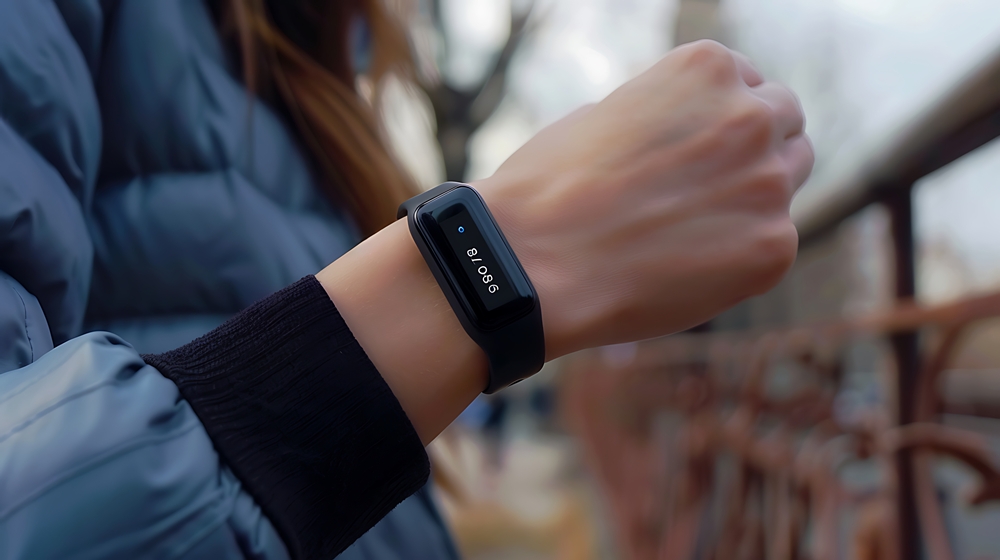
The review, which examined 40 studies with cohorts ranging from small pilot groups to nearly 19 million participants, found that devices such as the Oura Ring, Apple Watch, Fitbit, WHOOP band and Garmin watches are capable of detecting meaningful physiological changes across the menstrual cycle – and could one day help identify conditions far sooner than current methods allow.

The findings come as growing attention is being paid to the economic and personal toll of menstrual health problems.
Up to 90 per cent of women report cycle-related symptoms including pain, bloating and mood swings, while up to 40 per cent suffer from premenstrual syndrome.
A more severe condition, premenstrual dysphoric disorder, affects up to 8 per cent of women. In economic terms alone, menstrual and perimenopausal symptoms are estimated to cost the United States more than US$26 billion a year.
Researchers found that wearables were able to reproduce well-established hormonal patterns in real-world settings.
Skin temperature was found to be lower in the first half of the cycle before ovulation, and higher afterwards, consistent with known effects of progesterone.
Resting heart rate rose by around two to four beats per minute from the pre-ovulation phase to the days following it.
Heart rate variability, a marker of nervous system activity, was highest in the early cycle and lowest in the premenstrual phase, with lower readings linked to symptoms of PMS and PMDD.
The review also challenged some long-held assumptions.
Digital data suggested that ovulation tends to occur later and more variably than previously thought, with the pre-ovulation phase averaging 15 to 17 days rather than the 13 to 14 days typically cited.
Skin temperature was also found to dip most sharply more than five days before ovulation – not immediately before it – a finding the authors said could have practical implications for women using cycle tracking for contraception or conception.
Large datasets revealed that cycle patterns vary considerably between individuals and across a lifetime.
Nearly 20 per cent of women showed significant cycle-to-cycle variability, and both low and high body weight were linked to longer and less predictable cycles.
The data also pointed to racial differences in menstrual characteristics that had previously gone largely undetected in smaller laboratory studies.
On contraception, the review found that combined hormonal contraceptive users showed flatter, inverted heart rate variability patterns across the cycle, while progestin-only methods produced trends closer to natural cycles.
The authors cautioned that most research has been conducted in the United States and Europe, with predominantly white participants, and called for broader, more diverse studies.
They also flagged significant gaps in research on perimenopause, partly because many studies excluded women with irregular cycles.
Despite these limitations, researchers concluded that wearable devices hold genuine promise for helping women monitor their health and enabling earlier identification of conditions that might warrant medical attention – provided privacy safeguards and standardised research methods are put in place.












 Opinion4 weeks ago
What Maternal Mental Health Month reveals about where postpartum support actually breaks down

 Insight3 weeks ago
NIH Grant terminations disproportionately impact minority scientists, research finds

 Menopause5 days ago
Perimenopause misinformation ‘putting women at risk’

 Adolescent health3 weeks ago
WUKA brings Period-Positive Pool Party to London Aquatics Centre to keep girls swimming through puberty
 Insight3 weeks ago
PCOS renamed after decade-long campaign to end ‘cyst’ misconception

 Events4 weeks ago
WHIS 2026 unveils agenda and first speakers for the leading women’s health summit

 Menopause3 weeks ago
CBT shows promise for menopause insomnia and hot flashes

 Insight4 weeks ago
Online abuse and deepfakes ‘pushing women out of public life’
5 Comments