




Pregnancy
Crisis pregnancy centres warned off ectopic scans

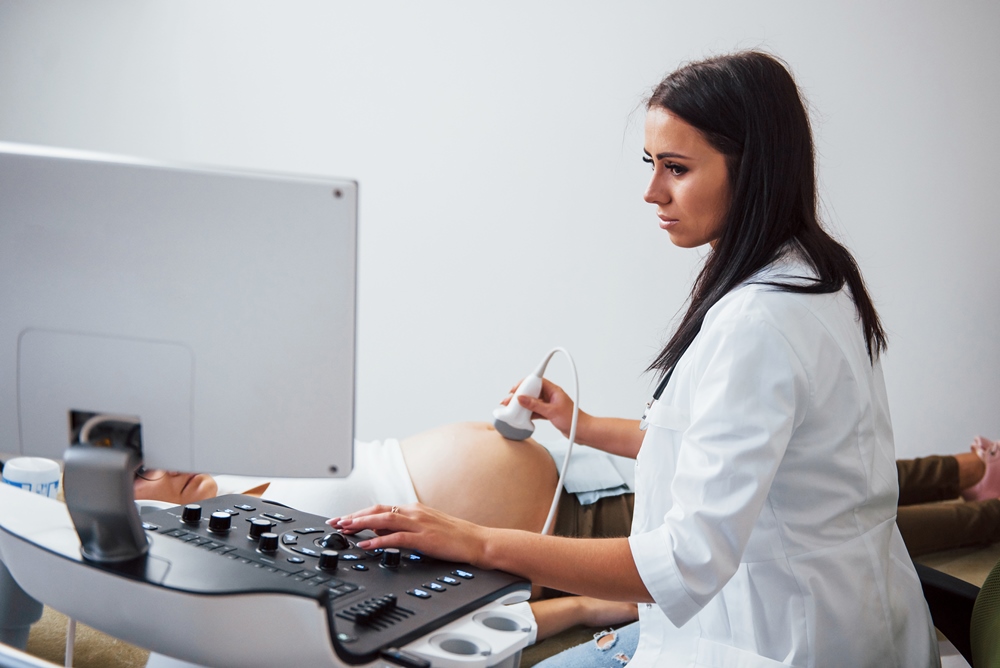
A lawsuit settlement in Massachusetts over alleged medical harm at a crisis pregnancy centre is prompting new legal guidance for faith-based clinics across the US.
Crisis pregnancy centres are now being advised not to perform ultrasounds on women with suspected ectopic pregnancies – a potentially life-threatening condition where an embryo implants outside the womb – and instead refer them to emergency care.
The advice was shared during a panel discussion hosted by the National Institute of Family and Life Advocates (NIFLA), a group that provides legal and medical support to crisis pregnancy centres.
Lawyers urged centres to avoid scanning women reporting symptoms.

One lawyer said during the recorded session: “Just as I’m walking down here I had a call from a centre.
“They had a woman come in who was cramping, and she said on a scale of 1 to 10, it was just below a 6. And I’m like, yikes, like, I wouldn’t scan her.”
The lawyer said the appropriate response in such cases is to send the client directly to the emergency department.
NIFLA has previously issued similar guidance.
A 2018 document states that “if a patient has symptoms of an ectopic pregnancy or miscarriage, she will not be offered an ultrasound exam and is advised, verbally and in writing, to immediately obtain medical care.”
Although NIFLA did not represent Clearway Clinic in the Massachusetts case, the centre was listed as a NIFLA member in 2023.
NIFLA has previously represented crisis pregnancy centres in high-profile cases, including a 2018 US Supreme Court case in California that resulted in a First Amendment ruling in their favour.
Crisis pregnancy centres are religiously affiliated organisations that provide free pregnancy tests and ultrasounds, typically with the aim of discouraging abortion, according to the American College of Obstetricians and Gynaecologists.
They have been criticised for presenting themselves as comprehensive reproductive health clinics while following an ideological rather than clinical model of care, according to a paper in the American Medical Association Journal of Ethics.
During the NIFLA panel, lawyers and a participating doctor advised against scanning women with symptoms of possible ectopic pregnancy, particularly in cases involving low levels of human chorionic gonadotropin (HCG) – a hormone produced by the placenta in early pregnancy.
Low or slowly rising HCG levels may indicate miscarriage or ectopic pregnancy.
The doctor said: “I’m not scanning. If you’ve got a level that’s low like that, it could be early pregnancy, but that is one of the cardinal signs of ectopic and one of the cardinal signs of miscarriage, slowly rising HCG.
“Please do not. She’s already got a provider. Dump it back on them.”
“She should be going back to her provider,” a legal representative added.
Andrea Swartzendruber, a researcher who studies crisis pregnancy centres, described the advice as a significant shift.
She said: “That seems like a very marked change, especially given that so many CPCs are using fear around ectopic pregnancy as a reason to come in and get scanned.”
The panel also addressed privacy concerns.
While many centres claim to be “HIPAA-compliant”, they are not legally bound by the US Health Insurance Portability and Accountability Act (HIPAA), which applies only to specific healthcare entities.
One lawyer said: “There’s this movement not to say HIPAA, and I just finally got everybody to spell it right. So I’m kind of upset.
“We want you to abide by those policies, but don’t advertise yourself as HIPAA-compliant.”
Debra Rosen, executive director of Reproductive Health and Freedom Watch, said this approach can be misleading.
Rosen said: “Unregulated pregnancy clinics masquerade as medical facilities, are not covered entities under HIPAA, and for decades have vigorously pushed back against even the most basic forms of accountability.
“Women nationwide face real harms as these fringe clinics trap them between illusions of confidentiality and the actual legal protections they receive.
“This dangerous gap demands legislative action.”











Women entering pregnancy with multiple conditions face a 20 per cent higher miscarriage risk and around four times the risk of anxiety and depression, new research has revealed.
The observational study found women with two or more pre-existing long-term physical or mental health conditions also had a 69 per cent higher risk of severe nausea and vomiting.
They had more than double the risk of venous thromboembolism, when a blood clot forms inside a vein, and a 42 per cent higher risk of pre-eclampsia, a pregnancy complication involving high blood pressure.

Dr Steven Wambua, research fellow in health data science at King’s College London and joint first author, said: “Maternity care is still largely organised around single health conditions, but one in five women now enters pregnancy with two or more.
“By harmonising five datasets covering all four UK nations, we could show consistently and across a much broader range of outcomes than before, that these women face higher risks and that risk climbs with every additional condition.”
Researchers from King’s College London, Queen’s University Belfast, Bristol NHS Foundation Trust, the University of Birmingham, Swansea University and the University of St Andrews analysed more than 2.2m pregnancies and birth events recorded between 2000 and 2022.
The data came from five datasets covering England, Scotland, Wales and Northern Ireland.
Around one in five pregnant women in the UK live with multiple long-term conditions, but their combined impact on pregnancy is poorly understood.
The study found risks rose with each additional condition. Women with three or more conditions had more than three-and-a-half times the risk of venous thromboembolism compared with women without long-term health conditions.
Women with multiple conditions also had a 32 per cent higher risk of placental abruption, when the placenta separates from the womb before birth, and a 26 per cent higher risk of gestational diabetes.
The researchers said maternity care pathways vary considerably and, where they exist, are often organised around individual conditions.
They said the findings highlight a need to restructure these pathways to address the complex needs of women living with multiple conditions.
Professor Krishnarajah Nirantharakumar, clinical professor of public health and health data science at King’s College London, MuM-PreDiCT principal investigator and joint senior author, said: “These findings make a strong case for recognising multiple long-term conditions as a marker of antenatal risk in its own right.
“That means identifying these women at maternity booking, assessing physical and mental health needs together, and joining up obstetric, primary care and mental health services around them.
“The near four-fold risk of antenatal anxiety and depression is particularly striking, and points to perinatal mental health support as an urgent priority.
Dr Kelly-Ann Eastwood of Bristol NHS Foundation Trust and Queen’s University Belfast, joint senior author, added: “Our results help define the urgent clinical challenges facing both women entering pregnancy with multiple long-term conditions, and clinicians caring for them across the UK.
“Supporting recommendations from recent national maternity and neonatal investigation reports, there is a critical need to address healthcare inequalities, and improve support for women with pre-existing mental health conditions.
“These findings highlight the pressing need to restructure existing maternity services to improve antenatal outcomes.
The authors cautioned that, because the study used routinely collected health records, some conditions and outcomes may have been under-recorded or recorded inconsistently.
Further work by the MuM-PReDiCT consortium will examine birth and child outcomes and identify which combinations of long-term conditions carry the greatest risk.


Climbing during the third trimester was not linked to higher rates of self-reported pregnancy complications in a global study.
The findings provide direct evidence on an activity pregnant women have traditionally been advised to avoid because of concerns about falls.
Researchers surveyed 692 people about climbing during pregnancy, falls, maternal and baby health outcomes and their return to the activity after giving birth.
The study recorded almost 64,000 hours of climbing among participants.
During that time, participants reported 155 “hard falls”, defined as falls or catches forceful enough to be remembered or cause concern.
The rate of adverse clinical events, meaning negative medical outcomes affecting the pregnancy or baby, was 0.03 per 1,000 hours of climbing exposure. All babies in the study were born live.
Researchers found no significant difference in pregnancy or foetal health outcomes between participants who stopped climbing at or before 27 weeks and those who continued beyond that point.
The findings suggest continuing the activity into the third trimester was not associated with increased self-reported complications among those surveyed.
The survey also found 96 per cent of participants said that, despite concerns about climbing while pregnant, they felt “happy” or “very happy” that they had continued.
Margie Davenport, professor in the Faculty of Kinesiology, Sport, and Recreation and lead author of the study, said the preliminary findings challenge an assumption about maternal exercise that had been based on opinion rather than research.
She said: “For decades we have restricted pregnant women from activities like climbing due to concern for their health and the health of the baby, but our evidence suggests it’s beneficial for both mental and physical health.”
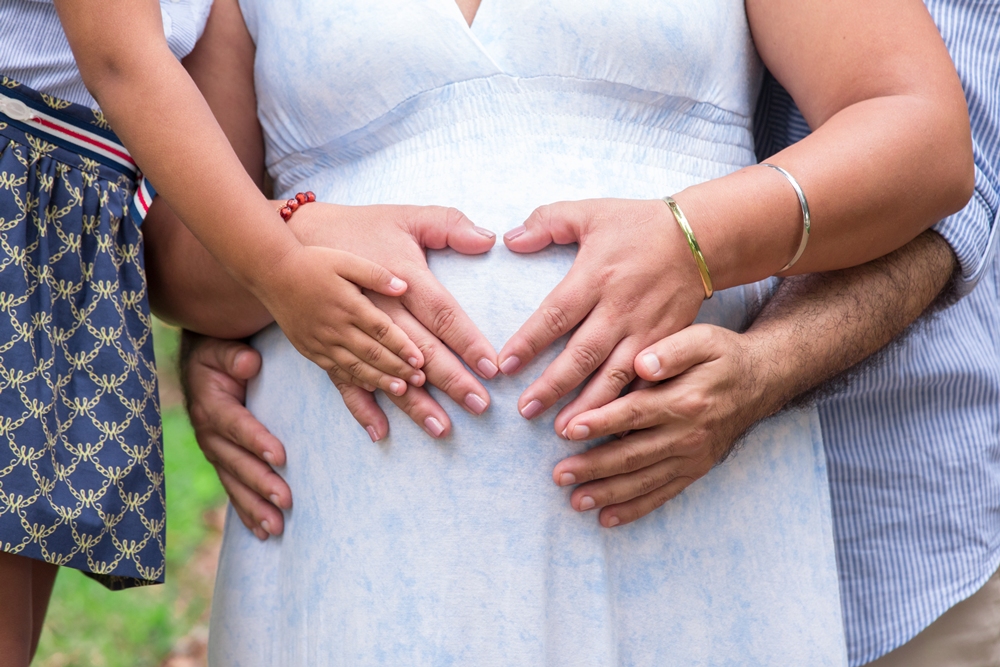
Medtech startup Peripear has won an Innovate UK award for developing a wearable designed to prevent perineal trauma during childbirth.
The Oxford-based company is developing a hands-free warm compress device for use on the perineum during the second stage of labour.
Peripear describes its product as the world’s first automated perineal thermotherapy wearable, designed to prevent perineal trauma during childbirth.
The device is intended to reduce severe tearing and episiotomies while improving maternal comfort.
Peripear has secured an Innovate UK Women in Innovation Award and a £74,974 grant.
The funding will support further product development ahead of the company’s planned first-in-human study.
Nina van Schaick, co-founder and chief operating officer of Peripear and midwife, said: “I’m sure I wasn’t the only one to see this gap.
“I was incredibly lucky to meet my co-founder, Eviatar Natan, right as my frustration about the lack of translation of evidence into practice had peaked.
“There was a proven mechanism that could reduce injuries occurring in up to 90 per cent of vaginal births, and it was being left out of clinical pathways simply because no standardised tool existed to deliver it.
“I’m a farmer’s granddaughter, and when I started practising over 14 years ago, I asked: where is the tool I need to implement this evidence? I looked around and realised we were still asking clinicians to improvise.
“Peripear is what happens when the person who has lived the problem, both personally and professionally, meets the person who can help her build the solution.”








 Entrepreneur2 weeks ago
Applications close August 18 for Women’s Health Innovation Summit 2026 Innovation Showcase

 Menopause2 weeks ago
Third of women unaware of perimenopause mental health impact

 Fertility6 days ago
Chelsea FC Women to launch first-of-its-kind player fertility fund

 Entrepreneur2 weeks ago
Women’s Health Week Europe 2026 releases fully populated agenda ahead of October summit

 Menopause1 week ago
Menopausal hormone therapy may lower dementia risk, study suggests

 Hormonal health2 weeks ago
We are wrapping our children in plastic and calling it care
 Pregnancy2 weeks ago
Chemicals in plastics may be linked to high blood pressure during pregnancy

 Opinion6 days ago
anna perimenopause app launches across 39 markets